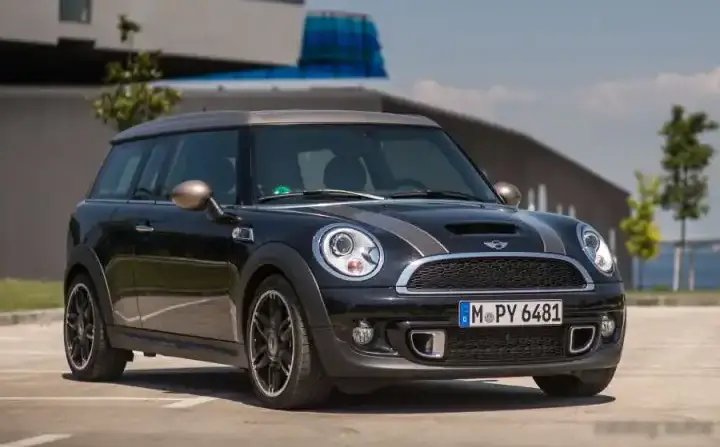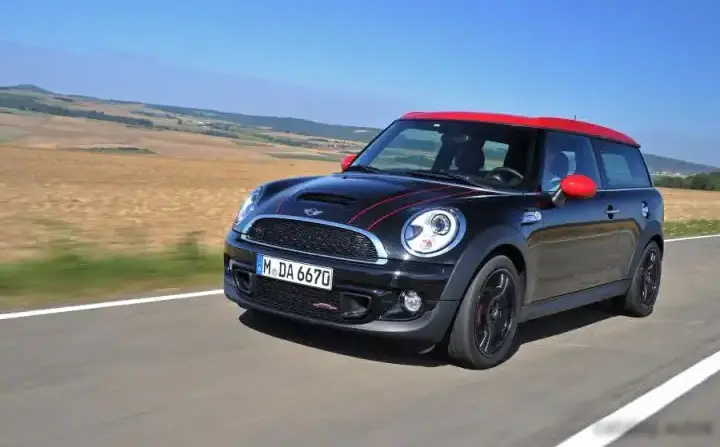
The Mini Clubman (R55) Cooper D 1.6, produced from 2011 to 2014, represented a diesel-powered variant within the second generation of the Clubman, a five-door station wagon (estate) distinguished by its unique split rear doors – a design element harking back to the original Mini. Positioned as a fuel-efficient option within the Clubman range, the Cooper D 1.6 offered a balance between practicality, economy, and the brand’s signature driving dynamics. It sat below the more powerful Cooper S models, targeting buyers prioritizing lower running costs and everyday usability. This model was primarily sold in the European market, where diesel engines held a significant share of the automotive landscape.
Technical Specifications
| Brand | Mini |
| Model | Clubman |
| Generation | Clubman (R55) |
| Type (Engine) | Cooper D 1.6 (112 Hp) |
| Start of production | 2011 |
| End of production | 2014 |
| Powertrain Architecture | Internal Combustion engine |
| Body type | Station wagon (estate) |
| Seats | 5 |
| Doors | 5 |
| Fuel consumption (urban) | 4.4 l/100 km (53.5 US mpg, 64.2 UK mpg, 22.7 km/l) |
| Fuel consumption (extra urban) | 3.6 l/100 km (65.3 US mpg, 78.5 UK mpg, 27.8 km/l) |
| Fuel consumption (combined) | 3.9 l/100 km (60.3 US mpg, 72.4 UK mpg, 25.6 km/l) |
| CO2 emissions | 103 g/km |
| Fuel Type | Diesel |
| Acceleration 0 – 100 km/h | 10.2 sec |
| Acceleration 0 – 62 mph | 10.2 sec |
| Acceleration 0 – 60 mph | 9.7 sec |
| Maximum speed | 197 km/h (122.41 mph) |
| Emission standard | Euro 5 |
| Weight-to-power ratio | 10.6 kg/Hp, 94.5 Hp/tonne |
| Weight-to-torque ratio | 4.4 kg/Nm, 227.8 Nm/tonne |
| Power | 112 Hp @ 4000 rpm |
| Power per litre | 70.1 Hp/l |
| Torque | 270 Nm @ 1750-2250 rpm (199.14 lb.-ft. @ 1750-2250 rpm) |
| Engine layout | Front, Transverse |
| Engine Model/Code | N47C16A |
| Engine displacement | 1598 cm3 (97.52 cu. in.) |
| Number of cylinders | 4 |
| Engine configuration | Inline |
| Cylinder Bore | 78 mm (3.07 in.) |
| Piston Stroke | 83.6 mm (3.29 in.) |
| Compression ratio | 16.5:1 |
| Number of valves per cylinder | 4 |
| Fuel injection system | Diesel Commonrail |
| Engine aspiration | Turbocharger, Intercooler |
| Engine oil capacity | 5.2 l (5.49 US qt | 4.58 UK qt) |
| Coolant | 5.4 l (5.71 US qt | 4.75 UK qt) |
| Kerb Weight | 1185 kg (2612.48 lbs.) |
| Max. weight | 1685 kg (3714.79 lbs.) |
| Max load | 500 kg (1102.31 lbs.) |
| Trunk (boot) space – minimum | 260 l (9.18 cu. ft.) |
| Trunk (boot) space – maximum | 930 l (32.84 cu. ft.) |
| Fuel tank capacity | 40 l (10.57 US gal | 8.8 UK gal) |
| Length | 3961 mm (155.94 in.) |
| Width | 1683 mm (66.26 in.) |
| Height | 1426 mm (56.14 in.) |
| Wheelbase | 2547 mm (100.28 in.) |
| Front track | 1459 mm (57.44 in.) |
| Rear (Back) track | 1467 mm (57.76 in.) |
| Ride height (ground clearance) | 138 mm (5.43 in.) |
| Minimum turning circle | 11 m (36.09 ft.) |
| Drivetrain Architecture | Front wheel drive |
| Number of gears | 6 |
| Gearbox type | Manual transmission |
| Front suspension | Independent, type McPherson with coil spring and anti-roll bar |
| Rear suspension | Independent multi-link suspension |
| Front brakes | Ventilated discs |
| Rear brakes | Disc |
| Assisting systems | ABS (Anti-lock braking system) |
| Steering type | Steering rack and pinion |
| Tires size | 175/65 R15 84H |
| Wheel rims size | 5.5J x 15 |
Powertrain & Engine Architecture
The Cooper D 1.6 was powered by the N47C16A, a 1.6-liter inline-four diesel engine. This engine was a key component of BMW/MINI’s modular engine family, known for its efficiency and refinement. The N47 featured a common rail direct injection system, delivering fuel at extremely high pressures for optimized combustion. A turbocharger with an intercooler was employed to boost power output and improve throttle response. The engine also incorporated four valves per cylinder and a sophisticated engine management system. The 6-speed manual transmission was standard, offering precise shifts and contributing to the car’s overall fuel efficiency. The engine’s design prioritized low-end torque, making it well-suited for everyday driving conditions.
Driving Characteristics
The 112 hp output and 270 Nm (199 lb-ft) of torque provided adequate performance for the Clubman. Acceleration from 0 to 60 mph took around 9.7 seconds, and top speed was 122.41 mph. While not a sports car, the Cooper D 1.6 offered a surprisingly engaging driving experience, thanks to the Clubman’s well-tuned chassis and responsive steering. The manual transmission allowed for good control over the engine’s power band. Compared to the more powerful Cooper S models, the Cooper D 1.6 felt less urgent in its acceleration, but it excelled in providing a relaxed and economical driving experience. The gear ratios were optimized for fuel efficiency, with taller gearing in higher gears for comfortable cruising.
Equipment & Trim Levels
The Cooper D 1.6 Clubman typically came equipped with standard features such as air conditioning, power windows, central locking, and a basic audio system. Higher trim levels offered options like alloy wheels, a panoramic sunroof, leather upholstery, and a more advanced infotainment system. The interior design was characteristic of Mini, with a large central speedometer and a retro-inspired dashboard layout. The split rear doors, a defining feature of the Clubman, provided unique access to the cargo area. Optional extras included parking sensors, automatic headlights, and rain-sensing wipers.
Chassis & Braking
The Clubman R55 utilized a McPherson strut front suspension and a multi-link rear suspension, providing a good balance between ride comfort and handling. The front brakes were ventilated discs, while the rear brakes were solid discs. Anti-lock Braking System (ABS) was standard. The suspension was tuned to provide a comfortable ride without sacrificing agility. The car’s relatively low weight contributed to its nimble handling characteristics. Stabilizer bars were fitted to both the front and rear axles to reduce body roll during cornering.
Market Reception & Comparison
The Mini Clubman Cooper D 1.6 was generally well-received by automotive critics for its fuel efficiency and practicality. It was praised for its distinctive styling and engaging driving dynamics. However, some reviewers noted that the engine could feel strained when pushed hard. Compared to the petrol-powered Cooper, the Cooper D 1.6 offered significantly better fuel economy, making it a popular choice for drivers covering long distances. Against other diesel estate cars in its class, the Clubman Cooper D 1.6 stood out for its premium brand image and unique design. Reliability was generally good, although some owners reported issues with the diesel particulate filter (DPF).
Legacy
The N47 engine family, including the N47C16A found in the Cooper D 1.6, became a mainstay in BMW and MINI vehicles for several years. While generally reliable, the engine did experience some issues with timing chain wear, particularly in earlier iterations. Today, used examples of the Clubman Cooper D 1.6 are relatively affordable and represent a good value for buyers seeking a fuel-efficient and stylish estate car. Regular maintenance, including timely oil changes and DPF regeneration, is crucial for ensuring the long-term reliability of this powertrain. The Clubman’s unique design and driving dynamics continue to appeal to enthusiasts, making it a desirable classic in the making.