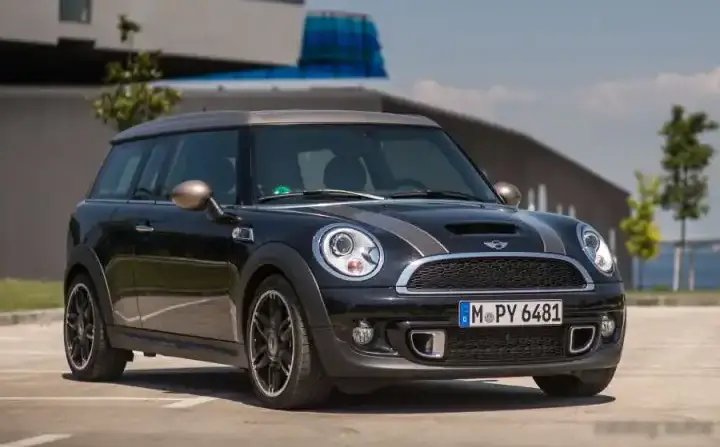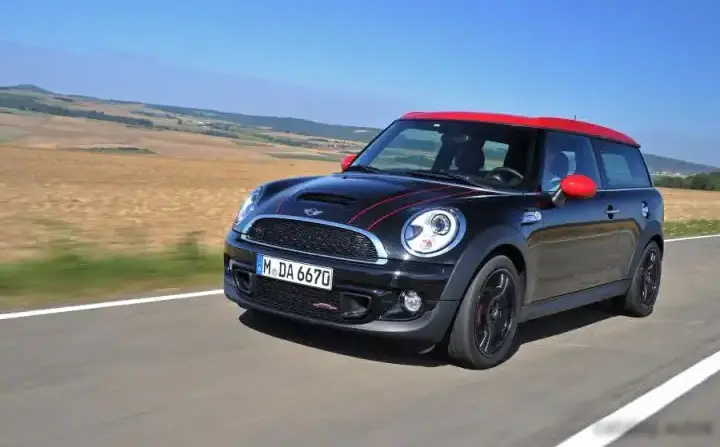
The Mini Clubman (R55) Cooper D 2.0 Automatic, produced between 2011 and 2014, represented a diesel-powered entry point into the second generation Clubman range, often referred to as the R55. Positioned as a more practical and spacious alternative to the standard Mini Hatch, the Clubman aimed to blend Mini’s iconic styling with increased versatility. This particular variant, equipped with the 2.0-liter diesel engine producing 112 horsepower and paired with a six-speed automatic transmission, offered a balance of fuel efficiency and usability for European drivers. It served as a key model in expanding the Clubman’s appeal beyond the enthusiast market.
Technical Specifications
| Brand | Mini |
| Model | Clubman |
| Generation | Clubman (R55) |
| Type (Engine) | Cooper D 2.0 (112 Hp) Automatic |
| Start of production | 2011 |
| End of production | 2014 |
| Powertrain Architecture | Internal Combustion engine |
| Body type | Station wagon (estate) |
| Seats | 5 |
| Doors | 5 |
| Fuel consumption (urban) | 6.9 l/100 km (34.1 US mpg, 40.9 UK mpg, 14.5 km/l) |
| Fuel consumption (extra urban) | 4.2 l/100 km (56 US mpg, 67.3 UK mpg, 23.8 km/l) |
| Fuel consumption (combined) | 5.2 l/100 km (45.2 US mpg, 54.3 UK mpg, 19.2 km/l) |
| CO2 emissions | 138 g/km |
| Fuel Type | Diesel |
| Acceleration 0 – 100 km/h | 10.6 sec |
| Acceleration 0 – 62 mph | 10.6 sec |
| Acceleration 0 – 60 mph | 10.1 sec |
| Maximum speed | 192 km/h (119.3 mph) |
| Emission standard | Euro 5 |
| Weight-to-power ratio | 10.8 kg/Hp, 92.2 Hp/tonne |
| Weight-to-torque ratio | 4.5 kg/Nm, 222.2 Nm/tonne |
| Power | 112 Hp @ 4000 rpm |
| Power per litre | 56.1 Hp/l |
| Torque | 270 Nm @ 1750-2250 rpm (199.14 lb.-ft. @ 1750-2250 rpm) |
| Engine layout | Front, Transverse |
| Engine Model/Code | N47C20A |
| Engine displacement | 1995 cm3 (121.74 cu. in.) |
| Number of cylinders | 4 |
| Engine configuration | Inline |
| Cylinder Bore | 84 mm (3.31 in.) |
| Piston Stroke | 90 mm (3.54 in.) |
| Compression ratio | 16.5:1 |
| Number of valves per cylinder | 4 |
| Fuel injection system | Diesel Commonrail |
| Engine aspiration | Turbocharger, Intercooler |
| Engine oil capacity | 5.2 l (5.49 US qt | 4.58 UK qt) |
| Coolant | 5.4 l (5.71 US qt | 4.75 UK qt) |
| Kerb Weight | 1215 kg (2678.62 lbs.) |
| Max. weight | 1715 kg (3780.93 lbs.) |
| Max load | 500 kg (1102.31 lbs.) |
| Trunk (boot) space – minimum | 260 l (9.18 cu. ft.) |
| Trunk (boot) space – maximum | 930 l (32.84 cu. ft.) |
| Fuel tank capacity | 40 l (10.57 US gal | 8.8 UK gal) |
| Length | 3961 mm (155.94 in.) |
| Width | 1683 mm (66.26 in.) |
| Height | 1426 mm (56.14 in.) |
| Wheelbase | 2547 mm (100.28 in.) |
| Front track | 1459 mm (57.44 in.) |
| Rear (Back) track | 1467 mm (57.76 in.) |
| Ride height (ground clearance) | 138 mm (5.43 in.) |
| Minimum turning circle | 11 m (36.09 ft.) |
| Drivetrain Architecture | Front wheel drive |
| Number of gears and type of gearbox | 6 gears, automatic transmission |
| Front suspension | Independent, type McPherson with coil spring and anti-roll bar |
| Rear suspension | Independent multi-link suspension |
| Front brakes | Ventilated discs |
| Rear brakes | Disc |
| Assisting systems | ABS (Anti-lock braking system) |
| Steering type | Steering rack and pinion |
| Tires size | 175/65 R15 84H |
| Wheel rims size | 5.5J x 15 |
Powertrain & Engine Architecture
The heart of the Clubman Cooper D 2.0 Automatic is the N47C20A engine, a 2.0-liter inline-four diesel. This engine was a cornerstone of BMW Group’s (including Mini) diesel offerings during the early 2010s. It features a common rail direct injection system, delivering fuel at extremely high pressure for optimized combustion. A single turbocharger with an intercooler provides forced induction, boosting power and torque. The N47 engine is known for its relatively complex valvetrain, utilizing chain-driven double overhead camshafts. The six-speed automatic transmission, typically an Aisin-sourced unit, was chosen for its smooth operation and efficiency. This transmission offered a ‘Sport’ mode for more aggressive shifting, but generally prioritized comfort and fuel economy.
Driving Characteristics
The 112 horsepower and 270 Nm (199 lb-ft) of torque delivered by the Cooper D 2.0 Automatic resulted in a 0-60 mph time of around 10.1 seconds and a top speed of 119 mph. While not particularly sporty, the engine provided ample torque for everyday driving and overtaking maneuvers. The automatic transmission, while smooth, could feel somewhat hesitant at times, particularly during kickdown. Compared to the six-speed manual version, the automatic offered less driver engagement but greater convenience. Higher-output diesel variants, such as the Clubman Cooper SD, offered significantly more performance, but at the cost of fuel economy and increased running costs. The gear ratios were tuned for efficiency, prioritizing higher gears at cruising speeds.
Equipment & Trim Levels
The Cooper D 2.0 Automatic typically came equipped with a reasonable level of standard equipment. This included air conditioning, power windows, central locking, and a basic audio system. Interior upholstery was usually cloth, with options for leather upgrades. Standard dashboard configuration featured Mini’s signature circular central display, housing infotainment and climate control functions. Optional extras included a panoramic sunroof, upgraded audio systems (Harman Kardon), navigation, and parking sensors. Trim levels varied slightly depending on the market, but generally offered packages that added cosmetic enhancements and additional convenience features.
Chassis & Braking
The Clubman R55 utilized a McPherson strut front suspension and a multi-link rear suspension, providing a comfortable and relatively controlled ride. Stabilizer bars were fitted front and rear to reduce body roll. The braking system consisted of ventilated discs at the front and solid discs at the rear. ABS (Anti-lock Braking System) was standard. The suspension setup was tuned to balance comfort and handling, leaning towards the former. The weight distribution, combined with the front-wheel-drive layout, could result in some understeer during spirited driving.
Market Reception & Comparison
The Clubman Cooper D 2.0 Automatic was generally well-received by critics as a practical and fuel-efficient option within the Mini lineup. It was praised for its spacious interior and comfortable ride. However, some reviewers noted the engine’s lack of outright performance and the automatic transmission’s occasional sluggishness. Compared to the petrol-powered Cooper, the diesel offered significantly better fuel economy, making it a popular choice for drivers covering long distances. Against other diesel estate cars in its class, the Clubman offered a more premium and stylish alternative, but often at a higher price point.
Legacy
The N47 engine, while generally reliable, has been known to experience timing chain issues in some cases, requiring preventative maintenance or eventual replacement. The automatic transmission has also proven to be generally durable, but regular fluid changes are crucial for longevity. Today, the Clubman Cooper D 2.0 Automatic represents an affordable entry point into Mini ownership. Its fuel efficiency and practicality continue to appeal to buyers seeking a stylish and versatile small estate car. However, potential buyers should be aware of the potential timing chain issues and ensure a thorough inspection before purchase.