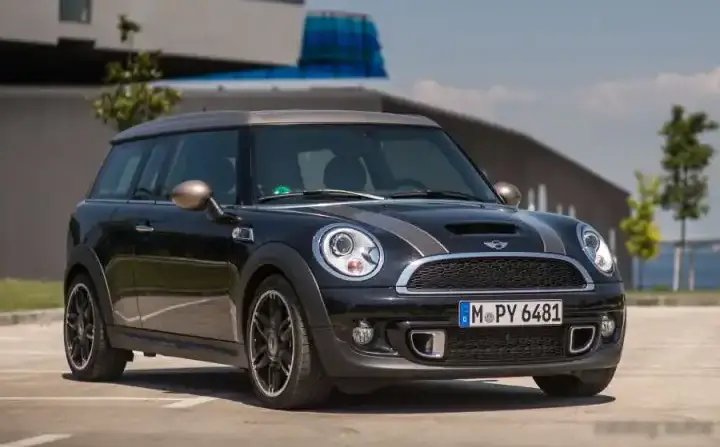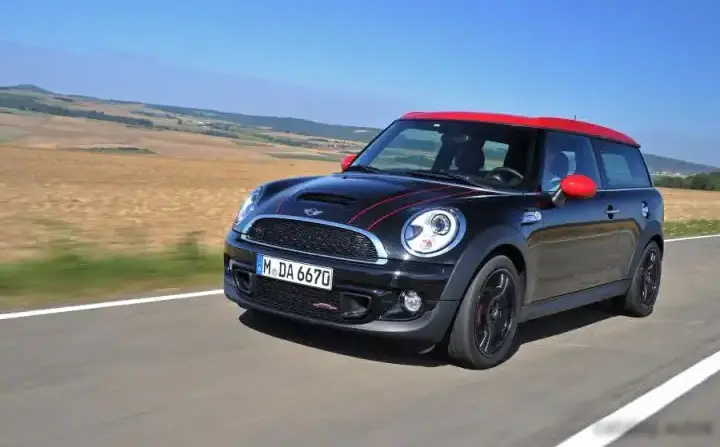
The Mini Clubman (R55) One 1.6, produced from September 2010 to November 2013, represented the entry point into the second-generation Clubman range, built on the BMW Group’s 1HX0/A3 platform. Positioned as a more practical and spacious alternative to the standard Mini Hatch, the Clubman featured distinctive rear split doors – a nod to the classic Mini estate cars of the 1960s. The “One” designation indicated the base trim level, powered by a 1.6-liter naturally aspirated engine producing 98 horsepower. This variant aimed to offer affordability and reasonable fuel economy within the Clubman lineup, appealing to buyers prioritizing practicality over outright performance.
Technical Specifications
| Brand | Mini |
| Model | Clubman |
| Generation | Clubman (R55) |
| Type (Engine) | One 1.6 (98 Hp) |
| Start of production | September, 2010 |
| End of production | November, 2013 |
| Powertrain Architecture | Internal Combustion engine |
| Body type | Station wagon (estate) |
| Seats | 5 |
| Doors | 5 |
| Fuel consumption (urban) | 7.3 l/100 km (32.2 US mpg) |
| Fuel consumption (extra urban) | 4.5 l/100 km (52.3 US mpg) |
| Fuel consumption (combined) | 5.5 l/100 km (42.8 US mpg) |
| CO2 emissions | 129 g/km |
| Fuel Type | Petrol (Gasoline) |
| Acceleration 0 – 100 km/h | 11.1 sec |
| Acceleration 0 – 62 mph | 11.1 sec |
| Acceleration 0 – 60 mph | 10.5 sec |
| Maximum speed | 185 km/h (114.95 mph) |
| Emission standard | Euro 5 |
| Weight-to-power ratio | 11.6 kg/Hp |
| Weight-to-torque ratio | 7.5 kg/Nm |
| Power | 98 Hp @ 6000 rpm |
| Torque | 153 Nm @ 3000 rpm (112.85 lb.-ft. @ 3000 rpm) |
| Engine layout | Front, Transverse |
| Engine Model/Code | N16B16A |
| Engine displacement | 1598 cm3 (97.52 cu. in.) |
| Number of cylinders | 4 |
| Engine configuration | Inline |
| Cylinder Bore | 77 mm (3.03 in.) |
| Piston Stroke | 85.8 mm (3.38 in.) |
| Compression ratio | 11:1 |
| Number of valves per cylinder | 4 |
| Fuel injection system | Multi-port manifold injection |
| Engine aspiration | Naturally aspirated engine |
| Engine oil capacity | 4.2 l (4.44 US qt | 3.7 UK qt) |
| Coolant | 5.2 l (5.49 US qt | 4.58 UK qt) |
| Kerb Weight | 1140 kg (2513.27 lbs.) |
| Max. weight | 1640 kg (3615.58 lbs.) |
| Max load | 500 kg (1102.31 lbs.) |
| Trunk (boot) space – minimum | 260 l (9.18 cu. ft.) |
| Trunk (boot) space – maximum | 930 l (32.84 cu. ft.) |
| Fuel tank capacity | 40 l (10.57 US gal | 8.8 UK gal) |
| Length | 3937 mm (155 in.) |
| Width | 1683 mm (66.26 in.) |
| Height | 1426 mm (56.14 in.) |
| Wheelbase | 2547 mm (100.28 in.) |
| Front track | 1459 mm (57.44 in.) |
| Rear (Back) track | 1467 mm (57.76 in.) |
| Ride height (ground clearance) | 138 mm (5.43 in.) |
| Minimum turning circle | 11 m (36.09 ft.) |
| Drivetrain Architecture | Front wheel drive |
| Number of gears | 6 gears, manual transmission |
| Front suspension | Independent, type McPherson with coil spring and anti-roll bar |
| Rear suspension | Semi-independent, coil spring |
| Front brakes | Ventilated discs |
| Rear brakes | Disc |
| Assisting systems | ABS (Anti-lock braking system) |
| Steering type | Steering rack and pinion |
| Tires size | 175/65 R15 84H |
| Wheel rims size | 5.5J x 15 ST |
Powertrain & Engine Architecture
The heart of the Clubman One 1.6 was the N16B16A engine, a 1.6-liter inline-four cylinder petrol engine. This engine was part of BMW’s N16 family, known for its relatively simple design and focus on fuel efficiency. It featured a naturally aspirated intake, multi-point fuel injection, and double overhead camshafts (DOHC) with four valves per cylinder. The engine produced 98 horsepower at 6000 rpm and 153 Nm (113 lb-ft) of torque at 3000 rpm. The engine’s design prioritized smooth operation and low-end torque over peak power. The Clubman One 1.6 was exclusively offered with a six-speed manual transmission, delivering power to the front wheels. This transmission was chosen to maximize fuel economy and provide a reasonably engaging driving experience, despite the engine’s modest output.
Driving Characteristics
The 1.6-liter engine in the Clubman One provided adequate, but not exhilarating, performance. Acceleration from 0 to 60 mph took around 10.5 seconds, and the top speed was 115 mph. The six-speed manual transmission helped to keep the engine in its optimal power band, but drivers often needed to downshift to maintain momentum when overtaking or climbing hills. Compared to the more powerful Clubman Cooper (with its turbocharged engine) or the diesel variants, the One felt noticeably slower. However, the lighter engine weight contributed to a more balanced feel in corners. The steering was precise and responsive, typical of Mini’s handling characteristics. The suspension provided a comfortable ride, absorbing most road imperfections without excessive body roll.
Equipment & Trim Levels
The Clubman One 1.6 came with a reasonable level of standard equipment. This included air conditioning, power windows, power mirrors, a CD/radio system with auxiliary input, and alloy wheels. Safety features included ABS, electronic stability control, and front and side airbags. Optional extras included a panoramic sunroof, upgraded audio systems, leather upholstery, and parking sensors. The interior was typically finished in cloth upholstery, with a dashboard layout consistent across the Clubman range, featuring the signature Mini center-mounted speedometer. The “One” trim was the most basic, focusing on essential features and affordability.
Chassis & Braking
The Clubman R55 utilized a McPherson strut front suspension and a semi-independent rear suspension setup. This configuration provided a good balance between ride comfort and handling. The front brakes were ventilated discs, while the rear brakes were solid discs. ABS (Anti-lock Braking System) was standard, enhancing braking performance and stability. The Clubman One’s relatively light weight (approximately 2513 lbs) contributed to its nimble handling and reduced strain on the braking system. Stabilizer bars were fitted to both the front and rear axles to minimize body roll during cornering.
Market Reception & Comparison
The Clubman One 1.6 was generally well-received as an affordable and practical entry point into the Clubman range. Critics praised its fuel economy (around 43 mpg combined) and comfortable ride. However, the engine’s lack of power was a common criticism, particularly when compared to the more potent Cooper models. The One offered a more economical alternative to the Cooper, appealing to buyers who prioritized fuel efficiency and practicality over performance. Compared to the diesel-powered Clubman variants, the One offered a lower purchase price but higher running costs due to petrol’s higher price per gallon.
Legacy
The N16B16A engine, while not known for being particularly groundbreaking, proved to be a reliable unit when properly maintained. Common issues included occasional oil leaks and problems with the cooling system. The Clubman One 1.6 remains a relatively affordable option in the used car market. Its simple mechanicals and readily available parts make it a relatively easy car to maintain. While it may not offer the performance of its more powerful siblings, the Clubman One 1.6 provides a practical, stylish, and fuel-efficient option for those seeking a unique and characterful small estate car.