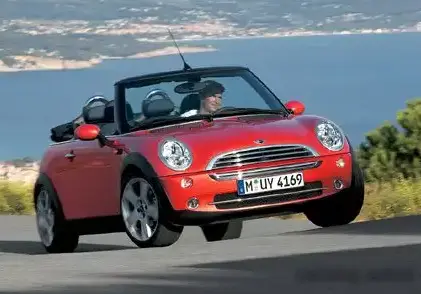
The Mini Convertible (R52) Cooper 1.6i 16V CVT, produced from October 2004 to August 2008, represents a key iteration of the first-generation modern Mini Convertible. Positioned as an entry-level offering within the R52 range, it aimed to provide open-top motoring with a focus on affordability and ease of use. This variant utilized a 1.6-liter naturally aspirated engine paired with a Continuously Variable Transmission (CVT), differentiating it from the more performance-oriented Cooper S and the manual transmission options available. The R52 generation, built on the BMW/MINI 1HX0/A3 platform, successfully reintroduced the iconic Mini brand to a wider audience, blending retro styling with contemporary engineering.
Technical Specifications
| Brand | Mini |
| Model | Convertible |
| Generation | Convertible (R52) |
| Type (Engine) | Cooper 1.6i 16V (116 Hp) CVT |
| Start of production | October, 2004 |
| End of production | August, 2008 |
| Powertrain Architecture | Internal Combustion engine |
| Body type | Cabriolet |
| Seats | 4 |
| Doors | 2 |
| Fuel consumption (urban) | 11.2 l/100 km (21 US mpg, 25.2 UK mpg, 8.9 km/l) |
| Fuel consumption (extra urban) | 6 l/100 km (39.2 US mpg, 47.1 UK mpg, 16.7 km/l) |
| Fuel consumption (combined) | 7.9 l/100 km (29.8 US mpg, 35.8 UK mpg, 12.7 km/l) |
| CO2 emissions | 189 g/km |
| Fuel Type | Petrol (Gasoline) |
| Acceleration 0 – 100 km/h | 11.2 sec |
| Acceleration 0 – 62 mph | 11.2 sec |
| Acceleration 0 – 60 mph | 10.6 sec |
| Maximum speed | 182 km/h (113.09 mph) |
| Weight-to-power ratio | 10.8 kg/Hp, 92.4 Hp/tonne |
| Weight-to-torque ratio | 8.4 kg/Nm, 119.4 Nm/tonne |
| Power | 116 Hp @ 6000 rpm |
| Power per litre | 72.6 Hp/l |
| Torque | 150 Nm @ 4500 rpm (110.63 lb.-ft. @ 4500 rpm) |
| Engine layout | Front, Transverse |
| Engine Model/Code | W10B16A |
| Engine displacement | 1598 cm3 (97.52 cu. in.) |
| Number of cylinders | 4 |
| Engine configuration | Inline |
| Cylinder Bore | 77 mm (3.03 in.) |
| Piston Stroke | 85.8 mm (3.38 in.) |
| Compression ratio | 10.6:1 |
| Number of valves per cylinder | 4 |
| Fuel injection system | Multi-port manifold injection |
| Engine aspiration | Naturally aspirated engine |
| Valvetrain | DOHC |
| Engine oil capacity | 4.5 l (4.76 US qt | 3.96 UK qt) |
| Coolant | 5.2 l (5.49 US qt | 4.58 UK qt) |
| Kerb Weight | 1256 kg (2769.01 lbs.) |
| Trunk (boot) space – minimum | 120 l (4.24 cu. ft.) |
| Trunk (boot) space – maximum | 605 l (21.37 cu. ft.) |
| Fuel tank capacity | 50 l (13.21 US gal | 11 UK gal) |
| Length | 3635 mm (143.11 in.) |
| Width | 1688 mm (66.46 in.) |
| Height | 1415 mm (55.71 in.) |
| Wheelbase | 2467 mm (97.13 in.) |
| Front track | 1458 mm (57.4 in.) |
| Rear (Back) track | 1466 mm (57.72 in.) |
| Drivetrain Architecture | The Internal combustion engine (ICE) drives the front wheels of the vehicle. |
| Drive wheel | Front wheel drive |
| Number of gears and type of gearbox | automatic transmission CVT |
| Front suspension | Spring Strut |
| Rear suspension | Coil spring |
| Front brakes | Ventilated discs |
| Rear brakes | Disc |
| Assisting systems | ABS (Anti-lock braking system) |
| Steering type | Steering rack and pinion |
| Power steering | Hydraulic Steering |
| Tires size | 175/65 R15 |
| Wheel rims size | 5.5J x 15 |
Powertrain & Engine Architecture
At the heart of the Cooper 1.6i CVT lies the BMW-developed W10B16A engine. This 1.6-liter inline-four cylinder engine features a double overhead camshaft (DOHC) valvetrain with four valves per cylinder, contributing to its relatively high output for its displacement. The engine utilizes multi-port fuel injection, a common technology at the time, delivering fuel directly into the intake ports. The engine’s 116 horsepower at 6000 rpm and 150 Nm (110.63 lb-ft) of torque at 4500 rpm were respectable figures for a naturally aspirated engine of this size in the early 2000s. The CVT transmission, while offering smooth acceleration and fuel efficiency, differed significantly from the standard six-speed manual and the optional six-speed automatic transmissions available in other R52 models. The CVT lacked defined gear steps, instead providing a seamless range of ratios to keep the engine operating in its optimal power band.
Driving Characteristics
The 1.6i CVT offered a distinctly different driving experience compared to its siblings. The CVT prioritized smooth, linear acceleration over outright performance. While the manual transmission Cooper offered a more engaging and responsive feel, and the Cooper S delivered significantly more power, the CVT version excelled in urban environments and on long highway journeys. The CVT’s continuously variable ratios allowed the engine to remain at its most efficient RPM, contributing to improved fuel economy. However, the lack of distinct gear changes could feel somewhat disconnected to drivers accustomed to traditional transmissions. Acceleration to 60 mph took approximately 10.6 seconds, making it the slowest variant in the R52 lineup. The CVT also impacted engine braking, which was less pronounced than with a conventional automatic or manual transmission.
Equipment & Trim Levels
The Cooper 1.6i CVT typically came equipped with a reasonable level of standard features. Interior appointments included cloth upholstery, a leather-wrapped steering wheel, and air conditioning. The dashboard layout was characteristic of the R52, featuring a large central speedometer and a smaller tachometer. Optional extras included a panoramic sunroof, sport seats, and a premium sound system. The trim level was generally considered entry-level, focusing on providing a stylish and comfortable convertible experience without the added cost of performance upgrades or luxury features. The exterior styling mirrored other Cooper models, with distinctive Mini design cues such as the white roof and chrome accents.
Chassis & Braking
The R52 Cooper 1.6i CVT utilized a MacPherson strut front suspension and a multi-link coil spring rear suspension. This setup provided a good balance of ride comfort and handling. Braking duties were handled by ventilated discs at the front and solid discs at the rear, equipped with an Anti-lock Braking System (ABS) as standard. The chassis was reinforced to compensate for the removal of the fixed roof, maintaining structural rigidity. The relatively lightweight nature of the 1.6-liter engine contributed to a balanced weight distribution, enhancing handling characteristics. Stabilizer bars were fitted front and rear to reduce body roll during cornering.
Market Reception & Comparison
The Cooper 1.6i CVT received mixed reviews. Critics praised its fuel efficiency and ease of driving, particularly in urban settings. However, the CVT transmission was often criticized for its lack of responsiveness and the somewhat detached driving experience. Compared to the manual transmission Cooper, the CVT version offered less driver engagement. Against the Cooper S, it was significantly slower and less sporty. However, it offered a more affordable entry point into Mini ownership, appealing to buyers who prioritized comfort and convenience over outright performance. Fuel economy figures of around 29.8 US mpg combined were competitive for the segment.
Legacy
The W10B16A engine, while not known for being particularly complex, has proven to be reasonably reliable over the long term. Common issues include oil leaks and occasional problems with the cooling system. The CVT transmission, however, requires more diligent maintenance. Regular fluid changes are crucial to prevent premature wear and failure. Today, the R52 Cooper 1.6i CVT remains a popular choice in the used car market, particularly among buyers seeking an affordable and stylish convertible. Its relatively simple mechanicals and readily available parts make it a relatively easy car to maintain. While it may not offer the performance of its more powerful siblings, it provides a unique and enjoyable open-top motoring experience.