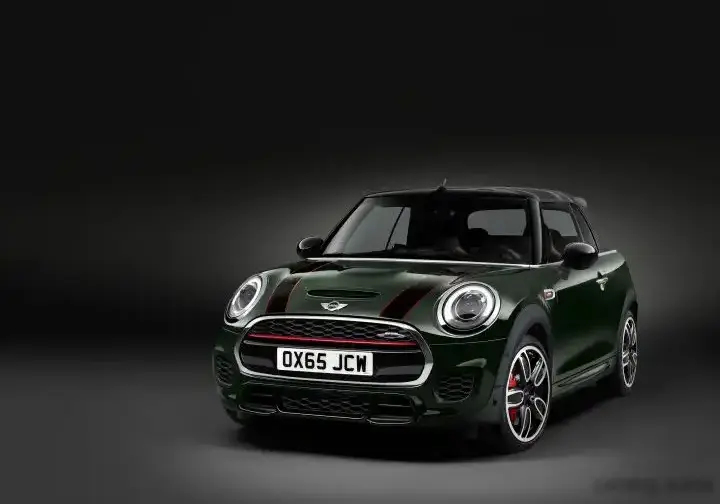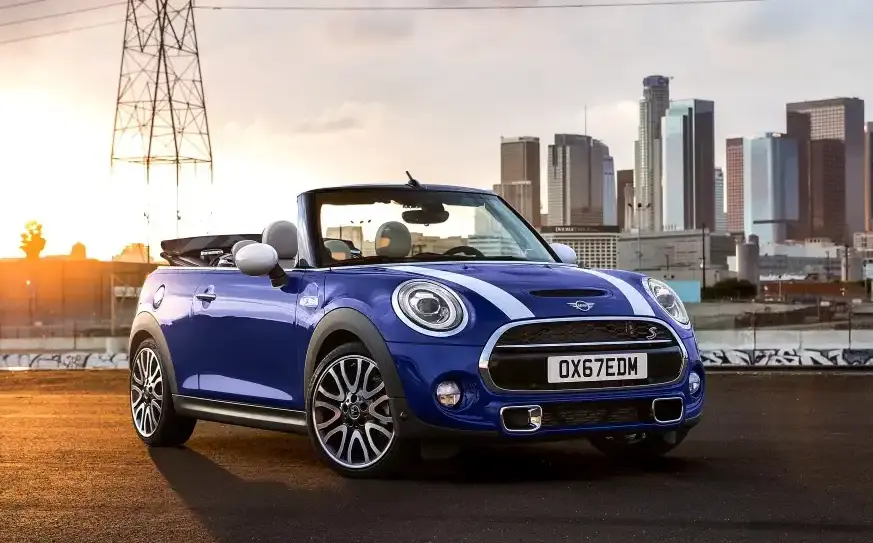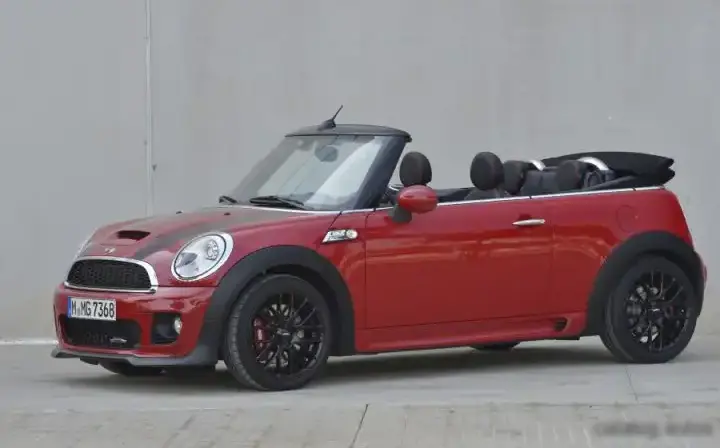
The Mini Convertible (R57) Cooper S 1.6i 16V Turbo, produced from August 2009 to February 2010, represented a performance-oriented variant within the second generation (R57) Mini Convertible lineup. Positioned as a step up from the base Cooper models, the Cooper S offered a significant boost in power and a more engaging driving experience. This model was primarily sold in European and North American markets, appealing to buyers seeking a stylish and sporty open-top car. It built upon the success of the R56 hatchback, translating the iconic Mini design into a desirable convertible format.
Technical Specifications
| Brand | Mini |
| Model | Convertible |
| Generation | Convertible (R57) |
| Type (Engine) | Cooper S 1.6i 16V Turbo (175 Hp) |
| Start of production | August, 2009 |
| End of production | February, 2010 |
| Powertrain Architecture | Internal Combustion engine |
| Body type | Cabriolet |
| Seats | 4 |
| Doors | 2 |
| Fuel consumption (urban) | 8.1 l/100 km (29 US mpg, 34.9 UK mpg, 12.3 km/l) |
| Fuel consumption (extra urban) | 5.4 l/100 km (43.6 US mpg, 52.3 UK mpg, 18.5 km/l) |
| Fuel consumption (combined) | 6.4 l/100 km (36.8 US mpg, 44.1 UK mpg, 15.6 km/l) |
| Fuel Type | Petrol (Gasoline) |
| Acceleration 0 – 100 km/h | 7.4 sec |
| Acceleration 0 – 62 mph | 7.4 sec |
| Acceleration 0 – 60 mph | 7 sec |
| Maximum speed | 225 km/h (139.81 mph) |
| Emission standard | Euro 4 |
| Weight-to-power ratio | 7.5 kg/Hp, 134.1 Hp/tonne |
| Weight-to-torque ratio | 5.4 kg/Nm, 183.9 Nm/tonne |
| Power | 175 Hp @ 5500 rpm |
| Power per litre | 109.5 Hp/l |
| Torque | 240 Nm @ 1600-5000 rpm (177.01 lb.-ft. @ 1600-5000 rpm) |
| Engine layout | Front, Transverse |
| Engine Model/Code | N14B16A |
| Engine displacement | 1598 cm3 (97.52 cu. in.) |
| Number of cylinders | 4 |
| Engine configuration | Inline |
| Cylinder Bore | 77 mm (3.03 in.) |
| Piston Stroke | 85.8 mm (3.38 in.) |
| Compression ratio | 10.5:1 |
| Number of valves per cylinder | 4 |
| Fuel injection system | Multi-port manifold injection |
| Engine aspiration | Supercharger, Intercooler |
| Valvetrain | DOHC |
| Engine oil capacity | 4.2 l (4.44 US qt | 3.7 UK qt) |
| Coolant | 5.2 l (5.49 US qt | 4.58 UK qt) |
| Kerb Weight | 1305 kg (2877.03 lbs.) |
| Max. weight | 1605 kg (3538.42 lbs.) |
| Max load | 300 kg (661.39 lbs.) |
| Trunk (boot) space – minimum | 160 l (5.65 cu. ft.) |
| Trunk (boot) space – maximum | 680 l (24.01 cu. ft.) |
| Fuel tank capacity | 50 l (13.21 US gal | 11 UK gal) |
| Length | 3714 mm (146.22 in.) |
| Width | 1683 mm (66.26 in.) |
| Height | 1414 mm (55.67 in.) |
| Wheelbase | 2467 mm (97.13 in.) |
| Front track | 1453 mm (57.2 in.) |
| Rear (Back) track | 1461 mm (57.52 in.) |
| Minimum turning circle | 10.7 m (35.1 ft.) |
| Drivetrain Architecture | The Internal combustion engine (ICE) drives the front wheels of the vehicle. |
| Drive wheel | Front wheel drive |
| Number of gears and type of gearbox | 6 gears, manual transmission |
| Front suspension | Spring Strut |
| Rear suspension | Transverse stabilizer |
| Front brakes | Ventilated discs |
| Rear brakes | Disc |
| Assisting systems | ABS (Anti-lock braking system) |
| Steering type | Steering rack and pinion |
| Tires size | 195/55 R16; 205/45 R 17 |
| Wheel rims size | 6.5J X 16 |
Powertrain & Engine Architecture
The heart of the Cooper S Convertible was the N14B16A 1.6-liter inline-four cylinder engine. This engine was a key component of the second-generation Mini, known for its responsiveness and relatively high specific output. The N14 featured a twin-scroll turbocharger and direct fuel injection, technologies that significantly enhanced its performance. The direct injection system allowed for precise fuel delivery, improving efficiency and reducing emissions. The engine also utilized variable valve timing (Double VANOS) on both the intake and exhaust camshafts, optimizing performance across the rev range. The 175 horsepower output was a substantial increase over the standard Cooper models, providing noticeably quicker acceleration. The engine was transversely mounted at the front of the vehicle, driving the front wheels.
Driving Characteristics
The Cooper S Convertible, even with the 175 hp engine, offered a distinctly different driving experience compared to its more powerful siblings like the John Cooper Works (JCW) variant. While not brutally fast, the turbocharger provided a strong mid-range punch, making it enjoyable for everyday driving and spirited backroad excursions. The six-speed manual transmission, standard on this model, allowed drivers to fully exploit the engine’s powerband. The convertible top, while adding some weight, didn’t significantly detract from the car’s nimble handling. The steering was precise and well-weighted, providing good feedback to the driver. Compared to the base Cooper, the Cooper S felt significantly more capable and responsive, offering a more engaging driving experience.
Equipment & Trim Levels
The Cooper S Convertible typically came well-equipped, reflecting its position as a premium trim level. Standard features included air conditioning, power windows and locks, a multi-function steering wheel, and a basic audio system. Upholstery was typically cloth, but leather options were available. Common optional extras included a premium sound system, navigation system, heated seats, and parking sensors. The convertible top was fully automatic and could be operated at speeds up to 30 mph. Exterior styling cues included unique front and rear bumpers, side skirts, and a chrome exhaust outlet, differentiating it from the standard Cooper models.
Chassis & Braking
The R57 Cooper S Convertible utilized a MacPherson strut front suspension and a multi-link rear suspension, providing a good balance of ride comfort and handling precision. The suspension was tuned to be slightly firmer than the standard Cooper, reflecting its sporty intentions. Brakes consisted of ventilated discs at the front and solid discs at the rear, providing adequate stopping power for the car’s weight and performance. Anti-lock brakes (ABS) were standard, enhancing safety. The chassis was reinforced to compensate for the lack of a fixed roof, maintaining structural rigidity.
Market Reception & Comparison
The Mini Convertible (R57) Cooper S was generally well-received by automotive critics. It was praised for its stylish design, engaging driving dynamics, and relatively fuel-efficient engine. However, some critics noted that the convertible top added weight and compromised structural rigidity compared to the hatchback version. Compared to other small convertibles on the market, the Cooper S offered a unique blend of British charm and German engineering. Fuel economy was respectable for a performance-oriented convertible, averaging around 37 mpg in combined driving. Reliability was generally good, although some owners reported issues with the turbocharger and fuel pump.
Legacy
The R57 Cooper S Convertible remains a popular choice in the used car market. Its combination of style, performance, and practicality continues to appeal to buyers seeking a fun and engaging open-top car. The N14 engine, while generally reliable, requires regular maintenance, including oil changes and spark plug replacements. The turbocharger is a potential weak point, and it’s important to check for signs of wear or damage. Overall, the Cooper S Convertible represents a well-rounded and enjoyable driving experience, and it has cemented its place as a modern classic.