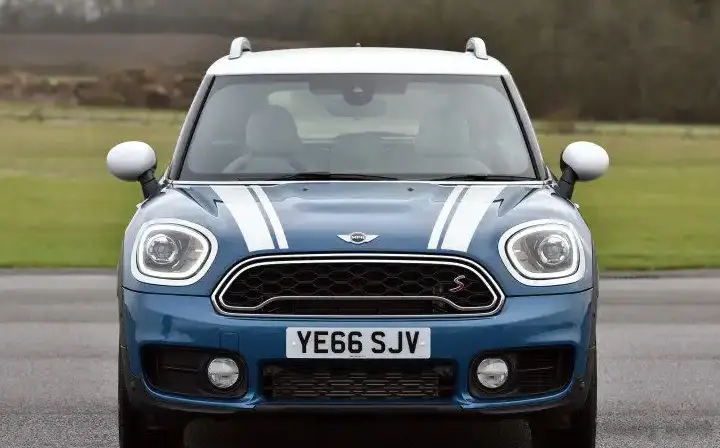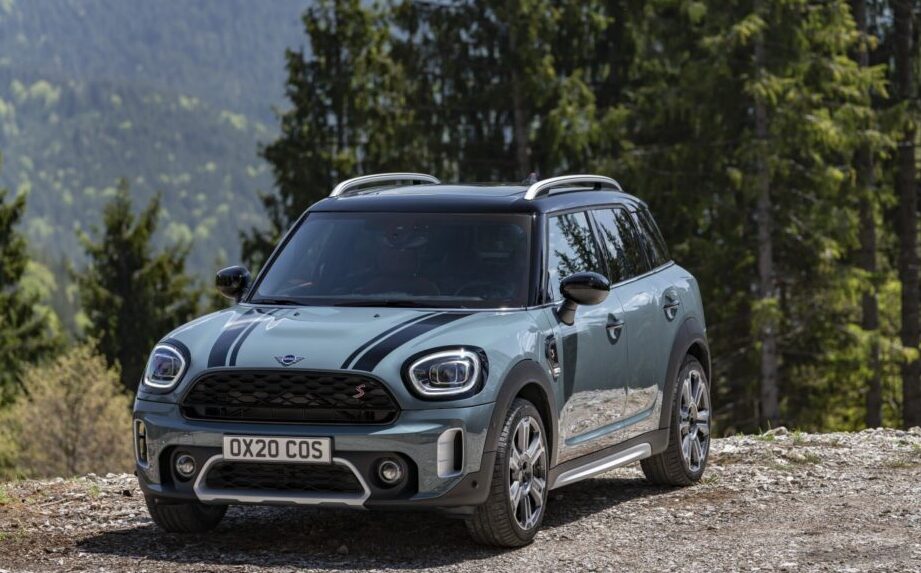
The Mini Countryman One 1.5, produced from November 2020 to July 2022, represents the entry point into the F60 Countryman facelift range. Positioned as a more accessible option within the second-generation Countryman lineup (introduced in 2017 and facelifted in 2020), this variant aimed to broaden the appeal of Mini’s largest model by offering a balance of practicality, style, and fuel efficiency. It slots below the Cooper and Cooper S models, offering a more economical choice for buyers prioritizing affordability. The Countryman itself is significant as Mini’s first model to offer all-wheel drive and a five-door configuration, expanding beyond the brand’s traditionally small-car focus.
Technical Specifications
| Brand | Mini |
| Model | Countryman |
| Generation | Countryman (F60, facelift 2020) |
| Type (Engine) | One 1.5 (102 Hp) |
| Start of production | November, 2020 |
| End of production | July, 2022 |
| Powertrain Architecture | Internal Combustion engine |
| Body type | SUV |
| Seats | 5 |
| Doors | 5 |
| Combined fuel consumption (WLTP) | 6.1-6.8 l/100 km (38.6 – 34.6 US mpg, 46.3 – 41.5 UK mpg, 16.4 – 14.7 km/l) |
| CO2 emissions (WLTP) | 140-155 g/km |
| Fuel consumption (urban) | 7.1-7.3 l/100 km (33.1 – 32.2 US mpg, 39.8 – 38.7 UK mpg, 14.1 – 13.7 km/l) |
| Fuel consumption (extra urban) | 5.1-5.4 l/100 km (46.1 – 43.6 US mpg, 55.4 – 52.3 UK mpg, 19.6 – 18.5 km/l) |
| Fuel consumption (combined) | 5.9-6.1 l/100 km (39.9 – 38.6 US mpg, 47.9 – 46.3 UK mpg, 16.9 – 16.4 km/l) |
| CO2 emissions (NEDC) | 134-140 g/km |
| Fuel Type | Petrol (Gasoline) |
| Acceleration 0 – 100 km/h | 12 sec |
| Acceleration 0 – 62 mph | 12 sec |
| Acceleration 0 – 60 mph | 11.4 sec |
| Maximum speed | 185 km/h (114.95 mph) |
| Emission standard | Euro 6d-ISC-FCM |
| Weight-to-power ratio | 13.6 kg/Hp, 73.4 Hp/tonne |
| Weight-to-torque ratio | 7.3 kg/Nm, 136.7 Nm/tonne |
| Power | 102 Hp @ 3900-6500 rpm |
| Power per litre | 68 Hp/l |
| Torque | 190 Nm @ 1380-3600 rpm (140.14 lb.-ft. @ 1380-3600 rpm) |
| Engine layout | Front, Transverse |
| Engine Model/Code | B38A15A |
| Engine displacement | 1499 cm3 (91.47 cu. in.) |
| Number of cylinders | 3 |
| Engine configuration | Inline |
| Number of valves per cylinder | 4 |
| Fuel injection system | Direct injection |
| Engine aspiration | Turbocharger, Intercooler |
| Engine oil capacity | 4.5 l (4.76 US qt | 3.96 UK qt) |
| Coolant capacity | 7.1 l (7.5 US qt | 6.25 UK qt) |
| Kerb Weight | 1390 kg (3064.43 lbs.) |
| Max. weight | 1960 kg (4321.06 lbs.) |
| Max load | 570 kg (1256.63 lbs.) |
| Trunk (boot) space – minimum | 450 l (15.89 cu. ft.) |
| Trunk (boot) space – maximum | 1390 l (49.09 cu. ft.) |
| Fuel tank capacity | 51 l (13.47 US gal | 11.22 UK gal) |
| Max. roof load | 75 kg (165.35 lbs.) |
| Permitted towbar download | 75 kg (165.35 lbs.) |
| Length | 4297 mm (169.17 in.) |
| Width | 1822 mm (71.73 in.) |
| Width including mirrors | 2001 mm (78.78 in.) |
| Height | 1557 mm (61.3 in.) |
| Wheelbase | 2670 mm (105.12 in.) |
| Front track | 1563 mm (61.54 in.) |
| Rear track | 1563 mm (61.54 in.) |
| Front overhang | 834 mm (32.83 in.) |
| Rear overhang | 793 mm (31.22 in.) |
| Ride height (ground clearance) | 165 mm (6.5 in.) |
| Minimum turning circle | 11.4 m (37.4 ft.) |
| Drivetrain Architecture | The Internal combustion engine (ICE) drives the front wheels of the vehicle. |
| Drive wheel | Front wheel drive |
| Number of gears and type of gearbox | 6 gears, manual transmission |
| Front suspension | Independent, type McPherson with coil spring and anti-roll bar |
| Rear suspension | Independent multi-link suspension |
| Front brakes | Ventilated discs |
| Rear brakes | Disc |
| Assisting systems | ABS (Anti-lock braking system) |
| Steering type | Steering rack and pinion |
| Power steering | Electric Steering |
| Tires size | 205/65 R16 95H |
| Wheel rims size | 7J x 16 ET41 |
INTRODUCTION
The Mini Countryman One 1.5, launched in late 2020 as part of the F60 facelift, offered a more accessible entry point into the Countryman range. This variant utilized a 1.5-liter turbocharged three-cylinder engine producing 102 horsepower, paired with a six-speed manual transmission. It was designed to appeal to buyers seeking the Countryman’s distinctive styling and practicality, but with a lower purchase price and improved fuel economy compared to the more powerful Cooper and Cooper S models. The facelift brought updated styling cues, improved technology, and enhanced efficiency across the Countryman lineup.
Powertrain & Engine Architecture
At the heart of the Countryman One 1.5 lies the BMW B38A15A engine, a 1.5-liter turbocharged inline-three cylinder. This engine is part of BMW’s modular engine family and features direct fuel injection, a single twin-scroll turbocharger, and an intercooler. The engine’s code signifies its displacement and configuration. The B38 engine is known for its relatively smooth operation for a three-cylinder unit, thanks to a carefully tuned crankshaft and balancing shaft. The six-speed manual transmission was the standard offering, providing a direct connection between the engine and the front wheels. The transmission’s gear ratios are tuned for a balance of fuel efficiency and acceptable acceleration. The engine utilizes variable valve timing (Valvetronic) on both the intake and exhaust sides to optimize performance and efficiency.
Driving Characteristics
The Countryman One 1.5 delivers a respectable, if not exhilarating, driving experience. With 102 horsepower and 190 Nm (140 lb-ft) of torque, acceleration from 0 to 60 mph takes around 11.4 seconds, and 0-100 km/h in 12 seconds. While noticeably slower than the Cooper and Cooper S variants, the One 1.5 provides sufficient power for everyday driving situations. The turbocharger provides a boost in torque at lower engine speeds, making it reasonably responsive in urban environments. The six-speed manual transmission offers a satisfying shift feel, and the gear ratios are well-matched to the engine’s powerband. Compared to the more powerful models, the One 1.5 feels less stressed during highway cruising, potentially contributing to improved long-term reliability. The front-wheel-drive configuration provides predictable handling, although it lacks the added traction and stability of the all-wheel-drive system available on other Countryman models.
Equipment & Trim Levels
The Countryman One 1.5 typically came equipped with a solid base level of standard features. These included air conditioning, a 6.5-inch infotainment system with Bluetooth connectivity, and a leather-wrapped steering wheel. Safety features such as ABS, stability control, and multiple airbags were standard. Interior upholstery was typically cloth, with options for partial leather available. Optional extras included a larger touchscreen infotainment system, navigation, Apple CarPlay, a panoramic sunroof, and various driver-assistance systems. Trim levels were relatively simple, with options primarily focused on adding convenience and aesthetic enhancements. The overall interior design retained the signature Mini aesthetic, with a centrally mounted infotainment screen and quirky design elements.
Chassis & Braking
The Countryman One 1.5 utilizes a McPherson strut front suspension and a multi-link rear suspension, providing a comfortable and controlled ride. The suspension is tuned to prioritize comfort over outright sportiness, making it well-suited for everyday driving. Front brakes are ventilated discs, while rear brakes are solid discs. ABS (Anti-lock Braking System) is standard, providing enhanced braking performance in emergency situations. The chassis is designed to provide a good balance of rigidity and weight, contributing to the car’s handling characteristics. The front-wheel-drive configuration means the vehicle doesn’t benefit from the enhanced stability offered by all-wheel drive, but the electronic stability control system helps to mitigate understeer.
Market Reception & Comparison
The Countryman One 1.5 was generally well-received by critics as a sensible and affordable entry point into the Countryman range. Reviewers praised its fuel efficiency and comfortable ride, but noted its relatively modest performance compared to the Cooper and Cooper S models. Compared to the Cooper, the One 1.5 offered significantly better fuel economy, but with a noticeable reduction in power. The Cooper S provided a substantial performance upgrade, but at a higher price point. The One 1.5’s main appeal lay in its affordability and practicality, making it a good choice for buyers who prioritized value over outright performance. Reliability reports suggest the B38 engine is generally robust, although regular maintenance is crucial.
Legacy
The Countryman One 1.5, while not the most powerful or dynamic variant in the F60 lineup, has established itself as a reliable and affordable option in the used car market. The B38 engine has proven to be relatively durable, and the six-speed manual transmission is known for its robustness. These vehicles represent a good value proposition for buyers seeking a stylish and practical compact SUV with reasonable running costs. As with any used vehicle, a thorough inspection and maintenance history check are essential before purchase. The One 1.5 continues to appeal to those seeking the Mini brand experience without the higher price tag of the more performance-oriented models.