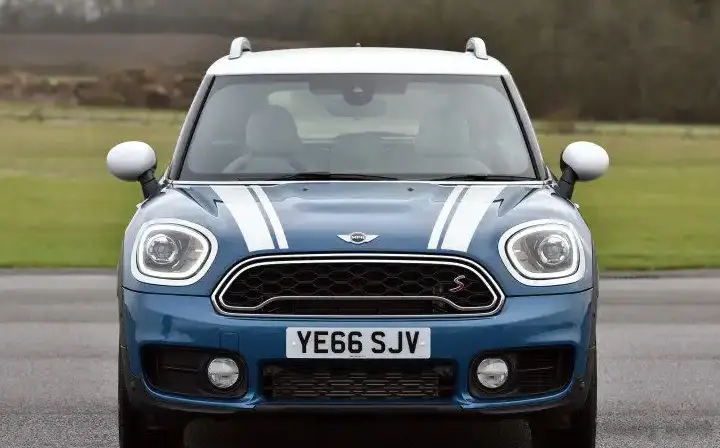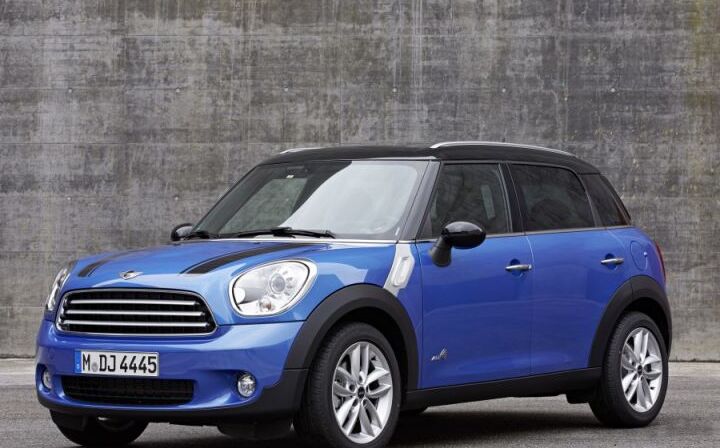
The Mini Countryman (R60) Cooper D 2.0 ALL4 Automatic, produced between 2010 and 2014, represented Mini’s entry into the compact SUV segment. Built on the R60 platform – the first generation Countryman – this variant offered a blend of Mini’s characteristic styling with increased practicality and, crucially, all-wheel drive capability. Positioned as a mid-range offering within the Countryman lineup, the Cooper D ALL4 Automatic aimed to provide a balance between fuel efficiency, reasonable performance, and all-weather traction. It served as a key model in expanding the Mini brand’s appeal beyond its traditional, more focused customer base, particularly in European markets where compact SUVs were gaining popularity.
Technical Specifications
| Brand | Mini |
| Model | Countryman |
| Generation | Countryman (R60) |
| Type (Engine) | Cooper D 2.0 (112 Hp) ALL4 Automatic |
| Start of production | 2010 |
| End of production | 2014 |
| Powertrain Architecture | Internal Combustion engine |
| Body type | SUV |
| Seats | 4 |
| Doors | 5 |
| Fuel consumption (urban) | 7.6 l/100 km (30.9 US mpg, 37.2 UK mpg, 13.2 km/l) |
| Fuel consumption (extra urban) | 5 l/100 km (47 US mpg, 56.5 UK mpg, 20 km/l) |
| Fuel consumption (combined) | 6 l/100 km (39.2 US mpg, 47.1 UK mpg, 16.7 km/l) |
| CO2 emissions | 158 g/km |
| Fuel Type | Diesel |
| Acceleration 0 – 100 km/h | 11.8 sec |
| Acceleration 0 – 62 mph | 11.8 sec |
| Acceleration 0 – 60 mph | 11.2 sec |
| Maximum speed | 175 km/h (108.74 mph) |
| Emission standard | Euro 5 |
| Weight-to-power ratio | 12.5 kg/Hp, 79.7 Hp/tonne |
| Weight-to-torque ratio | 5.2 kg/Nm, 192.2 Nm/tonne |
| Power | 112 Hp @ 4000 rpm |
| Torque | 270 Nm @ 1750-2250 rpm (199.14 lb.-ft. @ 1750-2250 rpm) |
| Engine layout | Front, Transverse |
| Engine Model/Code | N47C20A |
| Engine displacement | 1995 cm3 (121.74 cu. in.) |
| Number of cylinders | 4 |
| Engine configuration | Inline |
| Cylinder Bore | 84 mm (3.31 in.) |
| Piston Stroke | 90 mm (3.54 in.) |
| Compression ratio | 16.5:1 |
| Number of valves per cylinder | 4 |
| Fuel injection system | Diesel Commonrail |
| Engine aspiration | Turbocharger, Intercooler |
| Engine oil capacity | 5.2 l (5.49 US qt | 4.58 UK qt) |
| Coolant | 5.4 l (5.71 US qt | 4.75 UK qt) |
| Kerb Weight | 1405 kg (3097.49 lbs.) |
| Max. weight | 1875 kg (4133.67 lbs.) |
| Max load | 470 kg (1036.17 lbs.) |
| Trunk (boot) space – minimum | 350 l (12.36 cu. ft.) |
| Trunk (boot) space – maximum | 1170 l (41.32 cu. ft.) |
| Fuel tank capacity | 47 l (12.42 US gal | 10.34 UK gal) |
| Max. roof load | 75 kg (165.35 lbs.) |
| Permitted trailer load with brakes (12%) | 1200 kg (2645.55 lbs.) |
| Permitted trailer load without brakes | 500 kg (1102.31 lbs.) |
| Permitted towbar download | 75 kg (165.35 lbs.) |
| Length | 4097 mm (161.3 in.) |
| Width | 1789 mm (70.43 in.) |
| Height | 1561 mm (61.46 in.) |
| Wheelbase | 2595 mm (102.17 in.) |
| Front track | 1534 mm (60.39 in.) |
| Rear (Back) track | 1559 mm (61.38 in.) |
| Ride height (ground clearance) | 149 mm (5.87 in.) |
| Minimum turning circle (turning diameter) | 11.6 m (38.06 ft.) |
| Drive wheel | All wheel drive (4×4) |
| Number of gears and type of gearbox | 6 gears, automatic transmission |
| Front suspension | Independent, type McPherson with coil spring and anti-roll bar |
| Rear suspension | Independent multi-link suspension |
| Front brakes | Ventilated discs |
| Rear brakes | Disc |
| Assisting systems | ABS (Anti-lock braking system) |
| Steering type | Steering rack and pinion |
| Tires size | 205/60 R16 92H |
| Wheel rims size | 6.5J x 16 LM |
Powertrain & Engine Architecture
The heart of the Cooper D ALL4 Automatic is the N47C20A 2.0-liter inline-four diesel engine. This engine, a product of BMW’s (Mini’s parent company at the time) diesel technology, utilizes a common rail direct injection system, delivering fuel at extremely high pressure for optimized combustion. A single turbocharger with an intercooler provides forced induction, boosting power and torque. The N47 engine family was known for its relatively sophisticated design, including four valves per cylinder and a timing chain rather than a belt, contributing to potentially longer service intervals. The engine produces 112 horsepower at 4000 rpm and 270 Nm (199 lb-ft) of torque between 1750 and 2250 rpm. Paired with this engine is a six-speed automatic transmission, specifically designed to handle the diesel engine’s torque characteristics. This transmission wasn’t known for particularly rapid shifts, prioritizing smoothness and fuel efficiency over outright performance.
Driving Characteristics
The Cooper D ALL4 Automatic offered a comfortable, if not particularly sporty, driving experience. Acceleration from 0-60 mph took around 11.2 seconds, making it adequate for everyday driving but not exceptionally quick. The automatic transmission, while smooth, could feel somewhat hesitant during quick overtaking maneuvers. The ALL4 all-wheel-drive system provided enhanced traction, particularly in inclement weather, making it a more confident option than the front-wheel-drive Cooper D variants. The gear ratios were tuned for fuel economy, meaning the engine often operated at lower RPMs during cruising. Compared to the more powerful Cooper S models, the Cooper D felt noticeably slower, but it offered significantly better fuel economy. Against other diesel Countryman variants, like the Cooper SD, it lacked the extra punch of the larger engine.
Equipment & Trim Levels
The Cooper D ALL4 Automatic typically came standard with features such as air conditioning, power windows, power mirrors, a basic audio system, and alloy wheels. Safety features included ABS, traction control, and multiple airbags. Optional extras included a panoramic sunroof, leather upholstery, navigation system, parking sensors, and upgraded audio systems. Interior trim levels varied, with options for different cloth or leather upholstery colors and dashboard finishes. The overall interior design retained Mini’s signature quirky and stylish aesthetic, though material quality was generally good rather than luxurious.
Chassis & Braking
The Countryman R60 featured an independent suspension setup at all four corners. The front utilized a McPherson strut design, while the rear employed a multi-link system. This setup provided a reasonably comfortable ride, absorbing bumps effectively. The ALL4 models generally had slightly stiffer suspension components compared to the front-wheel-drive versions to accommodate the added weight and improve handling. Braking duties were handled by ventilated discs at the front and solid discs at the rear. ABS (Anti-lock Braking System) was standard. The braking performance was adequate for the vehicle’s weight and power, but not particularly outstanding.
Market Reception & Comparison
The Cooper D ALL4 Automatic was generally well-received by automotive critics as a practical and efficient option within the compact SUV segment. Reviewers praised its fuel economy, comfortable ride, and all-weather capability. However, some criticized its relatively slow acceleration and the sometimes-sluggish response of the automatic transmission. Compared to the petrol-powered Cooper S, the Cooper D offered significantly better fuel economy (around 39.2 US mpg combined) but lacked the same level of performance. Reliability was generally good, though the N47 engine was later subject to recalls related to timing chain issues in some markets. The Cooper D ALL4 Automatic appealed to buyers seeking a stylish, practical, and fuel-efficient SUV with the added security of all-wheel drive.
Legacy
The Mini Countryman Cooper D 2.0 ALL4 Automatic remains a relatively common sight on the used car market. The N47 engine, while generally reliable, requires diligent maintenance, particularly regarding oil changes and monitoring for potential timing chain wear. The automatic transmission is generally robust, but regular fluid changes are essential. The ALL4 system has proven to be durable and effective. Today, these Countrymans offer an affordable entry point into the Mini brand, providing a blend of style, practicality, and all-weather capability. Their continued presence on the road is a testament to their build quality and enduring appeal.