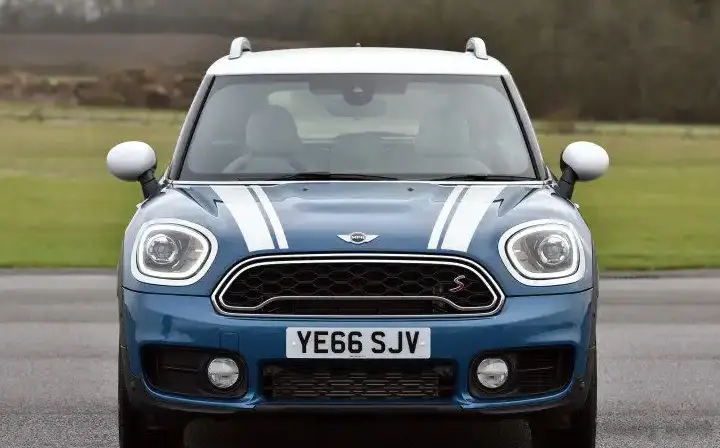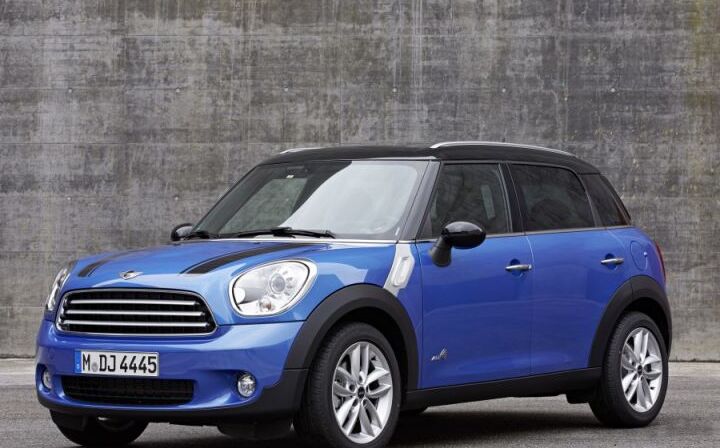
The Mini Countryman Cooper S ALL4, produced between 2010 and 2014 (R60 generation), represented Mini’s foray into the compact SUV segment. This variant, equipped with the 1.6-liter turbocharged N18B16A engine producing 184 horsepower, and paired with a six-speed manual transmission, occupied a mid-range position within the Countryman lineup, offering a balance between performance and practicality. It was positioned above the base Cooper models and below the more performance-focused John Cooper Works (JCW) variant. The ALL4 designation indicates a full-time all-wheel-drive system, enhancing traction and handling in various conditions.
Technical Specifications
| Brand | Mini |
| Model | Countryman |
| Generation | Countryman (R60) |
| Type (Engine) | Cooper S 1.6 (184 Hp) ALL4 |
| Start of production | 2010 |
| End of production | 2014 |
| Powertrain Architecture | Internal Combustion engine |
| Body type | SUV |
| Seats | 4-5 |
| Doors | 5 |
| Fuel consumption (urban) | 8.2 l/100 km (28.7 US mpg) |
| Fuel consumption (extra urban) | 5.8 l/100 km (40.6 US mpg) |
| Fuel consumption (combined) | 6.7 l/100 km (35.1 US mpg) |
| CO2 emissions | 157 g/km |
| Fuel Type | Petrol (Gasoline) |
| Acceleration 0 – 100 km/h | 7.9 sec |
| Acceleration 0 – 62 mph | 7.9 sec |
| Acceleration 0 – 60 mph | 7.5 sec |
| Maximum speed | 210 km/h (130.49 mph) |
| Emission standard | Euro 5 |
| Weight-to-power ratio | 7.5 kg/Hp |
| Weight-to-torque ratio | 5.8 kg/Nm |
| Power | 184 Hp @ 5500 rpm |
| Torque | 240 Nm @ 1600-5000 rpm (177.01 lb.-ft.) |
| Engine layout | Front, Transverse |
| Engine Model/Code | N18B16A |
| Engine displacement | 1598 cm3 (97.52 cu. in.) |
| Number of cylinders | 4 |
| Engine configuration | Inline |
| Cylinder Bore | 77 mm (3.03 in.) |
| Piston Stroke | 85.8 mm (3.38 in.) |
| Compression ratio | 10.5:1 |
| Number of valves per cylinder | 4 |
| Fuel injection system | Multi-port manifold injection |
| Engine aspiration | Turbocharger, Intercooler |
| Engine oil capacity | 4.2 l (4.44 US qt | 3.7 UK qt) |
| Coolant | 5.5 l (5.81 US qt | 4.84 UK qt) |
| Kerb Weight | 1380 kg (3042.38 lbs.) |
| Max. weight | 1840 kg (4056.51 lbs.) |
| Max load | 460 kg (1014.13 lbs.) |
| Trunk (boot) space – minimum | 350 l (12.36 cu. ft.) |
| Trunk (boot) space – maximum | 1170 l (41.32 cu. ft.) |
| Fuel tank capacity | 47 l (12.42 US gal | 10.34 UK gal) |
| Max. roof load | 75 kg (165.35 lbs.) |
| Permitted trailer load with brakes (12%) | 1000 kg (2204.62 lbs.) |
| Permitted trailer load without brakes | 500 kg (1102.31 lbs.) |
| Permitted towbar download | 75 kg (165.35 lbs.) |
| Length | 4110 mm (161.81 in.) |
| Width | 1789 mm (70.43 in.) |
| Height | 1561 mm (61.46 in.) |
| Wheelbase | 2595 mm (102.17 in.) |
| Front track | 1525 mm (60.04 in.) |
| Rear (Back) track | 1551 mm (61.06 in.) |
| Ride height (ground clearance) | 149 mm (5.87 in.) |
| Minimum turning circle (turning diameter) | 11.6 m (38.06 ft.) |
| Drive wheel | All wheel drive (4×4) |
| Number of gears and type of gearbox | 6 gears, manual transmission |
| Front suspension | Independent, type McPherson with coil spring and anti-roll bar |
| Rear suspension | Independent multi-link suspension |
| Front brakes | Ventilated discs |
| Rear brakes | Disc |
| Assisting systems | ABS (Anti-lock braking system) |
| Steering type | Steering rack and pinion |
| Tires size | 205/55 R17 91V RSC |
| Wheel rims size | 7J x 17 LM |
INTRODUCTION
The R60 Mini Countryman, launched in 2010, marked a significant expansion of the Mini brand, moving beyond its iconic small hatchback roots. The Cooper S ALL4 variant, powered by the 1.6-liter turbocharged engine, aimed to deliver a more engaging driving experience than the base Cooper models while offering the added security and capability of all-wheel drive. Built on the BMW-derived 1HX0/A3 platform, the Countryman sought to blend Mini’s characteristic styling and handling with the practicality of a small SUV. This particular configuration, with the manual transmission, was popular in Europe, offering a more driver-focused experience than the available automatic option.
Powertrain & Engine Architecture
At the heart of the Cooper S ALL4 lies the N18B16A 1.6-liter inline-four cylinder engine. This engine is a product of BMW’s engineering, featuring direct fuel injection, a twin-scroll turbocharger, and variable valve timing (Double VANOS). The N18 engine family was known for its responsiveness and relatively high specific output. The multi-port fuel injection system delivers fuel directly into the intake ports, optimizing combustion efficiency. The turbocharger provides a significant boost in power, delivering 184 horsepower at 5500 rpm and 240 Nm (177 lb-ft) of torque between 1600 and 5000 rpm. The six-speed manual transmission offers precise shifts and allows the driver to fully exploit the engine’s powerband. The ALL4 all-wheel-drive system utilizes a Haldex clutch to distribute torque between the front and rear axles, providing enhanced traction in slippery conditions.
Driving Characteristics
The Cooper S ALL4 with the manual transmission delivers a spirited driving experience. The turbocharger provides a noticeable surge of power, making the car feel quicker than its displacement might suggest. The six-speed gearbox is well-matched to the engine, offering close ratios that keep the engine in its optimal powerband. While not as overtly sporty as the JCW variant, the Cooper S ALL4 provides ample power for everyday driving and enjoyable weekend excursions. The ALL4 system enhances handling by distributing torque to all four wheels, reducing understeer and improving stability, particularly on corner exit. Compared to the automatic transmission version, the manual offers a more engaging and connected feel, allowing for greater driver control.
Equipment & Trim Levels
The Cooper S ALL4 typically came equipped with a generous array of standard features, including air conditioning, power windows and locks, a multi-function steering wheel, and a basic audio system. Upholstery was typically cloth, although leather options were available. Optional extras included a panoramic sunroof, navigation system, upgraded audio systems (Harman Kardon), heated seats, and parking sensors. The Countryman’s interior design retained Mini’s signature quirky styling, with a large central speedometer and toggle switches. Trim levels could vary slightly depending on the market, but generally, the Cooper S ALL4 represented a step up in terms of features and refinement compared to the base Cooper models.
Chassis & Braking
The Countryman’s chassis features independent suspension all around, with McPherson struts at the front and a multi-link setup at the rear. This configuration provides a good balance between ride comfort and handling. The Cooper S ALL4 typically featured slightly stiffer suspension components compared to the base Cooper models, enhancing its handling capabilities. Braking duties are handled by ventilated discs at the front and solid discs at the rear. Anti-lock brakes (ABS) are standard, providing enhanced stopping power and control. The steering is a rack-and-pinion system, offering precise and responsive steering feel.
Market Reception & Comparison
The Mini Countryman Cooper S ALL4 was generally well-received by automotive critics. It was praised for its stylish design, engaging driving dynamics, and practical interior. However, some critics noted that the rear seat space was somewhat limited and that the price was relatively high compared to other compact SUVs. Compared to the base Cooper models, the Cooper S ALL4 offered a significant performance upgrade. Compared to the JCW variant, it provided a more balanced blend of performance and comfort, making it a more suitable choice for everyday driving. Fuel economy was respectable for a turbocharged engine, averaging around 35 mpg in combined driving.
Legacy
The N18 engine, while generally reliable, has been known to exhibit some issues over time, including potential carbon buildup on the intake valves and occasional oil leaks. The ALL4 system has proven to be durable and reliable, providing consistent all-wheel-drive performance. Today, the R60 Mini Countryman Cooper S ALL4 remains a popular choice in the used car market, appealing to buyers who appreciate its unique styling, engaging driving dynamics, and practicality. Regular maintenance, including oil changes and inspections of the turbocharger and cooling system, is crucial to ensure the long-term reliability of this powertrain.