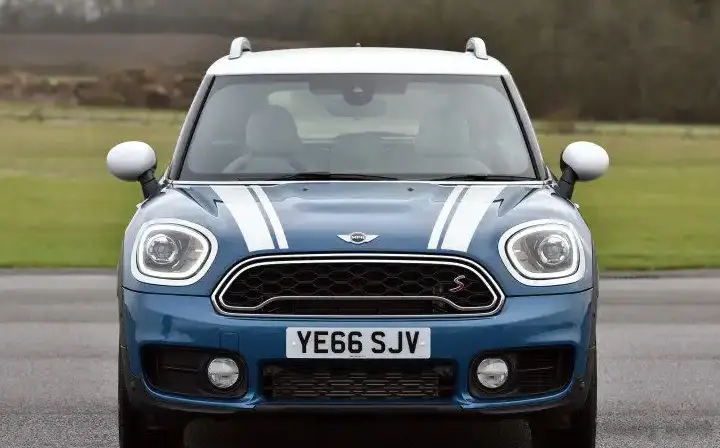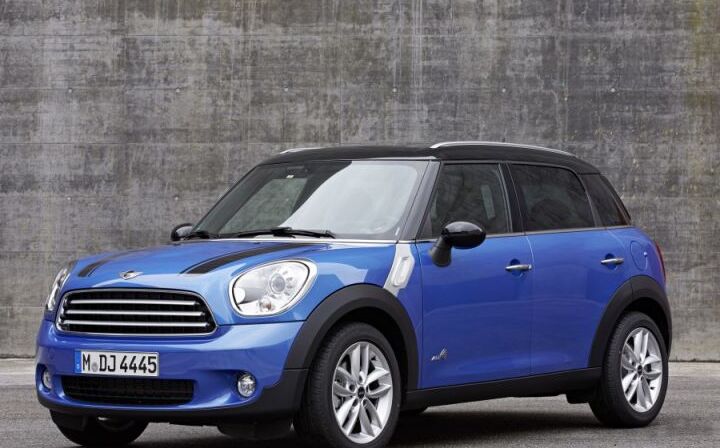
The Mini Countryman (R60) Cooper SD 2.0, produced from 2010 to 2014, represented Mini’s entry into the compact SUV segment. Positioned as a diesel-powered variant within the R60 Countryman lineup, it offered a blend of fuel efficiency and practicality, appealing to European buyers seeking a premium, small-sized crossover. This model utilized the BMW Group’s UKL platform, shared with other Mini and BMW models, and aimed to broaden the Mini brand’s appeal beyond its traditional, more compact offerings. The Cooper SD 2.0, with its 143 horsepower diesel engine, served as a mid-range option, slotting between the base Cooper models and the more performance-oriented John Cooper Works variants.
Technical Specifications
| Brand | Mini |
| Model | Countryman |
| Generation | Countryman (R60) |
| Type (Engine) | Cooper SD 2.0 (143 Hp) |
| Start of production | 2010 |
| End of production | 2014 |
| Powertrain Architecture | Internal Combustion engine |
| Body type | SUV |
| Seats | 4-5 |
| Doors | 5 |
| Fuel consumption (urban) | 5.2 l/100 km (45.2 US mpg, 54.3 UK mpg, 19.2 km/l) |
| Fuel consumption (extra urban) | 4.3 l/100 km (54.7 US mpg, 65.7 UK mpg, 23.3 km/l) |
| Fuel consumption (combined) | 4.6 l/100 km (51.1 US mpg, 61.4 UK mpg, 21.7 km/l) |
| CO2 emissions | 122 g/km |
| Fuel Type | Diesel |
| Acceleration 0 – 100 km/h | 9.3 sec |
| Acceleration 0 – 62 mph | 9.3 sec |
| Acceleration 0 – 60 mph | 8.8 sec |
| Maximum speed | 198 km/h (123.03 mph) |
| Emission standard | Euro 5 |
| Weight-to-power ratio | 9.2 kg/Hp, 108.3 Hp/tonne |
| Weight-to-torque ratio | 4.3 kg/Nm, 231.1 Nm/tonne |
| Power | 143 Hp @ 4000 rpm |
| Torque | 305 Nm @ 1750-2700 rpm (224.96 lb.-ft. @ 1750-2700 rpm) |
| Engine layout | Front, Transverse |
| Engine Model/Code | N47C20A |
| Engine displacement | 1995 cm3 (121.74 cu. in.) |
| Number of cylinders | 4 |
| Engine configuration | Inline |
| Cylinder Bore | 84 mm (3.31 in.) |
| Piston Stroke | 90 mm (3.54 in.) |
| Compression ratio | 16.5:1 |
| Number of valves per cylinder | 4 |
| Fuel injection system | Diesel Commonrail |
| Engine aspiration | Turbocharger, Intercooler |
| Engine oil capacity | 5.2 l (5.49 US qt | 4.58 UK qt) |
| Coolant | 5.4 l (5.71 US qt | 4.75 UK qt) |
| Kerb Weight | 1320 kg (2910.1 lbs.) |
| Max. weight | 1790 kg (3946.27 lbs.) |
| Max load | 470 kg (1036.17 lbs.) |
| Trunk (boot) space – minimum | 350 l (12.36 cu. ft.) |
| Trunk (boot) space – maximum | 1170 l (41.32 cu. ft.) |
| Fuel tank capacity | 47 l (12.42 US gal | 10.34 UK gal) |
| Max. roof load | 75 kg (165.35 lbs.) |
| Permitted trailer load with brakes (12%) | 1200 kg (2645.55 lbs.) |
| Permitted trailer load without brakes | 500 kg (1102.31 lbs.) |
| Permitted towbar download | 75 kg (165.35 lbs.) |
| Length | 4110 mm (161.81 in.) |
| Width | 1789 mm (70.43 in.) |
| Height | 1561 mm (61.46 in.) |
| Wheelbase | 2595 mm (102.17 in.) |
| Front track | 1525 mm (60.04 in.) |
| Rear (Back) track | 1551 mm (61.06 in.) |
| Ride height (ground clearance) | 149 mm (5.87 in.) |
| Minimum turning circle (turning diameter) | 11.6 m (38.06 ft.) |
| Drivetrain Architecture | The Internal combustion engine (ICE) drives the front wheels of the vehicle. |
| Drive wheel | Front wheel drive |
| Number of gears and type of gearbox | 6 gears, manual transmission |
| Front suspension | Independent, type McPherson with coil spring and anti-roll bar |
| Rear suspension | Independent multi-link suspension |
| Front brakes | Ventilated discs |
| Rear brakes | Disc |
| Assisting systems | ABS (Anti-lock braking system) |
| Steering type | Steering rack and pinion |
| Tires size | 205/55 R17 91V RSC |
| Wheel rims size | 7J x 17 LM |
Powertrain & Engine Architecture
The Cooper SD 2.0 was powered by the BMW N47C20A engine, a 2.0-liter inline-four cylinder diesel engine. This engine was a cornerstone of BMW and Mini’s diesel offerings during this period. It featured common rail direct injection, a turbocharger with an intercooler, and four valves per cylinder. The N47 engine family was known for its relatively sophisticated technology, including solenoid injectors and a timing chain. The 143 horsepower output was achieved at 4000 rpm, while the peak torque of 305 Nm (224.96 lb-ft) was available from 1750 to 2700 rpm. The engine’s design prioritized fuel efficiency and low-end torque, making it well-suited for everyday driving. The R60 Cooper SD 2.0 was equipped with a six-speed manual transmission as standard, delivering power to the front wheels.
Driving Characteristics
The 1.8L automatic Countryman Cooper SD offered a comfortable and refined driving experience. While not particularly sporty, the engine provided adequate power for most driving situations. The turbocharger minimized turbo lag, delivering a relatively linear power delivery. The six-speed automatic transmission was generally smooth-shifting, although it could occasionally feel hesitant during quick acceleration. Compared to the more powerful Cooper S or John Cooper Works models, the Cooper SD 2.0 felt noticeably slower, with a 0-60 mph time of around 8.8 seconds. However, its strength lay in its fuel economy and relaxed cruising ability. The gear ratios were tuned for efficiency, prioritizing lower engine speeds at highway speeds.
Equipment & Trim Levels
The Cooper SD 2.0 typically came standard with features such as air conditioning, power windows, power mirrors, a multi-function steering wheel, and a basic audio system. Higher trim levels offered options like leather upholstery, a panoramic sunroof, navigation system, parking sensors, and upgraded audio systems. Interior upholstery was typically cloth, with leather being an optional upgrade. The dashboard layout was characteristic of early 2010s Minis, featuring a large central speedometer and a smaller gauge for fuel and temperature. Optional extras included various customization packages, allowing buyers to personalize the exterior and interior of their vehicle.
Chassis & Braking
The Countryman R60 utilized a McPherson strut front suspension and a multi-link rear suspension. This setup provided a good balance between ride comfort and handling. The front suspension incorporated a stabilizer bar to reduce body roll. Braking duties were handled by ventilated discs at the front and solid discs at the rear. Anti-lock Braking System (ABS) was standard. The chassis was designed to provide a stable and predictable driving experience, although it wasn’t as agile as the smaller Mini Hatchback.
Market Reception & Comparison
The Cooper SD 2.0 was generally well-received by automotive critics for its fuel efficiency and practicality. It offered a compelling alternative to gasoline-powered rivals, particularly in Europe where diesel fuel was more prevalent and often cheaper. Compared to the Cooper S, the SD 2.0 sacrificed some performance in exchange for significantly better fuel economy. The manual transmission versions were often preferred by enthusiasts for their greater driver engagement, while the automatic offered convenience for everyday commuting. Reliability was generally good, although some owners reported issues with the diesel particulate filter (DPF) and the timing chain on the N47 engine.
Legacy
The Mini Countryman Cooper SD 2.0 remains a popular choice in the used car market, particularly for buyers seeking a fuel-efficient and stylish compact SUV. The N47 engine, while generally reliable, requires regular maintenance, including oil changes and DPF regeneration. The timing chain issue, while not universal, is a known concern and should be investigated during a pre-purchase inspection. Overall, the Cooper SD 2.0 represents a well-rounded and practical option within the R60 Countryman lineup, offering a blend of Mini’s signature style and BMW’s engineering expertise.