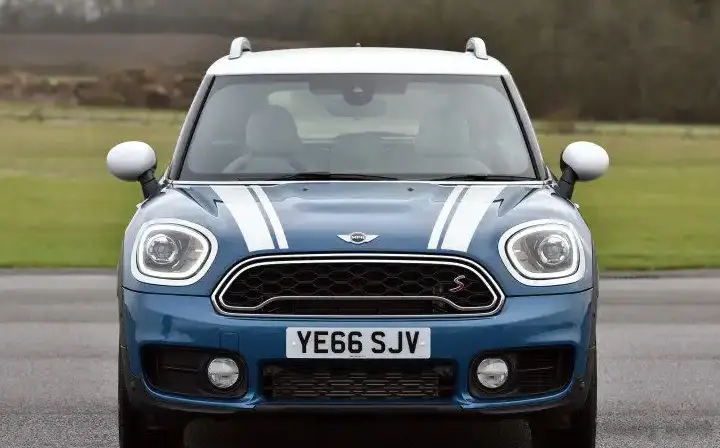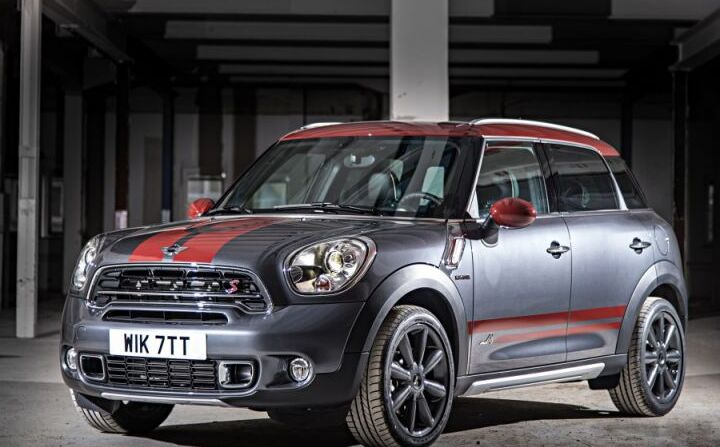
The Mini Countryman Cooper SD 2.0 (143 hp) represents a diesel-powered variant of the first-generation Countryman (R60), specifically the facelifted model produced from 2014 to 2016. Positioned as a mid-range offering within the Countryman lineup, it aimed to provide a balance between fuel efficiency, reasonable performance, and practicality for buyers seeking a compact SUV. This model played a significant role in expanding the Mini brand’s appeal beyond its traditional, more style-focused customer base, offering a more versatile vehicle for families and those requiring additional cargo space. It was primarily marketed in Europe and other regions where diesel engines held a strong market share.
Technical Specifications
| Brand | Mini |
| Model | Countryman |
| Generation | Countryman (R60, facelift 2014) |
| Type (Engine) | Cooper SD 2.0 (143 Hp) |
| Start of production | 2014 |
| End of production | 2016 |
| Powertrain Architecture | Internal Combustion engine |
| Body type | SUV |
| Seats | 5 |
| Doors | 5 |
| Fuel consumption (urban) | 5.1 l/100 km (46.1 US mpg, 55.4 UK mpg, 19.6 km/l) |
| Fuel consumption (extra urban) | 4.2 l/100 km (56 US mpg, 67.3 UK mpg, 23.8 km/l) |
| Fuel consumption (combined) | 4.5 l/100 km (52.3 US mpg, 62.8 UK mpg, 22.2 km/l) |
| CO2 emissions | 119 g/km |
| Fuel Type | Diesel |
| Acceleration 0 – 100 km/h | 9.2 sec |
| Acceleration 0 – 62 mph | 9.2 sec |
| Acceleration 0 – 60 mph | 8.7 sec |
| Maximum speed | 200 km/h (124.27 mph) |
| Emission standard | Euro 6 |
| Weight-to-power ratio | 9.2 kg/Hp, 108.3 Hp/tonne |
| Weight-to-torque ratio | 4.3 kg/Nm, 231.1 Nm/tonne |
| Power | 143 Hp @ 4000 rpm |
| Power per litre | 71.7 Hp/l |
| Torque | 305 Nm @ 1750-2700 rpm (224.96 lb.-ft. @ 1750-2700 rpm) |
| Engine layout | Front, Transverse |
| Engine Model/Code | N47C20A |
| Engine displacement | 1995 cm3 (121.74 cu. in.) |
| Number of cylinders | 4 |
| Engine configuration | Inline |
| Cylinder Bore | 84 mm (3.31 in.) |
| Piston Stroke | 90 mm (3.54 in.) |
| Compression ratio | 16.5:1 |
| Number of valves per cylinder | 4 |
| Fuel injection system | Diesel Commonrail |
| Engine aspiration | Turbocharger, Intercooler |
| Engine oil capacity | 5.2 l (5.49 US qt | 4.58 UK qt) |
| Coolant | 5.4 l (5.71 US qt | 4.75 UK qt) |
| Kerb Weight | 1320 kg (2910.1 lbs.) |
| Max. weight | 1830 kg (4034.46 lbs.) |
| Max load | 510 kg (1124.36 lbs.) |
| Trunk (boot) space – minimum | 350 l (12.36 cu. ft.) |
| Trunk (boot) space – maximum | 1170 l (41.32 cu. ft.) |
| Fuel tank capacity | 47 l (12.42 US gal | 10.34 UK gal) |
| Max. roof load | 75 kg (165.35 lbs.) |
| Permitted trailer load with brakes (12%) | 800 kg (1763.7 lbs.) |
| Permitted trailer load without brakes | 500 kg (1102.31 lbs.) |
| Permitted towbar download | 75 kg (165.35 lbs.) |
| Length | 4109 mm (161.77 in.) |
| Width | 1789 mm (70.43 in.) |
| Height | 1561 mm (61.46 in.) |
| Wheelbase | 2596 mm (102.2 in.) |
| Front track | 1529 mm (60.2 in.) |
| Rear (Back) track | 1556 mm (61.26 in.) |
| Ride height (ground clearance) | 150 mm (5.91 in.) |
| Minimum turning circle (turning diameter) | 11.6 m (38.06 ft.) |
| Drivetrain Architecture | The Internal combustion engine (ICE) drives the front wheels of the vehicle. |
| Drive wheel | Front wheel drive |
| Number of gears and type of gearbox | 6 gears, manual transmission |
| Front suspension | Independent, type McPherson with coil spring and anti-roll bar |
| Rear suspension | Independent multi-link suspension |
| Front brakes | Ventilated discs |
| Rear brakes | Disc |
| Assisting systems | ABS (Anti-lock braking system) |
| Steering type | Steering rack and pinion |
| Tires size | 205/55 R17 91V |
| Wheel rims size | 7J x 17 |
INTRODUCTION
The Mini Countryman Cooper SD 2.0 (143 hp) was introduced as part of the R60 facelift in 2014, building upon the original Countryman launched in 2010. This update brought styling revisions, interior enhancements, and engine refinements. The Cooper SD variant specifically targeted buyers seeking a fuel-efficient and reasonably powerful SUV. It sat between the Cooper D (typically around 116 hp) and the Cooper SD All4 (often with more power and all-wheel drive) in the Countryman range. The R60 Countryman was the first four-door Mini model, and the Cooper SD aimed to broaden the brand’s appeal by offering a more practical and versatile option than the traditional Mini hatchback.
Powertrain & Engine Architecture
At the heart of the Cooper SD 2.0 lies the BMW N47C20A engine, a 2.0-liter inline-four cylinder diesel engine. This engine is a common sight in various BMW and Mini models of the era. It utilizes a common rail direct injection system, delivering fuel directly into the combustion chamber at extremely high pressure for improved efficiency and reduced emissions. The N47 engine is known for its relatively sophisticated valvetrain, featuring double overhead camshafts (DOHC) and four valves per cylinder. A turbocharger with an intercooler is employed to boost power and torque. The 143 hp output is achieved at 4000 rpm, while the peak torque of 305 Nm (224.96 lb-ft) is available from 1750 to 2700 rpm, providing strong low-end and mid-range pull. The engine is transversely mounted in the front of the vehicle. The transmission offered was typically a 6-speed manual, although a 6-speed automatic transmission was also available as an option. The automatic transmission, while offering convenience, was sometimes criticized for being less responsive than the manual.
Driving Characteristics
The 143 hp Cooper SD 2.0 offered a comfortable and refined driving experience. While not overtly sporty, the engine provided sufficient power for everyday driving and highway cruising. The strong low-end torque made overtaking relatively effortless. Compared to the lower-powered Cooper D, the SD offered a noticeable performance improvement. However, it lacked the outright punch of the more powerful Cooper SD All4 variants. The 6-speed manual transmission allowed for precise gear selection, while the optional automatic, though smooth, could feel somewhat hesitant during quick acceleration. The gear ratios were tuned for fuel efficiency, prioritizing economy over outright performance. The front-wheel-drive configuration provided predictable handling, but could exhibit some torque steer under hard acceleration.
Equipment & Trim Levels
The Cooper SD 2.0 typically came equipped with a reasonable level of standard features. These included air conditioning, power windows, power mirrors, a basic audio system with USB connectivity, and alloy wheels. Interior upholstery was usually cloth, with leather options available as an upgrade. The dashboard layout was characteristic of the R60 Countryman, featuring a large central speedometer and a smaller gauge for fuel and temperature. Optional extras included a panoramic sunroof, navigation system, upgraded audio systems (Harman Kardon), parking sensors, and various customization options through the Mini Yours program. Trim levels could vary depending on the market, but generally offered packages that bundled together popular options.
Chassis & Braking
The Countryman Cooper SD 2.0 utilized an independent suspension setup at all four corners. The front suspension employed McPherson struts with coil springs and an anti-roll bar, while the rear featured a multi-link suspension system. This setup provided a good balance between ride comfort and handling. Braking duties were handled by ventilated discs at the front and solid discs at the rear. Anti-lock Braking System (ABS) was standard. The suspension tuning was geared towards comfort, resulting in a slightly softer ride compared to the more performance-oriented Mini models. Stabilizer bars helped to reduce body roll during cornering.
Market Reception & Comparison
The Countryman Cooper SD 2.0 was generally well-received by automotive critics. It was praised for its fuel efficiency, comfortable ride, and practical interior space. However, some reviewers noted that the engine could be somewhat noisy compared to some competitors. Compared to the petrol-powered Cooper S, the SD offered significantly better fuel economy, but lacked the same level of performance. Against other diesel SUVs in its class, the Countryman SD offered a more premium and stylish alternative, but often came at a higher price point. Reliability was generally good, although some owners reported issues with the diesel particulate filter (DPF) and turbocharger.
Legacy
The N47 engine, found in the Cooper SD 2.0, has proven to be a relatively durable powertrain, although it is not without its potential issues. The timing chain is a known weak point and requires periodic inspection and potential replacement. The diesel particulate filter (DPF) can also become clogged, particularly with frequent short trips. In the used car market, the Countryman Cooper SD 2.0 remains a popular choice for buyers seeking a fuel-efficient and stylish SUV. Its relatively low running costs and comfortable driving experience continue to appeal to a wide range of buyers. However, potential buyers should be aware of the potential maintenance costs associated with the diesel engine and its components.