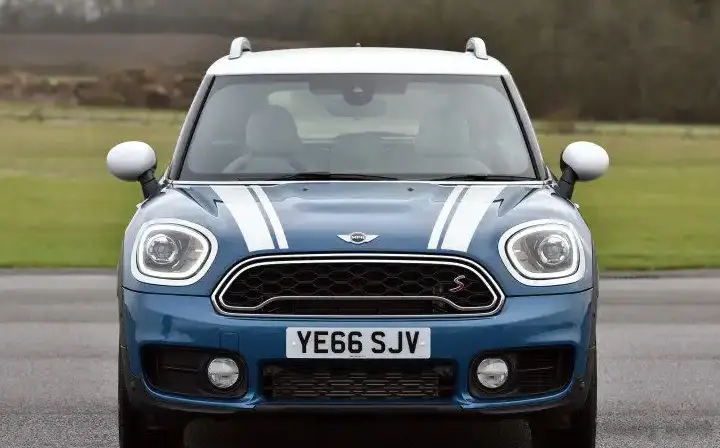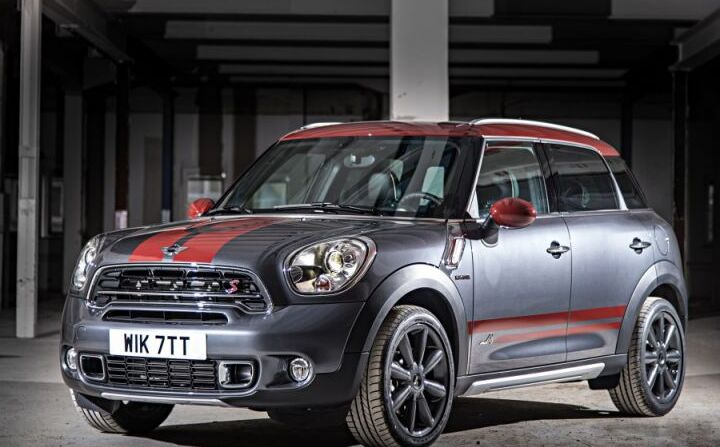
The Mini Countryman JCW 1.6 Automatic, produced from 2014 to 2016, represents the performance-oriented variant of the second-generation Countryman (R60) following its facelift. Positioned as the flagship trim, it aimed to deliver a more engaging driving experience than the standard Countryman models while retaining the vehicle’s practicality and distinctive Mini styling. This model occupied the top tier of the Countryman lineup, appealing to buyers seeking a sporty compact SUV. It built upon the foundation of the R60 platform, shared with the BMW X1, but distinguished itself through its powerful engine, upgraded suspension, and aggressive styling cues.
Technical Specifications
| Brand | Mini |
| Model | Countryman |
| Generation | Countryman (R60, facelift 2014) |
| Type (Engine) | JCW 1.6 (218 Hp) Automatic |
| Start of production | 2014 |
| End of production | 2016 |
| Powertrain Architecture | Internal Combustion engine |
| Body type | SUV |
| Seats | 5 |
| Doors | 5 |
| Fuel consumption (urban) | 10.4 l/100 km (22.6 US mpg, 27.2 UK mpg, 9.6 km/l) |
| Fuel consumption (extra urban) | 5.9 l/100 km (39.9 US mpg, 47.9 UK mpg, 16.9 km/l) |
| Fuel consumption (combined) | 7.5 l/100 km (31.4 US mpg, 37.7 UK mpg, 13.3 km/l) |
| CO2 emissions | 175 g/km |
| Fuel Type | Petrol (Gasoline) |
| Acceleration 0 – 100 km/h | 6.9 sec |
| Acceleration 0 – 62 mph | 6.9 sec |
| Acceleration 0 – 60 mph | 6.6 sec |
| Maximum speed | 225 km/h (139.81 mph) |
| Emission standard | Euro 6 |
| Weight-to-power ratio | 6.6 kg/Hp, 152.4 Hp/tonne |
| Weight-to-torque ratio | 4.8 kg/Nm, 209.8 Nm/tonne |
| Power | 218 Hp @ 6000 rpm |
| Power per litre | 136.4 Hp/l |
| Torque | 300 Nm @ 2100-4500 rpm (221.27 lb.-ft. @ 2100-4500 rpm) |
| Engine layout | Front, Transverse |
| Engine Model/Code | N18B16C |
| Engine displacement | 1598 cm3 (97.52 cu. in.) |
| Number of cylinders | 4 |
| Engine configuration | Inline |
| Cylinder Bore | 77 mm (3.03 in.) |
| Piston Stroke | 85.8 mm (3.38 in.) |
| Compression ratio | 10.5:1 |
| Number of valves per cylinder | 4 |
| Fuel injection system | Direct injection |
| Engine aspiration | Twin-power turbo, Intercooler |
| Engine oil capacity | 4.2 l (4.44 US qt | 3.7 UK qt) |
| Coolant | 6.5 l (6.87 US qt | 5.72 UK qt) |
| Kerb Weight | 1430 kg (3152.61 lbs.) |
| Max. weight | 1940 kg (4276.97 lbs.) |
| Max load | 510 kg (1124.36 lbs.) |
| Trunk (boot) space – minimum | 350 l (12.36 cu. ft.) |
| Trunk (boot) space – maximum | 1170 l (41.32 cu. ft.) |
| Fuel tank capacity | 47 l (12.42 US gal | 10.34 UK gal) |
| Length | 4133 mm (162.72 in.) |
| Width | 1789 mm (70.43 in.) |
| Height | 1549 mm (60.98 in.) |
| Wheelbase | 2596 mm (102.2 in.) |
| Front track | 1527 mm (60.12 in.) |
| Rear (Back) track | 1554 mm (61.18 in.) |
| Ride height (ground clearance) | 128 mm (5.04 in.) |
| Minimum turning circle | 11.6 m (38.06 ft.) |
| Drivetrain Architecture | The Internal combustion engine (ICE) drives the front wheels of the vehicle. |
| Drive wheel | Front wheel drive |
| Number of gears and type of gearbox | 6 gears, automatic transmission |
| Front suspension | Independent, type McPherson with coil spring and anti-roll bar |
| Rear suspension | Independent multi-link suspension |
| Front brakes | Ventilated discs |
| Rear brakes | Disc |
| Assisting systems | ABS (Anti-lock braking system) |
| Steering type | Steering rack and pinion |
| Tires size | 225/45 R18 91W |
| Wheel rims size | 7.5J x 18 |
Powertrain & Engine Architecture
At the heart of the Countryman JCW Automatic lies the N18B16C 1.6-liter turbocharged inline-four cylinder engine. This engine is a member of the BMW/PSA Prince engine family, known for its direct injection and twin-scroll turbocharging. The direct injection system, coupled with the turbocharger, allows for precise fuel delivery and increased power output. The engine produces 218 horsepower at 6000 rpm and 300 Nm (221 lb-ft) of torque between 2100 and 4500 rpm. The six-speed automatic transmission, sourced from Aisin, was specifically tuned to handle the increased power and torque of the JCW engine. While not known for lightning-fast shifts, it provided smooth and predictable gear changes, prioritizing drivability over outright performance.
Driving Characteristics
The JCW 1.6 Automatic offered a noticeable step up in performance compared to the standard Countryman models. Acceleration from 0 to 60 mph took approximately 6.6 seconds, and the car could reach a top speed of 139.81 mph. The automatic transmission, while smooth, did slightly diminish the sense of control compared to the available six-speed manual. The gear ratios were optimized for a balance between acceleration and fuel efficiency, but the engine sometimes felt strained during aggressive acceleration. The JCW suspension, featuring stiffer springs and dampers, provided improved handling and reduced body roll, making the car more engaging to drive on winding roads. However, this came at the expense of some ride comfort.
Equipment & Trim Levels
The JCW Automatic trim came standard with a comprehensive list of features, including sport seats, a sport steering wheel, and unique JCW styling cues both inside and out. Standard interior features included automatic climate control, a 6.5-inch infotainment system with Mini Connected, and Bluetooth connectivity. Optional extras included a panoramic sunroof, navigation system, Harman Kardon premium sound system, and various customization options through the Mini Yours program. Exterior features included JCW-specific aerodynamic body kit, 18-inch alloy wheels, and chrome exhaust outlets.
Chassis & Braking
The Countryman JCW featured an independent suspension setup, with McPherson struts at the front and a multi-link system at the rear. The JCW variant received stiffer springs and dampers compared to the standard Countryman, along with a thicker front stabilizer bar, to improve handling and reduce body roll. The braking system consisted of ventilated discs at the front and solid discs at the rear. ABS (Anti-lock Braking System) was standard. The suspension tuning aimed to provide a balance between sporty handling and acceptable ride comfort, though the firmer setup could be noticeable on rough road surfaces.
Market Reception & Comparison
The Countryman JCW 1.6 Automatic was generally well-received by automotive critics, who praised its performance and handling. However, some reviewers noted that the automatic transmission detracted from the overall driving experience compared to the manual version. Fuel economy was respectable for a performance SUV, averaging around 31.4 US mpg in combined driving. Compared to other trims, the JCW offered a significant performance upgrade but came at a higher price point. The standard Countryman models provided better fuel economy and a more comfortable ride, while the Cooper S offered a middle ground between performance and efficiency.
Legacy
The N18 engine, while generally reliable, is known to be susceptible to certain issues, including carbon buildup on the intake valves and potential oil leaks. Regular maintenance, including oil changes and fuel system cleaning, is crucial for long-term reliability. The six-speed Aisin automatic transmission is generally considered durable, but proper fluid changes are essential. Today, the Countryman JCW 1.6 Automatic holds a moderate position in the used car market, appealing to buyers seeking a sporty and stylish compact SUV. Its combination of performance, practicality, and distinctive Mini design continues to make it a desirable option for enthusiasts.