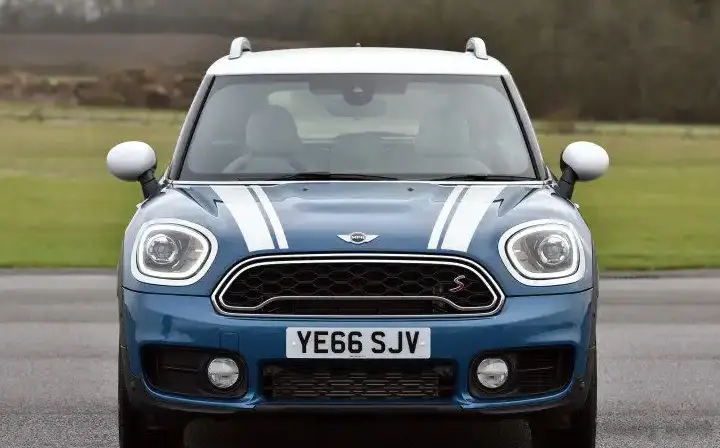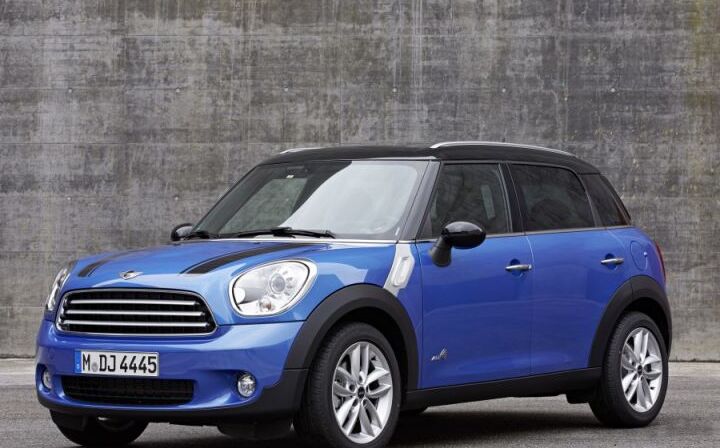
The Mini Countryman (R60) One 1.6, produced between 2010 and 2014, represented the entry point into the Countryman range, Mini’s first foray into the compact SUV segment. This variant, powered by a 1.6-liter naturally aspirated engine producing 98 horsepower, was primarily aimed at buyers seeking a stylish and fuel-efficient vehicle with the iconic Mini design. It served as a more accessible alternative to the more powerful Cooper and Cooper S models, offering a balance between affordability and the brand’s characteristic driving experience.
Technical Specifications
| Brand | Mini |
| Model | Countryman |
| Generation | Countryman (R60) |
| Type (Engine) | One 1.6 (98 Hp) |
| Start of production | 2010 |
| End of production | 2014 |
| Powertrain Architecture | Internal Combustion engine |
| Body type | SUV |
| Seats | 4-5 |
| Doors | 5 |
| Fuel consumption (economy) – urban | 7.4 l/100 km (31.8 US mpg) |
| Fuel consumption (economy) – extra urban | 5.2 l/100 km (45.2 US mpg) |
| Fuel consumption (economy) – combined | 6 l/100 km (39.2 US mpg) |
| CO2 emissions | 139 g/km |
| Fuel Type | Petrol (Gasoline) |
| Acceleration 0 – 100 km/h | 11.9 sec |
| Acceleration 0 – 62 mph | 11.9 sec |
| Acceleration 0 – 60 mph | 11.3 sec |
| Maximum speed | 173 km/h (107.5 mph) |
| Emission standard | Euro 5 |
| Weight-to-power ratio | 12.9 kg/Hp |
| Weight-to-torque ratio | 8.3 kg/Nm |
| Power | 98 Hp @ 6000 rpm |
| Torque | 153 Nm @ 3000 rpm (112.85 lb.-ft. @ 3000 rpm) |
| Engine layout | Front, Transverse |
| Engine Model/Code | N16B16A |
| Engine displacement | 1598 cm3 (97.52 cu. in.) |
| Number of cylinders | 4 |
| Engine configuration | Inline |
| Cylinder Bore | 77 mm (3.03 in.) |
| Piston Stroke | 85.8 mm (3.38 in.) |
| Compression ratio | 11:1 |
| Number of valves per cylinder | 4 |
| Fuel injection system | Multi-port manifold injection |
| Engine aspiration | Naturally aspirated engine |
| Engine oil capacity | 4.2 l (4.44 US qt | 3.7 UK qt) |
| Coolant | 5.5 l (5.81 US qt | 4.84 UK qt) |
| Kerb Weight | 1265 kg (2788.85 lbs.) |
| Max. weight | 1735 kg (3825.02 lbs.) |
| Max load | 470 kg (1036.17 lbs.) |
| Trunk (boot) space – minimum | 350 l (12.36 cu. ft.) |
| Trunk (boot) space – maximum | 1170 l (41.32 cu. ft.) |
| Fuel tank capacity | 47 l (12.42 US gal | 10.34 UK gal) |
| Max. roof load | 75 kg (165.35 lbs.) |
| Length | 4097 mm (161.3 in.) |
| Width | 1789 mm (70.43 in.) |
| Height | 1561 mm (61.46 in.) |
| Wheelbase | 2595 mm (102.17 in.) |
| Front track | 1534 mm (60.39 in.) |
| Rear (Back) track | 1559 mm (61.38 in.) |
| Ride height (ground clearance) | 149 mm (5.87 in.) |
| Minimum turning circle (turning diameter) | 11.6 m (38.06 ft.) |
| Drivetrain Architecture | Front wheel drive |
| Number of gears and type of gearbox | 6 gears, manual transmission |
| Front suspension | Independent, type McPherson with coil spring and anti-roll bar |
| Rear suspension | Independent multi-link suspension |
| Front brakes | Ventilated discs |
| Rear brakes | Disc |
| Assisting systems | ABS (Anti-lock braking system) |
| Steering type | Steering rack and pinion |
| Tires size | 205/60 R16 92H |
| Wheel rims size | 6.5J x 16 |
Positioning and Market Role
The Countryman One 1.6 occupied the base trim level within the R60 Countryman lineup. It was positioned below the Cooper (with its 1.6-liter turbocharged engine) and the performance-oriented Cooper S (featuring a more potent 1.6-liter turbo). The One was designed to attract buyers prioritizing affordability and fuel economy, while still wanting the Mini brand’s distinctive styling and a degree of practicality offered by the SUV body style. In European markets, where smaller cars are more prevalent, it provided a compelling entry point into the premium compact SUV segment. In the US, it appealed to those seeking a unique and stylish alternative to more conventional offerings.
Engine and Performance
The heart of the Countryman One 1.6 is the N16B16A 1.6-liter inline-four cylinder engine. This engine, part of BMW’s (Mini’s parent company) modular engine family, is naturally aspirated, meaning it doesn’t rely on a turbocharger or supercharger for forced induction. While producing a modest 98 horsepower and 113 lb-ft of torque, it offered a relatively smooth and linear power delivery. Acceleration from 0 to 60 mph took around 11.3 seconds, and it reached a top speed of 107.5 mph. These figures weren’t particularly impressive, but were adequate for everyday driving and commuting. The engine’s focus was on efficiency, achieving combined fuel economy figures of around 39.2 US mpg.
Comparison with Other Countryman Variants
The Countryman One 1.6 differed significantly from its siblings. The Cooper, with its turbocharged engine, offered a substantial power increase – around 172 horsepower – resulting in much quicker acceleration and a more engaging driving experience. However, this came at a higher price point and slightly reduced fuel economy. The Cooper S, boasting over 181 horsepower, was the performance leader of the range, offering a sporty and dynamic driving experience.
In terms of maintenance, the One 1.6’s naturally aspirated engine generally proved to be more reliable and less prone to issues than the turbocharged engines found in the Cooper and Cooper S models. Turbochargers add complexity and potential failure points. However, the Cooper and Cooper S models often featured more comprehensive standard equipment, justifying their higher price tags for some buyers. The One 1.6’s target audience was more focused on value and practicality, prioritizing fuel efficiency and lower running costs over outright performance.
Technology and Features
The Countryman One 1.6, even in its base trim, offered a respectable level of standard equipment. Features typically included air conditioning, power windows and locks, a CD/MP3 stereo system, and ABS brakes. Optional extras, such as alloy wheels, a panoramic sunroof, and navigation system, were available to enhance the vehicle’s appeal. The R60 Countryman also introduced Mini’s signature center-mounted speedometer and a range of customization options, allowing buyers to personalize their vehicles to their tastes. The interior design, while compact, was well-executed and offered a premium feel.
Legacy and Impact
The Mini Countryman (R60) One 1.6 played a crucial role in establishing Mini as a serious player in the compact SUV market. It broadened the brand’s appeal beyond its traditional customer base, attracting buyers who desired a stylish, practical, and fuel-efficient vehicle. While not the fastest or most powerful Countryman variant, it offered a compelling entry point into the range and demonstrated Mini’s ability to create a versatile and desirable vehicle. The R60 generation, and the One 1.6 specifically, laid the groundwork for the continued success of the Countryman model in subsequent generations.