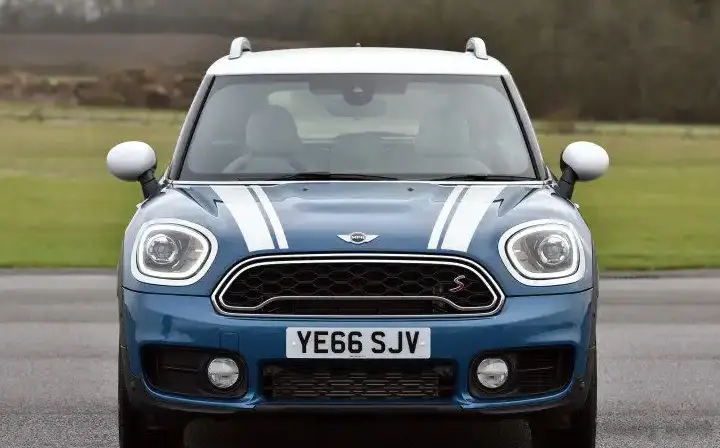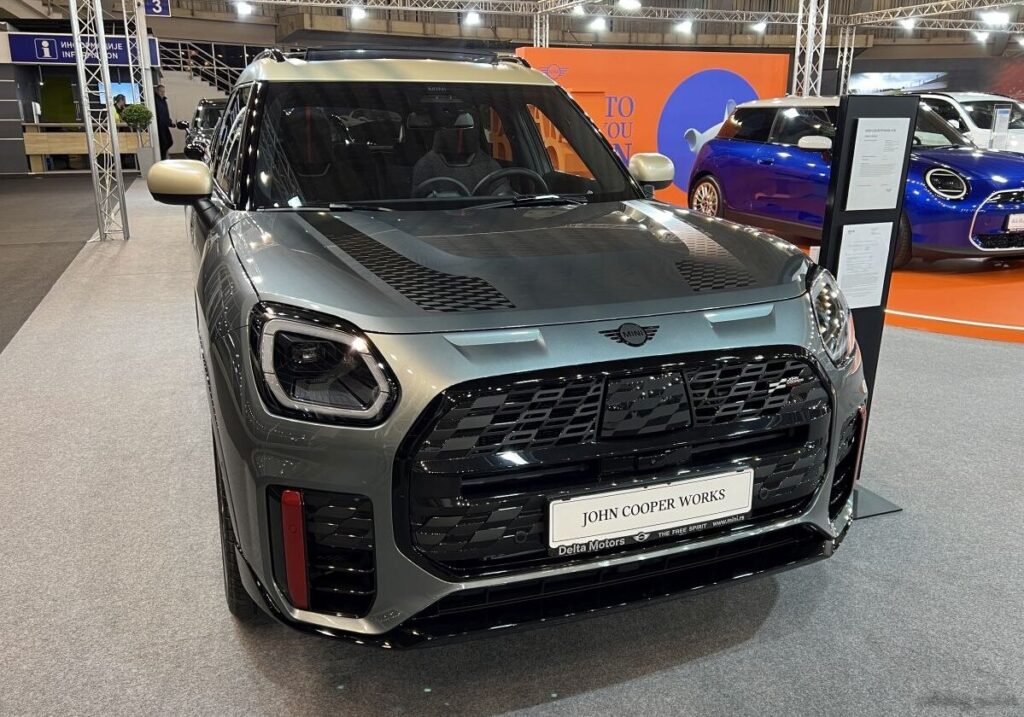
The Mini Countryman (U25) D 2.0 (163 Hp) Mild Hybrid Steptronic represents the diesel-powered, mild-hybrid variant of the second-generation Countryman, launched in February 2024. Positioned as a fuel-efficient option within the Countryman lineup, it caters to buyers seeking a balance between practicality, driving dynamics, and reduced emissions. This model builds upon the U25 platform, shared with other BMW Group vehicles, and integrates a 48-volt mild hybrid system to enhance efficiency and responsiveness. It serves as a key offering in European markets where diesel engines remain popular, and increasingly, in regions focusing on lower carbon footprints.
Technical Specifications
| Brand | Mini |
| Model | Countryman |
| Generation | Countryman (U25) |
| Type (Engine) | D 2.0 (163 Hp) Mild Hybrid Steptronic |
| Start of production | February, 2024 |
| Powertrain Architecture | MHEV (Mild Hybrid Electric Vehicle) |
| Body type | SUV |
| Seats | 5 |
| Doors | 5 |
| Combined fuel consumption (WLTP) | 4.6-4.8 l/100 km (51.1 – 49 US mpg) |
| CO2 emissions (WLTP) | 120-127 g/km |
| Fuel Type | Diesel |
| Acceleration 0 – 100 km/h | 8.5 sec |
| Acceleration 0 – 62 mph | 8.5 sec |
| Acceleration 0 – 60 mph | 8.1 sec |
| Maximum speed | 208 km/h (129.25 mph) |
| Emission standard | Euro 6e |
| Weight-to-power ratio | 9.9 kg/Hp |
| Weight-to-torque ratio | 4.1 kg/Nm |
| Gross battery capacity | 0.9 kWh |
| Battery technology | Lithium-ion (Li-Ion) |
| Electric motor power | 20 Hp |
| Electric motor Torque | 55 Nm (40.57 lb.-ft.) |
| System power | 163 Hp |
| System torque | 400 Nm (295.02 lb.-ft.) |
| Power | 150 Hp @ 3750-4000 rpm |
| Torque | 360 Nm @ 1500-2500 rpm (265.52 lb.-ft. @ 1500-2500 rpm) |
| Engine layout | Front, Transverse |
| Engine Model/Code | B47C20U2 |
| Engine displacement | 1995 cm3 (121.74 cu. in.) |
| Number of cylinders | 4 |
| Engine configuration | Inline |
| Cylinder Bore | 84 mm (3.31 in.) |
| Piston Stroke | 90 mm (3.54 in.) |
| Compression ratio | 16.5:1 |
| Number of valves per cylinder | 4 |
| Fuel injection system | Diesel Commonrail |
| Engine aspiration | Turbocharger, Intercooler |
| Kerb Weight | 1620 kg (3571.49 lbs.) |
| Max. weight | 2155 kg (4750.96 lbs.) |
| Max load | 535 kg (1179.47 lbs.) |
| Trunk (boot) space – minimum | 450 l (15.89 cu. ft.) |
| Trunk (boot) space – maximum | 1450 l (51.21 cu. ft.) |
| Fuel tank capacity | 45 l (11.89 US gal | 9.9 UK gal) |
| Length | 4444 mm (174.96 in.) |
| Width | 1843 mm (72.56 in.) |
| Width including mirrors | 2069 mm (81.46 in.) |
| Height | 1661 mm (65.39 in.) |
| Wheelbase | 2692 mm (105.98 in.) |
| Minimum turning circle | 11.6 m (38.06 ft.) |
| Drive wheel | Front wheel drive |
| Number of gears | 7 |
| Gearbox type | automatic transmission Steptronic |
| Front brakes | Ventilated discs |
| Rear brakes | Disc |
| Tires size | 205/65 R17 |
| Wheel rims size | 17 |
INTRODUCTION
The Mini Countryman U25 D 2.0 (163 Hp) Mild Hybrid Steptronic, introduced in 2024, is a significant iteration of Mini’s popular subcompact SUV. It falls within the second generation of the Countryman (U25 chassis code), which debuted in 2017 and received a substantial refresh for the 2024 model year. This particular variant combines a 2.0-liter turbocharged diesel engine with a 48-volt mild hybrid system and a seven-speed Steptronic automatic transmission. It’s designed to appeal to drivers prioritizing fuel economy and refinement without sacrificing the brand’s characteristic go-kart handling. The U25 Countryman shares its platform with several BMW models, benefiting from the group’s engineering expertise and component sharing.
Powertrain & Engine Architecture
At the heart of the Countryman D 2.0 lies the BMW Group’s B47C20U2 engine, a 2.0-liter inline-four cylinder diesel. This engine utilizes a common-rail direct injection system, delivering fuel at extremely high pressure for optimized combustion. A single turbocharger with an intercooler provides forced induction, boosting power and torque. The engine produces 150 horsepower at 3750-4000 rpm and 360 Nm (265.52 lb-ft) of torque between 1500-2500 rpm. The mild hybrid system, incorporating a 48-volt starter-generator, adds an additional 20 horsepower and 55 Nm (40.57 lb-ft) of torque. This system allows for extended start-stop functionality, regenerative braking, and a slight power boost during acceleration. The seven-speed Steptronic automatic transmission is a torque-converter type, known for its smooth shifts and responsiveness. It’s programmed to prioritize fuel efficiency while still providing adequate performance.
Driving Characteristics
The 163 hp diesel-mild hybrid powertrain delivers a balanced driving experience. Acceleration from 0-100 km/h (0-62 mph) takes 8.5 seconds, which is respectable for a small SUV. The mild hybrid system helps to mitigate turbo lag, providing a more immediate response to throttle inputs. The Steptronic transmission shifts smoothly and efficiently, and the gear ratios are well-suited for both city driving and highway cruising. While not as sporty as the higher-output Countryman variants (like the John Cooper Works), this version offers sufficient power for everyday driving and occasional longer journeys. The front-wheel-drive configuration contributes to a lighter overall weight, enhancing agility. The suspension is tuned for comfort, but still provides a reasonably engaging driving experience, typical of the Mini brand.
Equipment & Trim Levels
The Countryman D 2.0 (163 Hp) Mild Hybrid Steptronic typically comes standard with a comprehensive suite of features. These include automatic climate control, a touchscreen infotainment system with Apple CarPlay and Android Auto compatibility, and a range of safety features such as automatic emergency braking and lane departure warning. Interior upholstery is generally a combination of cloth and leatherette, with options for full leather available. Dashboard trim can be customized with various finishes. Common optional extras include a panoramic sunroof, a premium sound system, adaptive cruise control, and parking assist. Trim levels vary by market, but generally offer progressive upgrades in terms of interior materials, exterior styling, and technology features.
Chassis & Braking
The Countryman U25 utilizes a MacPherson strut front suspension and a multi-link rear suspension. This setup provides a good balance between ride comfort and handling precision. The front brakes are ventilated discs, while the rear brakes are solid discs. Anti-lock Braking System (ABS) is standard, along with Electronic Stability Control (ESC). The steering is electric power-assisted, offering a precise and responsive feel. The standard tire size is 205/65 R17, mounted on 17-inch alloy wheels. The chassis is reinforced to accommodate the added weight of the mild hybrid system components.
Market Reception & Comparison
The Countryman D 2.0 (163 Hp) Mild Hybrid Steptronic has been generally well-received by automotive critics. Its fuel efficiency is a major selling point, with combined fuel consumption figures ranging from 4.6 to 4.8 liters per 100 kilometers. Compared to the petrol-powered Countryman variants, the diesel offers significantly better fuel economy. It also provides more torque, resulting in stronger acceleration at lower speeds. Compared to the higher-output diesel variants (like the D 2.0 190 hp), this version offers a more affordable price point and slightly lower running costs. However, it lacks the outright performance of its more powerful sibling. Reliability has been generally good, with the BMW Group’s diesel engines proving to be durable and long-lasting.
Legacy
The B47 engine family, including the B47C20U2 used in this Countryman, has a proven track record for reliability, although some early versions experienced issues with timing chain tensioners. The integration of mild hybrid technology represents a step towards greater electrification and reduced emissions. On the used car market, the Countryman D 2.0 (163 Hp) Mild Hybrid Steptronic is expected to hold its value reasonably well, particularly as demand for fuel-efficient vehicles continues to grow. Its combination of practicality, driving dynamics, and relatively low running costs makes it an attractive option for buyers seeking a versatile and economical subcompact SUV.