
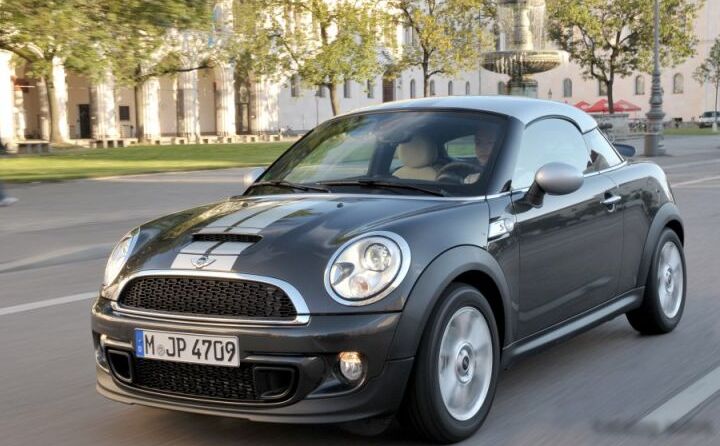
The Mini Coupe (R58) Cooper SD 2.0, produced between 2011 and 2015, represented a unique offering within the second-generation Mini lineup (R56). Positioned as a sporty, two-seater coupe, it aimed to provide a more focused driving experience than the standard Mini hatchback or convertible. The “SD” designation indicated a diesel engine, specifically the 2.0-liter turbocharged diesel, producing 143 horsepower. This variant occupied a middle ground in the Coupe range, offering a balance between performance and fuel efficiency, appealing to buyers seeking a distinctive and economical sports coupe. It was built on the R58 platform, a derivative of the broader R56 chassis shared with other second-generation Minis.
Technical Specifications
| Brand | Mini |
| Model | Coupe |
| Generation | Coupe (R58) |
| Type (Engine) | Cooper SD 2.0 (143 Hp) |
| Start of production | 2011 |
| End of production | 2015 |
| Powertrain Architecture | Internal Combustion engine |
| Body type | Coupe |
| Seats | 2 |
| Doors | 2 |
| Fuel consumption (economy) – urban (NEDC) | 5.1 l/100 km (46.1 US mpg, 55.4 UK mpg, 19.6 km/l) |
| Fuel consumption (economy) – extra urban (NEDC) | 3.9 l/100 km (60.3 US mpg, 72.4 UK mpg, 25.6 km/l) |
| Fuel consumption (economy) – combined (NEDC) | 4.3 l/100 km (54.7 US mpg, 65.7 UK mpg, 23.3 km/l) |
| CO2 emissions (NEDC) | 114 g/km |
| Fuel Type | Diesel |
| Acceleration 0 – 100 km/h | 7.9 sec |
| Acceleration 0 – 62 mph | 7.9 sec |
| Acceleration 0 – 60 mph | 7.5 sec |
| Maximum speed | 216 km/h (134.22 mph) |
| Emission standard | Euro 5 |
| Weight-to-power ratio | 8.2 kg/Hp, 121.7 Hp/tonne |
| Weight-to-torque ratio | 3.9 kg/Nm, 259.6 Nm/tonne |
| Power | 143 Hp @ 4000 rpm |
| Torque | 305 Nm @ 1750-2700 rpm (224.96 lb.-ft. @ 1750-2700 rpm) |
| Engine layout | Front, Transverse |
| Engine Model/Code | N47C20 |
| Engine displacement | 1995 cm3 (121.74 cu. in.) |
| Number of cylinders | 4 |
| Engine configuration | Inline |
| Cylinder Bore | 84 mm (3.31 in.) |
| Piston Stroke | 90 mm (3.54 in.) |
| Compression ratio | 16.5:1 |
| Number of valves per cylinder | 4 |
| Fuel injection system | Diesel Commonrail |
| Engine aspiration | Turbocharger, Intercooler |
| Valvetrain | DOHC |
| Engine oil capacity | 5.2 l (5.49 US qt | 4.58 UK qt) |
| Coolant | 6.6 l (6.97 US qt | 5.81 UK qt) |
| Kerb Weight | 1175 kg (2590.43 lbs.) |
| Max. weight | 1465 kg (3229.77 lbs.) |
| Max load | 290 kg (639.34 lbs.) |
| Trunk (boot) space – minimum | 290 l (10.24 cu. ft.) |
| Fuel tank capacity | 40 l (10.57 US gal | 8.8 UK gal) |
| Length | 3734 mm (147.01 in.) |
| Width | 1683 mm (66.26 in.) |
| Height | 1384 mm (54.49 in.) |
| Wheelbase | 2467 mm (97.13 in.) |
| Front track | 1453 mm (57.2 in.) |
| Rear (Back) track | 1461 mm (57.52 in.) |
| Front overhang | 696 mm (27.4 in.) |
| Rear overhang | 571 mm (22.48 in.) |
| Ride height (ground clearance) | 139 mm (5.47 in.) |
| Drag coefficient (Cd) | 0.35 |
| Minimum turning circle (turning diameter) | 10.7 m (35.1 ft.) |
| Drivetrain Architecture | The Internal combustion engine (ICE) drives the front wheels of the vehicle. |
| Drive wheel | Front wheel drive |
| Number of gears and type of gearbox | 6 gears, manual transmission |
| Front suspension | Independent type McPherson |
| Rear suspension | Independent multi-link suspension |
| Front brakes | Ventilated discs |
| Rear brakes | Disc |
| Assisting systems | ABS (Anti-lock braking system) |
| Steering type | Steering rack and pinion |
| Power steering | Electric Steering |
| Tires size | 195/55 R16 |
| Wheel rims size | 6.5J x 16 |
Powertrain & Engine Architecture
The heart of the Cooper SD 2.0 was the BMW-sourced N47C20 engine. This 2.0-liter inline-four diesel engine utilized common-rail direct injection, delivering fuel at extremely high pressure for optimized combustion. A single turbocharger with an intercooler boosted power output, providing 143 horsepower and a substantial 305 Nm (224.96 lb-ft) of torque. The engine featured a double overhead camshaft (DOHC) valvetrain with four valves per cylinder, contributing to its efficiency and responsiveness. The engine was transversely mounted in the front of the vehicle. The six-speed manual transmission was standard, providing precise gear changes and contributing to the car’s sporty feel. While an automatic transmission was offered on other Cooper models, it wasn’t typically paired with the SD variant in the US market.
Driving Characteristics
The Cooper SD 2.0 offered a unique driving experience. The high torque output of the diesel engine, available from as low as 1750 rpm, provided strong acceleration in everyday driving situations. While not as outright quick as the petrol-powered Cooper S, the SD offered a more relaxed and efficient driving style. The manual transmission allowed for good driver engagement, and the relatively lightweight chassis contributed to nimble handling. The gear ratios were tuned to prioritize fuel economy and mid-range acceleration, making it well-suited for highway cruising and city driving. Compared to the standard Cooper, the SD provided a more refined and less frantic experience, appealing to drivers who valued comfort and efficiency alongside sporty handling.
Equipment & Trim Levels
The Cooper SD 2.0 typically came well-equipped, though options were plentiful. Standard features included air conditioning, power windows, power mirrors, a multi-function steering wheel, and a basic audio system. Interior upholstery was typically cloth, with leather options available. The dashboard layout was characteristic of the second-generation Mini, featuring a large central speedometer and a smaller gauge for fuel and temperature. Optional extras included a panoramic sunroof, navigation system, upgraded audio, sport seats, and various exterior styling packages. The Coupe generally featured a more minimalist interior than the hatchback, reflecting its focus on a driver-centric experience.
Chassis & Braking
The R58 Coupe shared its chassis with other second-generation Minis, featuring independent McPherson strut suspension at the front and an independent multi-link suspension at the rear. This setup provided a good balance between ride comfort and handling precision. The front brakes were ventilated discs, while the rear brakes were solid discs. Anti-lock Braking System (ABS) was standard. The Coupe’s suspension was tuned to be slightly firmer than the standard hatchback, reflecting its sporty intentions. The relatively short wheelbase and wide track contributed to its agile handling characteristics.
Market Reception & Comparison
The Mini Coupe, and specifically the Cooper SD 2.0, received mixed reviews. Critics praised its distinctive styling and engaging driving dynamics, but some questioned the practicality of a two-seater coupe. The diesel engine was generally well-regarded for its fuel efficiency and torque, but some found it lacked the character of the petrol engines. Compared to the Cooper S, the SD offered better fuel economy and lower running costs, but less outright performance. Compared to the standard Cooper, the SD provided a more refined and torquey driving experience. The SD variant was often seen as a niche offering, appealing to buyers who prioritized fuel efficiency and a unique driving experience over outright speed.
Legacy
The N47 engine family, including the N47C20 found in the Cooper SD, has proven to be generally reliable, though early versions were known for potential timing chain issues. Proper maintenance, including regular oil changes and timing chain inspections, is crucial for long-term reliability. Today, the R58 Cooper SD 2.0 represents an affordable entry point into the Mini ownership experience. Its fuel efficiency and relatively low running costs make it an attractive option for those seeking a stylish and economical sports coupe. The unique styling and engaging driving dynamics continue to appeal to Mini enthusiasts, ensuring its place as a distinctive model within the brand’s history.
