Technical Specifications
| Brand | Mini |
| Model | Electric |
| Generation | Electric Cooper SE (F56, facelift 2021) |
| Type (Engine) | 32.6 kWh (184 Hp) |
| Start of production | March, 2021 |
| End of production | December, 2023 |
| Powertrain Architecture | BEV (Electric Vehicle) |
| Body type | Hatchback |
| Seats | 4 |
| Doors | 3 |
| Fuel Type | Electricity |
| Acceleration 0 – 100 km/h | 7.3 sec |
| Acceleration 0 – 62 mph | 7.3 sec |
| Acceleration 0 – 60 mph | 6.9 sec |
| Maximum speed | 150 km/h (93.21 mph) |
| Gross battery capacity | 32.6 kWh |
| All-electric range (WLTP) | 203-234 km (126.14 – 145.4 mi) |
| Average Energy consumption (WLTP) | 15.2-17.6 kWh/100 km (24.46 – 28.32 kWh/100 mi) |
| Average Energy consumption | 14.9-16.9 kWh/100 km (23.98 – 27.2 kWh/100 mi) |
| Electric motor power | 184 Hp |
| Electric motor Torque | 270 Nm (199.14 lb.-ft.) |
| Electric motor location | Front axle, Transverse |
| System power | 184 Hp |
| System torque | 270 Nm (199.14 lb.-ft.) |
| Trunk (boot) space – minimum | 211 l (7.45 cu. ft.) |
| Trunk (boot) space – maximum | 731 l (25.82 cu. ft.) |
| Length | 3850 mm (151.57 in.) |
| Width | 1727 mm (67.99 in.) |
| Width including mirrors | 1932 mm (76.06 in.) |
| Height | 1432 mm (56.38 in.) |
| Wheelbase | 2495 mm (98.23 in.) |
| Front track | 1484 mm (58.43 in.) |
| Rear (Back) track | 1483 mm (58.39 in.) |
| Front overhang | 771 mm (30.35 in.) |
| Rear overhang | 584 mm (22.99 in.) |
| Ride height (ground clearance) | 128 mm (5.04 in.) |
| Minimum turning circle | 10.7 m (35.1 ft.) |
| Drivetrain Architecture | One electric motor drives the front wheels. |
| Drive wheel | Front wheel drive |
| Number of gears and type of gearbox | 1 gears, automatic transmission |
| Front brakes | Disc |
| Rear brakes | Disc |
| Assisting systems | ABS (Anti-lock braking system) |
| Steering type | Steering rack and pinion |
| Power steering | Electric Steering |
| Tires size | 195/55 R16; 205/45 R17 |
| Wheel rims size | 6.5J x 16; 7J x 17 |
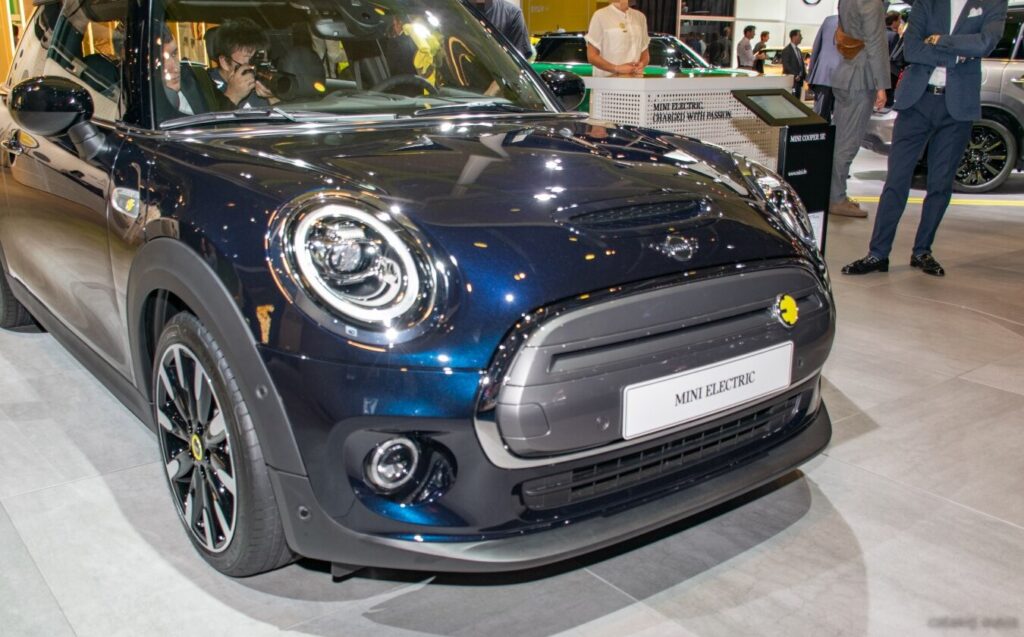
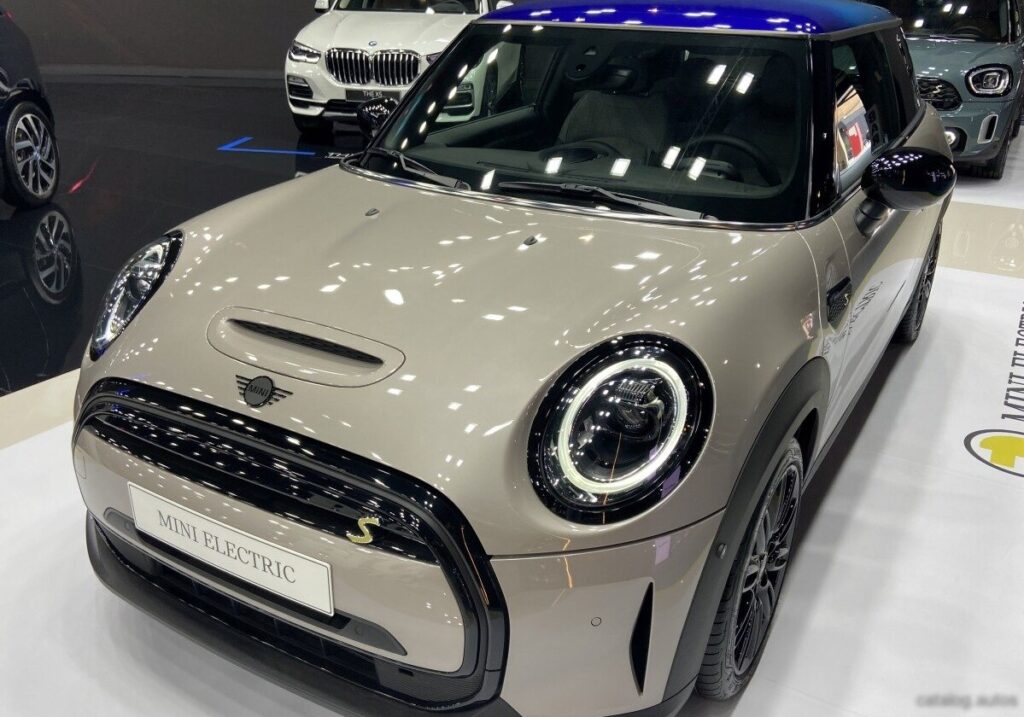
The Mini Electric Cooper SE (F56, facelift 2021) represents Mini’s inaugural foray into mass-production all-electric vehicles, arriving in March 2021 as part of the F56 LCI (Life Cycle Impulse) update. Positioned as an accessible entry point into the burgeoning electric vehicle market, it aimed to preserve the iconic Mini driving experience while embracing zero-emission technology. Production continued through December 2023. This variant, equipped with a 32.6 kWh battery and a 184 horsepower electric motor, was primarily targeted at urban drivers seeking a stylish and environmentally conscious vehicle. It builds upon the established F56 platform, initially introduced in 2014, but fundamentally alters the powertrain by replacing the traditional internal combustion engine with a fully electric system.
Powertrain & Engine Architecture
The Mini Electric Cooper SE utilizes a single electric motor, mounted transversely on the front axle, generating 184 horsepower and 199 lb-ft of torque. This motor draws power from a 32.6 kWh lithium-ion battery pack, strategically located under the floor of the vehicle to optimize weight distribution and interior space. The battery pack incorporates a liquid cooling system to maintain consistent and optimal operating temperatures, crucial for longevity and performance. The electric motor is coupled with a single-speed automatic transmission, delivering instant torque and remarkably smooth acceleration. The vehicle is equipped with a standard J1772 charging port for AC charging, and also supports DC fast charging capabilities for significantly quicker battery replenishment. The power electronics and inverter are seamlessly integrated into the powertrain to efficiently regulate the flow of energy between the battery and the motor.
Driving Characteristics
The 184 hp electric motor provides brisk acceleration, achieving 0-60 mph in approximately 6.9 seconds. While not positioned as a high-performance EV, the immediate torque delivery characteristic of electric motors provides a responsive and engaging driving experience, particularly well-suited for navigating urban environments. The single-speed transmission simplifies operation, eliminating the need for manual gear changes. Compared to the gasoline-powered Mini Cooper S, the Electric SE offers comparable acceleration in typical driving scenarios, but with a noticeably quieter and smoother power delivery. The battery pack’s low placement contributes to a lower center of gravity, enhancing stability and reducing body roll during cornering. The regenerative braking system allows for one-pedal driving in certain conditions, improving efficiency and driver convenience.
Equipment & Trim Levels
The Mini Electric Cooper SE (F56, facelift 2021) came standard with a comprehensive array of features, including a 6.5-inch touchscreen infotainment system with Apple CarPlay integration, a digital instrument cluster, and automatic climate control. Standard safety features encompassed automatic emergency braking, lane departure warning, and pedestrian detection systems. Higher trim levels offered enhancements such as a larger 8.8-inch touchscreen display, a premium audio system, and a panoramic sunroof. Interior upholstery options ranged from durable cloth to luxurious leatherette and full leather appointments. Exterior customization options were extensive, upholding Mini’s long-standing tradition of personalization, with a diverse palette of paint colors, roof designs, and wheel options available to prospective buyers.
Chassis & Braking
The chassis of the Electric Cooper SE is largely derived from the standard F56 platform, but incorporates modifications to accommodate the battery pack and electric powertrain. The suspension system utilizes MacPherson struts at the front and a multi-link configuration at the rear, tuned for a balance of comfort and handling. Brakes are disc brakes on all four wheels, providing adequate stopping power for the vehicle’s weight and performance. The car features an electric power steering system, delivering precise and responsive steering feel. The weight distribution is subtly altered compared to the gasoline-powered models, due to the battery pack’s location, influencing handling characteristics. Stabilizer bars are fitted to both the front and rear axles to minimize body roll during cornering maneuvers.
Market Reception & Comparison
The Mini Electric Cooper SE generally received positive reviews from automotive critics, who lauded its enjoyable driving dynamics, distinctive styling, and environmentally friendly attributes. However, its relatively limited range (203-234 km / 126-145 miles) was a frequently cited drawback, particularly when compared to some of its competitors. Compared to the gasoline-powered Mini Cooper, the Electric SE offered lower operating costs due to the elimination of fuel expenses and reduced maintenance requirements. When benchmarked against other electric vehicles in its price bracket, such as the Nissan LEAF or Chevrolet Bolt, the Mini Electric SE distinguished itself with its premium brand image and engaging driving experience. Energy efficiency, measured as MPGe, ranged from 119-138, depending on driving conditions and habits.
Legacy
The Mini Electric Cooper SE represented a pivotal moment for the brand, signifying its commitment to embracing electrification. While the initial range was a limitation, it provided a compelling entry point into the EV market for existing Mini enthusiasts and new customers alike. The powertrain has demonstrated a commendable level of reliability, with few widespread mechanical issues reported. In the used car market, the Electric Cooper SE maintains its value reasonably well, appealing to buyers seeking a stylish and eco-conscious urban vehicle. The valuable insights gained from the development of the Electric SE informed the design and engineering of subsequent electric Mini models, including the larger Countryman EV, paving the way for a fully electric future for the iconic brand.