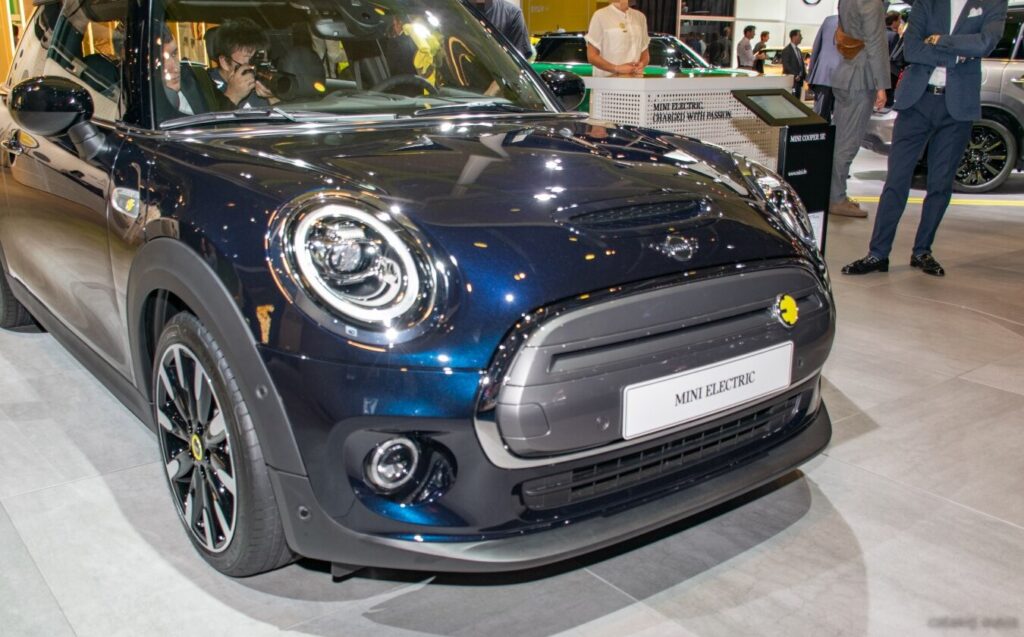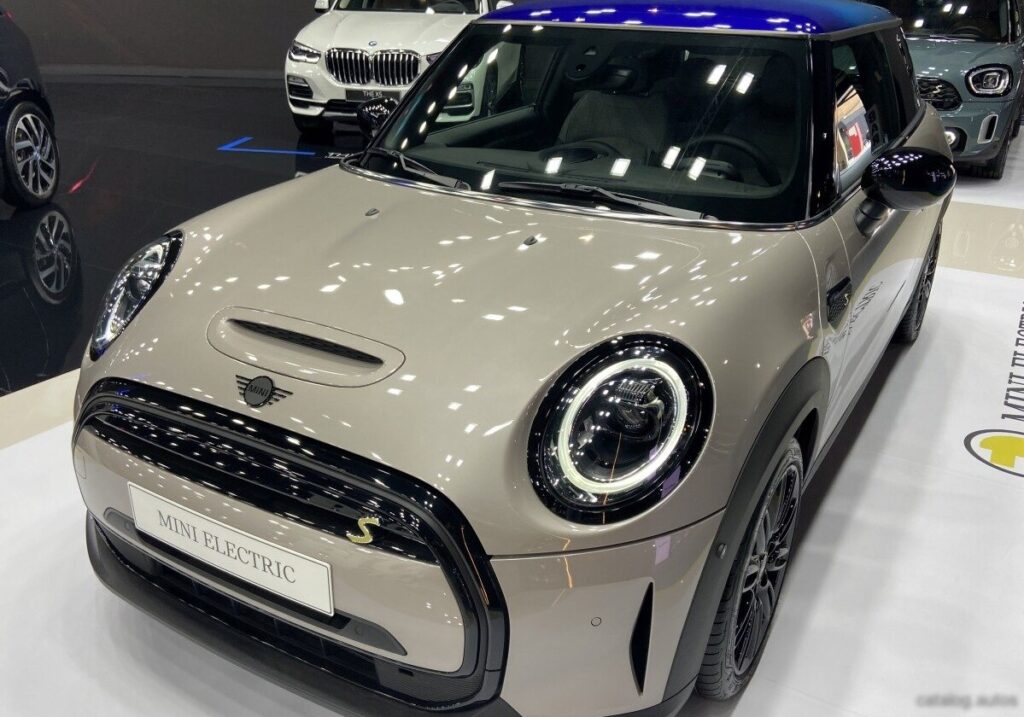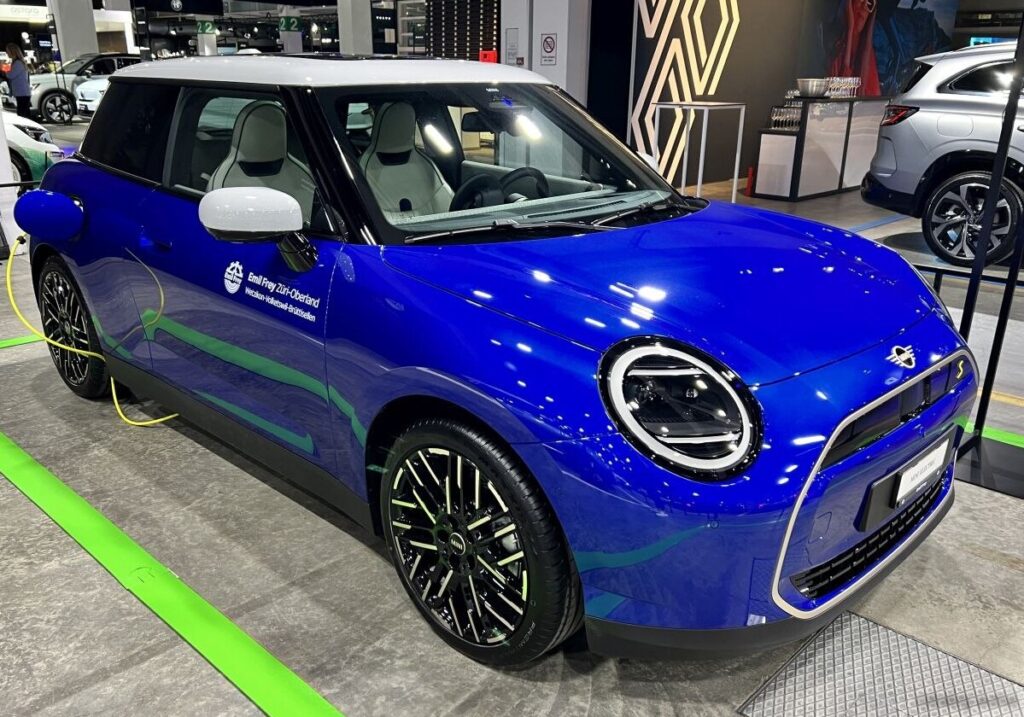
The Mini Electric JCW, specifically the variant equipped with the 54.2 kWh battery pack and producing 258 horsepower, represents the performance pinnacle of the first-generation all-electric Mini (J01) launched in November 2024. Positioned as the flagship model, it builds upon the foundation of the standard Mini Electric, offering significantly enhanced power and a sportier driving experience. This model is a key component of Mini’s strategy to transition towards a fully electric future, appealing to drivers seeking a premium, fun-to-drive EV with a recognizable brand heritage. The JCW trim aims to recapture the spirit of the iconic John Cooper Works performance models, albeit in an electric format.
Technical Specifications
| Brand | Mini |
| Model | Electric |
| Generation | Electric (J01) |
| Type (Engine) | JCW 54.2 kWh (258 Hp) |
| Start of production | November, 2024 |
| Powertrain Architecture | BEV (Electric Vehicle) |
| Body type | Hatchback |
| Seats | 4 |
| Doors | 3 |
| Fuel Type | Electricity |
| Acceleration 0 – 100 km/h | 5.9 sec |
| Acceleration 0 – 62 mph | 5.9 sec |
| Acceleration 0 – 60 mph | 5.6 sec |
| Maximum speed | 200 km/h (124.27 mph) |
| Weight-to-power ratio | 6.4 kg/Hp, 155.9 Hp/tonne |
| Weight-to-torque ratio | 4.7 kg/Nm, 211.5 Nm/tonne |
| Gross battery capacity | 54.2 kWh |
| Net (usable) battery capacity | 49.2 kWh |
| Battery voltage | 398.2 V |
| Battery technology | Lithium-ion (Li-Ion) |
| Battery location | Below the floor |
| All-electric range (WLTP) | 371 km (230.53 mi) |
| Average Energy consumption (WLTP) | 15.3-15.6 kWh/100 km (24.62 – 25.11 kWh/100 mi) |
| MPGe | 137 – 134 |
| km/kWh | 6.5 – 6.4 |
| mi/kWh | 4.1 – 4 |
| Electric motor power | 258 Hp @ 5000 rpm |
| Electric motor Torque | 350 Nm @ 50-5000 rpm (258.15 lb.-ft. @ 50-5000 rpm) |
| Electric motor model/code | HC0002N0 |
| Electric motor location | Front axle, Transverse |
| Electric motor type | Synchronous |
| System power | 258 Hp @ 5000 rpm |
| System torque | 350 Nm @ 50-5000 rpm (258.15 lb.-ft. @ 50-5000 rpm) |
| Kerb Weight | 1655 kg (3648.65 lbs.) |
| Max. weight | 2105 kg (4640.73 lbs.) |
| Max load | 450 kg (992.08 lbs.) |
| Trunk (boot) space – minimum | 210 l (7.42 cu. ft.) |
| Trunk (boot) space – maximum | 800 l (28.25 cu. ft.) |
| Length | 3858 mm (151.89 in.) |
| Width | 1756 mm (69.13 in.) |
| Height | 1460 mm (57.48 in.) |
| Wheelbase | 2526 mm (99.45 in.) |
| Front track | 1522 mm (59.92 in.) |
| Rear (Back) track | 1515 mm (59.65 in.) |
| Ride height (ground clearance) | 124 mm (4.88 in.) |
| Minimum turning circle | 10.8 m (35.43 ft.) |
| Drivetrain Architecture | One electric motor drives the front wheels. |
| Drive wheel | Front wheel drive |
| Number of gears | 1 |
| Gearbox type | Automatic transmission |
| Front suspension | Spring Strut, Transverse stabilizer |
| Rear suspension | Independent multi-link spring suspension with stabilizer |
| Front brakes | Ventilated discs |
| Rear brakes | Ventilated discs |
| Assisting systems | ABS (Anti-lock braking system) |
| Steering type | Steering rack and pinion |
| Power steering | Electric Steering |
| Tires size | 225/40 R18 |
| Wheel rims size | 7.5J x 18 |
Powertrain & Engine Architecture
The Mini Electric JCW utilizes a single electric motor, designated HC0002N0, driving the front wheels. This synchronous motor delivers a peak output of 258 horsepower and 350 Nm (258.15 lb-ft) of torque, available across a broad range from 50 to 5000 rpm. The power is supplied by a 54.2 kWh (gross) / 49.2 kWh (net) lithium-ion battery pack positioned low in the vehicle’s floor, contributing to a lower center of gravity and improved handling. The battery operates at 398.2 volts. The single-speed automatic transmission is a standard feature for all Mini Electric models, providing seamless acceleration. The electric powertrain benefits from regenerative braking, which helps to recapture energy during deceleration and extend the vehicle’s range. The JCW variant features optimized power electronics and thermal management systems compared to the standard Mini Electric to handle the increased power output.
Driving Characteristics
The JCW variant offers a noticeably more engaging driving experience than the standard Mini Electric. The increased power and torque result in quicker acceleration – 0 to 60 mph in approximately 5.6 seconds. While still front-wheel drive, the JCW’s traction control system is tuned for more spirited driving, allowing for controlled wheelspin during acceleration. The single-speed transmission provides instant torque delivery, characteristic of electric vehicles. The low center of gravity, thanks to the battery pack’s placement, contributes to agile handling and reduced body roll. Compared to a hypothetical gasoline-powered JCW, the electric version offers a different character – the instant torque provides a unique sensation, but the absence of engine noise and traditional gear changes alters the overall driving feel.
Equipment & Trim Levels
The JCW trim level comes standard with a comprehensive suite of features. Interior appointments include sport seats upholstered in a combination of cloth and leatherette, a JCW-specific steering wheel, and unique interior trim elements. Standard technology includes a 8.8-inch touchscreen infotainment system with navigation, Apple CarPlay, and Android Auto compatibility. Available options include a panoramic sunroof, premium Harman Kardon audio system, and advanced driver-assistance systems such as adaptive cruise control and parking assist. Exterior styling cues differentiate the JCW from other Mini Electric models, including a more aggressive front fascia, unique alloy wheel designs, and JCW badging.
Chassis & Braking
The Mini Electric JCW utilizes a MacPherson strut front suspension and a multi-link rear suspension, both featuring stabilizer bars to minimize body roll. The suspension is tuned to provide a balance between comfort and sporty handling. Braking duties are handled by ventilated disc brakes on all four wheels, providing ample stopping power. The standard ABS (Anti-lock Braking System) enhances safety during emergency braking situations. The vehicle’s relatively low weight, thanks to the compact electric powertrain, contributes to its nimble handling characteristics.
Market Reception & Comparison
The Mini Electric JCW has been generally well-received by automotive critics, praised for its fun-to-drive character and stylish design. However, some reviewers have noted the relatively limited range compared to other EVs in its price segment. Compared to the standard Mini Electric, the JCW offers a significant performance upgrade, but at a higher price point. Against competitors like the Fiat 500e and Honda e, the JCW stands out with its more powerful motor and sportier driving dynamics. Fuel economy, expressed as MPGe, ranges from 137-134, and energy consumption is between 15.3-15.6 kWh/100km.
Legacy
The Mini Electric JCW represents a significant step in Mini’s electrification strategy. While long-term reliability data is still emerging, the electric powertrain is expected to offer lower maintenance costs compared to traditional internal combustion engines. The JCW variant is likely to become a sought-after model in the used car market, appealing to enthusiasts who appreciate its unique combination of performance, style, and electric power. The JCW’s success will influence future electric Mini models, shaping the brand’s identity in the evolving automotive landscape.