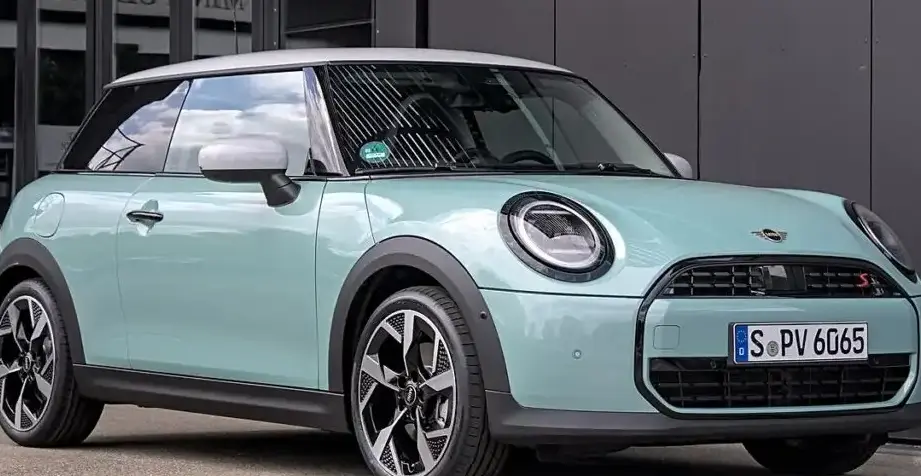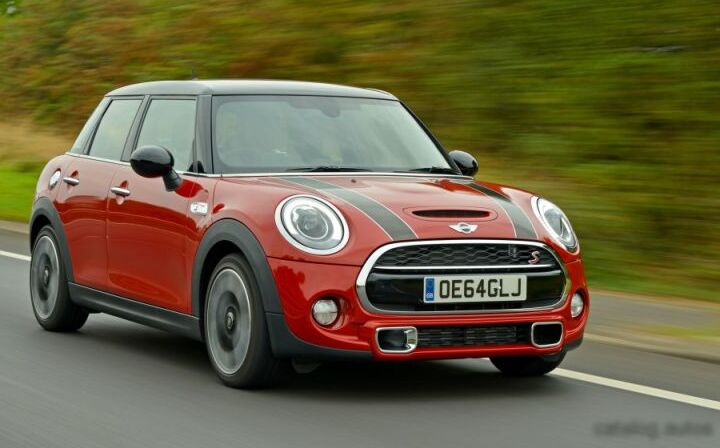
The Mini Hatch (F55) 5-door One 1.2, produced from March 2014 to November 2017, represented the entry point into the third generation of the iconic Mini hatchback. Positioned within the F55 5-door range, this variant offered a more accessible price point and focused on fuel efficiency, appealing to urban drivers and those new to the Mini brand. It was a key model in expanding the Mini lineup, offering the practicality of five doors alongside the brand’s signature styling and handling characteristics. The F55 generation marked a significant shift for Mini, utilizing the UKL1 platform shared with BMW models, resulting in a larger and more refined vehicle than its predecessors.
Technical Specifications
| Brand | Mini |
| Model | Hatch |
| Generation | Hatch (F55) 5-door |
| Type (Engine) | One 1.2 (102 Hp) |
| Start of production | March, 2014 |
| End of production | November, 2017 |
| Powertrain Architecture | Internal Combustion engine |
| Body type | Hatchback |
| Seats | 5 |
| Doors | 5 |
| Fuel consumption (urban) | 5.9 l/100 km (39.9 US mpg, 47.9 UK mpg, 16.9 km/l) |
| Fuel consumption (extra urban) | 4.2 l/100 km (56 US mpg, 67.3 UK mpg, 23.8 km/l) |
| Fuel consumption (combined) | 4.8 l/100 km (49 US mpg, 58.9 UK mpg, 20.8 km/l) |
| CO2 emissions | 112 g/km |
| Fuel Type | Petrol (Gasoline) |
| Acceleration 0 – 100 km/h | 10.1 sec |
| Acceleration 0 – 62 mph | 10.1 sec |
| Acceleration 0 – 60 mph | 9.6 sec |
| Maximum speed | 192 km/h (119.3 mph) |
| Emission standard | Euro 6 |
| Weight-to-power ratio | 11.3 kg/Hp, 88.7 Hp/tonne |
| Weight-to-torque ratio | 6.4 kg/Nm, 156.5 Nm/tonne |
| Power | 102 Hp @ 4000 rpm |
| Power per litre | 85.1 Hp/l |
| Torque | 180 Nm @ 1400 rpm (132.76 lb.-ft. @ 1400 rpm) |
| Engine layout | Front, Transverse |
| Engine Model/Code | B38A12A |
| Engine displacement | 1198 cm3 (73.11 cu. in.) |
| Number of cylinders | 3 |
| Engine configuration | Inline |
| Cylinder Bore | 78 mm (3.07 in.) |
| Piston Stroke | 83.6 mm (3.29 in.) |
| Compression ratio | 10.2:1 |
| Number of valves per cylinder | 4 |
| Fuel injection system | Direct injection |
| Engine aspiration | Twin-power turbo, Intercooler |
| Engine oil capacity | 4.25 l (4.49 US qt | 3.74 UK qt) |
| Coolant | 4.9 l (5.18 US qt | 4.31 UK qt) |
| Kerb Weight | 1150 kg (2535.32 lbs.) |
| Max. weight | 1680 kg (3703.77 lbs.) |
| Max load | 530 kg (1168.45 lbs.) |
| Trunk (boot) space – minimum | 278 l (9.82 cu. ft.) |
| Fuel tank capacity | 40 l (10.57 US gal | 8.8 UK gal) |
| Length | 3982 mm (156.77 in.) |
| Width | 1727 mm (67.99 in.) |
| Height | 1425 mm (56.1 in.) |
| Wheelbase | 2567 mm (101.06 in.) |
| Front track | 1501 mm (59.09 in.) |
| Rear (Back) track | 1501 mm (59.09 in.) |
| Ride height (ground clearance) | 146 mm (5.75 in.) |
| Minimum turning circle | 11.02 m (36.15 ft.) |
| Drivetrain Architecture | Front wheel drive |
| Number of gears | 6 gears, manual transmission |
| Front suspension | Independent, type McPherson with coil spring and anti-roll bar |
| Rear suspension | Independent multi-link suspension |
| Front brakes | Ventilated discs |
| Rear brakes | Disc |
| Assisting systems | ABS (Anti-lock braking system) |
| Steering type | Steering rack and pinion |
| Tires size | 175/65 R15 84H |
| Wheel rims size | 5.5J x 15 |
Powertrain & Engine Architecture
The heart of the F55 One 1.2 is the BMW-developed B38A12A 1.2-liter three-cylinder turbocharged engine. This engine is a key component of BMW’s modular engine family, known for its efficiency and surprisingly robust power output for its size. It utilizes direct fuel injection, delivering fuel directly into the combustion chamber for improved efficiency and reduced emissions. The engine also features a single twin-scroll turbocharger with an intercooler, which helps to minimize turbo lag and provide a more responsive driving experience. The valvetrain employs four valves per cylinder, contributing to improved breathing and overall performance. The engine is transversely mounted at the front of the vehicle, driving the front wheels. The standard transmission for this variant was a six-speed manual gearbox, although a six-speed automatic option was also available, though less common.
Driving Characteristics
The 102 horsepower and 180 Nm (133 lb-ft) of torque produced by the 1.2-liter engine provided adequate, though not exhilarating, performance. Acceleration from 0-60 mph took around 9.6 seconds, and top speed was 119.3 mph. Compared to the more powerful Cooper and Cooper S models, the One 1.2 felt noticeably slower, particularly during overtaking maneuvers. However, the engine’s peak torque was available from a low 1400 rpm, providing decent responsiveness in urban driving conditions. The six-speed manual transmission offered a precise and engaging shift feel, while the optional automatic, though convenient, could feel somewhat hesitant at times. The gear ratios were tuned for fuel efficiency rather than outright performance. The One 1.2 prioritized usability and economy over sporty driving dynamics.
Equipment & Trim Levels
The F55 One 1.2 typically came equipped with a reasonable level of standard features. These included air conditioning, power windows, power mirrors, a basic audio system with USB connectivity, and alloy wheels. Safety features such as ABS, stability control, and multiple airbags were also standard. Interior upholstery was typically cloth, with a relatively simple dashboard layout. Optional extras included a larger touchscreen infotainment system with navigation, automatic climate control, parking sensors, and a panoramic sunroof. Trim levels varied slightly depending on the market, but generally, the One 1.2 served as the base model, with options available to upgrade the interior and exterior aesthetics.
Chassis & Braking
The F55 5-door One 1.2 utilized independent suspension all around, with McPherson struts at the front and a multi-link setup at the rear. This provided a comfortable and controlled ride, typical of the Mini brand. The front brakes were ventilated discs, while the rear brakes were solid discs. ABS (Anti-lock Braking System) was standard. The suspension was tuned to prioritize comfort and handling balance, rather than outright sportiness. The steering was precise and responsive, providing good feedback to the driver. The relatively lightweight construction of the vehicle, at 1150 kg (2535 lbs), helped to contribute to its nimble handling characteristics.
Market Reception & Comparison
The Mini Hatch (F55) 5-door One 1.2 was generally well-received by critics as an affordable and practical entry point into the Mini range. It was praised for its fuel efficiency, comfortable ride, and stylish design. However, some reviewers noted that the engine lacked the punch of the more powerful Cooper models. Compared to the Cooper, the One 1.2 offered significantly lower running costs but sacrificed performance. The One 1.2 also competed with other small hatchbacks such as the Volkswagen Polo and the Ford Fiesta, offering a more premium feel and distinctive styling but at a slightly higher price point.
Legacy
The B38 engine family, including the 1.2-liter unit found in the F55 One, has proven to be relatively reliable. Common issues are generally minor, such as occasional turbocharger issues or oil leaks. The F55 One 1.2 remains a popular choice in the used car market, particularly for buyers seeking a stylish and economical city car. Its relatively low running costs and comfortable ride make it a practical option for daily commuting. The availability of spare parts is good, and maintenance costs are generally reasonable. The F55 generation, and the One 1.2 variant specifically, helped to broaden the appeal of the Mini brand, attracting a wider range of customers.