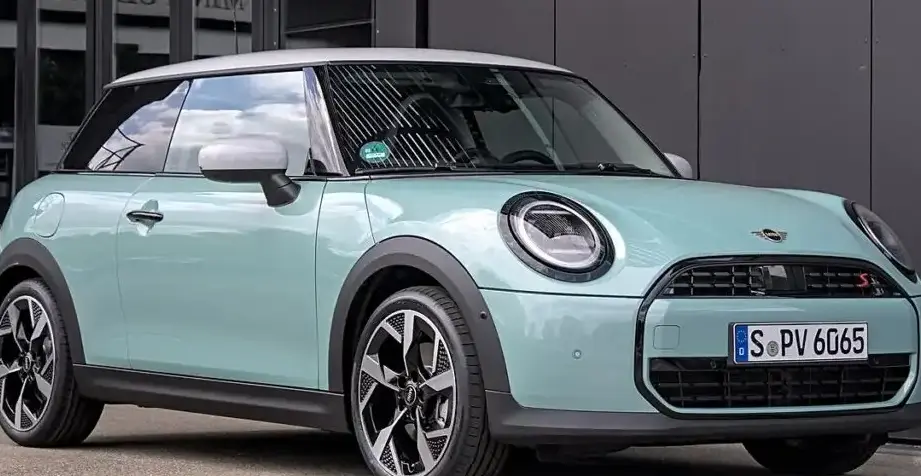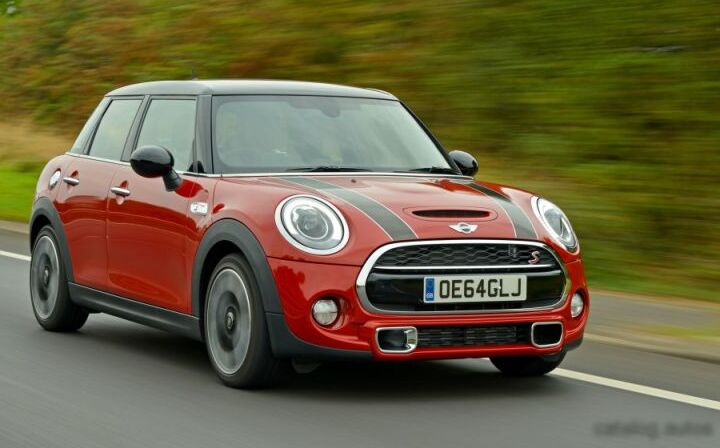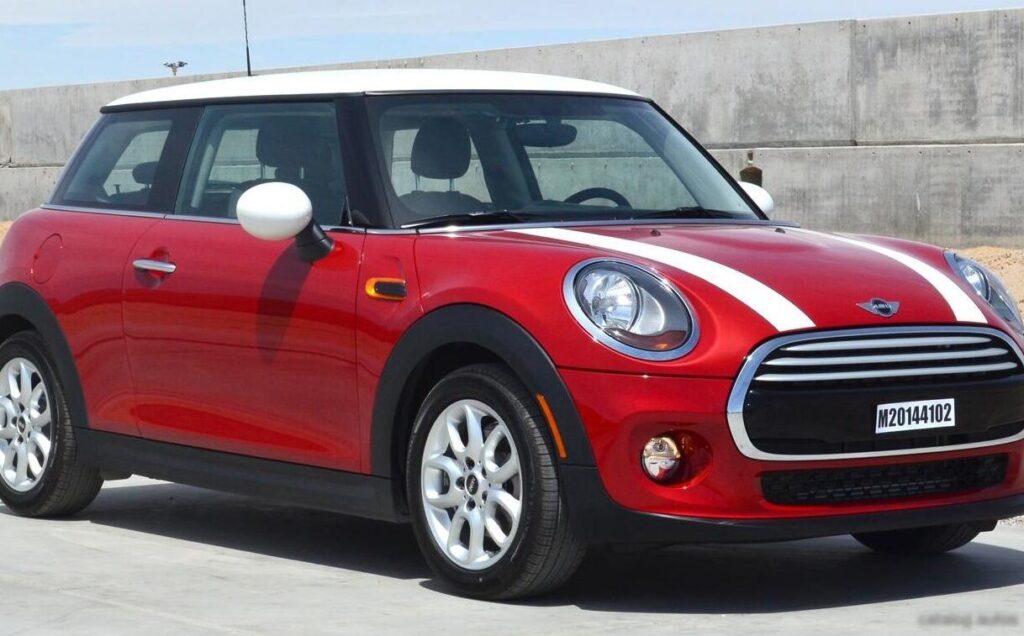
The Mini Hatch (F56) 3-door Cooper 1.5, produced from March 2014 to 2018, represents the first generation of the redesigned Mini, moving away from the BMW PN platform to the UKL1 platform shared with other BMW Group vehicles. This particular variant, powered by the 1.5-liter three-cylinder engine producing 136 horsepower, served as a key entry point into the new Mini lineup, offering a blend of iconic styling, nimble handling, and relatively efficient performance. It aimed to capture the essence of the original Mini while incorporating modern technology and safety features. The F56 generation marked a significant shift in Mini’s production, with manufacturing primarily taking place at the Cowley plant in Oxford, England, and Born, Netherlands.
Technical Specifications
| Brand | Mini |
| Model | Hatch |
| Generation | Hatch (F56) 3-door |
| Type (Engine) | Cooper 1.5 (136 Hp) |
| Start of production | March, 2014 |
| End of production | 2018 |
| Powertrain Architecture | Internal Combustion engine |
| Body type | Hatchback |
| Seats | 4 |
| Doors | 3 |
| Fuel consumption (urban) | 5.7 – 5.8 l/100 km (41.3 – 40.6 US mpg) |
| Fuel consumption (extra urban) | 3.8 – 3.9 l/100 km (61.9 – 60.3 US mpg) |
| Fuel consumption (combined) | 4.5 – 4.6 l/100 km (52.3 – 51.1 US mpg) |
| CO2 emissions | 105 – 107 g/km |
| Fuel Type | Petrol (Gasoline) |
| Acceleration 0 – 100 km/h | 7.9 sec |
| Acceleration 0 – 62 mph | 7.9 sec |
| Acceleration 0 – 60 mph | 7.5 sec |
| Maximum speed | 210 km/h (130.49 mph) |
| Emission standard | Euro 6 |
| Weight-to-power ratio | 8 kg/Hp, 125.3 Hp/tonne |
| Weight-to-torque ratio | 4.7 kg/Nm, 212 Nm/tonne |
| Power | 136 Hp @ 4500-6000 rpm |
| Torque | 230 Nm @ 1250-4000 rpm (169.64 lb.-ft. @ 1250-4000 rpm) |
| Engine layout | Front, Transverse |
| Engine Model/Code | B38A15A |
| Engine displacement | 1499 cm3 (91.47 cu. in.) |
| Number of cylinders | 3 |
| Engine configuration | Inline |
| Cylinder Bore | 82 mm (3.23 in.) |
| Piston Stroke | 94.6 mm (3.72 in.) |
| Compression ratio | 11:1 |
| Number of valves per cylinder | 4 |
| Fuel injection system | Direct injection |
| Engine aspiration | Twin-power turbo, Intercooler |
| Engine oil capacity | 4.25 l (4.49 US qt | 3.74 UK qt) |
| Coolant | 5.7 l (6.02 US qt | 5.02 UK qt) |
| Kerb Weight | 1085 kg (2392.02 lbs.) |
| Max. weight | 1565 kg (3450.23 lbs.) |
| Max load | 480 kg (1058.22 lbs.) |
| Trunk (boot) space – minimum | 211 l (7.45 cu. ft.) |
| Fuel tank capacity | 40 l (10.57 US gal | 8.8 UK gal) |
| Length | 3821 mm (150.43 in.) |
| Width | 1727 mm (67.99 in.) |
| Height | 1414 mm (55.67 in.) |
| Wheelbase | 2495 mm (98.23 in.) |
| Front track | 1501 mm (59.09 in.) |
| Rear (Back) track | 1501 mm (59.09 in.) |
| Ride height (ground clearance) | 124 mm (4.88 in.) |
| Minimum turning circle (turning diameter) | 10.8 m (35.43 ft.) |
| Drivetrain Architecture | The Internal combustion engine (ICE) drives the front wheels of the vehicle. |
| Drive wheel | Front wheel drive |
| Number of gears and type of gearbox | 6 gears, manual transmission |
| Front suspension | Independent, type McPherson with coil spring and anti-roll bar |
| Rear suspension | Independent multi-link suspension |
| Front brakes | Ventilated discs |
| Rear brakes | Disc |
| Assisting systems | ABS (Anti-lock braking system) |
| Steering type | Steering rack and pinion |
| Tires size | 175/65 R15 84H |
| Wheel rims size | 5.5J x 15 |
Powertrain & Engine Architecture
The heart of the F56 Cooper 1.5 is the B38A15A engine, a 1.5-liter inline three-cylinder gasoline engine. This engine is part of BMW’s modular engine family, utilizing a single turbocharger and direct fuel injection to deliver a balance of power and efficiency. The engine’s design incorporates features like a twin-scroll turbocharger to minimize turbo lag and improve responsiveness. The B38 engine benefits from BMW’s Valvetronic technology, which allows for precise control of valve lift and timing, optimizing combustion efficiency and reducing emissions. The 136 horsepower and 230 Nm (169.64 lb-ft) of torque are delivered across a relatively broad rev range, making it usable in everyday driving situations. The engine is paired with a 6-speed manual transmission as standard, contributing to the car’s engaging driving experience.
Driving Characteristics
The 1.5-liter Cooper offers a surprisingly lively driving experience. While not as overtly powerful as the Cooper S variants, the 136 hp engine provides adequate acceleration for most driving scenarios. The 0-60 mph time of around 7.5 seconds is respectable, and the engine feels responsive thanks to the turbocharger. The manual transmission is well-matched to the engine, with precise shifts and a relatively short throw. The F56’s chassis is well-tuned, providing a firm but comfortable ride. The steering is direct and communicative, offering good feedback to the driver. Compared to the more powerful Cooper S, the 1.5-liter model prioritizes fuel efficiency and ease of driving over outright performance. It’s a more relaxed and forgiving car, making it ideal for daily commutes and longer journeys.
Equipment & Trim Levels
The base Cooper 1.5 came standard with a respectable level of equipment, including air conditioning, power windows, a multi-function steering wheel, and a basic audio system. Interior upholstery was typically cloth, with options for leather upgrades. The dashboard featured a centrally-mounted infotainment screen, which could be upgraded with navigation and connected services. Popular optional extras included a panoramic sunroof, heated seats, parking sensors, and a premium Harman Kardon audio system. Trim levels beyond the base Cooper 1.5 often added cosmetic enhancements, such as different wheel designs, exterior trim accents, and interior color schemes. The Cooper 1.5 was often seen as a blank canvas for personalization, with a wide range of MINI customization options available.
Chassis & Braking
The F56 Cooper 1.5 utilizes a McPherson strut front suspension and a multi-link rear suspension, providing a good balance of ride comfort and handling precision. The suspension is tuned to be relatively firm, contributing to the car’s agile handling characteristics. Braking duties are handled by ventilated discs at the front and solid discs at the rear. ABS (Anti-lock Braking System) is standard, providing enhanced braking performance in emergency situations. The car’s relatively low weight (around 1085 kg or 2392 lbs) contributes to its nimble handling and efficient braking.
Market Reception & Comparison
The Mini Hatch (F56) 3-door Cooper 1.5 was generally well-received by automotive critics. It was praised for its stylish design, engaging driving dynamics, and relatively efficient engine. However, some critics noted that the interior space was limited, particularly in the rear seats. Compared to the Cooper S, the 1.5-liter model offered a more affordable entry point into the Mini lineup, but at the expense of outright performance. Fuel economy was a strong point, with combined figures averaging around 52.3 mpg. Reliability proved to be generally good, although some owners reported minor issues with the infotainment system and electrical components.
Legacy
The F56 Cooper 1.5 has proven to be a popular choice in the used car market. Its combination of style, efficiency, and driving enjoyment continues to appeal to buyers. The B38 engine has demonstrated reasonable long-term reliability, although regular maintenance is essential. The availability of spare parts is good, and the car’s relatively simple mechanical design makes it relatively easy to maintain. The F56 generation marked a significant evolution for the Mini brand, and the Cooper 1.5 played a key role in establishing the new model’s success.