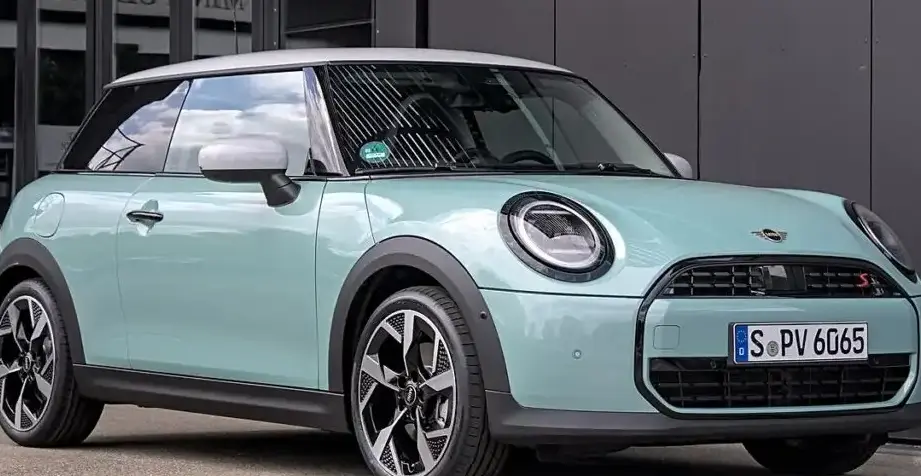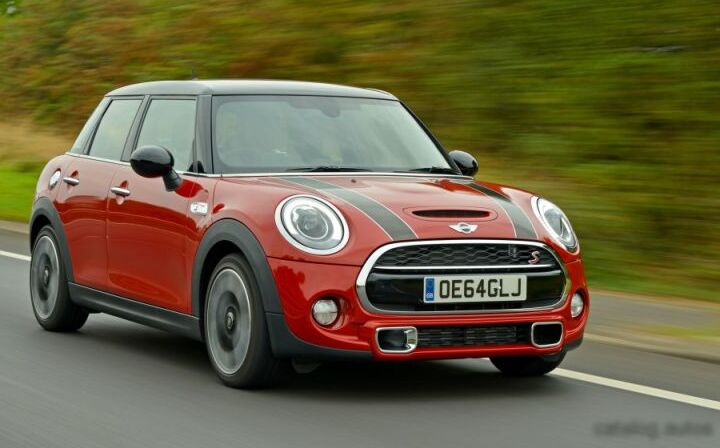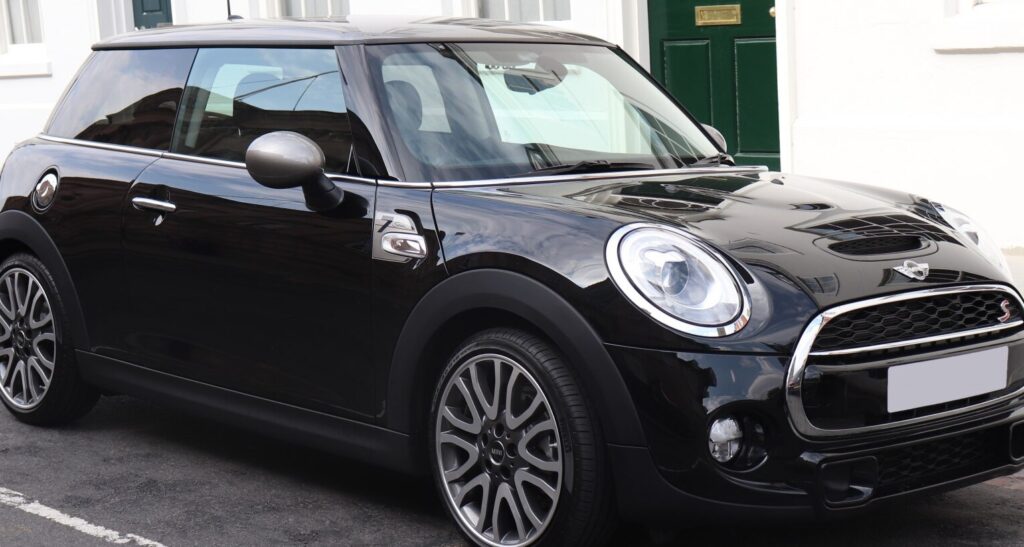
The Mini Hatch (F56) Cooper S 2.0, produced from March 2014 to 2018, represents a significant evolution in the iconic British marque’s history. Falling within the third generation of the modern Mini, the F56 chassis marked a departure from the previous generation’s BMW-engineered platform, utilizing the UKL1 front-wheel-drive architecture shared with other BMW Group vehicles. The Cooper S 2.0, positioned as the performance-oriented variant within the three-door hatchback range, offered a substantial upgrade over the base Cooper models, appealing to drivers seeking a more engaging and spirited driving experience. This model aimed to recapture the original Mini’s “go-kart” handling while incorporating modern safety and technology features.
Technical Specifications
| Brand | Mini |
| Model | Hatch |
| Generation | Hatch (F56) 3-door |
| Type (Engine) | Cooper S 2.0 (192 Hp) |
| Start of production | March, 2014 |
| End of production | 2018 |
| Powertrain Architecture | Internal Combustion engine |
| Body type | Hatchback |
| Seats | 4 |
| Doors | 3 |
| Fuel consumption (urban) | 7.6 – 7.7 l/100 km (30.9 – 30.5 US mpg) |
| Fuel consumption (extra urban) | 4.6 – 4.8 l/100 km (51.1 – 49 US mpg) |
| Fuel consumption (combined) | 5.7 – 5.8 l/100 km (41.3 – 40.6 US mpg) |
| CO2 emissions | 133 – 136 g/km |
| Fuel Type | Petrol (Gasoline) |
| Acceleration 0 – 100 km/h | 6.8 sec |
| Acceleration 0 – 62 mph | 6.8 sec |
| Acceleration 0 – 60 mph | 6.5 sec |
| Maximum speed | 235 km/h (146.02 mph) |
| Emission standard | Euro 6 |
| Weight-to-power ratio | 6 kg/Hp |
| Weight-to-torque ratio | 3.9 kg/Nm |
| Power | 192 Hp @ 4700-6000 rpm |
| Torque | 300 Nm @ 1250-4750 rpm (221.27 lb.-ft. @ 1250-4750 rpm) |
| Engine layout | Front, Transverse |
| Engine Model/Code | B48A20A |
| Engine displacement | 1998 cm3 (121.93 cu. in.) |
| Number of cylinders | 4 |
| Engine configuration | Inline |
| Cylinder Bore | 82 mm (3.23 in.) |
| Piston Stroke | 94.6 mm (3.72 in.) |
| Compression ratio | 11:1 |
| Number of valves per cylinder | 4 |
| Fuel injection system | Direct injection |
| Engine aspiration | Twin-power turbo, Intercooler |
| Engine oil capacity | 5.3 l (5.6 US qt | 4.66 UK qt) |
| Coolant | 5.8 l (6.13 US qt | 5.1 UK qt) |
| Kerb Weight | 1160 kg (2557.36 lbs.) |
| Max. weight | 1640 kg (3615.58 lbs.) |
| Max load | 480 kg (1058.22 lbs.) |
| Trunk (boot) space – minimum | 211 l (7.45 cu. ft.) |
| Fuel tank capacity | 44 l (11.62 US gal | 9.68 UK gal) |
| Length | 3850 mm (151.57 in.) |
| Width | 1727 mm (67.99 in.) |
| Height | 1414 mm (55.67 in.) |
| Wheelbase | 2495 mm (98.23 in.) |
| Front track | 1485 mm (58.46 in.) |
| Rear (Back) track | 1485 mm (58.46 in.) |
| Ride height (ground clearance) | 124 mm (4.88 in.) |
| Minimum turning circle (turning diameter) | 10.8 m (35.43 ft.) |
| Drivetrain Architecture | Front wheel drive |
| Number of gears and type of gearbox | 6 gears, manual transmission |
| Front suspension | Independent, type McPherson with coil spring and anti-roll bar |
| Rear suspension | Independent multi-link suspension |
| Front brakes | Ventilated discs |
| Rear brakes | Disc |
| Assisting systems | ABS (Anti-lock braking system) |
| Steering type | Steering rack and pinion |
| Tires size | 195/55 R16 87W |
| Wheel rims size | 6.5J x 16 |
Powertrain & Engine Architecture
The Cooper S 2.0 is powered by the BMW B48A20A 2.0-liter inline-four cylinder engine. This engine is a member of BMW’s modular engine family, featuring a single twin-scroll turbocharger, direct fuel injection, and variable valve timing (VANOS) on both the intake and exhaust camshafts. The B48 engine is known for its responsiveness and efficiency. The 2.0L engine produces 192 horsepower at 4700-6000 rpm and 300 Nm (221 lb-ft) of torque between 1250-4750 rpm. The engine’s turbocharger is strategically positioned to minimize turbo lag and provide a broad torque curve. The F56 Cooper S typically came equipped with a six-speed manual transmission, but a six-speed automatic transmission was also available. The automatic transmission offered smooth shifts and adaptive learning capabilities, but generally resulted in slightly reduced acceleration compared to the manual.
Driving Characteristics
The Cooper S 2.0 with the manual transmission delivers a noticeably more engaging driving experience than the base Cooper models. Acceleration from 0-60 mph takes approximately 6.5 seconds, making it a genuinely quick hatchback. The engine’s strong low-end torque provides ample power for everyday driving, while the turbocharger delivers a surge of power in the mid-range. The automatic transmission, while convenient, slightly diminishes the sense of control and responsiveness. The F56’s chassis is well-balanced, providing precise steering and minimal body roll. The suspension is tuned to provide a comfortable ride without sacrificing handling prowess. Compared to other variants, the Cooper S 2.0 offers a significant performance advantage, making it the choice for drivers prioritizing driving enjoyment.
Equipment & Trim Levels
The Cooper S 2.0 typically included standard features such as sport seats, a sport leather steering wheel, automatic climate control, and a 6.5-inch infotainment system with Mini Connected services. Optional extras included a larger 8.8-inch infotainment system with navigation, a Harman Kardon premium sound system, a panoramic sunroof, and various customization options through Mini’s extensive personalization program. Interior upholstery options ranged from cloth to leather, with a variety of color combinations available. The Cooper S trim also featured unique exterior styling cues, including a more aggressive front bumper, side skirts, and a rear spoiler.
Chassis & Braking
The F56 Cooper S 2.0 utilizes a McPherson strut front suspension and a multi-link rear suspension. This setup provides a good balance between ride comfort and handling precision. The braking system consists of ventilated disc brakes at the front and solid disc brakes at the rear. ABS (Anti-lock Braking System) is standard. The chassis is constructed from high-strength steel and aluminum to minimize weight and maximize rigidity. The steering system is an electric power-assisted rack and pinion system, providing precise and responsive steering feel.
Market Reception & Comparison
The F56 Cooper S 2.0 was generally well-received by automotive critics, who praised its engaging driving dynamics, stylish design, and premium interior. However, some critics noted that the optional extras could significantly increase the price. Compared to the base Cooper, the Cooper S 2.0 offered a substantial performance upgrade, but at a higher price point. Compared to other hot hatchbacks in its class, such as the Volkswagen GTI, the Cooper S 2.0 offered a more unique and characterful driving experience, but the GTI often provided better practicality and value. Fuel economy was respectable for a performance-oriented hatchback, averaging around 40 mpg in combined driving.
Legacy
The B48 engine in the F56 Cooper S 2.0 has proven to be a reliable and durable powertrain. While some early models experienced minor issues with the timing chain tensioner, these were addressed through warranty repairs. Today, the F56 Cooper S 2.0 remains a popular choice in the used car market, appealing to drivers seeking a fun-to-drive and stylish hatchback. Its combination of performance, handling, and premium features has cemented its place as a modern classic within the Mini lineage.