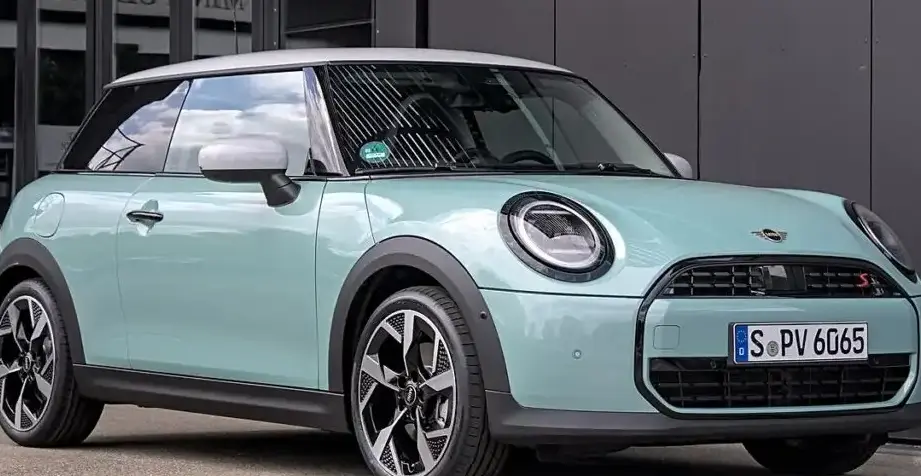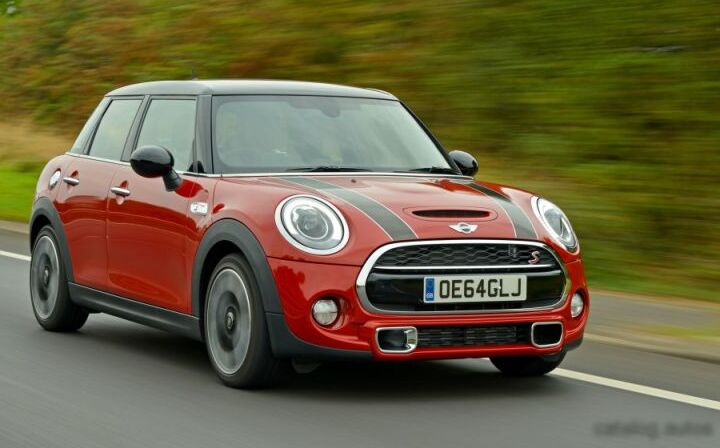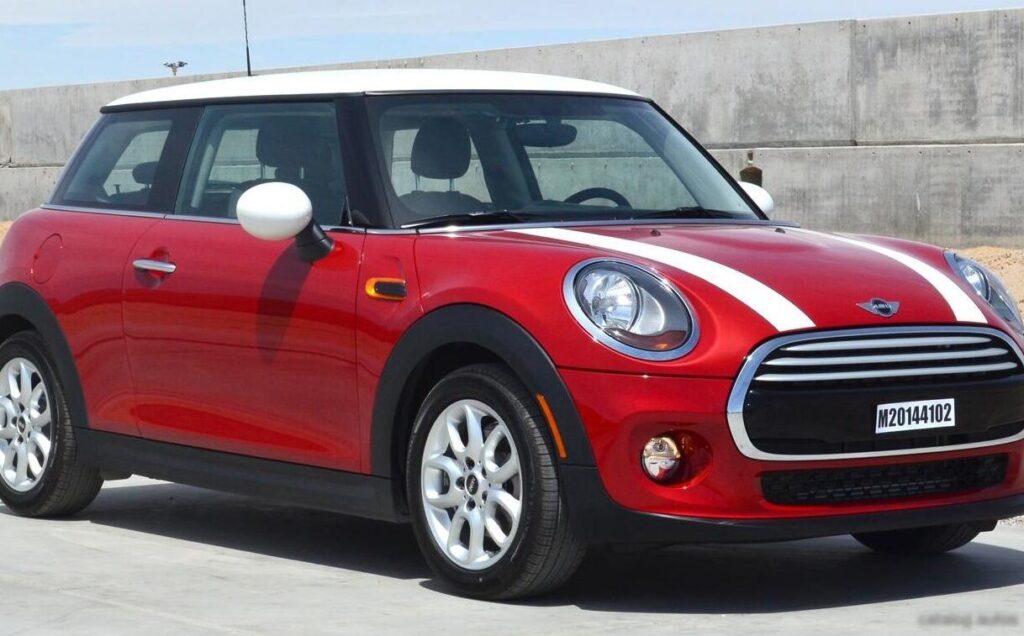
The Mini Hatch (F56) 3-door Cooper SD 2.0, produced from July 2014 to 2018, represented a significant step in the revitalization of the iconic Mini brand under BMW ownership. This variant, powered by a 2.0-liter turbocharged diesel engine producing 170 horsepower, occupied a middle ground within the F56 lineup, offering a blend of performance and fuel efficiency. It catered to buyers seeking a more refined and economical driving experience than the base Cooper models, while remaining more accessible than the performance-focused John Cooper Works variants. The F56 generation marked a departure from the previous R56 model, featuring a new platform (UKL1) and a wider range of customization options.
Technical Specifications
| Brand | Mini |
| Model | Hatch |
| Generation | Hatch (F56) 3-door |
| Type (Engine) | Cooper SD 2.0 (170 Hp) |
| Start of production | July, 2014 |
| End of production | 2018 |
| Powertrain Architecture | Internal Combustion engine |
| Body type | Hatchback |
| Seats | 4 |
| Doors | 3 |
| Fuel consumption (urban) | 4.9 l/100 km (48 US mpg, 57.6 UK mpg, 20.4 km/l) |
| Fuel consumption (extra urban) | 3.6 l/100 km (65.3 US mpg, 78.5 UK mpg, 27.8 km/l) |
| Fuel consumption (combined) | 4 l/100 km (58.8 US mpg, 70.6 UK mpg, 25 km/l) |
| CO2 emissions | 106 g/km |
| Fuel Type | Diesel |
| Acceleration 0 – 100 km/h | 7.3 sec |
| Acceleration 0 – 62 mph | 7.3 sec |
| Acceleration 0 – 60 mph | 6.9 sec |
| Maximum speed | 227 km/h (141.05 mph) |
| Emission standard | Euro 6 |
| Weight-to-power ratio | 6.9 kg/Hp, 144.7 Hp/tonne |
| Weight-to-torque ratio | 3.3 kg/Nm, 306.4 Nm/tonne |
| Power | 170 Hp @ 4000 rpm |
| Power per litre | 85.2 Hp/l |
| Torque | 360 Nm @ 1500-2750 rpm (265.52 lb.-ft. @ 1500-2750 rpm) |
| Engine layout | Front, Transverse |
| Engine Model/Code | B47C20B |
| Engine displacement | 1995 cm3 (121.74 cu. in.) |
| Number of cylinders | 4 |
| Engine configuration | Inline |
| Cylinder Bore | 84 mm (3.31 in.) |
| Piston Stroke | 90 mm (3.54 in.) |
| Compression ratio | 16.5:1 |
| Number of valves per cylinder | 4 |
| Fuel injection system | Diesel Commonrail |
| Engine aspiration | Turbocharger, Intercooler |
| Engine oil capacity | 5 l (5.28 US qt | 4.4 UK qt) |
| Coolant | 3.3 l (3.49 US qt | 2.9 UK qt) |
| Kerb Weight | 1175 kg (2590.43 lbs.) |
| Max. weight | 1655 kg (3648.65 lbs.) |
| Max load | 480 kg (1058.22 lbs.) |
| Trunk (boot) space – minimum | 211 l (7.45 cu. ft.) |
| Fuel tank capacity | 44 l (11.62 US gal | 9.68 UK gal) |
| Length | 3821 mm (150.43 in.) |
| Width | 1727 mm (67.99 in.) |
| Height | 1414 mm (55.67 in.) |
| Wheelbase | 2495 mm (98.23 in.) |
| Front track | 1485 mm (58.46 in.) |
| Rear (Back) track | 1485 mm (58.46 in.) |
| Ride height (ground clearance) | 143 mm (5.63 in.) |
| Minimum turning circle | 10.8 m (35.43 ft.) |
| Drivetrain Architecture | Front wheel drive |
| Number of gears and type of gearbox | 6 gears, manual transmission |
| Front suspension | Independent, type McPherson with coil spring and anti-roll bar |
| Rear suspension | Independent multi-link suspension |
| Front brakes | Ventilated discs |
| Rear brakes | Disc |
| Assisting systems | ABS (Anti-lock braking system) |
| Steering type | Steering rack and pinion |
| Tires size | 195/55 R16 87W |
| Wheel rims size | 6.5J x 16 |
Powertrain & Engine Architecture
The heart of the Cooper SD 2.0 is the BMW-developed B47C20B 2.0-liter inline-four diesel engine. This engine is a member of the modular B-series family, known for its efficiency and refinement. It utilizes a common-rail direct injection system, delivering fuel at extremely high pressures for optimized combustion. A single turbocharger with an intercooler provides forced induction, boosting power and torque. The engine features four valves per cylinder and a sophisticated engine management system to balance performance and fuel economy. The 6-speed manual transmission was standard, offering precise shifts and a direct connection to the engine. The B47 engine is known for its relatively quiet operation and smooth power delivery, a characteristic that sets it apart from some of its competitors.
Driving Characteristics
The Cooper SD 2.0 offered a noticeably different driving experience compared to the petrol-powered Cooper and Cooper S models. While not as overtly sporty, the diesel engine’s substantial 360 Nm (265 lb-ft) of torque, available from a low 1500 rpm, provided strong acceleration in everyday driving situations. The 0-60 mph time of around 6.9 seconds was respectable, and the engine felt particularly at home during highway cruising. The manual transmission’s gear ratios were well-matched to the engine’s torque curve, allowing for effortless overtaking. Compared to the higher-output Cooper S, the SD prioritized fuel efficiency and relaxed cruising over outright performance. The manual gearbox provided a more engaging experience than the optional automatic transmission, which, while smooth, could feel somewhat hesitant at times.
Equipment & Trim Levels
The Cooper SD 2.0 typically came equipped with a generous level of standard features. These included air conditioning, power windows, a multi-function steering wheel, and a basic audio system. Interior upholstery was typically cloth, with options for leather upgrades. The dashboard featured a centrally-mounted infotainment screen, which could be upgraded with navigation and connected services. Optional extras included a panoramic sunroof, heated seats, parking sensors, and a premium Harman Kardon audio system. The Mini’s extensive customization options allowed buyers to personalize their vehicle with a wide range of exterior and interior finishes.
Chassis & Braking
The F56 Mini utilized a McPherson strut front suspension and a multi-link rear suspension, providing a good balance of ride comfort and handling agility. The Cooper SD 2.0, due to its slightly higher weight compared to the base Cooper, featured slightly stiffer spring rates and dampers. Front brakes were ventilated discs, while rear brakes were solid discs. ABS (Anti-lock Braking System) was standard. The steering was precise and well-weighted, providing good feedback to the driver. The relatively compact dimensions of the Mini and its responsive steering made it enjoyable to drive on twisty roads.
Market Reception & Comparison
The Cooper SD 2.0 was generally well-received by automotive critics. It was praised for its fuel efficiency, comfortable ride, and refined engine. However, some reviewers noted that it lacked the outright excitement of the Cooper S. Compared to other diesel hatchbacks in its class, the Mini offered a more premium and stylish experience. Fuel economy was a key selling point, with the Cooper SD 2.0 consistently achieving impressive MPG figures in real-world testing. Reliability was generally good, although some owners reported issues with the diesel particulate filter (DPF) system, a common concern with modern diesel engines.
Legacy
The B47 engine, found in the Cooper SD 2.0, has proven to be a relatively durable and reliable powertrain when properly maintained. While the DPF system can require attention, particularly for drivers who primarily undertake short journeys, the engine itself is generally robust. On the used car market, the F56 Cooper SD 2.0 remains a popular choice for buyers seeking a stylish, economical, and enjoyable hatchback. Its combination of performance, fuel efficiency, and Mini’s iconic design continues to appeal to a wide range of drivers. The F56 generation, and the Cooper SD 2.0 variant within it, played a crucial role in cementing Mini’s position as a premium small car brand.