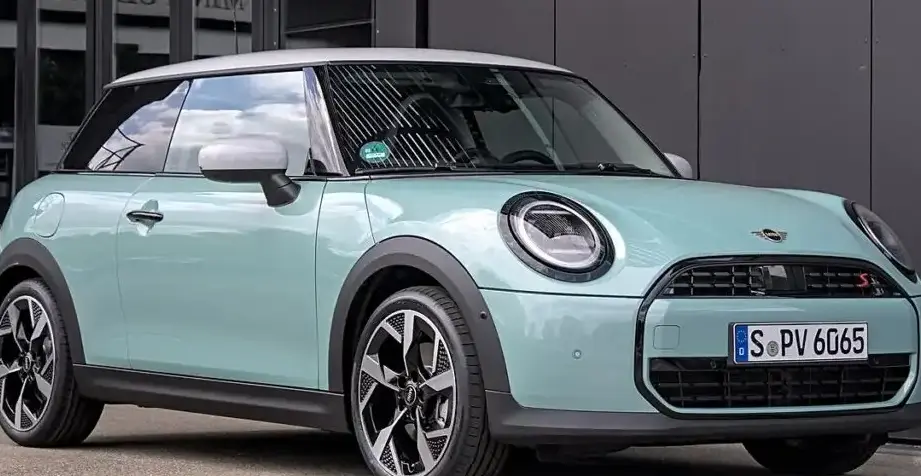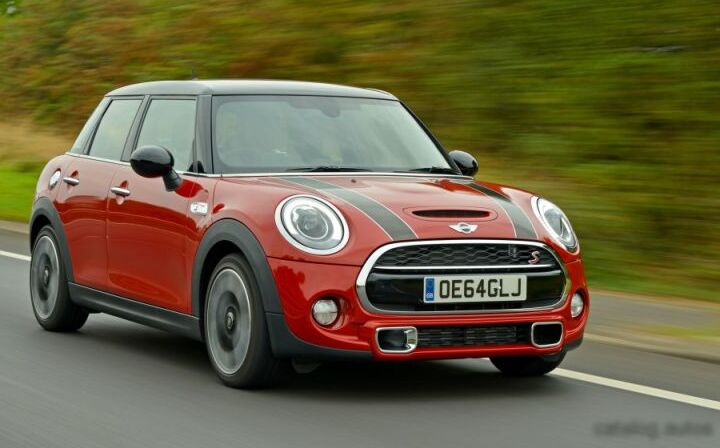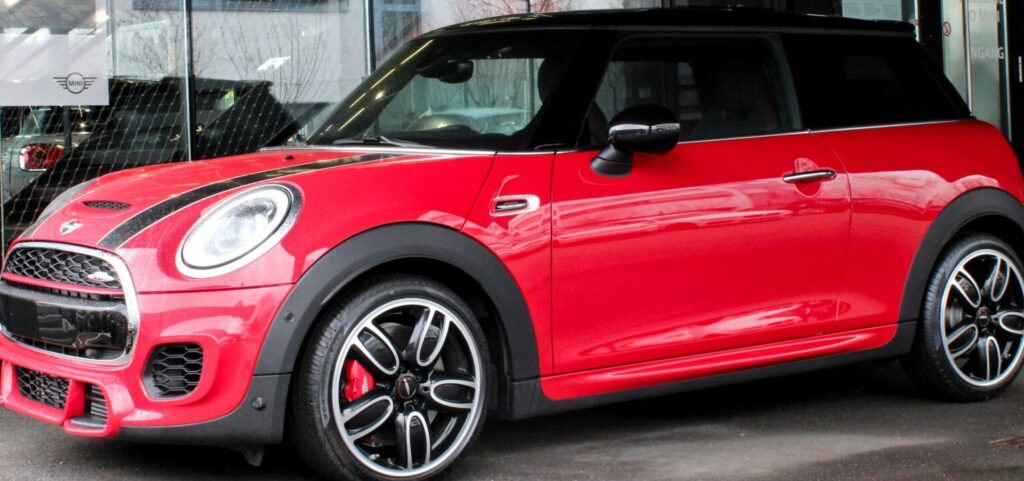
The Mini Hatch (F56) 3-door JCW 2.0 Automatic, produced from May 2015 to May 2018, represents the high-performance variant of the third-generation Mini Hatchback. Positioned as the flagship model within the F56 range, it aimed to deliver a significantly more engaging driving experience than the standard Cooper and Cooper S models. This JCW variant was a key component in revitalizing the Mini brand’s performance image, appealing to enthusiasts seeking a premium, sporty compact car. It built upon the foundation of the UKL1 platform, shared with BMW models, and offered a blend of iconic Mini styling with modern technology.
Technical Specifications
| Brand | Mini |
| Model | Hatch |
| Generation | Hatch (F56) 3-door |
| Type (Engine) | JCW 2.0 (231 Hp) Automatic |
| Start of production | May, 2015 |
| End of production | May, 2018 |
| Powertrain Architecture | Internal Combustion engine |
| Body type | Hatchback |
| Seats | 4 |
| Doors | 3 |
| Fuel consumption (economy) – urban | 7.2 l/100 km (32.7 US mpg, 39.2 UK mpg, 13.9 km/l) |
| Fuel consumption (economy) – extra urban | 4.9 l/100 km (48 US mpg, 57.6 UK mpg, 20.4 km/l) |
| Fuel consumption (economy) – combined | 5.7 l/100 km (41.3 US mpg, 49.6 UK mpg, 17.5 km/l) |
| CO2 emissions | 133 g/km |
| Fuel Type | Petrol (Gasoline) |
| Acceleration 0 – 100 km/h | 6.1 sec |
| Acceleration 0 – 62 mph | 6.1 sec |
| Acceleration 0 – 60 mph | 5.8 sec |
| Maximum speed | 246 km/h (152.86 mph) |
| Emission standard | Euro 6 |
| Weight-to-power ratio | 5.3 kg/Hp, 189.3 Hp/tonne |
| Weight-to-torque ratio | 3.8 kg/Nm, 262.3 Nm/tonne |
| Power | 231 Hp @ 5200-6000 rpm |
| Power per litre | 115.6 Hp/l |
| Torque | 320 Nm @ 1250-4800 rpm (236.02 lb.-ft. @ 1250-4800 rpm) |
| Engine layout | Front, Transverse |
| Engine Model/Code | B48A20B |
| Engine displacement | 1998 cm3 (121.93 cu. in.) |
| Number of cylinders | 4 |
| Engine configuration | Inline |
| Cylinder Bore | 82 mm (3.23 in.) |
| Piston Stroke | 94.6 mm (3.72 in.) |
| Compression ratio | 10.2:1 |
| Number of valves per cylinder | 4 |
| Fuel injection system | Direct injection |
| Engine aspiration | Twin-power turbo, Intercooler |
| Engine oil capacity | 5.25 l (5.55 US qt | 4.62 UK qt) |
| Coolant | 6.6 l (6.97 US qt | 5.81 UK qt) |
| Kerb Weight | 1220 kg (2689.64 lbs.) |
| Max. weight | 1700 kg (3747.86 lbs.) |
| Max load | 480 kg (1058.22 lbs.) |
| Trunk (boot) space – minimum | 211 l (7.45 cu. ft.) |
| Fuel tank capacity | 44 l (11.62 US gal | 9.68 UK gal) |
| Length | 3874 mm (152.52 in.) |
| Width | 1727 mm (67.99 in.) |
| Height | 1414 mm (55.67 in.) |
| Wheelbase | 2495 mm (98.23 in.) |
| Front track | 1485 mm (58.46 in.) |
| Rear (Back) track | 1485 mm (58.46 in.) |
| Ride height (ground clearance) | 143 mm (5.63 in.) |
| Minimum turning circle (turning diameter) | 10.8 m (35.43 ft.) |
| Drivetrain Architecture | The Internal combustion engine (ICE) drives the front wheels of the vehicle. |
| Drive wheel | Front wheel drive |
| Number of gears and type of gearbox | 6 gears, automatic transmission Steptronic |
| Front suspension | Independent, type McPherson with coil spring and anti-roll bar |
| Rear suspension | Independent multi-link suspension |
| Front brakes | Ventilated discs |
| Rear brakes | Disc |
| Assisting systems | ABS (Anti-lock braking system) |
| Steering type | Steering rack and pinion |
| Tires size | 205/45 R17 88Y XL |
| Wheel rims size | 7J x 17 |
Powertrain & Engine Architecture
At the heart of the JCW 2.0 Automatic lies the BMW-sourced B48A20B 2.0-liter inline-four cylinder engine. This engine is a significant departure from the earlier supercharged JCW engines, utilizing a single twin-scroll turbocharger and direct fuel injection to produce 231 horsepower and 236 lb-ft of torque. The turbocharger design minimizes turbo lag, providing a more responsive power delivery. The engine features a relatively high 10.2:1 compression ratio, contributing to its efficiency and performance. The automatic transmission is a 6-speed Steptronic unit, offering both automatic shifting and manual control via steering wheel-mounted paddles. This transmission was specifically tuned to handle the increased power output of the JCW engine and provide quick, precise gear changes.
Driving Characteristics
The JCW 2.0 Automatic delivers a noticeably more spirited driving experience compared to the standard Mini Hatch. Acceleration from 0-60 mph takes approximately 5.8 seconds, and the car feels eager to rev. The automatic transmission, while smooth, can sometimes feel slightly hesitant during quick downshifts. However, the paddle shifters allow for greater control and engagement. The JCW’s suspension is firmer than the standard Mini, providing improved handling and reduced body roll, but at the expense of some ride comfort. Compared to the 6-speed manual version, the automatic offers convenience, particularly in urban driving, but may slightly diminish the raw, connected feel favored by some enthusiasts.
Equipment & Trim Levels
The JCW 2.0 Automatic came standard with a comprehensive list of features, including sport seats, a sport leather steering wheel, automatic climate control, and a 6.5-inch infotainment system with Mini Connected services. Exterior features included unique JCW styling cues, such as a more aggressive front bumper, side skirts, and a rear spoiler. Optional extras included a larger 8.8-inch infotainment system with navigation, a Harman Kardon premium sound system, and various customization options for interior trim and exterior paint colors. Available packages often bundled popular options together, such as the Wired Package which included navigation and connected services.
Chassis & Braking
The JCW 2.0 Automatic features a McPherson strut front suspension and a multi-link rear suspension, both tuned for enhanced performance. The suspension components are stiffer than those found in the standard Mini Hatch, and the car sits slightly lower to the ground. Braking duties are handled by ventilated discs at the front and solid discs at the rear. The ABS system is standard, providing enhanced stopping power and stability. The JCW also benefits from a more robust braking system compared to lower trims, designed to withstand the demands of spirited driving.
Market Reception & Comparison
The Mini JCW 2.0 Automatic was generally well-received by automotive critics, who praised its performance, handling, and distinctive styling. However, some reviewers noted that the price was relatively high compared to other hot hatches in the market. Compared to the Cooper S Automatic, the JCW offered a significant performance upgrade, but at a considerable cost premium. The JCW also offered a more premium feel and a more exclusive image. Fuel economy, while respectable for a performance car, was lower than that of the standard Mini Hatch models.
Legacy
The F56 JCW 2.0 Automatic has established itself as a desirable used car, particularly among Mini enthusiasts. The B48 engine has proven to be relatively reliable, although regular maintenance is crucial. Common issues include oil leaks and occasional turbocharger problems. The automatic transmission is generally durable, but fluid changes should be performed according to the manufacturer’s recommendations. Today, the F56 JCW represents a compelling option for those seeking a fun-to-drive, stylish, and relatively practical hot hatch.