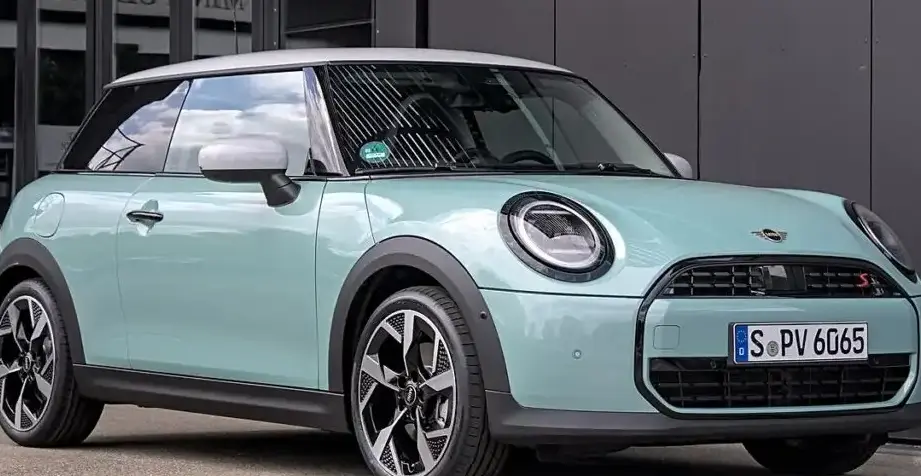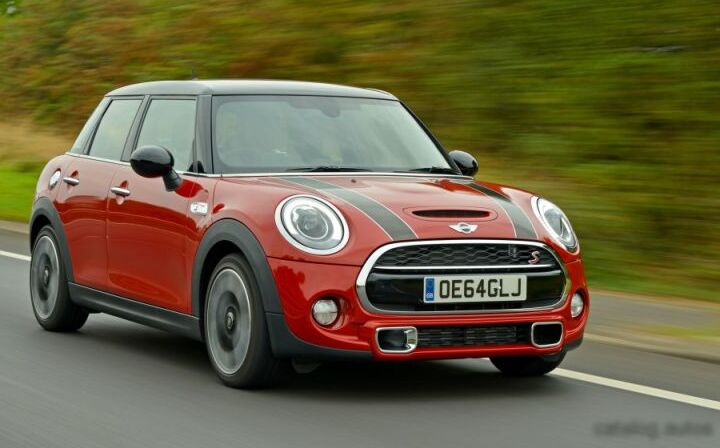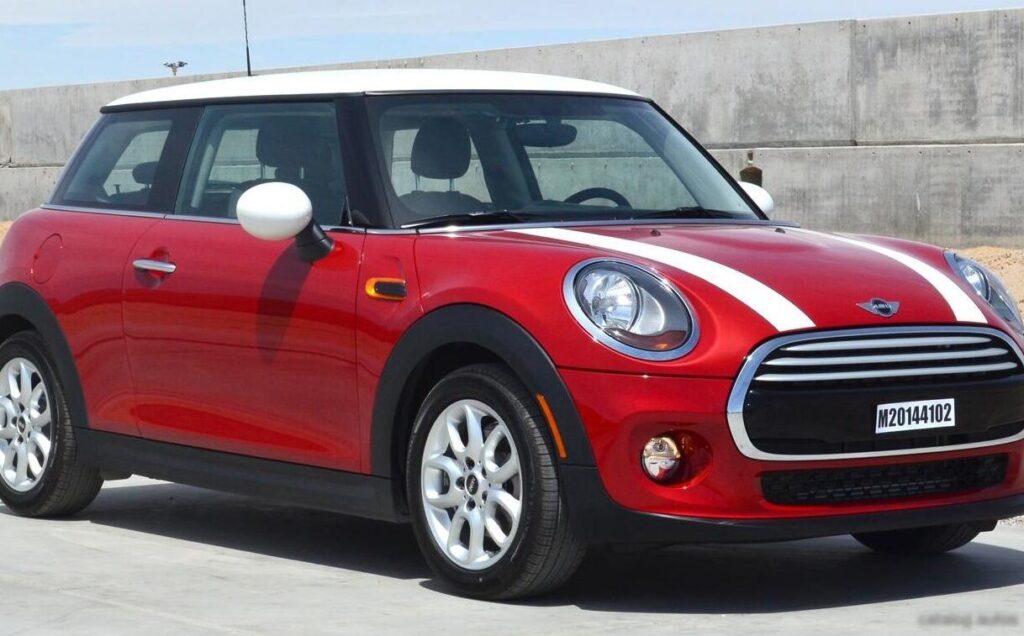
The Mini Hatch (F56) One D 1.5, produced from March 2014 to 2018, represents the entry-level diesel variant within the third generation of the iconic Mini Hatchback. Positioned as a fuel-efficient and accessible option, it catered to European markets prioritizing economy and urban practicality. This 3-door hatchback utilized the UKL1 platform (internally designated F56) and offered a distinct driving experience compared to its petrol counterparts and higher-powered diesel siblings. The One D 1.5 aimed to deliver classic Mini character with modern diesel technology.
Technical Specifications
| Brand | Mini |
| Model | Hatch |
| Generation | Hatch (F56) 3-door |
| Type (Engine) | One D 1.5 (95 Hp) |
| Start of production | March, 2014 |
| End of production | 2018 |
| Powertrain Architecture | Internal Combustion engine |
| Body type | Hatchback |
| Seats | 4 |
| Doors | 3 |
| Fuel consumption (urban) | 3.9 – 4.0 l/100 km (60.3 – 58.8 US mpg) |
| Fuel consumption (extra urban) | 3.1 – 3.2 l/100 km (75.9 – 73.5 US mpg) |
| Fuel consumption (combined) | 3.4 – 3.5 l/100 km (69.2 – 67.2 US mpg) |
| CO2 emissions | 89 – 92 g/km |
| Fuel Type | Diesel |
| Acceleration 0 – 100 km/h | 11 sec |
| Acceleration 0 – 62 mph | 11 sec |
| Acceleration 0 – 60 mph | 10.5 sec |
| Maximum speed | 190 km/h (118.06 mph) |
| Emission standard | Euro 6 |
| Weight-to-power ratio | 11.7 kg/Hp |
| Weight-to-torque ratio | 5.1 kg/Nm |
| Power | 95 Hp @ 4000 rpm |
| Torque | 220 Nm @ 1750 rpm (162.26 lb.-ft. @ 1750 rpm) |
| Engine layout | Front, Transverse |
| Engine Model/Code | B37C15A |
| Engine displacement | 1496 cm3 (91.29 cu. in.) |
| Number of cylinders | 3 |
| Engine configuration | Inline |
| Cylinder Bore | 84 mm (3.31 in.) |
| Piston Stroke | 90 mm (3.54 in.) |
| Compression ratio | 16.5:1 |
| Number of valves per cylinder | 4 |
| Fuel injection system | Diesel Commonrail |
| Engine aspiration | Turbocharger, Intercooler |
| Engine oil capacity | 4.4 l (4.65 US qt | 3.87 UK qt) |
| Coolant capacity | 3.3 l (3.49 US qt | 2.9 UK qt) |
| Kerb Weight | 1115 kg (2458.15 lbs.) |
| Max. weight | 1595 kg (3516.37 lbs.) |
| Max load | 480 kg (1058.22 lbs.) |
| Trunk (boot) space – minimum | 211 l (7.45 cu. ft.) |
| Fuel tank capacity | 44 l (11.62 US gal | 9.68 UK gal) |
| Length | 3821 mm (150.43 in.) |
| Width | 1727 mm (67.99 in.) |
| Height | 1414 mm (55.67 in.) |
| Wheelbase | 2495 mm (98.23 in.) |
| Front track | 1501 mm (59.09 in.) |
| Rear track | 1501 mm (59.09 in.) |
| Ride height (ground clearance) | 124 mm (4.88 in.) |
| Minimum turning circle | 10.8 m (35.43 ft.) |
| Drivetrain Architecture | Front wheel drive |
| Number of gears | 6 |
| Gearbox type | Manual transmission |
| Front suspension | Independent, McPherson with coil spring and anti-roll bar |
| Rear suspension | Independent multi-link suspension |
| Front brakes | Ventilated discs |
| Rear brakes | Disc |
| Assisting systems | ABS (Anti-lock braking system) |
| Steering type | Steering rack and pinion |
| Tires size | 175/65 R15 84H |
| Wheel rims size | 5.5J x 15 |
Powertrain & Engine Architecture
The heart of the One D 1.5 is the BMW-sourced B37C15A 1.5-liter three-cylinder diesel engine. This engine is part of BMW’s modular engine family and features a turbocharger with an intercooler to boost power and efficiency. The engine utilizes a common-rail direct injection system, delivering fuel directly into the combustion chamber at extremely high pressure for optimized combustion. The valvetrain employs four valves per cylinder, enhancing breathing and contributing to the engine’s torque output. The engine’s 16.5:1 compression ratio is typical for a diesel engine, aiding in efficient combustion. The 6-speed manual transmission was standard, providing a balance between fuel economy and driver engagement. While an automatic transmission was offered on other F56 models, it wasn’t paired with this specific engine.
Driving Characteristics
The 95 horsepower and 220 Nm (162 lb-ft) of torque delivered by the One D 1.5 provided adequate, though not exhilarating, performance. Acceleration from 0-60 mph took around 10.5 seconds, and top speed was 118 mph. The engine’s torque peak at 1750 rpm meant that usable power was available from low engine speeds, making it well-suited for urban driving and overtaking. Compared to the more powerful Cooper D variants, the One D felt noticeably slower, particularly at higher speeds. The manual transmission’s gear ratios were tuned for fuel efficiency, with a relatively long final drive. The driving experience was characterized by its light steering and nimble handling, typical of the Mini brand, but the engine lacked the punch of its more potent siblings.
Equipment & Trim Levels
The One D 1.5 typically came equipped with a relatively basic level of standard features. Interior upholstery was cloth, and the dashboard featured a simple, functional design. Standard equipment included air conditioning, power windows, and a basic audio system. Optional extras included alloy wheels, a panoramic sunroof, navigation system, and upgraded interior trim. The One D served as the entry point to the F56 range, with buyers able to upgrade to higher trim levels (Cooper, Cooper D, JCW) for more features and performance. The focus was on providing a cost-effective and efficient package.
Chassis & Braking
The F56 One D 1.5 utilized a McPherson strut front suspension and a multi-link rear suspension, providing a comfortable and controlled ride. The suspension was tuned to prioritize handling and agility, characteristic of the Mini brand. Front brakes were ventilated discs, while rear brakes were solid discs. ABS (Anti-lock Braking System) was standard. The relatively light weight of the One D (1115 kg / 2458 lbs) contributed to its nimble handling. Stabilizer bars were fitted front and rear to reduce body roll during cornering.
Market Reception & Comparison
The Mini One D 1.5 was generally well-received by critics for its fuel efficiency and low running costs. However, some reviewers noted that the engine lacked the refinement and performance of its competitors, and even of the higher-powered Mini diesel models. Compared to the Cooper D, the One D offered significantly less power and a less engaging driving experience, but at a lower price point. Fuel economy was a key selling point, with combined figures averaging around 69 mpg (US). Reliability was generally good, although some owners reported issues with the diesel particulate filter (DPF) system, a common concern with modern diesel engines.
Legacy
The B37C15A engine, while not known for being a powerhouse, proved to be a relatively reliable unit when properly maintained. On the used car market, the F56 One D 1.5 represents an affordable entry point into Mini ownership. Its fuel efficiency and low running costs continue to appeal to buyers seeking an economical and practical hatchback. However, potential buyers should be aware of the potential for DPF issues and ensure that the vehicle has been regularly serviced. The One D 1.5 remains a popular choice for urban commuters and those prioritizing fuel economy over outright performance.