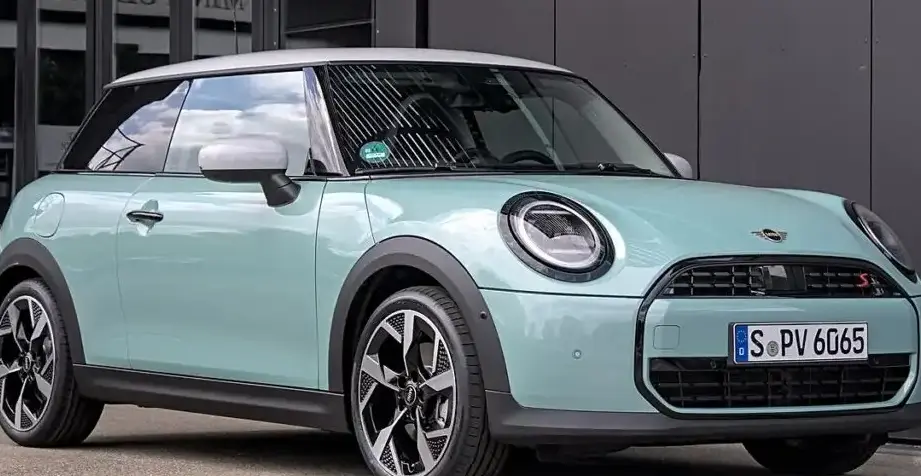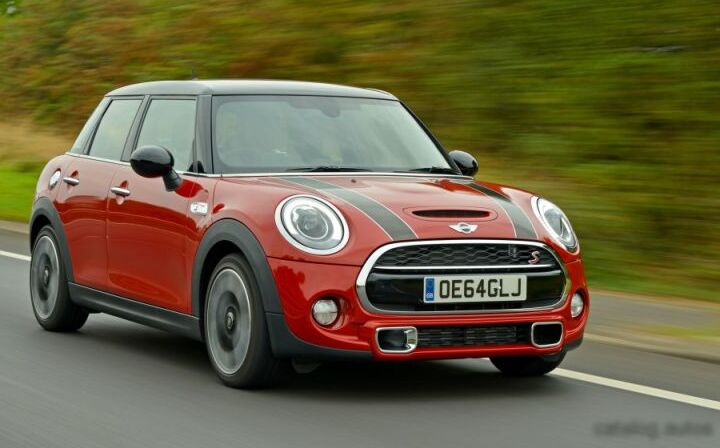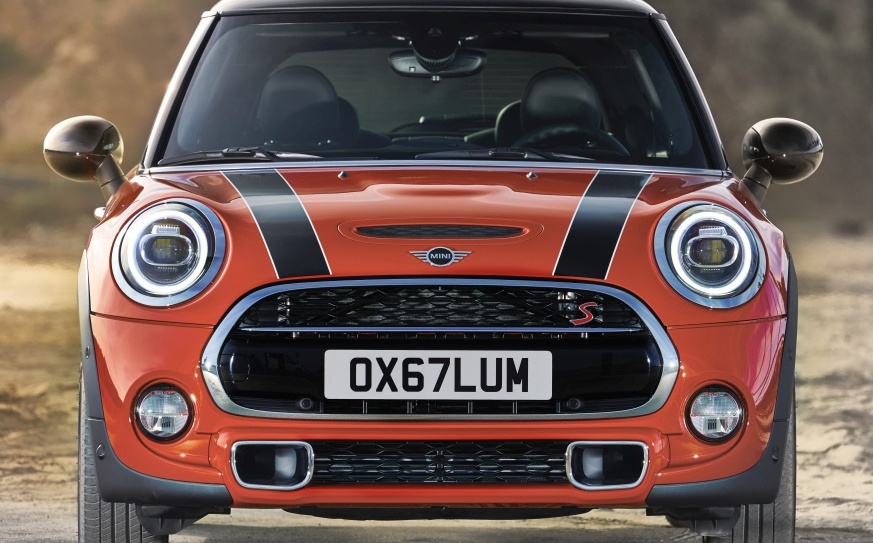
The Mini Hatch (F56) facelift, introduced in 2018, represented a significant refresh of the third-generation Mini, launched in 2014. Among the various engine and trim combinations offered, the Cooper 1.5, producing 136 horsepower, occupied a key position in the lineup. This variant, available as a 3-door hatchback, aimed to balance performance, fuel efficiency, and affordability, appealing to a broad range of buyers. Production of this specific configuration ran throughout the 2018 model year, building upon the established success of the F56 platform, which shared its underpinnings with the BMW 2 Series Active Tourer.
Technical Specifications
| Brand | Mini |
| Model | Hatch |
| Generation | Hatch (F56, facelift 2018) 3-door |
| Type (Engine) | Cooper 1.5 (136 Hp) |
| Start of production | 2018 |
| End of production | 2018 |
| Powertrain Architecture | Internal Combustion engine |
| Body type | Hatchback |
| Seats | 4 |
| Doors | 3 |
| Fuel consumption (urban) | 5.7-5.8 l/100 km (41.3 – 40.6 US mpg) |
| Fuel consumption (extra urban) | 3.8-3.9 l/100 km (61.9 – 60.3 US mpg) |
| Fuel consumption (combined) | 4.5-4.6 l/100 km (52.3 – 51.1 US mpg) |
| CO2 emissions | 105-107 g/km |
| Fuel Type | Petrol (Gasoline) |
| Acceleration 0 – 100 km/h | 7.9 sec |
| Acceleration 0 – 62 mph | 7.9 sec |
| Acceleration 0 – 60 mph | 7.5 sec |
| Maximum speed | 210 km/h (130.49 mph) |
| Emission standard | Euro 6 |
| Weight-to-power ratio | 8 kg/Hp |
| Weight-to-torque ratio | 4.7 kg/Nm |
| Power | 136 Hp @ 4400-6000 rpm |
| Torque | 230 Nm @ 1250-4300 rpm (169.64 lb.-ft. @ 1250-4300 rpm) |
| Engine layout | Front, Transverse |
| Engine Model/Code | B38A15A |
| Engine displacement | 1499 cm3 (91.47 cu. in.) |
| Number of cylinders | 3 |
| Engine configuration | Inline |
| Cylinder Bore | 82 mm (3.23 in.) |
| Piston Stroke | 94.6 mm (3.72 in.) |
| Compression ratio | 11:1 |
| Number of valves per cylinder | 4 |
| Fuel injection system | Direct injection |
| Engine aspiration | Twin-power turbo, Intercooler |
| Engine oil capacity | 4.25 l (4.49 US qt | 3.74 UK qt) |
| Coolant | 4.9 l (5.18 US qt | 4.31 UK qt) |
| Kerb Weight | 1085 kg (2392.02 lbs.) |
| Max. weight | 1565 kg (3450.23 lbs.) |
| Max load | 480 kg (1058.22 lbs.) |
| Trunk (boot) space – minimum | 211 l (7.45 cu. ft.) |
| Fuel tank capacity | 40 l (10.57 US gal | 8.8 UK gal) |
| Max. roof load | 60 kg (132.28 lbs.) |
| Length | 3821 mm (150.43 in.) |
| Width | 1727 mm (67.99 in.) |
| Height | 1414 mm (55.67 in.) |
| Wheelbase | 2495 mm (98.23 in.) |
| Front track | 1501 mm (59.09 in.) |
| Rear (Back) track | 1501 mm (59.09 in.) |
| Ride height (ground clearance) | 143 mm (5.63 in.) |
| Drag coefficient (Cd) | 0.28 |
| Minimum turning circle (turning diameter) | 10.8 m (35.43 ft.) |
| Drivetrain Architecture | Front wheel drive |
| Drive wheel | Front wheel drive |
| Number of gears and type of gearbox | 6 gears, manual transmission |
| Front suspension | Independent, type McPherson with coil spring and anti-roll bar |
| Rear suspension | Independent multi-link suspension |
| Front brakes | Ventilated discs |
| Rear brakes | Disc |
| Assisting systems | ABS (Anti-lock braking system) |
| Steering type | Steering rack and pinion |
| Power steering | Electric Steering |
| Tires size | 175/65 R15 84H |
| Wheel rims size | 5.5J x 15 |
Powertrain & Engine Architecture
The heart of the Cooper 1.5 was the BMW B38A15A engine, a 1.5-liter turbocharged inline-three cylinder powerplant. This engine was part of BMW’s modular engine family, known for its compact size and efficiency. The B38 featured direct fuel injection, operating at a compression ratio of 11:1, and utilized a single twin-scroll turbocharger with an intercooler to boost power output. The engine’s valvetrain employed four valves per cylinder, contributing to its responsive nature. The 6-speed manual transmission was standard, offering precise shifts and a direct connection to the engine. This engine code was a significant departure from the earlier Cooper models, which often featured four-cylinder engines.
Driving Characteristics
The 136 hp and 230 Nm (169.64 lb-ft) of torque delivered by the Cooper 1.5 provided a lively, yet accessible driving experience. While not as overtly sporty as the more powerful Cooper S models, the 1.5 offered sufficient performance for everyday driving and spirited backroad excursions. Acceleration from 0-60 mph took approximately 7.5 seconds. The turbocharger provided a noticeable boost in power from around 1250 rpm, offering good low-end torque for easy overtaking. Compared to the manual transmission, the automatic version, while offering convenience, slightly dulled the driving experience, with a bit more lag in gear changes. The gear ratios were tuned for a balance of fuel economy and responsiveness.
Equipment & Trim Levels
The Cooper 1.5 typically came standard with features like air conditioning, power windows, a basic infotainment system with Bluetooth connectivity, and alloy wheels. Interior upholstery was typically cloth, with options for leather upgrades. Available optional extras included a larger touchscreen display, navigation system, parking sensors, and a panoramic sunroof. Trim levels varied by market, but generally offered packages that bundled popular options together. The Cooper 1.5 sat in the middle of the range, offering more features than the base One model, but lacking the performance enhancements and premium features of the Cooper S.
Chassis & Braking
The F56 Mini Hatch utilized a McPherson strut front suspension and a multi-link rear suspension, providing a comfortable yet sporty ride. The suspension was tuned to minimize body roll and provide precise handling. The Cooper 1.5 featured ventilated front disc brakes and solid rear discs, providing adequate stopping power for its weight and performance. ABS (Anti-lock Braking System) was standard. The electric power steering offered precise control and a responsive feel. Stabilizer bars were fitted front and rear to further reduce body roll during cornering.
Market Reception & Comparison
The Cooper 1.5 was generally well-received by automotive critics. It was praised for its fuel efficiency, nimble handling, and stylish design. However, some reviewers noted that the engine could feel strained at higher speeds, and the interior, while well-designed, could feel cramped for taller occupants. Compared to the Cooper S, the 1.5 offered a more affordable entry point into the Mini brand, sacrificing some performance for improved fuel economy. Against competitors like the Volkswagen Polo and Audi A1, the Mini offered a more premium feel and a more engaging driving experience.
Legacy
The B38 engine family has proven to be relatively reliable, although some owners have reported issues with the timing chain and oil leaks. The F56 Mini Hatch, including the Cooper 1.5 variant, remains a popular choice in the used car market, prized for its distinctive styling and fun-to-drive character. The 1.5-liter engine offers a good balance of performance and fuel economy, making it a practical choice for daily commuting. Well-maintained examples continue to command reasonable prices, reflecting the enduring appeal of the Mini brand.