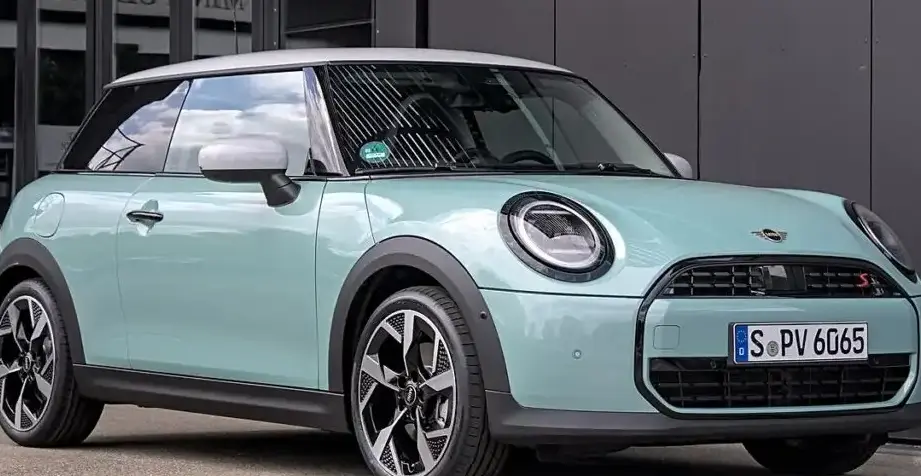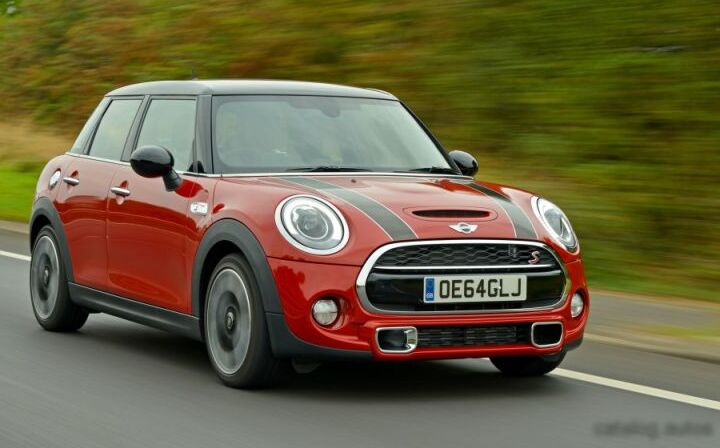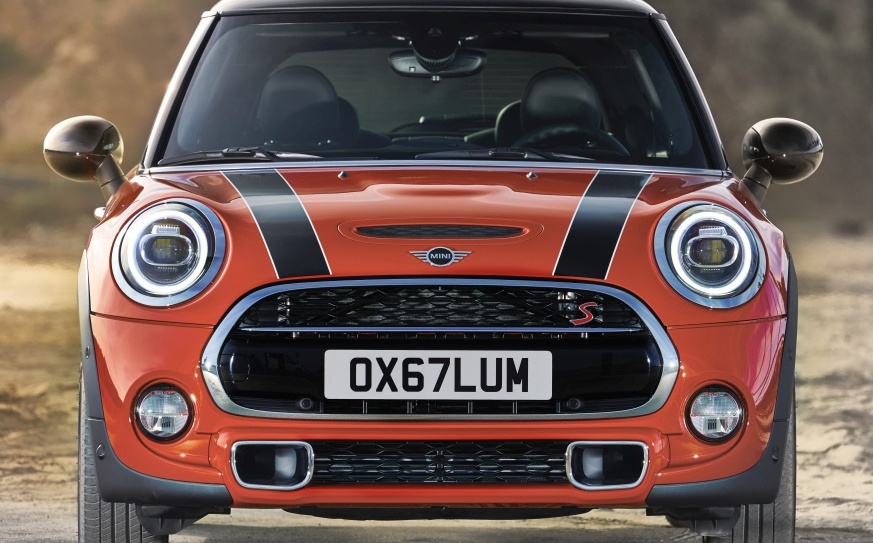
The Mini Hatch (F56) facelift Cooper S 2.0, produced from 2018, represents a mid-cycle refresh of the third-generation Mini Hatch. This particular variant, boasting a 2.0-liter turbocharged engine producing 192 horsepower, occupied a performance-oriented position within the F56 lineup, slotting above the Cooper models and below any potential JCW (John Cooper Works) offerings. The facelift brought subtle styling updates, improved technology, and refinements to the powertrain, solidifying the Cooper S as a popular choice for enthusiasts seeking a premium, sporty compact car in the European and increasingly, North American markets.
Technical Specifications
| Brand | Mini |
| Model | Hatch |
| Generation | Hatch (F56, facelift 2018) 3-door |
| Type (Engine) | Cooper S 2.0 (192 Hp) |
| Start of production | 2018 |
| End of production | 2018 |
| Powertrain Architecture | Internal Combustion engine |
| Body type | Hatchback |
| Seats | 4 |
| Doors | 3 |
| Fuel consumption (urban) | 7.6-7.7 l/100 km (30.9 – 30.5 US mpg) |
| Fuel consumption (extra urban) | 4.6-4.8 l/100 km (51.1 – 49 US mpg) |
| Fuel consumption (combined) | 5.7-5.8 l/100 km (41.3 – 40.6 US mpg) |
| CO2 emissions | 133-136 g/km |
| Fuel Type | Petrol (Gasoline) |
| Acceleration 0 – 100 km/h | 6.8 sec |
| Acceleration 0 – 62 mph | 6.8 sec |
| Acceleration 0 – 60 mph | 6.5 sec |
| Maximum speed | 235 km/h (146.02 mph) |
| Emission standard | Euro 6 |
| Weight-to-power ratio | 6 kg/Hp |
| Weight-to-torque ratio | 3.9 kg/Nm |
| Power | 192 Hp @ 5000-6000 rpm |
| Torque | 300 Nm @ 1250-4600 rpm (221.27 lb.-ft. @ 1250-4600 rpm) |
| Engine layout | Front, Transverse |
| Engine Model/Code | B48A20A |
| Engine displacement | 1998 cm3 (121.93 cu. in.) |
| Number of cylinders | 4 |
| Engine configuration | Inline |
| Cylinder Bore | 82 mm (3.23 in.) |
| Piston Stroke | 94.6 mm (3.72 in.) |
| Compression ratio | 11:1 |
| Number of valves per cylinder | 4 |
| Fuel injection system | Direct injection |
| Engine aspiration | Twin-power turbo, Intercooler |
| Engine oil capacity | 5.3 l (5.6 US qt | 4.66 UK qt) |
| Coolant | 5.8 l (6.13 US qt | 5.1 UK qt) |
| Kerb Weight | 1160 kg (2557.36 lbs.) |
| Max. weight | 1640 kg (3615.58 lbs.) |
| Max load | 480 kg (1058.22 lbs.) |
| Trunk (boot) space – minimum | 211 l (7.45 cu. ft.) |
| Fuel tank capacity | 44 l (11.62 US gal | 9.68 UK gal) |
| Max. roof load | 60 kg (132.28 lbs.) |
| Length | 3850 mm (151.57 in.) |
| Width | 1727 mm (67.99 in.) |
| Height | 1414 mm (55.67 in.) |
| Wheelbase | 2495 mm (98.23 in.) |
| Front track | 1485 mm (58.46 in.) |
| Rear (Back) track | 1485 mm (58.46 in.) |
| Ride height (ground clearance) | 143 mm (5.63 in.) |
| Drag coefficient (Cd) | 0.31 |
| Minimum turning circle | 10.8 m (35.43 ft.) |
| Drivetrain Architecture | Front wheel drive |
| Number of gears and type of gearbox | 6 gears, manual transmission |
| Front suspension | Independent, type McPherson with coil spring and anti-roll bar |
| Rear suspension | Independent multi-link suspension |
| Front brakes | Ventilated discs |
| Rear brakes | Disc |
| Assisting systems | ABS (Anti-lock braking system) |
| Steering type | Steering rack and pinion |
| Power steering | Electric Steering |
| Tires size | 195/55 R16 87W |
| Wheel rims size | 6.5J x 16 |
INTRODUCTION
The F56 Mini Hatch facelift, launched in 2018, continued the revitalization of the iconic Mini brand under BMW ownership. The Cooper S 2.0 variant, powered by BMW’s B48 engine, was a key component of this strategy, offering a compelling blend of performance, style, and technology. This iteration built upon the foundation laid by the earlier F56 models, addressing some criticisms regarding interior space and refinement. The 3-door configuration emphasized the car’s sporty character and appealed to buyers prioritizing driving enjoyment over outright practicality. The 2018 facelift brought subtle exterior tweaks, including redesigned headlights and taillights, along with an upgraded infotainment system and enhanced driver assistance features.
Powertrain & Engine Architecture
At the heart of the Cooper S 2.0 lies BMW’s B48A20A 2.0-liter inline-four cylinder engine. This engine is a member of BMW’s modular engine family, known for its efficiency and performance. It utilizes direct fuel injection, a single twin-scroll turbocharger, and variable valve timing (VANOS) on both intake and exhaust camshafts. The B48 engine produces 192 horsepower at 5000-6000 rpm and 300 Nm (221 lb-ft) of torque between 1250 and 4600 rpm. This broad torque curve provides strong acceleration in everyday driving situations. The engine’s intercooler helps to manage intake air temperatures, maximizing power output. The 6-speed manual transmission was standard, offering precise shifts and a direct connection to the engine. An optional 8-speed automatic transmission was also available, providing smoother gear changes and improved fuel economy, though at the expense of some driver engagement.
Driving Characteristics
The Cooper S 2.0 delivers a noticeably more spirited driving experience than the standard Cooper models. The 192 hp engine provides brisk acceleration, with 0-60 mph times around 6.5 seconds. The turbocharger provides a minimal amount of lag, delivering a responsive throttle response. The manual transmission’s short throw and precise gate make for an engaging driving experience. The chassis is well-tuned, offering a good balance between comfort and handling. The steering is direct and communicative, providing plenty of feedback to the driver. While not a track-focused machine, the Cooper S 2.0 is capable of providing plenty of fun on twisty roads. Compared to the higher-output JCW variant, the Cooper S 2.0 offers a more accessible power delivery and a slightly more comfortable ride.
Equipment & Trim Levels
The Cooper S 2.0 came standard with a generous amount of equipment, including automatic climate control, a 6.5-inch infotainment system with Bluetooth connectivity, and a leather-wrapped steering wheel. Optional extras included a larger 8.8-inch infotainment system with navigation, a Harman Kardon premium sound system, heated seats, and a panoramic sunroof. Interior upholstery options ranged from cloth to leather, with a variety of color combinations available. The exterior could be customized with a wide range of paint colors, wheel designs, and styling packages. The Cooper S trim also included sport seats, unique exterior styling cues, and upgraded brakes compared to the base Cooper models.
Chassis & Braking
The F56 Mini Hatch utilizes a McPherson strut front suspension and a multi-link rear suspension. This setup provides a good balance between ride comfort and handling precision. The Cooper S 2.0 featured slightly stiffer springs and dampers compared to the standard Cooper models, further enhancing its sporty character. Brakes consisted of ventilated discs at the front and solid discs at the rear. ABS (Anti-lock Braking System) was standard. The car’s relatively low weight contributes to its agile handling and responsive braking performance.
Market Reception & Comparison
The Mini Cooper S 2.0 was generally well-received by automotive critics. It was praised for its engaging driving dynamics, stylish design, and premium interior. Some critics noted that the rear seat space was limited, and the ride could be firm on rough roads. Compared to rivals such as the Volkswagen GTI and Audi A3, the Mini offered a more unique and characterful driving experience, but at a slightly higher price point. Fuel economy was competitive, with combined figures around 40-41 mpg. Reliability was generally good, although some owners reported minor issues with the infotainment system.
Legacy
The F56 Mini Hatch Cooper S 2.0 has proven to be a popular choice in the used car market. The B48 engine has a reputation for being relatively reliable, although regular maintenance is essential. The car’s stylish design and engaging driving dynamics continue to appeal to enthusiasts. The availability of aftermarket parts and tuning options makes it a popular platform for customization. As a modern classic, the F56 Cooper S 2.0 represents a compelling blend of British heritage and German engineering, offering a unique and enjoyable driving experience.