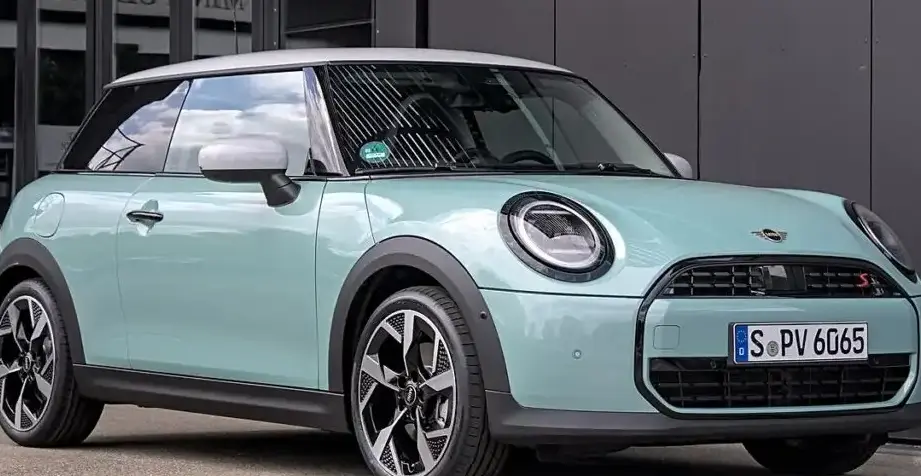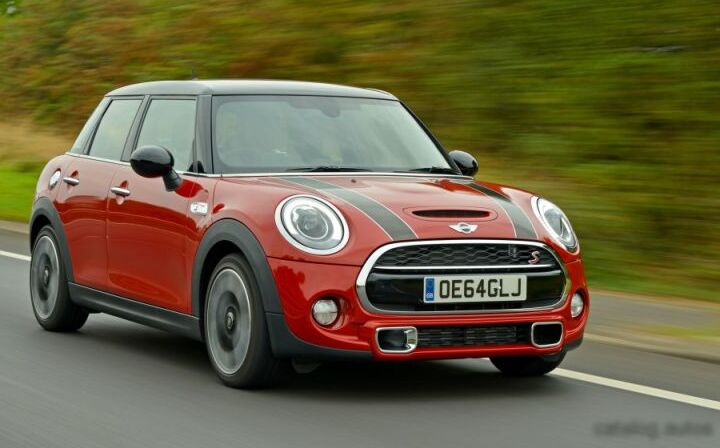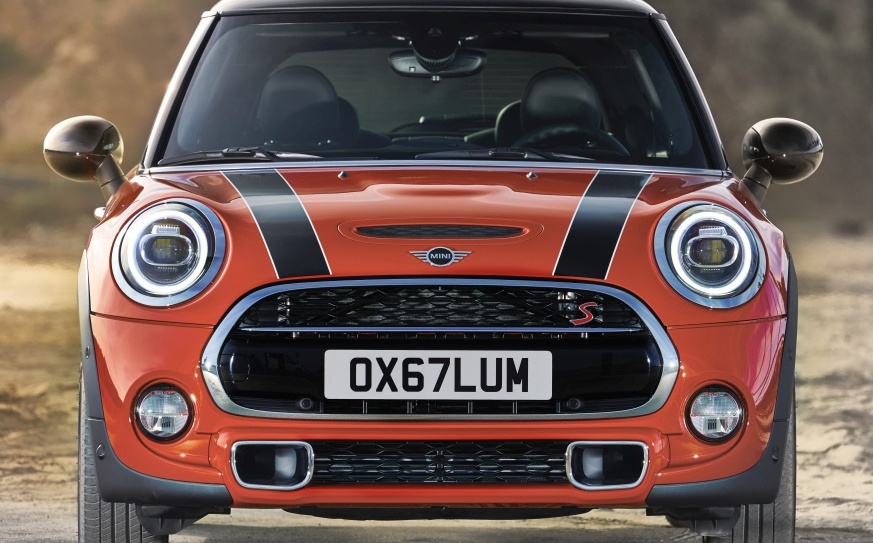
The Mini Hatch (F56) facelift, specifically the One First 1.5 (75 hp) 3-door model, represents an entry point into the modern Mini lineup introduced in 2018. This variant was primarily aimed at the European market, offering a blend of iconic Mini styling with a focus on fuel efficiency and affordability. It slots into the F56 generation, which began production in 2014 and received a significant facelift in 2018, bringing updated styling, technology, and engine options. The “First” designation denoted a specific trim level, often representing a well-equipped but accessible version of the base One model.
Technical Specifications
| Brand | Mini |
| Model | Hatch |
| Generation | Hatch (F56, facelift 2018) 3-door |
| Type (Engine) | One First 1.5 (75 Hp) |
| Start of production | 2018 |
| End of production | 2018 |
| Powertrain Architecture | Internal Combustion engine |
| Body type | Hatchback |
| Seats | 4 |
| Doors | 3 |
| Fuel consumption (urban) | 5.9-6.1 l/100 km (39.9 – 38.6 US mpg) |
| Fuel consumption (extra urban) | 4.4-4.5 l/100 km (53.5 – 52.3 US mpg) |
| Fuel consumption (combined) | 4.9-5.1 l/100 km (48 – 46.1 US mpg) |
| CO2 emissions | 112-116 g/km |
| Fuel Type | Petrol (Gasoline) |
| Acceleration 0 – 100 km/h | 12.8 sec |
| Acceleration 0 – 62 mph | 12.8 sec |
| Acceleration 0 – 60 mph | 12.2 sec |
| Maximum speed | 175 km/h (108.74 mph) |
| Emission standard | Euro 6 c |
| Weight-to-power ratio | 14.8 kg/Hp |
| Weight-to-torque ratio | 6.9 kg/Nm |
| Power | 75 Hp @ 3500-6500 rpm |
| Torque | 160 Nm @ 1250-3000 rpm (118.01 lb.-ft.) |
| Engine layout | Front, Transverse |
| Engine Model/Code | B38A15A |
| Engine displacement | 1499 cm3 (91.47 cu. in.) |
| Number of cylinders | 3 |
| Engine configuration | Inline |
| Cylinder Bore | 82 mm (3.23 in.) |
| Piston Stroke | 94.6 mm (3.72 in.) |
| Compression ratio | 11:1 |
| Number of valves per cylinder | 4 |
| Fuel injection system | Direct injection |
| Engine aspiration | Twin-power turbo, Intercooler |
| Engine oil capacity | 4.25 l (4.49 US qt | 3.74 UK qt) |
| Coolant | 4.9 l (5.18 US qt | 4.31 UK qt) |
| Kerb Weight | 1110 kg (2447.13 lbs.) |
| Max. weight | 1565 kg (3450.23 lbs.) |
| Max load | 455 kg (1003.1 lbs.) |
| Trunk (boot) space – minimum | 211 l (7.45 cu. ft.) |
| Fuel tank capacity | 40 l (10.57 US gal | 8.8 UK gal) |
| Max. roof load | 60 kg (132.28 lbs.) |
| Length | 3821 mm (150.43 in.) |
| Width | 1727 mm (67.99 in.) |
| Height | 1414 mm (55.67 in.) |
| Wheelbase | 2495 mm (98.23 in.) |
| Front track | 1501 mm (59.09 in.) |
| Rear (Back) track | 1501 mm (59.09 in.) |
| Ride height (ground clearance) | 143 mm (5.63 in.) |
| Drag coefficient (Cd) | 0.30 |
| Minimum turning circle | 10.8 m (35.43 ft.) |
| Drivetrain Architecture | Front wheel drive |
| Number of gears and type of gearbox | 6 gears, manual transmission |
| Front suspension | Independent, type McPherson with coil spring and anti-roll bar |
| Rear suspension | Independent multi-link suspension |
| Front brakes | Ventilated discs |
| Rear brakes | Disc |
| Assisting systems | ABS (Anti-lock braking system) |
| Steering type | Steering rack and pinion |
| Power steering | Electric Steering |
| Tires size | 175/65 R15 84H |
| Wheel rims size | 5.5J x 15 |
INTRODUCTION
The Mini Hatch One First 1.5, launched in 2018 as part of the F56 facelift, offered a more accessible entry point into the premium small car segment. Positioned below the Cooper and Cooper S models, the One First aimed to attract buyers prioritizing fuel economy and stylish design over outright performance. The facelift brought a revised front fascia with a larger grille, redesigned headlights, and updated interior trim. This variant was particularly popular in Europe, where smaller displacement engines and a focus on efficiency are highly valued. It represented a continuation of Mini’s strategy to broaden its appeal beyond enthusiasts seeking a sporty driving experience.
Powertrain & Engine Architecture
At the heart of the One First 1.5 lies the BMW B38A15A 1.5-liter three-cylinder turbocharged engine. This engine is part of BMW’s modular engine family, known for its compact size, lightweight construction, and efficiency. The B38 utilizes direct fuel injection, a single twin-scroll turbocharger, and variable valve timing (VANOS) to optimize performance and fuel economy. The engine produces 75 horsepower at 3500-6500 rpm and 160 Nm (118 lb-ft) of torque between 1250-3000 rpm. The engine’s aluminum block and head contribute to its relatively low weight. The One First was typically paired with a six-speed manual transmission, although a six-speed automatic transmission was also available as an option. The automatic transmission is a conventional torque-converter type, prioritizing smooth shifts over outright speed.
Driving Characteristics
The 1.5-liter engine in the One First provides adequate, though not exhilarating, performance. Acceleration from 0-60 mph takes around 12.2 seconds, and the top speed is 175 km/h (108.74 mph). The turbocharger provides a noticeable boost in power, but the engine can feel somewhat strained at higher speeds or when fully loaded. The manual transmission offers a precise and engaging shift feel, while the automatic provides smooth and convenient operation. Compared to the more powerful Cooper models, the One First feels noticeably slower, particularly in highway overtaking situations. However, its lighter weight and efficient engine contribute to better fuel economy and a more nimble feel in city driving. The gear ratios are tuned for efficiency, prioritizing lower engine speeds at cruising speeds.
Equipment & Trim Levels
The “First” trim level for the One included a generous amount of standard equipment. Typically, this included air conditioning, power windows, power mirrors, a centrally mounted 6.5-inch infotainment system with Bluetooth connectivity, and a leather-wrapped steering wheel. Safety features such as ABS, electronic stability control, and multiple airbags were also standard. Optional extras included a larger infotainment screen, navigation system, automatic climate control, parking sensors, and a panoramic sunroof. Interior upholstery was typically cloth, with options for partial leather trim. The dashboard design featured the iconic Mini circular center display and toggle switches, providing a distinctive and stylish interior environment.
Chassis & Braking
The F56 Mini Hatch utilizes a McPherson strut front suspension and a multi-link rear suspension, providing a comfortable yet sporty ride. The One First variant typically featured slightly softer suspension tuning compared to the Cooper S, prioritizing ride comfort over ultimate handling performance. Brakes consisted of ventilated discs at the front and solid discs at the rear. ABS (Anti-lock Braking System) was standard. The steering is electrically assisted, providing precise and responsive control. The chassis is relatively lightweight, contributing to the car’s nimble handling characteristics. Stabilizer bars are present at both the front and rear, helping to reduce body roll during cornering.
Market Reception & Comparison
The Mini One First 1.5 was generally well-received by critics as an affordable and stylish entry point into the Mini brand. Its fuel economy was praised, and its nimble handling made it enjoyable to drive in urban environments. However, some critics noted its lack of outright performance compared to the Cooper models. Compared to other small hatchbacks in its class, the Mini One First offered a more premium interior and a more distinctive design, but at a higher price point. The 1.8L engine found in some competing models often provided more power, but typically at the expense of fuel efficiency. Reliability reports suggest that the B38 engine is generally reliable, although some owners have reported issues with the turbocharger and fuel injectors.
Legacy
The Mini One First 1.5 (F56) represents a significant step in Mini’s efforts to broaden its appeal to a wider audience. The B38 engine proved to be a reliable and efficient powerplant, and the F56 chassis provided a solid foundation for a fun-to-drive small car. On the used car market, these models are generally sought after for their stylish design and relatively low running costs. While not as desirable as the more powerful Cooper S variants, the One First offers a compelling package for buyers seeking a premium small car with a focus on fuel efficiency and affordability. The engine’s relatively simple design and widespread use across the BMW and Mini ranges mean that parts availability is generally good, making maintenance relatively straightforward.