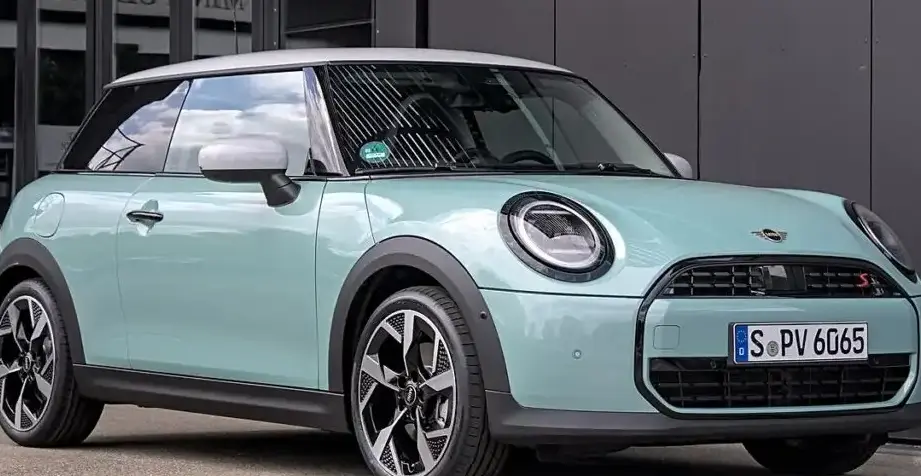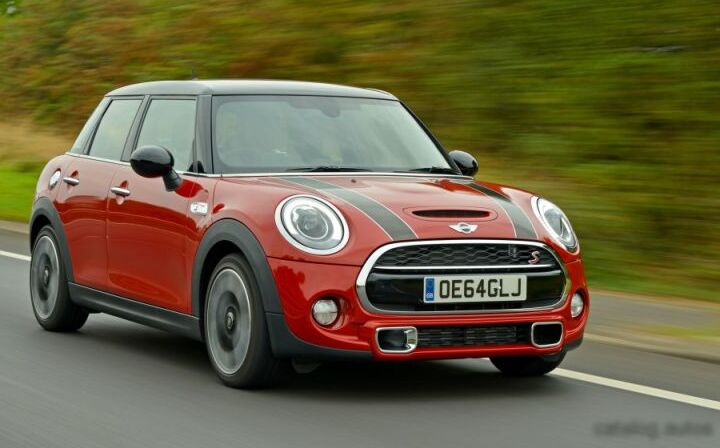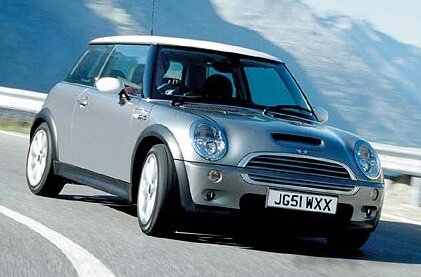
The Mini Cooper S (R53), produced from 2004 to 2006, represented a significant step up in performance for the revitalized Mini brand. Building upon the foundation laid by the R50 Cooper, the Cooper S introduced a supercharged engine and a more aggressive character, appealing to enthusiasts seeking a spirited driving experience in a compact package. This variant occupied the performance-oriented tier within the first generation of the modern Mini, positioned above the base Cooper and below any potential future John Cooper Works (JCW) models. The R53 platform, based on BMW’s 1HX0/A3 architecture, aimed to recapture the original Mini’s go-kart handling while incorporating modern safety and convenience features.
Technical Specifications
| Brand | Mini |
| Model | Hatch |
| Generation | Hatch (R50; R53) |
| Type (Engine) | Cooper S 1.6 i 16V (170 Hp) |
| Start of production | 2004 |
| End of production | 2006 |
| Powertrain Architecture | Internal Combustion engine |
| Body type | Hatchback |
| Seats | 4 |
| Doors | 3 |
| Fuel consumption (urban) | 11.8 l/100 km (19.9 US mpg) |
| Fuel consumption (extra urban) | 6.8 l/100 km (34.6 US mpg) |
| Fuel consumption (combined) | 8.6 l/100 km (27.4 US mpg) |
| Fuel Type | Petrol (Gasoline) |
| Acceleration 0 – 100 km/h | 7.2 sec |
| Acceleration 0 – 62 mph | 7.2 sec |
| Acceleration 0 – 60 mph | 6.8 sec |
| Maximum speed | 222 km/h (137.94 mph) |
| Weight-to-power ratio | 6.7 kg/Hp |
| Weight-to-torque ratio | 5.2 kg/Nm |
| Power | 170 Hp @ 6000 rpm |
| Torque | 220 Nm @ 4000 rpm (162.26 lb.-ft. @ 4000 rpm) |
| Engine layout | Front, Transverse |
| Engine Model/Code | W11B16A |
| Engine displacement | 1598 cm3 (97.52 cu. in.) |
| Number of cylinders | 4 |
| Engine configuration | Inline |
| Cylinder Bore | 77 mm (3.03 in.) |
| Piston Stroke | 85.8 mm (3.38 in.) |
| Compression ratio | 10.6:1 |
| Number of valves per cylinder | 4 |
| Fuel injection system | Multi-port manifold injection |
| Engine aspiration | Supercharger, Intercooler |
| Valvetrain | OHC |
| Engine oil capacity | 4.5 l (4.76 US qt | 3.96 UK qt) |
| Coolant capacity | 5.3 l (5.6 US qt | 4.66 UK qt) |
| Kerb Weight | 1140 kg (2513.27 lbs.) |
| Max. weight | 1570 kg (3461.26 lbs.) |
| Max load | 430 kg (947.99 lbs.) |
| Trunk (boot) space – minimum | 150 l (5.3 cu. ft.) |
| Fuel tank capacity | 50 l (13.21 US gal | 11 UK gal) |
| Length | 3655 mm (143.9 in.) |
| Width | 1688 mm (66.46 in.) |
| Height | 1428 mm (56.22 in.) |
| Wheelbase | 2467 mm (97.13 in.) |
| Front track | 1453 mm (57.2 in.) |
| Rear track | 1460 mm (57.48 in.) |
| Drivetrain Architecture | Front wheel drive |
| Number of gears | 6 |
| Gearbox type | Manual transmission |
| Front suspension | Spring Strut |
| Rear suspension | Coil spring |
| Front brakes | Ventilated discs |
| Rear brakes | Disc |
| Assisting systems | ABS (Anti-lock braking system) |
| Steering type | Steering rack and pinion |
| Power steering | Hydraulic Steering |
| Tires size | 195/55R16 |
| Wheel rims size | 6.5J X 16 |
Powertrain & Engine Architecture
The heart of the Cooper S was the W11B16A 1.6-liter inline-four engine. This engine was a significant departure from the naturally aspirated engines found in the standard Cooper. The key feature was a mechanically driven Eaton supercharger, providing instant boost and a noticeable increase in power. The supercharger, coupled with an intercooler to reduce intake air temperature, allowed the engine to produce 170 horsepower at 6000 rpm and 162 lb-ft of torque at 4000 rpm. Fuel delivery was handled by a multi-port fuel injection system. The engine utilized a single overhead camshaft (OHC) design with four valves per cylinder. The six-speed manual transmission was standard, offering precise shifts and contributing to the car’s engaging driving experience. While an automatic transmission was offered in other Mini variants, it wasn’t typically paired with the Cooper S due to its performance focus.
Driving Characteristics
The Cooper S, with its supercharged engine and manual transmission, delivered a distinctly sporty driving experience. Acceleration from 0 to 60 mph took approximately 6.8 seconds, and the car could reach a top speed of 137.94 mph. The supercharger provided strong low-end and mid-range torque, making the car feel responsive and eager in everyday driving situations. Compared to the naturally aspirated Cooper, the Cooper S offered a substantial performance advantage. The six-speed gearbox allowed drivers to keep the engine in its optimal power band, maximizing acceleration and responsiveness. While the suspension was firm, it provided good body control and a connected feel to the road, living up to the Mini’s reputation for go-kart-like handling.
Equipment & Trim Levels
The Cooper S came reasonably well-equipped as standard. Interior features typically included sport seats, a leather-wrapped steering wheel, and aluminum trim accents. Standard exterior features included alloy wheels, fog lights, and a more aggressive front bumper design compared to the standard Cooper. Optional extras included a panoramic sunroof, upgraded audio systems, and various customization options through the Mini Yours program, allowing buyers to personalize their vehicles with unique interior and exterior finishes. The Cooper S trim was generally considered the premium offering within the R53 range, appealing to buyers who prioritized performance and style.
Chassis & Braking
The R53 Cooper S utilized a MacPherson strut front suspension and a multi-link rear suspension, providing a good balance of handling and ride comfort. The chassis was reinforced compared to the standard Cooper to handle the increased power output. Braking duties were handled by ventilated disc brakes at the front and solid disc brakes at the rear. Anti-lock Braking System (ABS) was standard. The steering was a hydraulic power-assisted rack and pinion system, providing precise and responsive steering feel. The car rode on 195/55R16 tires, contributing to its grip and handling characteristics.
Market Reception & Comparison
The Cooper S was generally well-received by automotive critics, who praised its performance, handling, and distinctive styling. It was often compared to other small, sporty hatchbacks such as the Volkswagen GTI and the Mazda MX-5. While the GTI offered more interior space and practicality, the Cooper S was lauded for its more engaging driving experience and unique character. Fuel economy was reasonable for a performance-oriented vehicle, averaging around 27.4 US mpg in combined driving. Reliability was generally good, although some owners reported issues with the supercharger and cooling system.
Legacy
The R53 Cooper S played a crucial role in establishing the modern Mini as a desirable and sporty brand. The supercharged engine and engaging driving dynamics set a high benchmark for future Mini models. Today, the R53 Cooper S remains a popular choice among enthusiasts, offering a unique blend of retro styling, modern technology, and spirited performance. Well-maintained examples are sought after in the used car market, and the W11B16A engine, while requiring occasional maintenance, is generally considered a robust and reliable powerplant when properly cared for. The R53 Cooper S cemented the Mini’s reputation as a fun-to-drive and stylish small car, paving the way for the brand’s continued success.