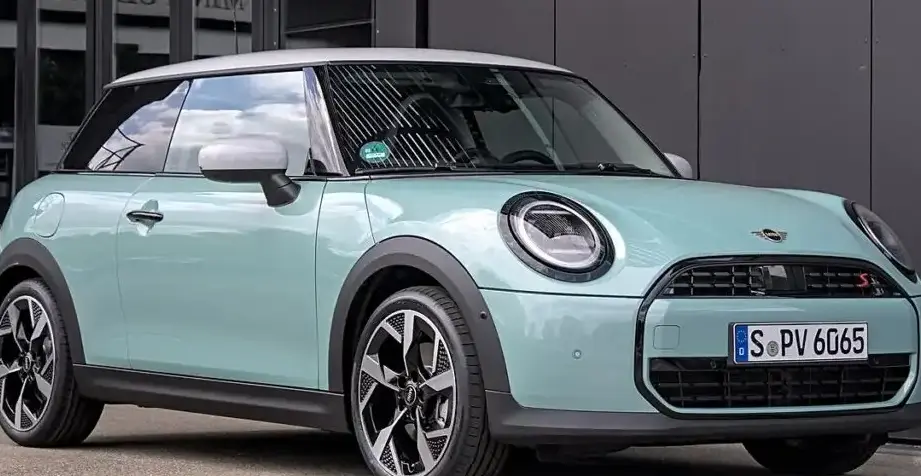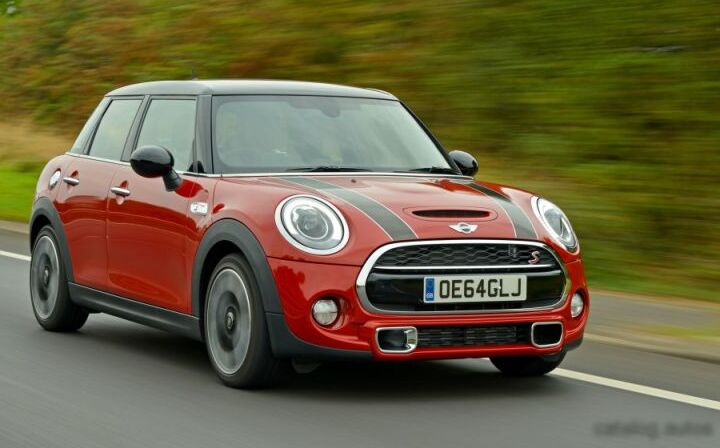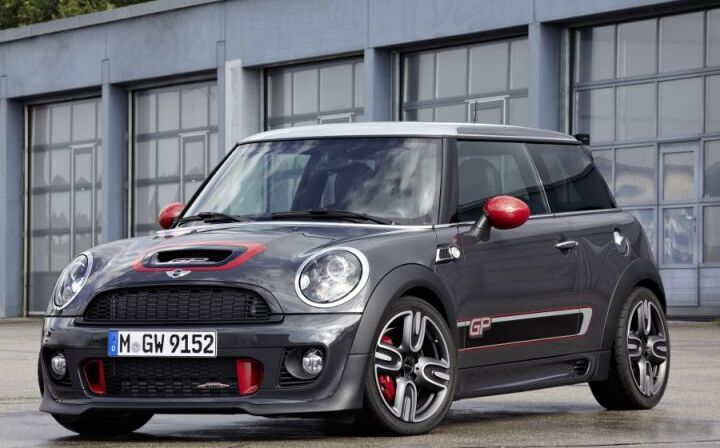
The Mini Hatch (R56) Cooper 1.6, producing 122 horsepower, was a key variant in the second generation of the modern Mini, produced between 2010 and 2012. Positioned as a mid-range offering within the R56 lineup, it bridged the gap between the base One models and the performance-oriented Cooper S. This model represented a significant evolution of the original Mini, blending retro styling with contemporary engineering and a focus on driving enjoyment. The R56 generation, built on the BMW Group’s 1HX0/A3 platform, aimed to retain the iconic Mini character while offering improved practicality, safety, and refinement.
Technical Specifications
| Brand | Mini |
| Model | Hatch |
| Generation | Hatch (R56) |
| Type (Engine) | Cooper 1.6 (122 Hp) |
| Start of production | 2010 |
| End of production | 2012 |
| Powertrain Architecture | Internal Combustion engine |
| Body type | Hatchback |
| Seats | 4 |
| Doors | 3 |
| Fuel consumption (urban) | 6.9 l/100 km (34.1 US mpg) |
| Fuel consumption (extra urban) | 4.6 l/100 km (51.1 US mpg) |
| Fuel consumption (combined) | 5.4 l/100 km (43.6 US mpg) |
| CO2 emissions | 127 g/km |
| Fuel Type | Petrol (Gasoline) |
| Acceleration 0 – 100 km/h | 9.1 sec |
| Acceleration 0 – 62 mph | 9.1 sec |
| Acceleration 0 – 60 mph | 8.6 sec |
| Maximum speed | 203 km/h (126.14 mph) |
| Emission standard | Euro 5 |
| Weight-to-power ratio | 8.7 kg/Hp |
| Weight-to-torque ratio | 6.7 kg/Nm |
| Power | 122 Hp @ 6000 rpm |
| Torque | 160 Nm @ 4250 rpm (118.01 lb.-ft. @ 4250 rpm) |
| Engine layout | Front, Transverse |
| Engine Model/Code | N16B16A |
| Engine displacement | 1598 cm3 (97.52 cu. in.) |
| Number of cylinders | 4 |
| Engine configuration | Inline |
| Cylinder Bore | 77 mm (3.03 in.) |
| Piston Stroke | 85.8 mm (3.38 in.) |
| Compression ratio | 11:1 |
| Number of valves per cylinder | 4 |
| Fuel injection system | Multi-port manifold injection |
| Engine aspiration | Naturally aspirated engine |
| Engine oil capacity | 4.2 l (4.44 US qt | 3.7 UK qt) |
| Coolant capacity | 5.2 l (5.49 US qt | 4.58 UK qt) |
| Kerb Weight | 1065 kg (2347.92 lbs.) |
| Max. weight | 1515 kg (3340 lbs.) |
| Max load | 450 kg (992.08 lbs.) |
| Trunk (boot) space – minimum | 160 l (5.65 cu. ft.) |
| Trunk (boot) space – maximum | 680 l (24.01 cu. ft.) |
| Fuel tank capacity | 40 l (10.57 US gal | 8.8 UK gal) |
| Length | 3699 mm (145.63 in.) |
| Width | 1683 mm (66.26 in.) |
| Height | 1407 mm (55.39 in.) |
| Wheelbase | 2467 mm (97.13 in.) |
| Front track | 1459 mm (57.44 in.) |
| Rear track | 1467 mm (57.76 in.) |
| Ride height (ground clearance) | 139 mm (5.47 in.) |
| Minimum turning circle | 10.7 m (35.1 ft.) |
| Drivetrain Architecture | Front wheel drive |
| Number of gears | 6 |
| Gearbox type | Manual transmission |
| Front suspension | Independent, McPherson with coil spring and anti-roll bar |
| Rear suspension | Independent coil spring |
| Front brakes | Ventilated discs |
| Rear brakes | Disc |
| Assisting systems | ABS (Anti-lock braking system) |
| Steering type | Steering rack and pinion |
| Tires size | 175/65 R15 84H |
| Wheel rims size | 5.5J x 15 |
Powertrain & Engine Architecture
The heart of the R56 Cooper 1.6 was the N16B16A engine, a 1.6-liter naturally aspirated inline-four cylinder. This engine was part of BMW’s new generation of four-cylinder powerplants, featuring a lightweight aluminum block and head. It utilized a multi-port fuel injection system, delivering fuel directly into the intake ports, and a single overhead camshaft (SOHC) valvetrain with four valves per cylinder. The engine’s 122 horsepower output was achieved through careful tuning of the engine management system and optimized intake and exhaust designs. The six-speed manual transmission was standard, offering precise shifts and a direct connection to the engine. This transmission was chosen to enhance the driving experience, providing drivers with greater control over the engine’s power delivery.
Driving Characteristics
The 1.6-liter Cooper offered a balanced driving experience. While not as overtly sporty as the Cooper S, it provided ample power for everyday driving and spirited excursions. Acceleration from 0-60 mph took approximately 8.6 seconds, and the car reached a top speed of 126 mph. The six-speed manual transmission allowed for efficient cruising at highway speeds, while the relatively short gear ratios provided responsive acceleration in city traffic. Compared to the more powerful Cooper S, the 1.6-liter engine required more frequent downshifts to maintain momentum, but it also offered a more forgiving powerband for less experienced drivers. The front-wheel-drive configuration provided predictable handling, although it could exhibit some torque steer under hard acceleration.
Equipment & Trim Levels
The Cooper 1.6 typically came equipped with standard features such as air conditioning, power windows, power locks, and a basic audio system. Interior upholstery was typically cloth, with options for leather upgrades. Dashboard design featured the signature Mini circular center display, housing the speedometer and various vehicle information. Optional extras included a panoramic sunroof, sport seats, upgraded audio systems, and various customization options for interior and exterior trim. The Cooper 1.6 often served as a base for personalization, allowing owners to tailor the car to their individual preferences.
Chassis & Braking
The R56 Cooper 1.6 utilized an independent McPherson strut suspension in the front and an independent multi-link suspension in the rear, providing a comfortable yet controlled ride. The suspension was tuned to prioritize handling and agility, offering a responsive feel in corners. Braking duties were handled by ventilated discs at the front and solid discs at the rear, equipped with ABS (Anti-lock Braking System) as standard. The chassis was designed to be rigid and lightweight, contributing to the car’s overall handling characteristics. Stabilizer bars were fitted front and rear to reduce body roll during cornering.
Market Reception & Comparison
The R56 Cooper 1.6 was generally well-received by automotive critics. It was praised for its stylish design, engaging driving dynamics, and relatively good fuel economy. Compared to the Cooper S, the 1.6-liter model offered a more affordable entry point into the Mini brand, appealing to a wider range of buyers. However, some critics noted that the engine lacked the outright performance of the Cooper S and that the interior space was somewhat limited. Fuel economy was a strong point, averaging around 43.6 US mpg in combined driving, making it a practical choice for daily commuting. Reliability was generally good, although some owners reported minor issues with electrical components.
Legacy
The R56 Cooper 1.6 remains a popular choice in the used car market. Its combination of style, practicality, and driving enjoyment has ensured its enduring appeal. The N16B16A engine, while not known for being exceptionally powerful, is generally considered reliable with proper maintenance. Common issues include oil leaks and occasional problems with the cooling system. The R56 generation Mini, and the Cooper 1.6 variant in particular, played a significant role in revitalizing the Mini brand and establishing it as a premium small car offering. Today, it is viewed as a stylish and fun-to-drive alternative to more conventional hatchbacks.