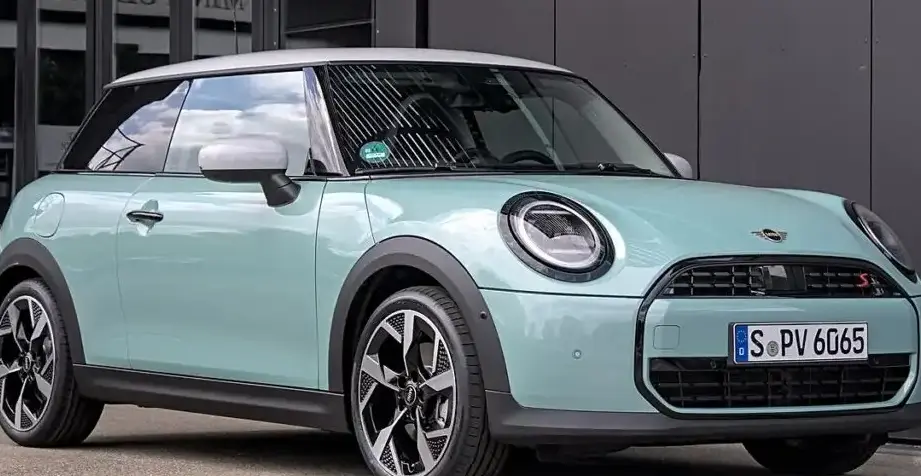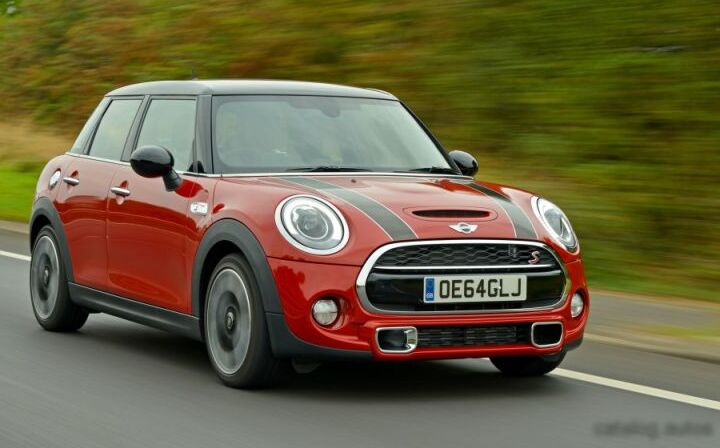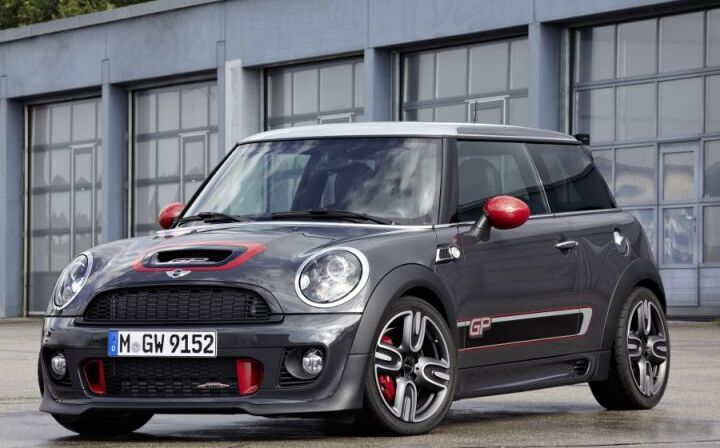
The Mini Hatch (R56) Cooper D 1.6, producing 110 horsepower, was a key variant in the second generation of the modern Mini, produced from 2010 to 2013. Positioned as a fuel-efficient and accessible entry point into the Mini lineup, it offered a diesel alternative to the petrol-powered Cooper models. This model sat within the R56 chassis code generation, which was based on the BMW Group’s 1HX0/A3 platform, shared with the first generation BMW 1 Series. The Cooper D 1.6 aimed to broaden the Mini’s appeal by providing a more economical option for European drivers, where diesel fuel was more prevalent and often incentivized.
Technical Specifications
| Brand | Mini |
| Model | Hatch |
| Generation | Hatch (R56) |
| Type (Engine) | Cooper D 1.6 (110 Hp) |
| Start of production | 2010 |
| End of production | 2013 |
| Powertrain Architecture | Internal Combustion engine |
| Body type | Hatchback |
| Seats | 4 |
| Doors | 3 |
| Fuel consumption (urban) | 4.7 l/100 km (50 US mpg, 60.1 UK mpg, 21.3 km/l) |
| Fuel consumption (extra urban) | 3.5 l/100 km (67.2 US mpg, 80.7 UK mpg, 28.6 km/l) |
| Fuel consumption (combined) | 3.9 l/100 km (60.3 US mpg, 72.4 UK mpg, 25.6 km/l) |
| CO2 emissions | 104 g/km |
| Fuel Type | Diesel |
| Acceleration 0 – 100 km/h | 9.9 sec |
| Acceleration 0 – 62 mph | 9.9 sec |
| Acceleration 0 – 60 mph | 9.4 sec |
| Maximum speed | 195 km/h (121.17 mph) |
| Emission standard | Euro 4 |
| Weight-to-power ratio | 9.9 kg/Hp, 100.9 Hp/tonne |
| Weight-to-torque ratio | 4.5 kg/Nm, 220.2 Nm/tonne |
| Power | 110 Hp @ 4000 rpm |
| Power per litre | 70.5 Hp/l |
| Torque | 240 Nm @ 1750-2000 rpm (177.01 lb.-ft. @ 1750-2000 rpm) |
| Engine layout | Front, Transverse |
| Engine Model/Code | N47C16A |
| Engine displacement | 1560 cm3 (95.2 cu. in.) |
| Number of cylinders | 4 |
| Engine configuration | Inline |
| Cylinder Bore | 75 mm (2.95 in.) |
| Piston Stroke | 88.3 mm (3.48 in.) |
| Compression ratio | 18:1 |
| Number of valves per cylinder | 4 |
| Fuel injection system | Diesel Commonrail |
| Engine aspiration | Turbocharger, Intercooler |
| Engine oil capacity | 5.2 l (5.49 US qt | 4.58 UK qt) |
| Coolant | 5.4 l (5.71 US qt | 4.75 UK qt) |
| Kerb Weight | 1090 kg (2403.04 lbs.) |
| Max. weight | 1540 kg (3395.12 lbs.) |
| Max load | 450 kg (992.08 lbs.) |
| Trunk (boot) space – minimum | 160 l (5.65 cu. ft.) |
| Trunk (boot) space – maximum | 680 l (24.01 cu. ft.) |
| Fuel tank capacity | 40 l (10.57 US gal | 8.8 UK gal) |
| Length | 3709 mm (146.02 in.) |
| Width | 1683 mm (66.26 in.) |
| Height | 1407 mm (55.39 in.) |
| Wheelbase | 2467 mm (97.13 in.) |
| Front track | 1459 mm (57.44 in.) |
| Rear (Back) track | 1467 mm (57.76 in.) |
| Ride height (ground clearance) | 139 mm (5.47 in.) |
| Minimum turning circle | 10.7 m (35.1 ft.) |
| Drivetrain Architecture | Front wheel drive |
| Number of gears | 6 gears, manual transmission |
| Front suspension | Independent, type McPherson with coil spring and anti-roll bar |
| Rear suspension | Independent coil spring |
| Front brakes | Ventilated discs |
| Rear brakes | Disc |
| Assisting systems | ABS (Anti-lock braking system) |
| Steering type | Steering rack and pinion |
| Tires size | 175/65 R15 84H |
| Wheel rims size | 5.5J x 15 |
Powertrain & Engine Architecture
The Cooper D 1.6 was powered by the N47C16A engine, a 1.6-liter inline-four cylinder diesel engine. This engine was a product of BMW’s diesel technology and featured common rail direct injection, a turbocharger with an intercooler, and four valves per cylinder. The common rail system allowed for precise fuel delivery, contributing to both efficiency and reduced emissions. The turbocharger boosted power output, providing a noticeable increase in torque compared to naturally aspirated diesel engines. The N47 series engines were known for their relatively sophisticated engineering, including a timing chain rather than a belt, intended to improve longevity. The engine produced 110 horsepower at 4000 rpm and 240 Nm (177 lb-ft) of torque between 1750 and 2000 rpm. This torque curve provided good low-end responsiveness, making it suitable for everyday driving. The engine was transversely mounted in the front of the vehicle, driving the front wheels.
Driving Characteristics
The 1.6-liter diesel engine, paired with a six-speed manual transmission, offered a different driving experience compared to the petrol-powered Cooper variants. While not as outright quick as the Cooper S, the Cooper D provided ample torque for comfortable cruising and overtaking. Acceleration from 0 to 60 mph took approximately 9.4 seconds, and the top speed was around 121 mph. The gear ratios were tuned to maximize fuel efficiency and provide smooth power delivery. The engine felt responsive at lower RPMs, making it well-suited for city driving. However, it did require more downshifting when accelerating quickly or climbing hills compared to the higher-output petrol engines. The overall driving experience was characterized by its refinement and fuel economy, rather than sporty performance.
Equipment & Trim Levels
The Cooper D 1.6 typically came equipped with a reasonable level of standard features. These included air conditioning, power windows, central locking, and an audio system. Interior upholstery was typically cloth, with options for leather upgrades. Dashboard trim could vary depending on the specific package chosen. Optional extras included a panoramic sunroof, sport seats, parking sensors, and a navigation system. The Mini’s customization options were a key selling point, allowing buyers to personalize their vehicle with a wide range of accessories and trim choices. The Cooper D often served as a base for customers who wanted to add these options, creating a uniquely tailored vehicle.
Chassis & Braking
The R56 Mini utilized a McPherson strut front suspension and a multi-link rear suspension, providing a good balance between ride comfort and handling. The Cooper D 1.6, being a lower-powered variant, generally featured a slightly softer suspension setup compared to the Cooper S. Front brakes were ventilated discs, while rear brakes were solid discs. ABS (Anti-lock Braking System) was standard. The suspension was tuned to provide a stable and predictable ride, with minimal body roll during cornering. The steering was precise and responsive, contributing to the Mini’s characteristic go-kart-like handling. Stabilizer bars were fitted front and rear to further reduce body roll.
Market Reception & Comparison
The Cooper D 1.6 was well-received in European markets, where diesel engines were popular due to their fuel efficiency and lower running costs. Critics praised its fuel economy, which averaged around 60.3 US mpg, and its comfortable ride. However, some reviewers noted that it lacked the sporty character of the petrol-powered Cooper S. Compared to the Cooper, the Cooper D offered significantly better fuel economy but slightly slower acceleration. Compared to the Cooper S, it was considerably less powerful but more economical. The Cooper D appealed to buyers who prioritized fuel efficiency and practicality over outright performance.
Legacy
The N47 engine family, including the N47C16A found in the Cooper D 1.6, gained a reputation for being relatively reliable, although some early versions were affected by timing chain issues. Proper maintenance, including regular oil changes, is crucial for ensuring the longevity of these engines. On the used car market, the Cooper D 1.6 remains a popular choice for buyers seeking a fuel-efficient and stylish hatchback. Its relatively low running costs and readily available parts make it an attractive option. The R56 generation Mini, as a whole, is considered a significant milestone in the brand’s history, successfully reviving the Mini nameplate for a modern audience.