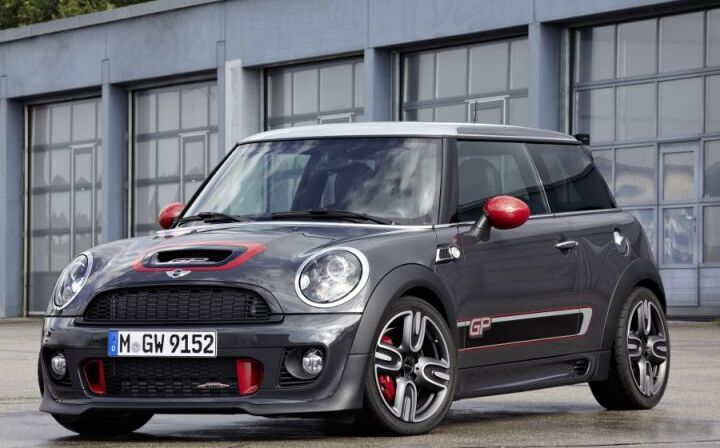
The Mini Hatch (R56) Cooper D 1.6, producing 112 horsepower, was a key variant in the second generation of the modern Mini, produced from 2011 to 2013. Positioned as a fuel-efficient and relatively affordable entry point into the Mini range, it offered a diesel alternative to the petrol-powered Cooper models. This model sat within the R56 chassis code generation, which was based on the BMW Group’s 1HX0/A3 platform, shared with the first generation BMW 1 Series. The Cooper D 1.6 aimed to broaden the Mini’s appeal, particularly in European markets where diesel engines were – and continue to be – highly popular due to favorable taxation and fuel economy.
Technical Specifications
| Brand | Mini |
| Model | Hatch |
| Generation | Hatch (R56) |
| Type (Engine) | Cooper D 1.6 (112 Hp) |
| Start of production | 2011 |
| End of production | 2013 |
| Powertrain Architecture | Internal Combustion engine |
| Body type | Hatchback |
| Seats | 4 |
| Doors | 3 |
| Fuel consumption (urban) | 4.2 l/100 km (56 US mpg, 67.3 UK mpg, 23.8 km/l) |
| Fuel consumption (extra urban) | 3.5 l/100 km (67.2 US mpg, 80.7 UK mpg, 28.6 km/l) |
| Fuel consumption (combined) | 3.8 l/100 km (61.9 US mpg, 74.3 UK mpg, 26.3 km/l) |
| CO2 emissions | 99 g/km |
| Fuel Type | Diesel |
| Acceleration 0 – 100 km/h | 9.7 sec |
| Acceleration 0 – 62 mph | 9.7 sec |
| Acceleration 0 – 60 mph | 9.2 sec |
| Maximum speed | 197 km/h (122.41 mph) |
| Emission standard | Euro 5 |
| Weight-to-power ratio | 9.7 kg/Hp, 102.8 Hp/tonne |
| Weight-to-torque ratio | 4 kg/Nm, 247.7 Nm/tonne |
| Power | 112 Hp @ 4000 rpm |
| Power per litre | 70.1 Hp/l |
| Torque | 270 Nm @ 1750-2250 rpm (199.14 lb.-ft. @ 1750-2250 rpm) |
| Engine layout | Front, Transverse |
| Engine Model/Code | N47C16A |
| Engine displacement | 1598 cm3 (97.52 cu. in.) |
| Number of cylinders | 4 |
| Engine configuration | Inline |
| Cylinder Bore | 78 mm (3.07 in.) |
| Piston Stroke | 83.6 mm (3.29 in.) |
| Compression ratio | 16.5:1 |
| Number of valves per cylinder | 4 |
| Fuel injection system | Diesel Commonrail |
| Engine aspiration | Turbocharger, Intercooler |
| Engine oil capacity | 5.2 l (5.49 US qt | 4.58 UK qt) |
| Coolant | 5.4 l (5.71 US qt | 4.75 UK qt) |
| Kerb Weight | 1090 kg (2403.04 lbs.) |
| Max. weight | 1540 kg (3395.12 lbs.) |
| Max load | 450 kg (992.08 lbs.) |
| Trunk (boot) space – minimum | 160 l (5.65 cu. ft.) |
| Trunk (boot) space – maximum | 680 l (24.01 cu. ft.) |
| Fuel tank capacity | 40 l (10.57 US gal | 8.8 UK gal) |
| Length | 3723 mm (146.57 in.) |
| Width | 1683 mm (66.26 in.) |
| Height | 1407 mm (55.39 in.) |
| Wheelbase | 2467 mm (97.13 in.) |
| Front track | 1459 mm (57.44 in.) |
| Rear (Back) track | 1467 mm (57.76 in.) |
| Ride height (ground clearance) | 139 mm (5.47 in.) |
| Minimum turning circle | 10.7 m (35.1 ft.) |
| Drivetrain Architecture | The Internal combustion engine (ICE) drives the front wheels of the vehicle. |
| Drive wheel | Front wheel drive |
| Number of gears and type of gearbox | 6 gears, manual transmission |
| Front suspension | Independent, type McPherson with coil spring and anti-roll bar |
| Rear suspension | Independent multi-link suspension |
| Front brakes | Ventilated discs |
| Rear brakes | Disc |
| Assisting systems | ABS (Anti-lock braking system) |
| Steering type | Steering rack and pinion |
| Tires size | 175/65 R15 84H |
| Wheel rims size | 5.5J x 15 LM |
INTRODUCTION
The R56 Mini Cooper D 1.6, launched in 2011, represented a significant step in expanding the Mini’s appeal beyond its traditionally youthful and style-conscious demographic. It offered a diesel engine option within the second-generation Mini Hatchback range (2006-2013). This variant was particularly important in Europe, where diesel fuel was cheaper and more readily available than petrol, and where government incentives favored lower-emission vehicles. The 112 hp diesel engine provided a balance between performance and economy, making it a practical choice for everyday driving. It was positioned as a more sensible alternative to the more powerful Cooper S and the base Cooper models.
Powertrain & Engine Architecture
At the heart of the Cooper D 1.6 was the BMW N47C16A engine, a 1.6-liter inline-four cylinder diesel. This engine was a significant advancement in diesel technology, featuring common rail direct injection and a turbocharger with an intercooler. The common rail system allowed for precise control of fuel delivery, optimizing combustion efficiency and reducing emissions. The turbocharger boosted power output, providing increased torque at lower engine speeds. The N47 engine family was known for its relatively sophisticated design, including four valves per cylinder and a robust engine block. The engine produced 112 horsepower at 4000 rpm and 270 Nm (199 lb-ft) of torque between 1750 and 2250 rpm. The engine was paired with a 6-speed manual transmission, which was the standard offering. While an automatic transmission was available on some R56 models, it wasn’t commonly paired with this specific diesel engine.
Driving Characteristics
The Cooper D 1.6 offered a distinctly different driving experience compared to the petrol-powered Cooper and Cooper S models. While it lacked the outright acceleration of its petrol counterparts (0-60 mph in approximately 9.2 seconds), it provided a strong surge of torque from low engine speeds, making it surprisingly capable in everyday driving situations. The 6-speed manual transmission was well-matched to the engine’s characteristics, allowing drivers to keep the engine in its optimal power band. Compared to the higher-output Cooper S, the Cooper D felt less eager to rev, but it offered superior fuel economy. The manual gearbox provided a more engaging driving experience than the optional automatic, offering greater control and responsiveness. The relatively low kerb weight of around 1090 kg (2403 lbs) helped to mitigate the lower horsepower output, resulting in a nimble and enjoyable driving experience.
Equipment & Trim Levels
The Cooper D 1.6 typically came equipped with a reasonable level of standard features, including air conditioning, power windows, central locking, and an audio system. Interior upholstery was typically cloth, although leather options were available. Dashboard design was consistent with other R56 models, featuring the iconic central speedometer and a range of customizable options. Optional extras included a panoramic sunroof, navigation system, sport seats, and various exterior styling packages. Trim levels varied depending on the market, but generally followed a progression from base ‘Cooper’ to more well-equipped versions with additional features and cosmetic enhancements.
Chassis & Braking
The R56 Mini Cooper D 1.6 utilized a McPherson strut front suspension and a multi-link rear suspension, providing a comfortable yet sporty ride. The suspension was tuned to balance handling and ride quality, offering a good compromise for everyday driving. Braking duties were handled by ventilated discs at the front and solid discs at the rear. Anti-lock Braking System (ABS) was standard. The chassis was relatively lightweight, contributing to the car’s nimble handling characteristics. Stabilizer bars were fitted front and rear to reduce body roll during cornering.
Market Reception & Comparison
The Cooper D 1.6 was generally well-received by automotive critics, who praised its fuel economy and torque delivery. It was seen as a practical and sensible alternative to the more performance-oriented Cooper S. Compared to the petrol-powered Cooper, the Cooper D offered significantly better fuel economy, making it a more attractive option for drivers covering long distances. However, some critics noted that the diesel engine lacked the refinement and responsiveness of the petrol engines. Reliability was generally good, although the N47 engine family did experience some issues with timing chain tensioners in later years.
Legacy
The R56 Mini Cooper D 1.6 remains a popular choice in the used car market, particularly for those seeking a fuel-efficient and stylish hatchback. The N47 engine, while having some known issues, is generally considered durable when properly maintained. The car’s compact size, nimble handling, and distinctive styling continue to appeal to a wide range of buyers. The Cooper D 1.6 played a significant role in establishing the modern Mini as a mainstream automotive brand, demonstrating that the Mini could be both fashionable and practical.