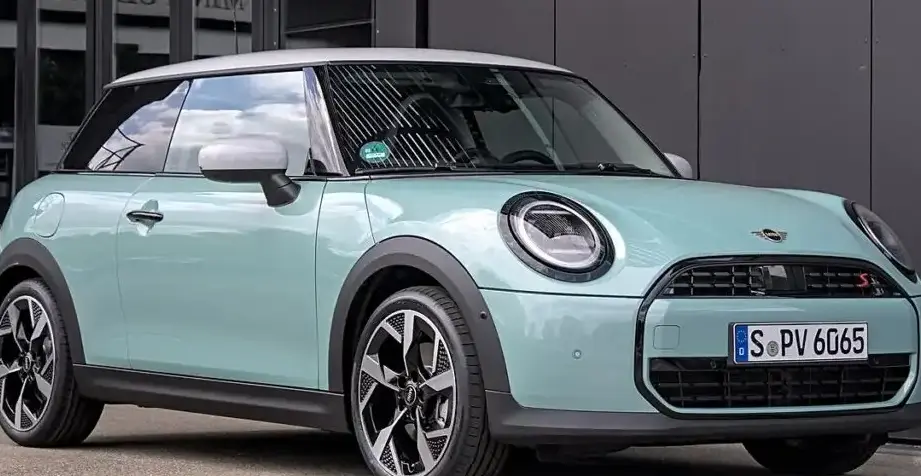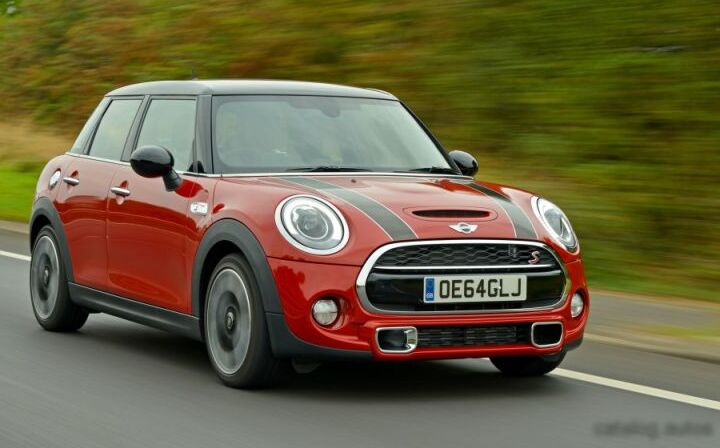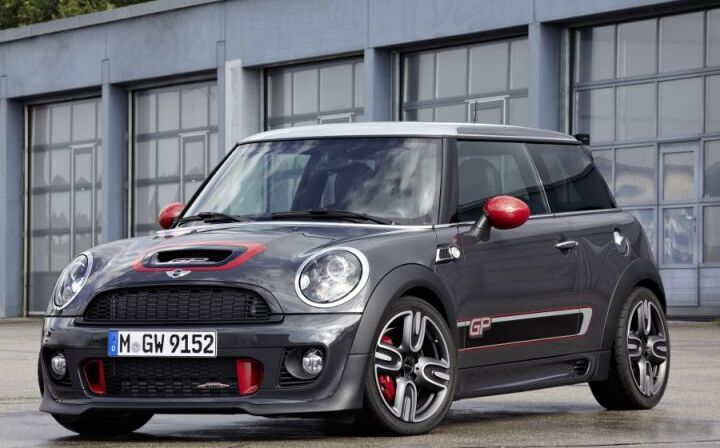
The Mini Hatch (R56) Cooper SD 2.0 (143 hp) was a diesel-powered variant of the second-generation Mini Hatch, produced between 2011 and 2013. Positioned as a fuel-efficient and relatively sporty option within the R56 lineup, it offered a balance between performance and economy. This model represented Mini’s continued expansion into diesel offerings, catering to European markets where diesel fuel was more prevalent and incentivized. It sat in the mid-range of the R56 offerings, above the Cooper but below the more performance-focused John Cooper Works models.
Technical Specifications
| Brand | Mini |
| Model | Hatch |
| Generation | Hatch (R56) |
| Type (Engine) | Cooper SD 2.0 (143 Hp) |
| Start of production | 2011 |
| End of production | 2013 |
| Powertrain Architecture | Internal Combustion engine |
| Body type | Hatchback |
| Seats | 4 |
| Doors | 3 |
| Fuel consumption (urban) | 5.1 l/100 km (46.1 US mpg, 55.4 UK mpg, 19.6 km/l) |
| Fuel consumption (extra urban) | 3.9 l/100 km (60.3 US mpg, 72.4 UK mpg, 25.6 km/l) |
| Fuel consumption (combined) | 4.3 l/100 km (54.7 US mpg, 65.7 UK mpg, 23.3 km/l) |
| CO2 emissions | 114 g/km |
| Fuel Type | Diesel |
| Acceleration 0 – 100 km/h | 8.1 sec |
| Acceleration 0 – 62 mph | 8.1 sec |
| Acceleration 0 – 60 mph | 7.7 sec |
| Maximum speed | 215 km/h (133.59 mph) |
| Emission standard | Euro 5 |
| Weight-to-power ratio | 8 kg/Hp, 124.3 Hp/tonne |
| Weight-to-torque ratio | 3.8 kg/Nm, 265.2 Nm/tonne |
| Power | 143 Hp @ 4000 rpm |
| Torque | 305 Nm @ 1750-2700 rpm (224.96 lb.-ft. @ 1750-2700 rpm) |
| Engine layout | Front, Transverse |
| Engine Model/Code | N47C20A |
| Engine displacement | 1995 cm3 (121.74 cu. in.) |
| Number of cylinders | 4 |
| Engine configuration | Inline |
| Cylinder Bore | 84 mm (3.31 in.) |
| Piston Stroke | 90 mm (3.54 in.) |
| Compression ratio | 16.5:1 |
| Number of valves per cylinder | 4 |
| Fuel injection system | Diesel Commonrail |
| Engine aspiration | Turbocharger, Intercooler |
| Engine oil capacity | 5.2 l (5.49 US qt | 4.58 UK qt) |
| Coolant | 5.4 l (5.71 US qt | 4.75 UK qt) |
| Kerb Weight | 1150 kg (2535.32 lbs.) |
| Max. weight | 1600 kg (3527.4 lbs.) |
| Max load | 450 kg (992.08 lbs.) |
| Trunk (boot) space – minimum | 160 l (5.65 cu. ft.) |
| Trunk (boot) space – maximum | 680 l (24.01 cu. ft.) |
| Fuel tank capacity | 40 l (10.57 US gal | 8.8 UK gal) |
| Length | 3729 mm (146.81 in.) |
| Width | 1683 mm (66.26 in.) |
| Height | 1407 mm (55.39 in.) |
| Wheelbase | 2467 mm (97.13 in.) |
| Front track | 1459 mm (57.44 in.) |
| Rear (Back) track | 1467 mm (57.76 in.) |
| Ride height (ground clearance) | 139 mm (5.47 in.) |
| Minimum turning circle | 10.7 m (35.1 ft.) |
| Drivetrain Architecture | Front wheel drive |
| Number of gears and type of gearbox | 6 gears, manual transmission |
| Front suspension | Independent, type McPherson with coil spring and anti-roll bar |
| Rear suspension | Independent coil spring |
| Front brakes | Ventilated discs |
| Rear brakes | Disc |
| Assisting systems | ABS (Anti-lock braking system) |
| Steering type | Steering rack and pinion |
| Tires size | 195/55 R16 87V |
| Wheel rims size | 6.5J x 16 LM |
Powertrain & Engine Architecture
The Cooper SD 2.0 utilized BMW’s N47C20A engine, a 2.0-liter inline-four cylinder diesel engine. This engine was a key component of BMW and Mini’s efficient dynamics strategy. It featured common rail direct injection, a turbocharger with an intercooler, and four valves per cylinder. The N47 engine family was known for its relatively sophisticated technology for a diesel of its time, including piezo injectors and a variable geometry turbocharger (VGT) to optimize performance across the rev range. The engine produced 143 horsepower at 4000 rpm and a substantial 305 Nm (224.96 lb-ft) of torque between 1750 and 2700 rpm. The engine was transversely mounted in the front of the vehicle. The Cooper SD was exclusively offered with a 6-speed manual transmission in the US market, providing a direct connection to the engine and allowing for driver control.
Driving Characteristics
The 143 hp diesel engine, coupled with the 6-speed manual gearbox, provided a surprisingly engaging driving experience. While not as overtly sporty as the Cooper S, the Cooper SD offered strong acceleration, particularly in the mid-range, thanks to the abundant torque. The 0-60 mph time of around 7.7 seconds was respectable for a small hatchback. The gear ratios were well-chosen to maximize fuel efficiency while still providing adequate performance for everyday driving. Compared to the petrol-powered Cooper, the SD offered significantly better fuel economy, but lacked the high-revving character and immediate throttle response of the gasoline engine. The manual transmission allowed drivers to fully exploit the engine’s torque band, making overtaking maneuvers relatively effortless.
Equipment & Trim Levels
The Cooper SD 2.0 typically came well-equipped, reflecting its position as a mid-range offering. Standard features included air conditioning, power windows, power mirrors, a multi-function steering wheel, and a basic audio system. Interior upholstery was typically cloth, although leather options were available. Optional extras included a panoramic sunroof, upgraded audio systems (Harman Kardon), navigation, and various styling packages. The dashboard layout was consistent with other R56 models, featuring a large central speedometer and a smaller gauge for fuel and temperature. The Cooper SD also benefited from Mini’s customizable options, allowing buyers to personalize their vehicle with a wide range of colors and trim choices.
Chassis & Braking
The R56 Mini utilized a McPherson strut front suspension and a multi-link rear suspension, providing a good balance between ride comfort and handling. The Cooper SD, being a diesel variant, generally had slightly softer spring rates compared to the Cooper S to accommodate the heavier engine. Braking duties were handled by ventilated discs at the front and solid discs at the rear. Anti-lock Braking System (ABS) was standard. The steering was a rack and pinion system, providing precise and responsive handling. The car’s relatively low weight contributed to its agile handling characteristics.
Market Reception & Comparison
The Cooper SD 2.0 was generally well-received by automotive critics, who praised its fuel efficiency, strong torque, and engaging driving dynamics. It was seen as a practical and economical alternative to the petrol-powered Cooper, particularly for drivers who covered long distances. Compared to the Cooper, the SD offered significantly better fuel economy (around 54.7 US mpg combined) but slightly less outright performance. Compared to the Cooper S, the SD lacked the same level of excitement but provided a more refined and comfortable driving experience. Reliability was generally good, although some owners reported issues with the diesel particulate filter (DPF) and turbocharger.
Legacy
The N47 engine family, including the N47C20A found in the Cooper SD, became a mainstay in BMW and Mini models for several years. While generally reliable, the engine did experience some well-documented issues, including timing chain wear and DPF problems. Today, the R56 Cooper SD 2.0 remains a popular choice in the used car market, particularly for those seeking a fuel-efficient and stylish hatchback. Its relatively simple mechanicals and readily available parts make it a relatively affordable and easy-to-maintain vehicle. However, potential buyers should be aware of the potential for DPF issues and timing chain wear, and ensure that the vehicle has been properly maintained.