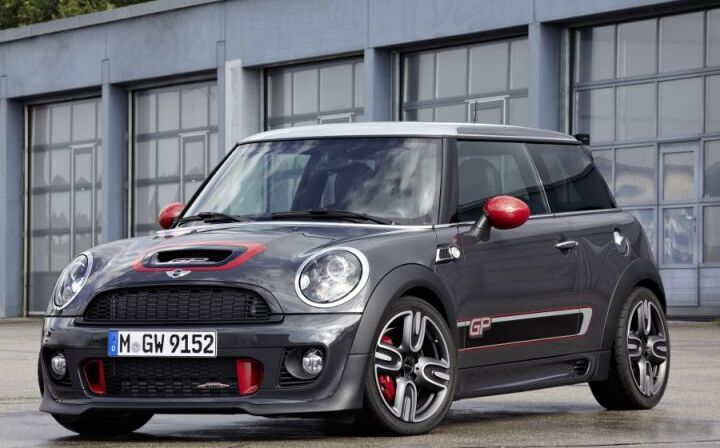
The Mini Hatch (R56) John Cooper Works (JCW) 1.6, produced between 2010 and 2014, represented the performance pinnacle of the second-generation Mini Hatchback. Positioned as the flagship model within the R56 range, the JCW 1.6 offered a significantly enhanced driving experience compared to the standard Cooper and Cooper S variants. It built upon the success of the earlier R53 JCW, aiming to deliver a more refined yet still distinctly sporty package. The R56 JCW was primarily marketed in Europe, the UK, and increasingly in North America, appealing to enthusiasts seeking a premium small car with genuine performance credentials. This variant was a key part of Mini’s strategy to establish itself as a performance brand, leveraging its motorsport heritage.
Technical Specifications
| Brand | Mini |
| Model | Hatch |
| Generation | Hatch (R56) |
| Type (Engine) | JCW 1.6 (211 Hp) |
| Start of production | 2010 |
| End of production | 2014 |
| Powertrain Architecture | Internal Combustion engine |
| Body type | Hatchback |
| Seats | 4 |
| Doors | 3 |
| Fuel consumption (urban) | 9.4 l/100 km (25 US mpg) |
| Fuel consumption (extra urban) | 5.8 l/100 km (40.6 US mpg) |
| Fuel consumption (combined) | 7.1 l/100 km (33.1 US mpg) |
| CO2 emissions | 165 g/km |
| Fuel Type | Petrol (Gasoline) |
| Acceleration 0 – 100 km/h | 6.5 sec |
| Acceleration 0 – 62 mph | 6.5 sec |
| Acceleration 0 – 60 mph | 6.2 sec |
| Maximum speed | 238 km/h (147.89 mph) |
| Emission standard | Euro 5 |
| Weight-to-power ratio | 5.4 kg/Hp |
| Weight-to-torque ratio | 4 kg/Nm |
| Power | 211 Hp @ 6000 rpm |
| Torque | 280 Nm @ 2000-5300 rpm (206.52 lb.-ft.) |
| Engine layout | Front, Transverse |
| Engine Model/Code | N18B16C |
| Engine displacement | 1598 cm3 (97.52 cu. in.) |
| Number of cylinders | 4 |
| Engine configuration | Inline |
| Cylinder Bore | 77 mm (3.03 in.) |
| Piston Stroke | 85.8 mm (3.38 in.) |
| Compression ratio | 10:1 |
| Number of valves per cylinder | 4 |
| Fuel injection system | Multi-port manifold injection |
| Engine aspiration | Turbocharger, Intercooler |
| Engine oil capacity | 4.2 l (4.44 US qt | 3.7 UK qt) |
| Coolant | 7.5 l (7.93 US qt | 6.6 UK qt) |
| Kerb Weight | 1130 kg (2491.22 lbs.) |
| Max. weight | 1580 kg (3483.3 lbs.) |
| Max load | 450 kg (992.08 lbs.) |
| Trunk (boot) space – minimum | 160 l (5.65 cu. ft.) |
| Trunk (boot) space – maximum | 680 l (24.01 cu. ft.) |
| Fuel tank capacity | 50 l (13.21 US gal | 11 UK gal) |
| Length | 3714 mm (146.22 in.) |
| Width | 1683 mm (66.26 in.) |
| Height | 1407 mm (55.39 in.) |
| Wheelbase | 2467 mm (97.13 in.) |
| Front track | 1453 mm (57.2 in.) |
| Rear (Back) track | 1461 mm (57.52 in.) |
| Ride height (ground clearance) | 130 mm (5.12 in.) |
| Minimum turning circle | 10.7 m (35.1 ft.) |
| Drivetrain Architecture | Front wheel drive |
| Number of gears | 6 |
| Gearbox type | Manual transmission |
| Front suspension | Independent, McPherson with coil spring and anti-roll bar |
| Rear suspension | Independent coil spring |
| Front brakes | Ventilated discs |
| Rear brakes | Disc |
| Assisting systems | ABS (Anti-lock braking system) |
| Steering type | Steering rack and pinion |
| Tires size | 205/45 R17 84W RSC |
| Wheel rims size | 7J x 17 LM |
INTRODUCTION
The R56 Mini JCW 1.6 represented a significant step up in performance from the standard R56 models. Introduced in 2010, it served as the performance halo for the second-generation Mini, building on the foundation laid by the earlier R53 JCW. The R56 JCW was designed to appeal to driving enthusiasts who wanted a fun-to-drive, premium small car with a distinctive character. It was available in both hatchback and convertible body styles, offering a range of customization options to cater to individual preferences. The JCW variant was positioned above the Cooper S in the lineup, offering a more potent engine, upgraded suspension, and distinctive styling cues.
Powertrain & Engine Architecture
At the heart of the R56 JCW 1.6 lies the N18B16C engine, a 1.6-liter turbocharged inline-four cylinder. This engine is a significant departure from the supercharged designs used in previous JCW models. The N18 features direct fuel injection, a twin-scroll turbocharger, and variable valve timing (Double VANOS) on both the intake and exhaust camshafts. These technologies contribute to its impressive power output of 211 horsepower at 6000 rpm and 280 Nm (206.52 lb-ft) of torque available from 2000 to 5300 rpm. The engine’s architecture is designed for responsiveness and efficiency. The JCW utilized a six-speed manual transmission as standard, providing precise gear changes and enhancing the driving experience. While an automatic transmission was available in some markets, the manual was favored by enthusiasts for its greater engagement.
Driving Characteristics
The R56 JCW 1.6 delivers a noticeably more engaging driving experience than the standard Cooper or Cooper S. The turbocharged engine provides strong acceleration, with a 0-60 mph time of around 6.2 seconds and a top speed of 147.89 mph. The close-ratio six-speed manual transmission allows drivers to keep the engine in its optimal power band, maximizing performance. The JCW’s suspension is firmer and more responsive than the standard R56, providing improved handling and cornering stability. The steering is precise and well-weighted, offering excellent feedback to the driver. Compared to the Cooper S, the JCW feels significantly more powerful and agile, offering a more visceral and rewarding driving experience. While the ride can be firm on rough roads, it’s a worthwhile trade-off for the enhanced handling and performance.
Equipment & Trim Levels
The R56 JCW 1.6 came standard with a comprehensive list of features, including sport seats, a sport steering wheel, and unique JCW styling cues both inside and out. Exterior features included a distinctive JCW aerodynamic body kit, larger wheels, and a dual exhaust system. Inside, the JCW featured unique trim elements, such as anthracite headliner and stainless steel pedals. Optional extras included navigation system, panoramic sunroof, and upgraded sound system. Leather upholstery and heated seats were also available. The JCW trim level was designed to convey a sense of exclusivity and sportiness, differentiating it from the standard Mini models.
Chassis & Braking
The R56 JCW 1.6 features a McPherson strut front suspension and a multi-link rear suspension, optimized for performance handling. The suspension components are stiffer than those used in the standard R56, providing improved body control and reduced roll. The JCW also features larger brakes than the standard models, with ventilated discs at the front and solid discs at the rear. ABS (Anti-lock braking system) is standard. The chassis is designed to provide a balance between sporty handling and everyday usability. The front track is 1453 mm and the rear track is 1461 mm, contributing to the car’s stable and predictable handling characteristics.
Market Reception & Comparison
The R56 JCW 1.6 was generally well-received by automotive critics, who praised its performance, handling, and distinctive character. It was often compared favorably to other hot hatches, such as the Volkswagen Polo GTI and the Renault Clio RS. The JCW’s fuel economy was reasonable for a performance car, with combined fuel consumption of around 33.1 US mpg. However, some critics noted that the ride could be firm on rough roads. Compared to the Cooper S, the JCW offered a significant performance upgrade, but at a higher price point. The JCW was targeted at enthusiasts who were willing to pay a premium for a more engaging and rewarding driving experience.
Legacy
The R56 JCW 1.6 remains a popular choice among Mini enthusiasts today. The N18 engine, while not without its quirks, is generally considered to be reliable when properly maintained. Common issues include oil leaks and occasional turbocharger problems. The JCW’s distinctive styling and engaging driving dynamics have ensured its continued appeal in the used car market. It represents a high point in the R56 generation, offering a unique blend of performance, style, and practicality. The R56 JCW laid the groundwork for future JCW models, establishing the brand as a serious contender in the hot hatch segment.