
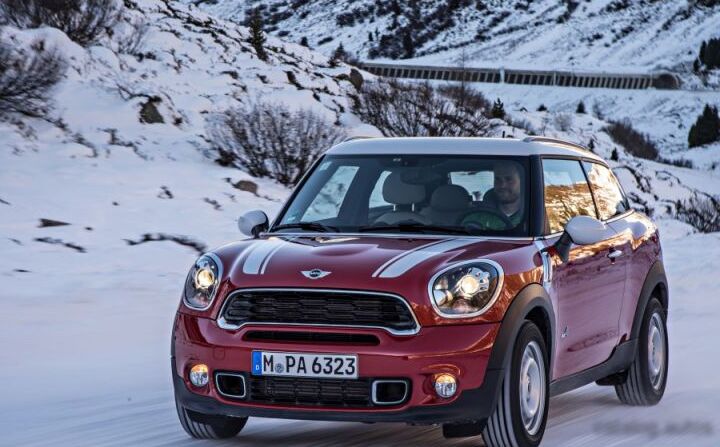
The Mini Paceman Cooper 1.6 (122 hp) was a subcompact luxury crossover produced by Mini from 2014 to 2016, falling within the R61 Paceman generation. Positioned as a more sporting and style-focused alternative to the conventional Mini Cooper hatchback and Countryman, the Paceman featured a distinctive coupe-like roofline and a three-door body style. This particular 1.6-liter variant served as an entry point into the Paceman range, offering a balance between affordability and the brand’s signature driving dynamics. It was designed to appeal to buyers seeking a premium small crossover with a focus on aesthetics and a more engaging driving experience than some of its more practical competitors.
Technical Specifications
| Brand | Mini |
| Model | Paceman |
| Generation | Paceman (R61) |
| Type (Engine) | Cooper 1.6 (122 Hp) |
| Start of production | 2014 |
| End of production | 2016 |
| Powertrain Architecture | Internal Combustion engine |
| Body type | Hatchback |
| Seats | 4 |
| Doors | 3 |
| Fuel consumption (urban) | 7.3 l/100 km (32.2 US mpg) |
| Fuel consumption (extra urban) | 5.1 l/100 km (46.1 US mpg) |
| Fuel consumption (combined) | 5.9 l/100 km (39.9 US mpg) |
| CO2 emissions | 137 g/km |
| Fuel Type | Petrol (Gasoline) |
| Acceleration 0 – 100 km/h | 10.3 sec |
| Acceleration 0 – 62 mph | 10.3 sec |
| Acceleration 0 – 60 mph | 9.8 sec |
| Maximum speed | 193 km/h (119.92 mph) |
| Emission standard | Euro 6 |
| Weight-to-power ratio | 10.3 kg/Hp |
| Weight-to-torque ratio | 7.8 kg/Nm |
| Power | 122 Hp @ 6000 rpm |
| Torque | 160 Nm @ 4250 rpm (118.01 lb.-ft. @ 4250 rpm) |
| Engine layout | Front, Transverse |
| Engine Model/Code | N16B16A |
| Engine displacement | 1598 cm3 (97.52 cu. in.) |
| Number of cylinders | 4 |
| Engine configuration | Inline |
| Cylinder Bore | 77 mm (3.03 in.) |
| Piston Stroke | 85.8 mm (3.38 in.) |
| Compression ratio | 11:1 |
| Number of valves per cylinder | 4 |
| Fuel injection system | Direct injection |
| Engine aspiration | Twin-power turbo, Intercooler |
| Engine oil capacity | 4.2 l (4.44 US qt | 3.7 UK qt) |
| Coolant | 6 l (6.34 US qt | 5.28 UK qt) |
| Kerb Weight | 1255 kg (2766.8 lbs.) |
| Max. weight | 1725 kg (3802.97 lbs.) |
| Max load | 470 kg (1036.17 lbs.) |
| Trunk (boot) space – minimum | 330 l (11.65 cu. ft.) |
| Trunk (boot) space – maximum | 1080 l (38.14 cu. ft.) |
| Fuel tank capacity | 47 l (12.42 US gal | 10.34 UK gal) |
| Max. roof load | 75 kg (165.35 lbs.) |
| Length | 4109 mm (161.77 in.) |
| Width | 1786 mm (70.31 in.) |
| Height | 1518 mm (59.76 in.) |
| Wheelbase | 2595 mm (102.17 in.) |
| Front track | 1538 mm (60.55 in.) |
| Rear (Back) track | 1566 mm (61.65 in.) |
| Ride height (ground clearance) | 133 mm (5.24 in.) |
| Drag coefficient (Cd) | 0.35 |
| Minimum turning circle | 11.6 m (38.06 ft.) |
| Drivetrain Architecture | Front wheel drive |
| Number of gears and type of gearbox | 6 gears, manual transmission |
| Front suspension | Independent, type McPherson with coil spring and anti-roll bar |
| Rear suspension | Independent multi-link suspension |
| Front brakes | Ventilated discs |
| Rear brakes | Disc |
| Assisting systems | ABS (Anti-lock braking system) |
| Steering type | Steering rack and pinion |
| Power steering | Electric Steering |
| Tires size | 205/60 R16 |
| Wheel rims size | 6.5J x 16 |
INTRODUCTION
The Mini Paceman Cooper 1.6 (122 hp) debuted in 2014 as part of the R61 series, a unique offering within the Mini lineup. Built on the UKL1 platform shared with other Mini models and BMW vehicles, the Paceman aimed to blend the brand’s iconic styling with the practicality of a small crossover. This specific 1.6-liter engine, paired with a six-speed manual transmission, represented the base level of performance for the Paceman range. It was positioned below the more powerful Cooper S and John Cooper Works variants, targeting buyers who prioritized fuel efficiency and affordability over outright speed. The Paceman itself was discontinued in 2016, replaced by the second-generation Countryman which adopted a more conventional five-door layout.
Powertrain & Engine Architecture
At the heart of the Paceman Cooper 1.6 was the BMW N16B16A engine, a 1.6-liter turbocharged inline-four cylinder. This engine was part of BMW’s modular engine family and featured direct fuel injection, a twin-scroll turbocharger, and variable valve timing (VANOS) on both the intake and exhaust camshafts. The turbocharger helped to mitigate turbo lag and provide a broader torque curve. The engine produced 122 horsepower at 6,000 rpm and 160 Nm (118 lb-ft) of torque at 4,250 rpm. The six-speed manual transmission offered precise shifts and contributed to the car’s engaging driving experience. While an automatic transmission was available, the manual was favored by enthusiasts for its greater control and responsiveness. The engine’s layout was front-transverse, driving the front wheels.
Driving Characteristics
The Paceman Cooper 1.6 offered a surprisingly nimble and enjoyable driving experience, despite its relatively modest power output. The turbocharger provided a noticeable boost in acceleration, making it feel quicker than the numbers suggest. The six-speed manual transmission allowed drivers to keep the engine in its optimal power band. However, compared to the Cooper S or JCW models, the 1.6-liter engine felt less potent, particularly when fully loaded or tackling steep inclines. The gear ratios were tuned for a balance between fuel efficiency and performance, with a relatively long sixth gear for highway cruising. The steering was precise and well-weighted, providing good feedback to the driver. Overall, the driving experience was characterized by agility and a playful character, typical of the Mini brand.
Equipment & Trim Levels
The base Paceman Cooper 1.6 came standard with a respectable level of equipment. Interior features included cloth upholstery, air conditioning, a Mini infotainment system with a 6.5-inch display, Bluetooth connectivity, and power windows and locks. Optional extras included leather upholstery, a panoramic sunroof, navigation system, upgraded sound system, and various cosmetic enhancements. Trim levels were relatively simple, with most customization options available as individual add-ons. The Paceman’s interior design was characterized by its retro-modern aesthetic, with large circular air vents and a centrally mounted speedometer. The rear seats offered limited legroom, reflecting the car’s compact dimensions.
Chassis & Braking
The Paceman Cooper 1.6 featured a McPherson strut front suspension and a multi-link rear suspension, providing a comfortable yet controlled ride. The suspension was tuned to prioritize handling and agility, with relatively firm damping. The front brakes were ventilated discs, while the rear brakes were solid discs. Anti-lock braking system (ABS) was standard. The car’s relatively low weight (1255 kg / 2766.8 lbs) contributed to its nimble handling. The steering was electric power-assisted, providing a light and responsive feel. The standard tire size was 205/60 R16, mounted on 6.5J x 16 alloy wheels.
Market Reception & Comparison
The Mini Paceman Cooper 1.6 received mixed reviews from automotive critics. While praised for its stylish design and engaging driving dynamics, it was often criticized for its limited rear seat space and relatively high price compared to other subcompact crossovers. Compared to the Cooper S variant, the 1.6-liter engine felt underpowered, and the automatic transmission options didn’t offer the same level of engagement as the manual. Fuel economy was respectable, averaging around 39.9 US mpg in combined driving. Reliability was generally good, although some owners reported minor issues with the infotainment system and electrical components. The Paceman’s unique styling and brand appeal helped it to carve out a niche in the market, attracting buyers who were willing to pay a premium for a distinctive and fun-to-drive crossover.
Legacy
The Mini Paceman Cooper 1.6 has become a sought-after model on the used car market, particularly among Mini enthusiasts. Its combination of style, driving dynamics, and relative affordability makes it an attractive option for buyers looking for a unique and engaging small crossover. The N16B16A engine has proven to be reasonably reliable, although regular maintenance is essential to prevent issues. Parts availability is generally good, thanks to the widespread use of BMW components. While the Paceman’s limited rear seat space and cargo capacity may not appeal to all buyers, its distinctive design and playful character continue to make it a popular choice among those who appreciate the Mini brand’s unique personality.
