
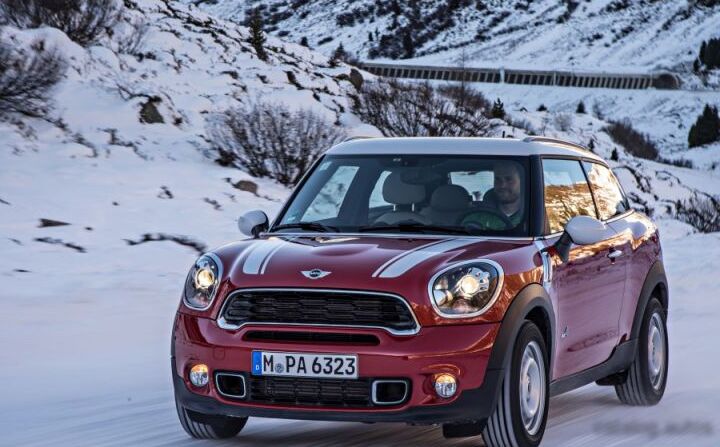
The Mini Paceman Cooper D ALL4, produced between 2014 and 2016, represented a unique offering within the second generation Paceman (R61) lineup. Positioned as a compact crossover, the Paceman aimed to blend Mini’s iconic styling with a more practical, albeit still sporty, package. The Cooper D ALL4 variant, powered by a 1.6-liter diesel engine producing 112 horsepower, served as a fuel-efficient and all-weather capable option for buyers seeking a premium small vehicle. It occupied a middle ground in the Paceman range, offering a balance between performance and economy, slotting below the more powerful Cooper S and John Cooper Works models, and above the base Cooper trim.
Technical Specifications
| Brand | Mini |
| Model | Paceman |
| Generation | Paceman (R61) |
| Type (Engine) | Cooper D 1.6 (112 Hp) ALL4 |
| Start of production | 2014 |
| End of production | 2016 |
| Powertrain Architecture | Internal Combustion engine |
| Body type | Hatchback |
| Seats | 4 |
| Doors | 3 |
| Fuel consumption (urban) | 5.2 l/100 km (45.2 US mpg, 54.3 UK mpg, 19.2 km/l) |
| Fuel consumption (extra urban) | 4.4 l/100 km (53.5 US mpg, 64.2 UK mpg, 22.7 km/l) |
| Fuel consumption (combined) | 4.7 l/100 km (50 US mpg, 60.1 UK mpg, 21.3 km/l) |
| CO2 emissions | 123 g/km |
| Fuel Type | Diesel |
| Acceleration 0 – 100 km/h | 11.5 sec |
| Acceleration 0 – 62 mph | 11.5 sec |
| Acceleration 0 – 60 mph | 10.9 sec |
| Maximum speed | 183 km/h (113.71 mph) |
| Emission standard | Euro 6 |
| Weight-to-power ratio | 12.3 kg/Hp, 81.2 Hp/tonne |
| Weight-to-torque ratio | 5.1 kg/Nm, 195.7 Nm/tonne |
| Power | 112 Hp @ 4000 rpm |
| Power per litre | 70.1 Hp/l |
| Torque | 270 Nm @ 1750-2250 rpm (199.14 lb.-ft. @ 1750-2250 rpm) |
| Engine layout | Front, Transverse |
| Engine Model/Code | N47C16A |
| Engine displacement | 1598 cm3 (97.52 cu. in.) |
| Number of cylinders | 4 |
| Engine configuration | Inline |
| Cylinder Bore | 78 mm (3.07 in.) |
| Piston Stroke | 83.6 mm (3.29 in.) |
| Compression ratio | 16.5:1 |
| Number of valves per cylinder | 4 |
| Fuel injection system | Diesel Commonrail |
| Engine aspiration | Twin-power turbo, Intercooler |
| Engine oil capacity | 5.2 l (5.49 US qt | 4.58 UK qt) |
| Coolant | 6 l (6.34 US qt | 5.28 UK qt) |
| Kerb Weight | 1380 kg (3042.38 lbs.) |
| Max. weight | 1850 kg (4078.55 lbs.) |
| Max load | 470 kg (1036.17 lbs.) |
| Trunk (boot) space – minimum | 330 l (11.65 cu. ft.) |
| Trunk (boot) space – maximum | 1080 l (38.14 cu. ft.) |
| Fuel tank capacity | 47 l (12.42 US gal | 10.34 UK gal) |
| Max. roof load | 75 kg (165.35 lbs.) |
| Permitted trailer load with brakes (12%) | 800 kg (1763.7 lbs.) |
| Permitted trailer load without brakes | 500 kg (1102.31 lbs.) |
| Permitted towbar download | 75 kg (165.35 lbs.) |
| Length | 4109 mm (161.77 in.) |
| Width | 1786 mm (70.31 in.) |
| Height | 1518 mm (59.76 in.) |
| Wheelbase | 2596 mm (102.2 in.) |
| Front track | 1538 mm (60.55 in.) |
| Rear (Back) track | 1566 mm (61.65 in.) |
| Ride height (ground clearance) | 133 mm (5.24 in.) |
| Drag coefficient (Cd) | 0.35 |
| Minimum turning circle (turning diameter) | 11.6 m (38.06 ft.) |
| Drive wheel | All wheel drive (4×4) |
| Number of gears and type of gearbox | 6 gears, manual transmission |
| Front suspension | Independent, type McPherson with coil spring and anti-roll bar |
| Rear suspension | Independent multi-link suspension |
| Front brakes | Ventilated discs |
| Rear brakes | Disc |
INTRODUCTION
The Mini Paceman Cooper D ALL4, launched in 2014, was a three-door crossover based on the R61 platform, shared with the Countryman. It aimed to offer a more stylish and engaging alternative to traditional small hatchbacks and crossovers. The “ALL4” designation indicated Mini’s all-wheel-drive system, providing enhanced traction and stability, particularly beneficial in inclement weather. The 1.6-liter diesel engine, identified by the N47C16A engine code, was a key component of the Cooper D variant, prioritizing fuel efficiency and reasonable performance. This model year represented a mid-cycle refresh for the Paceman, incorporating minor styling and equipment updates.
Powertrain & Engine Architecture
The heart of the Cooper D ALL4 is the N47C16A 1.6-liter inline-four diesel engine. This engine utilizes a second-generation common rail direct injection system, delivering fuel at pressures up to 1,800 bar for optimized combustion. A twin-scroll turbocharger with an intercooler further enhances performance and efficiency. The engine features four valves per cylinder and a variable geometry turbo (VGT) to improve responsiveness across the rev range. The N47 engine family is known for its relatively compact size and lightweight construction. The six-speed manual transmission was standard, offering precise shifts and a direct connection to the engine. The ALL4 all-wheel-drive system employs an electro-hydraulically controlled multi-plate clutch to distribute torque between the front and rear axles, dynamically adjusting based on driving conditions.
Driving Characteristics
The 112 horsepower and 270 Nm (199 lb-ft) of torque produced by the Cooper D ALL4 provided adequate, though not exhilarating, performance. Acceleration from 0-60 mph took around 10.9 seconds, and the top speed was 113.71 mph. The engine’s torque peak, available from 1750-2250 rpm, provided good low-end grunt, making it suitable for everyday driving and overtaking maneuvers. Compared to the more powerful Cooper S, the Cooper D felt noticeably slower, but it offered significantly better fuel economy. The manual transmission’s gear ratios were well-matched to the engine’s characteristics, allowing for smooth and efficient cruising. The ALL4 system provided confident handling in various conditions, enhancing grip and stability, especially on slippery surfaces.
Equipment & Trim Levels
The Cooper D ALL4 typically came standard with features such as air conditioning, power windows, power mirrors, a multi-function steering wheel, and a basic audio system. Upholstery was typically cloth, though leather options were available. Optional extras included a panoramic sunroof, navigation system, upgraded audio, parking sensors, and various cosmetic enhancements. Trim levels could vary depending on the market, but generally offered packages that bundled popular options together. The Paceman’s interior design retained Mini’s signature quirky and stylish aesthetic, with a large central speedometer and toggle switches.
Chassis & Braking
The Paceman’s chassis featured independent suspension all around, with McPherson struts at the front and a multi-link setup at the rear. This configuration provided a comfortable ride and responsive handling. The Cooper D ALL4 was equipped with ventilated disc brakes at the front and solid discs at the rear. Anti-lock braking system (ABS) was standard, along with electronic brakeforce distribution (EBD). The steering system was electric power-assisted, providing light and precise steering feel. Stabilizer bars were fitted to both the front and rear axles to reduce body roll during cornering.
Market Reception & Comparison
The Mini Paceman Cooper D ALL4 was generally well-received by critics for its stylish design, fuel efficiency, and all-weather capability. However, some reviewers noted its relatively high price compared to other small crossovers and its limited rear passenger space. Compared to the Cooper S, the Cooper D offered significantly better fuel economy (around 50 mpg combined) but lacked the same level of performance. Against competitors like the Audi Q3 and BMW X1, the Paceman stood out with its unique styling and more engaging driving experience, but often came at a higher price point.
Legacy
The N47 engine family, including the version used in the Cooper D ALL4, gained a reputation for being relatively reliable, although some early versions were prone to timing chain issues. Regular maintenance, including oil changes and timing chain inspections, is crucial for long-term reliability. Today, used examples of the Paceman Cooper D ALL4 are available at relatively affordable prices. They remain popular among buyers seeking a stylish, fuel-efficient, and all-weather capable small crossover. The Paceman, while discontinued in 2016, continues to be recognized for its distinctive design and Mini’s commitment to a premium driving experience.
