
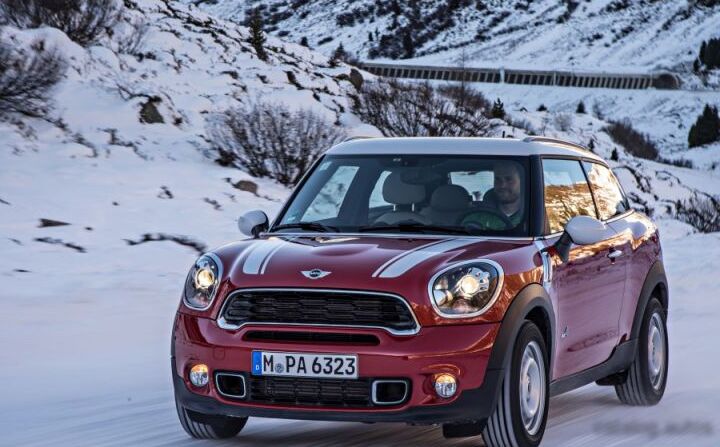
The Mini Paceman Cooper SD 2.0 Automatic, produced between 2014 and 2016, represents a unique offering within the second generation Paceman (R61) lineup. Positioned as a diesel-powered, mid-range variant, it aimed to blend fuel efficiency with a more refined driving experience than the base Cooper models, while remaining more accessible than the performance-oriented John Cooper Works (JCW) trims. The Paceman itself was Mini’s attempt to create a sporty, coupe-like crossover, differentiating itself from the more conventional Mini Cooper hatchback and Countryman. This particular variant, with its 2.0-liter diesel engine and automatic transmission, was primarily marketed towards European consumers seeking a stylish and economical vehicle for both city driving and longer journeys.
Technical Specifications
| Brand | Mini |
| Model | Paceman |
| Generation | Paceman (R61) |
| Type (Engine) | Cooper SD 2.0 (143 Hp) Automatic |
| Start of production | 2014 |
| End of production | 2016 |
| Powertrain Architecture | Internal Combustion engine |
| Body type | Hatchback |
| Seats | 4 |
| Doors | 3 |
| Fuel consumption (urban) | 7.2 l/100 km (32.7 US mpg) |
| Fuel consumption (extra urban) | 4.8 l/100 km (49 US mpg) |
| Fuel consumption (combined) | 5.7 l/100 km (41.3 US mpg) |
| CO2 emissions | 149 g/km |
| Fuel Type | Diesel |
| Acceleration 0 – 100 km/h | 9.3 sec |
| Acceleration 0 – 62 mph | 9.3 sec |
| Acceleration 0 – 60 mph | 8.8 sec |
| Maximum speed | 199 km/h (123.65 mph) |
| Emission standard | Euro 6 |
| Weight-to-power ratio | 9.4 kg/Hp |
| Weight-to-torque ratio | 4.4 kg/Nm |
| Power | 143 Hp @ 4000 rpm |
| Torque | 305 Nm @ 1750-2700 rpm (224.96 lb.-ft.) |
| Engine layout | Front, Transverse |
| Engine Model/Code | N47C20A |
| Engine displacement | 1995 cm3 (121.74 cu. in.) |
| Number of cylinders | 4 |
| Engine configuration | Inline |
| Cylinder Bore | 84 mm (3.31 in.) |
| Piston Stroke | 90 mm (3.54 in.) |
| Compression ratio | 16.5:1 |
| Number of valves per cylinder | 4 |
| Fuel injection system | Diesel Commonrail |
| Engine aspiration | Twin-power turbo, Intercooler |
| Engine oil capacity | 5.2 l (5.49 US qt | 4.58 UK qt) |
| Coolant | 6.5 l (6.87 US qt | 5.72 UK qt) |
| Kerb Weight | 1345 kg (2965.22 lbs.) |
| Max. weight | 1815 kg (4001.39 lbs.) |
| Max load | 470 kg (1036.17 lbs.) |
| Trunk (boot) space – minimum | 330 l (11.65 cu. ft.) |
| Trunk (boot) space – maximum | 1080 l (38.14 cu. ft.) |
| Fuel tank capacity | 47 l (12.42 US gal | 10.34 UK gal) |
| Length | 4114 mm (161.97 in.) |
| Width | 1786 mm (70.31 in.) |
| Height | 1518 mm (59.76 in.) |
| Wheelbase | 2596 mm (102.2 in.) |
| Front track | 1531 mm (60.28 in.) |
| Rear track | 1558 mm (61.34 in.) |
| Ride height (ground clearance) | 138 mm (5.43 in.) |
| Drag coefficient (Cd) | 0.35 |
| Minimum turning circle | 11.6 m (38.06 ft.) |
| Drivetrain | Front wheel drive |
| Number of gears | 6 |
| Gearbox type | Automatic transmission |
| Front suspension | Independent, McPherson with coil spring and anti-roll bar |
| Rear suspension | Independent multi-link suspension |
| Front brakes | Ventilated discs |
| Rear brakes | Disc |
| Tires size | 205/55 R17 |
| Wheel rims size | 7J x 17 |
Powertrain & Engine Architecture
The heart of the Paceman Cooper SD 2.0 Automatic is the BMW-derived N47C20A 2.0-liter four-cylinder diesel engine. This engine is a common rail direct injection (CRDI) unit, utilizing piezo injectors for precise fuel delivery and optimized combustion. The N47 engine family is known for its efficiency and relatively quiet operation for a diesel. The ‘C20A’ designation indicates a specific output tuning of the engine, delivering 143 horsepower at 4000 rpm and a substantial 305 Nm (224.96 lb-ft) of torque between 1750 and 2700 rpm. A single turbocharger with variable geometry turbine (VGT) technology, coupled with an intercooler, provides boost to enhance performance. The engine also features four valves per cylinder and a timing chain for durability. The automatic transmission is a six-speed Aisin unit, chosen for its smoothness and reliability. It’s not a particularly sporty transmission, prioritizing comfort and fuel economy over rapid shifts.
Driving Characteristics
The 143 hp and 305 Nm of torque provide adequate, though not exhilarating, performance. Acceleration from 0-60 mph takes around 8.8 seconds, and the top speed is 199 km/h (123.65 mph). The automatic transmission contributes to a relaxed driving experience, particularly in urban environments. However, it can feel somewhat hesitant during quick overtaking maneuvers, requiring a deliberate kickdown. Compared to the more powerful Cooper SD variants or the petrol-powered Cooper S, this version feels noticeably less responsive. The gear ratios are tuned for fuel efficiency, meaning the engine doesn’t always feel like it’s in its optimal power band. The front-wheel-drive configuration provides predictable handling, but lacks the all-weather capability of the optional ALL4 all-wheel-drive system available on other Paceman models.
Equipment & Trim Levels
The Cooper SD 2.0 Automatic typically came equipped with standard Mini features such as air conditioning, power windows, a multi-function steering wheel, and a basic audio system. Upholstery was usually cloth, though leather options were available. Common optional extras included a panoramic sunroof, navigation system, upgraded sound system (Harman Kardon), parking sensors, and heated seats. The Paceman offered a degree of customization, allowing buyers to choose from a variety of exterior colors, interior trims, and styling packages. The ‘Chili’ and ‘Pepper’ packages were popular choices, adding cosmetic enhancements and additional features.
Chassis & Braking
The Paceman R61 utilizes a McPherson strut front suspension and a multi-link rear suspension, providing a comfortable ride quality. Stabilizer bars are fitted front and rear to reduce body roll during cornering. The Cooper SD 2.0 Automatic features ventilated disc brakes at the front and solid disc brakes at the rear. Anti-lock Braking System (ABS) is standard. The suspension setup is tuned for a balance between comfort and handling, leaning towards the former. The steering is electrically assisted, providing light and precise control.
Market Reception & Comparison
The Paceman Cooper SD 2.0 Automatic was generally well-received by critics for its fuel efficiency and comfortable ride. However, some reviewers noted its relatively high price compared to other small crossovers and its somewhat limited rear passenger space. Compared to the petrol-powered Cooper models, the SD offered significantly better fuel economy, but lacked the same level of responsiveness. Against the more powerful Cooper SD variants, it represented a more affordable entry point into the diesel Paceman range, but at the expense of performance. Reliability was generally good, although the N47 engine has been known to experience timing chain issues in some cases, requiring preventative maintenance.
Legacy
The Mini Paceman Cooper SD 2.0 Automatic remains a relatively common sight on the used car market. Its fuel efficiency and stylish design continue to appeal to buyers seeking a compact and economical crossover. The N47 engine, while generally reliable, requires diligent maintenance, particularly regarding the timing chain. Regular oil changes and adherence to the manufacturer’s service schedule are crucial for long-term durability. Today, these Pacemans represent an affordable entry point into the Mini brand, offering a unique blend of style, practicality, and fuel economy.
