
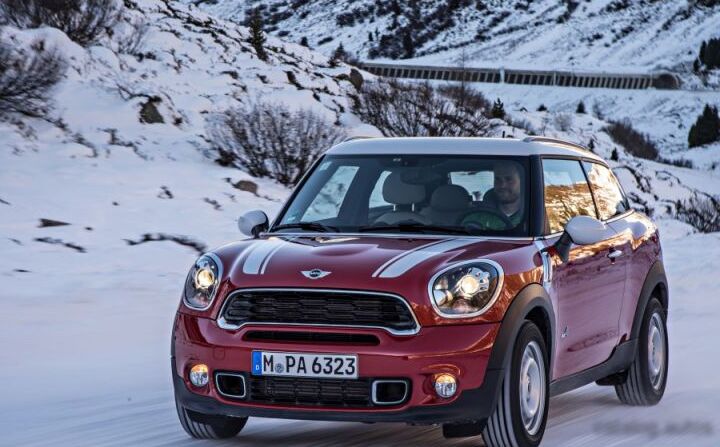
The Mini Paceman John Cooper Works (JCW) 1.6, produced from March 2013 to November 2016, represented the performance pinnacle of the R61 Paceman range. Positioned as the sporty, more aggressively styled sibling to the Mini Countryman, the Paceman offered a coupe-like profile within the subcompact luxury crossover segment. The JCW 1.6 variant, powered by the N18B16C engine, was the top-tier offering, aimed at enthusiasts seeking a more engaging driving experience than the standard Paceman models. It was a key part of Mini’s strategy to broaden its appeal and offer a diverse range of vehicles within the BMW Group portfolio.
Technical Specifications
| Brand | Mini |
| Model | Paceman |
| Generation | Paceman (R61) |
| Type (Engine) | JCW 1.6 (218 Hp) |
| Start of production | March, 2013 |
| End of production | November, 2016 |
| Powertrain Architecture | Internal Combustion engine |
| Body type | Hatchback |
| Seats | 4 |
| Doors | 3 |
| Fuel consumption (urban) | 9.4 l/100 km (25 US mpg, 30.1 UK mpg, 10.6 km/l) |
| Fuel consumption (extra urban) | 6.2 l/100 km (37.9 US mpg, 45.6 UK mpg, 16.1 km/l) |
| Fuel consumption (combined) | 7.4 l/100 km (31.8 US mpg, 38.2 UK mpg, 13.5 km/l) |
| CO2 emissions | 172 g/km |
| Fuel Type | Petrol (Gasoline) |
| Acceleration 0 – 100 km/h | 6.9 sec |
| Acceleration 0 – 62 mph | 6.9 sec |
| Acceleration 0 – 60 mph | 6.6 sec |
| Maximum speed | 226 km/h (140.43 mph) |
| Emission standard | Euro 5 |
| Weight-to-power ratio | 6.4 kg/Hp, 155.7 Hp/tonne |
| Weight-to-torque ratio | 4.7 kg/Nm, 214.3 Nm/tonne |
| Power | 218 Hp @ 6000 rpm |
| Power per litre | 136.4 Hp/l |
| Torque | 300 Nm @ 2100-4500 rpm (221.27 lb.-ft. @ 2100-4500 rpm) |
| Engine layout | Front, Transverse |
| Engine Model/Code | N18B16C |
| Engine displacement | 1598 cm3 (97.52 cu. in.) |
| Number of cylinders | 4 |
| Engine configuration | Inline |
| Cylinder Bore | 77 mm (3.03 in.) |
| Piston Stroke | 85.8 mm (3.38 in.) |
| Compression ratio | 10.5:1 |
| Number of valves per cylinder | 4 |
| Fuel injection system | Direct injection |
| Engine aspiration | Turbocharger, Intercooler |
| Engine oil capacity | 4.2 l (4.44 US qt | 3.7 UK qt) |
| Coolant | 6 l (6.34 US qt | 5.28 UK qt) |
| Kerb Weight | 1400 kg (3086.47 lbs.) |
| Max. weight | 1870 kg (4122.64 lbs.) |
| Max load | 470 kg (1036.17 lbs.) |
| Trunk (boot) space – minimum | 330 l (11.65 cu. ft.) |
| Trunk (boot) space – maximum | 1080 l (38.14 cu. ft.) |
| Fuel tank capacity | 47 l (12.42 US gal | 10.34 UK gal) |
| Length | 4124 mm (162.36 in.) |
| Width | 1786 mm (70.31 in.) |
| Height | 1527 mm (60.12 in.) |
| Wheelbase | 2596 mm (102.2 in.) |
| Front track | 1527 mm (60.12 in.) |
| Rear (Back) track | 1554 mm (61.18 in.) |
| Ride height (ground clearance) | 107 mm (4.21 in.) |
| Minimum turning circle | 11.6 m (38.06 ft.) |
| Drivetrain Architecture | Front wheel drive |
| Number of gears and type of gearbox | 6 gears, manual transmission |
| Front suspension | Independent, type McPherson with coil spring and anti-roll bar |
| Rear suspension | Independent multi-link suspension |
| Front brakes | Ventilated discs |
| Rear brakes | Disc |
| Assisting systems | ABS (Anti-lock braking system) |
| Steering type | Steering rack and pinion |
| Tires size | 225/45 R18 91V |
| Wheel rims size | 7.5J x 18 |
INTRODUCTION
The Mini Paceman JCW 1.6, launched in 2013, was a performance-oriented variant of the R61 Paceman. Built on the UKL1 platform (shared with the contemporary Mini Countryman), the Paceman distinguished itself with a more aggressively sloped roofline, giving it a sportier, coupe-like appearance. The JCW designation signified John Cooper Works, Mini’s performance division, and indicated a significant upgrade in engine output, handling, and styling compared to the standard Paceman models. This variant aimed to attract buyers who desired a premium, sporty subcompact crossover with a distinctive design.
Powertrain & Engine Architecture
At the heart of the Paceman JCW 1.6 lies the N18B16C 1.6-liter turbocharged inline-four cylinder engine. This engine is a member of Mini’s modular engine family, known for its direct fuel injection, variable valve timing (Double VANOS), and a twin-scroll turbocharger. The direct injection system, supplied by Bosch, delivers fuel directly into the combustion chamber, improving efficiency and power output. The turbocharger, coupled with an intercooler, provides increased air intake, boosting horsepower and torque. The engine produces 218 hp at 6000 rpm and 300 Nm (221 lb-ft) of torque between 2100 and 4500 rpm. The engine’s relatively high specific output (136.4 hp per liter) is a testament to its advanced engineering. The standard transmission was a 6-speed manual, although a 6-speed automatic transmission was also available as an option. The automatic transmission featured Steptronic technology, allowing for manual gear selection.
Driving Characteristics
The Paceman JCW 1.6 offered a noticeably more engaging driving experience than the standard Paceman models. The increased power and torque, combined with the sport-tuned suspension, resulted in quicker acceleration and improved handling. The 0-60 mph sprint took approximately 6.6 seconds, and the top speed was electronically limited to 140 mph. The manual transmission provided precise gear changes, while the automatic transmission offered smooth and responsive shifts. The JCW model featured a stiffer suspension setup, reducing body roll and enhancing cornering stability. However, this also resulted in a slightly firmer ride quality compared to the standard Paceman. The front-wheel-drive configuration, while providing good traction, could exhibit some torque steer under hard acceleration.
Equipment & Trim Levels
The JCW 1.6 came standard with a comprehensive list of features, including sport seats, a sport leather steering wheel, automatic climate control, and a high-fidelity sound system. Exterior styling cues included unique front and rear bumpers, side skirts, a rear spoiler, and JCW-specific alloy wheels. Optional extras included a panoramic sunroof, navigation system, Harman Kardon premium sound system, and various interior trim options. The interior typically featured a combination of cloth and leather upholstery, with JCW-branded accents. The dashboard layout was consistent with other Paceman models, featuring a centrally mounted speedometer and a multi-function display.
Chassis & Braking
The Paceman JCW 1.6 utilized an independent suspension system on both the front and rear axles. The front suspension employed McPherson struts with coil springs and an anti-roll bar, while the rear suspension featured a multi-link setup. This configuration provided a good balance between ride comfort and handling performance. The braking system consisted of ventilated discs on the front wheels and solid discs on the rear wheels. Anti-lock braking system (ABS) was standard, along with electronic brakeforce distribution (EBD). The JCW model also featured larger brake rotors and calipers compared to the standard Paceman, providing improved stopping power.
Market Reception & Comparison
The Mini Paceman JCW 1.6 received generally positive reviews from automotive critics. It was praised for its sporty handling, powerful engine, and distinctive styling. However, some critics noted the relatively small rear passenger space and limited cargo capacity. Compared to other trims in the Paceman lineup, the JCW 1.6 offered a significant performance upgrade but came at a higher price point. The standard Paceman models, such as the Cooper and Cooper S, prioritized fuel efficiency and comfort over outright performance. The JCW 1.6 was positioned as the enthusiast’s choice, appealing to drivers who valued a more engaging driving experience.
Legacy
The Mini Paceman JCW 1.6 remains a desirable vehicle in the used car market, particularly among Mini enthusiasts. The N18 engine, while generally reliable, can be prone to certain issues, such as oil leaks and timing chain wear, especially if not properly maintained. Regular servicing and adherence to the manufacturer’s recommended maintenance schedule are crucial for ensuring the long-term reliability of this powertrain. Despite these potential issues, the Paceman JCW 1.6 continues to offer a unique combination of style, performance, and driving enjoyment, making it a compelling option for those seeking a sporty and distinctive subcompact crossover.
