
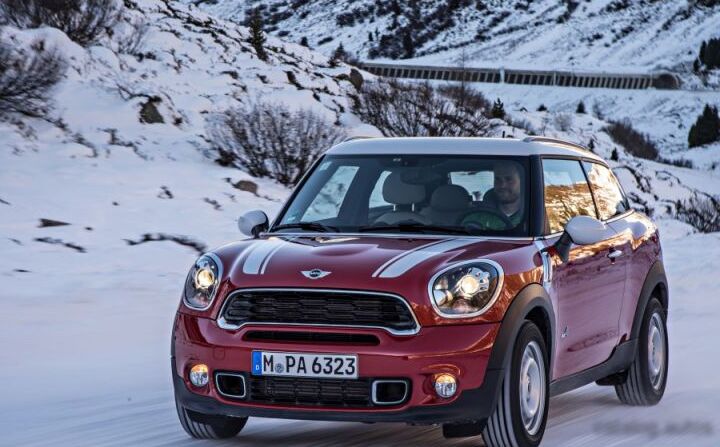
The Mini Paceman John Cooper Works (JCW) 1.6 Automatic, produced from March 2013 to November 2016, represented the performance-oriented variant of Mini’s quirky, coupe-like crossover. Positioned as the top-tier trim level within the R61 Paceman range, it aimed to deliver a more engaging driving experience than the standard Cooper and Cooper S models. Built on the UKL1 platform (shared with the R60 Countryman), the Paceman JCW 1.6 Automatic offered a unique blend of Mini’s signature styling, sporty handling, and a turbocharged engine paired with a six-speed automatic transmission. It was primarily marketed towards enthusiasts seeking a premium, compact crossover with a focus on performance and a distinctive aesthetic.
Technical Specifications
| Brand | Mini |
| Model | Paceman |
| Generation | Paceman (R61) |
| Type (Engine) | JCW 1.6 (218 Hp) Automatic |
| Start of production | March, 2013 |
| End of production | November, 2016 |
| Powertrain Architecture | Internal Combustion engine |
| Body type | Hatchback |
| Seats | 4 |
| Doors | 3 |
| Fuel consumption (economy) – urban | 10.7 l/100 km (22 US mpg, 26.4 UK mpg, 9.3 km/l) |
| Fuel consumption (economy) – extra urban | 6.3 l/100 km (37.3 US mpg, 44.8 UK mpg, 15.9 km/l) |
| Fuel consumption (economy) – combined | 7.9 l/100 km (29.8 US mpg, 35.8 UK mpg, 12.7 km/l) |
| CO2 emissions | 184 g/km |
| Fuel Type | Petrol (Gasoline) |
| Acceleration 0 – 100 km/h | 6.9 sec |
| Acceleration 0 – 62 mph | 6.9 sec |
| Acceleration 0 – 60 mph | 6.6 sec |
| Maximum speed | 224 km/h (139.19 mph) |
| Emission standard | Euro 5 |
| Weight-to-power ratio | 6.5 kg/Hp, 153.5 Hp/tonne |
| Weight-to-torque ratio | 4.7 kg/Nm, 211.3 Nm/tonne |
| Power | 218 Hp @ 6000 rpm |
| Power per litre | 136.4 Hp/l |
| Torque | 300 Nm @ 2100-4500 rpm (221.27 lb.-ft. @ 2100-4500 rpm) |
| Engine layout | Front, Transverse |
| Engine Model/Code | N18B16C |
| Engine displacement | 1598 cm3 (97.52 cu. in.) |
| Number of cylinders | 4 |
| Engine configuration | Inline |
| Cylinder Bore | 77 mm (3.03 in.) |
| Piston Stroke | 85.8 mm (3.38 in.) |
| Compression ratio | 10.5:1 |
| Number of valves per cylinder | 4 |
| Fuel injection system | Direct injection |
| Engine aspiration | Turbocharger, Intercooler |
| Engine oil capacity | 4.2 l (4.44 US qt | 3.7 UK qt) |
| Coolant | 6.5 l (6.87 US qt | 5.72 UK qt) |
| Kerb Weight | 1420 kg (3130.56 lbs.) |
| Max. weight | 1890 kg (4166.74 lbs.) |
| Max load | 470 kg (1036.17 lbs.) |
| Trunk (boot) space – minimum | 330 l (11.65 cu. ft.) |
| Trunk (boot) space – maximum | 1080 l (38.14 cu. ft.) |
| Fuel tank capacity | 47 l (12.42 US gal | 10.34 UK gal) |
| Length | 4124 mm (162.36 in.) |
| Width | 1786 mm (70.31 in.) |
| Height | 1527 mm (60.12 in.) |
| Wheelbase | 2596 mm (102.2 in.) |
| Front track | 1527 mm (60.12 in.) |
| Rear (Back) track | 1554 mm (61.18 in.) |
| Ride height (ground clearance) | 107 mm (4.21 in.) |
| Minimum turning circle (turning diameter) | 11.6 m (38.06 ft.) |
| Drivetrain Architecture | The Internal combustion engine (ICE) drives the front wheels of the vehicle. |
| Drive wheel | Front wheel drive |
| Number of gears and type of gearbox | 6 gears, automatic transmission |
| Front suspension | Independent, type McPherson with coil spring and anti-roll bar |
| Rear suspension | Independent multi-link suspension |
| Front brakes | Ventilated discs |
| Rear brakes | Disc |
| Assisting systems | ABS (Anti-lock braking system) |
| Steering type | Steering rack and pinion |
| Tires size | 225/45 R18 91V |
| Wheel rims size | 7.5J x 18 |
INTRODUCTION
The Mini Paceman JCW 1.6 Automatic, launched in 2013, was a performance-focused iteration of the R61 Paceman, a three-door, four-seater crossover. It slotted above the Cooper S Paceman in the lineup, offering a significant power upgrade and a more aggressive aesthetic. The Paceman itself was a somewhat controversial model, criticized for its compromised rear headroom due to its sloping roofline, but it appealed to buyers seeking a more individualistic and sporty Mini experience. The JCW variant aimed to amplify that appeal with a potent engine and enhanced driving dynamics. Production continued until November 2016, coinciding with the broader updates to the Mini range.
Powertrain & Engine Architecture
At the heart of the Paceman JCW 1.6 Automatic lies the N18B16C 1.6-liter turbocharged inline-four cylinder engine. This engine, a member of the BMW/PSA Prince engine family, featured direct fuel injection, a twin-scroll turbocharger, and variable valve timing (Double VANOS). The direct injection system allowed for precise fuel delivery, optimizing combustion efficiency and power output. The turbocharger, coupled with an intercooler, minimized turbo lag and maximized boost pressure. The engine produced 218 horsepower at 6,000 rpm and 300 Nm (221 lb-ft) of torque between 2,100 and 4,500 rpm. This power was channeled through a six-speed automatic transmission, specifically the Aisin B6F40, known for its smooth shifts and responsiveness. While a six-speed manual transmission was available in some markets, the automatic was a popular choice for its convenience and suitability for everyday driving.
Driving Characteristics
The Paceman JCW 1.6 Automatic delivered a noticeably more spirited driving experience compared to the standard Paceman models. Acceleration from 0 to 60 mph took approximately 6.6 seconds, and the car reached a top speed of 139 mph. The automatic transmission, while not as engaging as a manual, provided quick and seamless gear changes, allowing the engine to remain within its optimal power band. The JCW suspension, featuring stiffer springs and dampers, reduced body roll and improved handling precision. However, this came at the expense of some ride comfort. The steering was direct and responsive, providing good feedback to the driver. Compared to the Cooper S automatic, the JCW offered a significant performance advantage, with a more urgent throttle response and greater overall power. The manual transmission version of the JCW offered even quicker acceleration and a more connected driving feel, but the automatic provided a more relaxed experience for daily commuting.
Equipment & Trim Levels
The JCW trim level came generously equipped. Standard features included sport seats upholstered in a combination of cloth and leatherette, a JCW steering wheel, JCW-specific exterior styling cues (including unique bumpers, side skirts, and a rear spoiler), and 18-inch alloy wheels. Inside, the JCW featured unique interior trim elements and badging. Optional extras included a panoramic sunroof, navigation system, Harman Kardon premium sound system, and various customization options through the Mini Yours program. The interior dashboard configuration was typical of the R61 Paceman, featuring a centrally mounted speedometer and a multi-function display. The Paceman JCW Automatic was positioned as the premium offering within the Paceman range, reflecting its higher price point and enhanced performance.
Chassis & Braking
The Paceman JCW 1.6 Automatic utilized an independent suspension setup at all four corners. The front suspension employed a McPherson strut design with coil springs and an anti-roll bar, while the rear featured a multi-link suspension. This configuration provided a good balance between handling and ride comfort, although the JCW’s stiffer springs and dampers prioritized handling. Braking duties were handled by ventilated discs at the front and solid discs at the rear. The car was equipped with ABS (Anti-lock Braking System) and electronic brakeforce distribution. The JCW also featured larger brake calipers and rotors compared to the standard Paceman models, providing improved stopping power.
Market Reception & Comparison
Critics generally praised the Paceman JCW 1.6 Automatic for its performance and handling, but some noted the compromised rear headroom and the relatively firm ride. Compared to the Cooper S Automatic, the JCW offered a substantial performance upgrade, justifying its higher price for enthusiasts. Fuel economy, while respectable for a performance crossover, was not a strong point, averaging around 29.8 US mpg in combined driving. Reliability was generally good, although some owners reported minor issues with the turbocharger and fuel injection system. The JCW’s unique styling and sporty character set it apart from other compact crossovers, appealing to buyers seeking a more individualistic vehicle.
Legacy
The Mini Paceman JCW 1.6 Automatic remains a desirable vehicle in the used car market, particularly among Mini enthusiasts. The N18 engine, while known for some potential issues like carbon buildup, is generally considered reliable with proper maintenance. The six-speed Aisin automatic transmission is also known for its durability. The Paceman JCW’s combination of performance, styling, and Mini’s brand appeal ensures its continued popularity among those seeking a fun-to-drive and distinctive crossover. Its legacy lies in offering a unique and engaging driving experience within the Mini lineup, bridging the gap between practicality and performance.
