
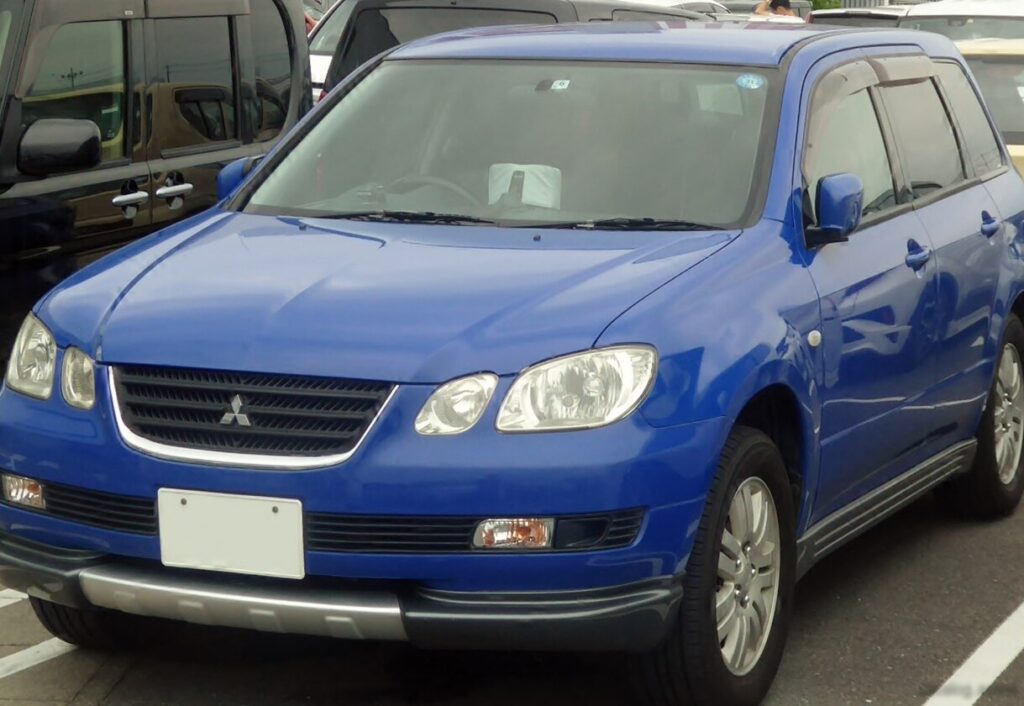
The Mitsubishi Airtrek 2.4 GDI, produced between 2001 and 2006, represents Mitsubishi’s entry into the burgeoning compact SUV market. Positioned as a mid-range offering within the Airtrek lineup, the 2.4 GDI variant aimed to balance performance with fuel efficiency, appealing to buyers seeking a practical and capable vehicle. The Airtrek, never officially sold in the United States, was primarily marketed in Japan, Europe, and Australia, offering an alternative to established competitors like the Honda CR-V and Toyota RAV4. It was built on the Mitsubishi GS platform, shared with other Mitsubishi models of the era.
Technical Specifications
| Brand | Mitsubishi |
| Model | Airtrek |
| Generation | Airtrek |
| Type (Engine) | 2.4 GDI (139 Hp) |
| Start of production | 2001 |
| End of production | 2006 |
| Powertrain Architecture | Internal Combustion engine |
| Body type | SUV |
| Seats | 5 |
| Doors | 4 |
| Fuel Type | Petrol (Gasoline) |
| Weight-to-power ratio | 10.4 kg/Hp, 95.9 Hp/tonne |
| Weight-to-torque ratio | 7 kg/Nm, 142.8 Nm/tonne |
| Power | 139 Hp @ 5500 rpm |
| Power per litre | 59.1 Hp/l |
| Torque | 207 Nm @ 3500 rpm (152.68 lb.-ft. @ 3500 rpm) |
| Engine layout | Front, Longitudinal |
| Engine Model/Code | 4G64 |
| Engine displacement | 2351 cm3 (143.47 cu. in.) |
| Number of cylinders | 4 |
| Engine configuration | Inline |
| Cylinder Bore | 86.5 mm (3.41 in.) |
| Piston Stroke | 100 mm (3.94 in.) |
| Compression ratio | 10.8:1 |
| Number of valves per cylinder | 4 |
| Fuel injection system | Direct injection |
| Engine aspiration | Naturally aspirated engine |
| Valvetrain | DOHC |
| Engine oil capacity | 4.3 l (4.54 US qt | 3.78 UK qt) |
| Kerb Weight | 1450 kg (3196.7 lbs) |
| Max. weight | 1725 kg (3802.97 lbs) |
| Max load | 275 kg (606.27 lbs) |
| Trunk (boot) space – minimum | 402 l (14.2 cu. ft.) |
| Trunk (boot) space – maximum | 1049 l (37.05 cu. ft.) |
| Fuel tank capacity | 60 l (15.85 US gal | 13.2 UK gal) |
| Length | 4410 mm (173.62 in.) |
| Width | 1750 mm (68.9 in.) |
| Height | 1550 mm (61.02 in.) |
| Wheelbase | 2626 mm (103.39 in.) |
| Front track | 1495 mm (58.86 in.) |
| Rear (Back) track | 1495 mm (58.86 in.) |
| Drive wheel | All wheel drive (4×4) |
| Number of gears and type of gearbox | 4 gears, automatic transmission |
| Front suspension | Wishbone |
| Rear suspension | Coil spring |
| Front brakes | Ventilated discs |
| Rear brakes | Drum |
| Assisting systems | ABS (Anti-lock braking system) |
| Steering type | Steering rack and pinion |
| Power steering | Hydraulic Steering |
| Tires size | 215/60 R16 |
Powertrain & Engine Architecture
The heart of the Airtrek 2.4 GDI is the 4G64 engine, a 2.4-liter inline-four cylinder powerplant. “GDI” stands for Gasoline Direct Injection, a key feature of this engine. Direct injection allows fuel to be sprayed directly into the combustion chamber, resulting in more efficient combustion, increased power, and reduced emissions compared to traditional multi-point fuel injection systems. The 4G64 utilizes a sophisticated engine management system to control fuel delivery and ignition timing. The engine features a double overhead camshaft (DOHC) valvetrain with four valves per cylinder, optimizing airflow for improved performance. The automatic transmission is a conventional four-speed unit, chosen for its balance of cost and reliability. While not offering the responsiveness of a manual transmission, it provided smooth and effortless shifting for everyday driving.
Driving Characteristics
The 139 horsepower and 152.68 lb-ft of torque produced by the 2.4 GDI engine provided adequate, though not exhilarating, performance. Acceleration was reasonable for everyday driving, but the Airtrek 2.4 GDI wasn’t designed for sporty driving. The automatic transmission, while smooth, could feel somewhat sluggish, particularly during overtaking maneuvers. Compared to the available manual transmission, the automatic resulted in a noticeable decrease in responsiveness. The all-wheel-drive system provided enhanced traction in various weather conditions, making it a capable vehicle for those living in areas with inclement weather. The gear ratios were tuned for fuel economy and comfortable cruising rather than outright speed.
Equipment & Trim Levels
The 2.4 GDI trim typically included features such as air conditioning, power windows and locks, and a basic audio system. Interior upholstery was generally cloth, with optional leather available. Dashboard configuration was functional and straightforward, prioritizing usability over luxury. Optional extras included a sunroof, upgraded audio system, and alloy wheels. The Airtrek aimed for a practical and well-equipped package without venturing into premium territory.
Chassis & Braking
The Airtrek utilized a front wishbone and rear coil spring suspension setup, providing a comfortable ride quality. The suspension was tuned to prioritize comfort over sporty handling. Braking duties were handled by ventilated discs at the front and drum brakes at the rear. Anti-lock Braking System (ABS) was standard, enhancing safety by preventing wheel lockup during hard braking. The steering system employed a hydraulic rack and pinion setup, offering reasonable steering feel and precision.
Market Reception & Comparison
The Mitsubishi Airtrek 2.4 GDI received generally positive reviews for its practicality, fuel efficiency, and all-wheel-drive capability. Critics noted that the engine, while adequate, wasn’t particularly powerful compared to some competitors. The automatic transmission was sometimes criticized for its lack of responsiveness. Compared to the lower-powered 1.8-liter variants, the 2.4 GDI offered a noticeable performance improvement, making it a more appealing option for drivers who frequently carried passengers or cargo. However, it wasn’t as fuel-efficient as the smaller engine. Compared to the diesel options available in Europe, the 2.4 GDI offered a smoother and quieter driving experience, but at the expense of fuel economy.
Legacy
The Mitsubishi Airtrek, while not a massive sales success, established Mitsubishi as a player in the compact SUV segment. The 4G64 engine proved to be a relatively reliable unit, with proper maintenance. Today, used examples of the Airtrek 2.4 GDI are relatively affordable and can be found in good condition. Common issues include wear and tear on suspension components and potential for oil leaks as the engine ages. The Airtrek remains a practical and capable vehicle for those seeking an affordable and reliable SUV, particularly in regions where all-wheel drive is valued. Its GDI technology, while advanced for its time, requires consistent use of quality fuel to prevent carbon buildup and maintain optimal performance.
