
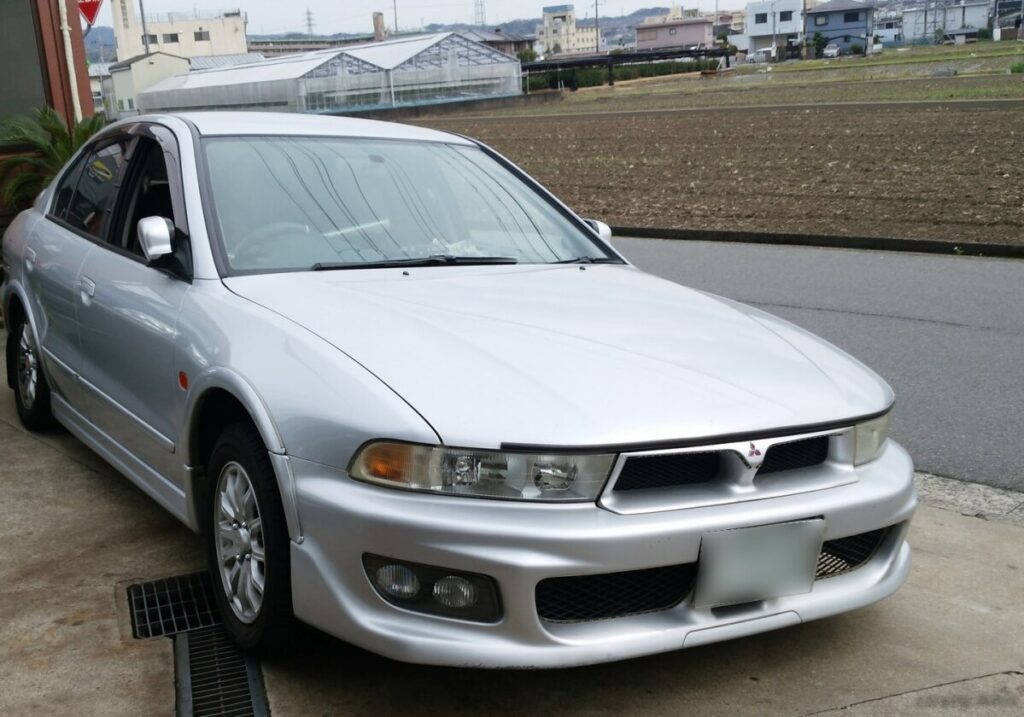
The Mitsubishi Aspire, known as the Legnum in Japan, was a mid-size sedan produced between 1997 and 2002. Representing Mitsubishi’s foray into a more upscale and sporty sedan segment, the Aspire/Legnum aimed to compete with established players like the Toyota Camry and Honda Accord, but with a focus on performance and distinctive styling. The “EAO” designation refers to the specific chassis code and generally denotes models produced during the latter part of the production run, often featuring refinements to the engine and transmission options. This article will focus specifically on the 280 horsepower variant, a flagship offering within the Legnum/Aspire lineup.
Technical Specifications
| Brand | Mitsubishi |
| Model | Aspire / Legnum |
| Generation | Aspire (EAO) |
| Type (Engine) | LEGNUM (EAO) (280 Hp) |
| Start of Production | 1997 |
| End of Production | 2002 |
| Powertrain Architecture | Internal Combustion Engine |
| Body Type | Sedan |
| Fuel Type | Petrol (Gasoline) |
| Power | 280 Hp |
| Engine Aspiration | Naturally Aspirated |
Powertrain & Engine Architecture
The heart of the 280 horsepower Legnum/Aspire was the 6A13TT engine, a 2.5-liter V6. This engine was notable for its twin-turbocharged configuration, a relatively uncommon feature in mainstream mid-size sedans of the era. The twin-turbo setup utilized two smaller turbochargers instead of a single large one, which helped to minimize turbo lag and provide a broader, more usable powerband. The engine featured a DOHC (Double Overhead Camshaft) valvetrain with 24 valves, and Mitsubishi’s proprietary MIVEC (Mitsubishi Innovative Valve timing and lift Electronic Control) technology. MIVEC allowed for variable valve timing on both the intake and exhaust camshafts, optimizing engine performance and efficiency across a wider range of engine speeds. Fuel delivery was handled by a multi-point fuel injection system. While a five-speed manual transmission was available on some models, the 280 hp variant was most commonly paired with a four-speed automatic transmission, designed to handle the engine’s substantial torque output. This automatic transmission featured adaptive shift logic, attempting to learn the driver’s style and adjust shift points accordingly.
Driving Characteristics
The 280 hp Legnum/Aspire offered a significantly different driving experience compared to its naturally aspirated counterparts. The twin-turbochargers provided a noticeable surge of power in the mid-range, delivering strong acceleration for overtaking and merging onto highways. While not a dedicated sports sedan, the Legnum/Aspire offered a level of performance that was uncommon in its class. The four-speed automatic transmission, while generally smooth, wasn’t as quick-shifting as some of the newer automatic transmissions available in other vehicles. This could result in a slight delay in response when downshifting for cornering or quick acceleration. The suspension was tuned to provide a balance between comfort and handling, offering a reasonably compliant ride while still maintaining good body control. The all-wheel-drive system, standard on the 280 hp model, enhanced traction and stability, particularly in inclement weather conditions.
Equipment & Trim Levels
The 280 hp Legnum/Aspire typically represented the highest trim level available. Standard features included leather upholstery, power-adjustable front seats, a premium sound system, automatic climate control, and alloy wheels. Optional extras often included a sunroof, navigation system (a rarity for the time), and upgraded interior trim. The interior design was generally well-appointed, with a focus on comfort and functionality. The dashboard layout was relatively straightforward, with easy-to-read gauges and logically placed controls. The Legnum/Aspire aimed to provide a more luxurious and refined interior experience compared to some of its more basic competitors.
Chassis & Braking
The Legnum/Aspire utilized a MacPherson strut front suspension and a multi-link rear suspension. This suspension setup provided a good balance between ride comfort and handling precision. The all-wheel-drive system employed a viscous coupling center differential, distributing torque between the front and rear axles as needed. Braking duties were handled by ventilated disc brakes on all four wheels, providing ample stopping power. Anti-lock brakes (ABS) were standard equipment, enhancing safety and control during emergency braking situations. The chassis was reinforced to handle the increased power output of the turbocharged engine, providing a solid and stable platform for spirited driving.
Market Reception & Comparison
The Legnum/Aspire, particularly the 280 hp variant, received generally positive reviews from automotive critics. It was praised for its strong performance, comfortable ride, and well-equipped interior. However, some critics noted that the styling was somewhat conservative compared to some of its more flamboyant competitors. In terms of fuel economy, the 280 hp model was predictably less efficient than the naturally aspirated versions, averaging around 18-22 mpg in combined driving. Compared to other turbocharged sedans of the era, such as the Mazda Millenia, the Legnum/Aspire offered a more refined and comfortable driving experience, but lacked the same level of outright sportiness. The Legnum/Aspire was primarily marketed towards buyers who wanted a mid-size sedan with a bit more performance and luxury than the mainstream offerings.
Legacy
The Mitsubishi Legnum/Aspire, while not a massive sales success, has gained a cult following among enthusiasts. The 6A13TT engine is known for its durability and potential for modification. Properly maintained examples of the 280 hp variant are becoming increasingly rare and sought-after by collectors. The all-wheel-drive system and robust drivetrain contribute to the vehicle’s longevity. Common issues with these vehicles often relate to age-related wear and tear, such as turbocharger issues, sensor failures, and deterioration of rubber components. However, parts availability remains reasonably good, and the engine is generally considered to be relatively easy to work on. Today, the Legnum/Aspire represents a unique and interesting chapter in Mitsubishi’s history, offering a blend of performance, luxury, and distinctive styling that sets it apart from its contemporaries. The 280 hp variant, in particular, stands as a testament to Mitsubishi’s engineering capabilities and its willingness to push the boundaries of what was expected in a mid-size sedan.
