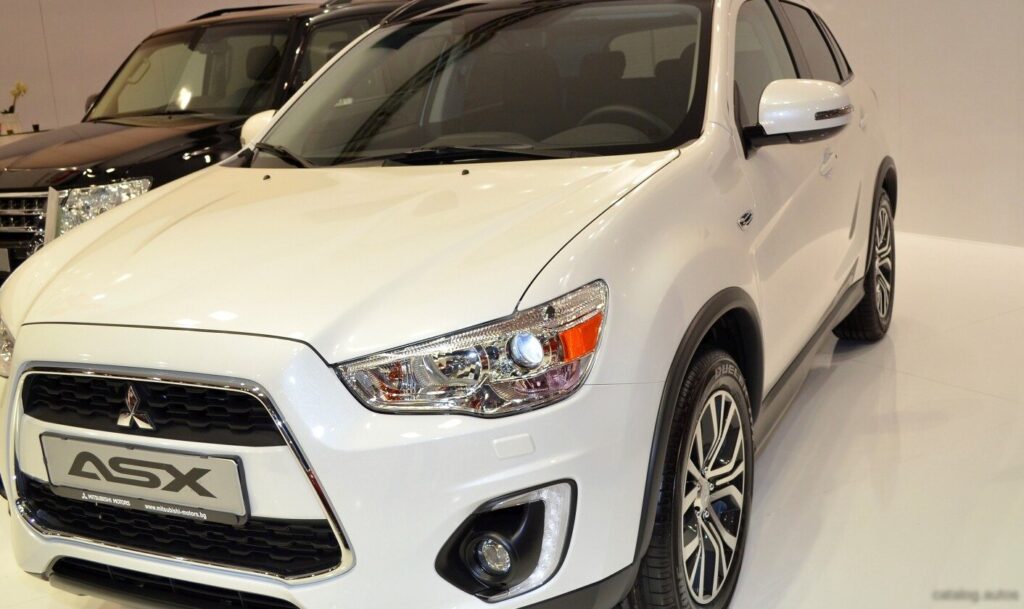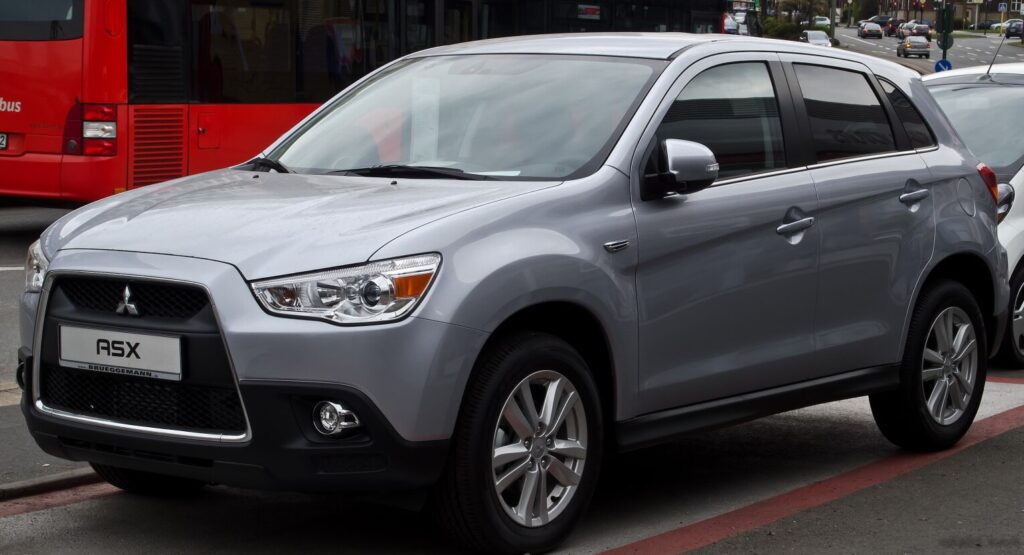
The Mitsubishi ASX, known as the Mitsubishi Outlander Sport in the North American market, is a compact crossover SUV produced by Mitsubishi Motors. The first generation, known internally as the GA2W, was introduced in 2010 and continued through 2012 with various updates. The 1.6-liter DOHC MIVEC 2WD variant, producing 117 horsepower, represented an entry-level offering within the ASX lineup, primarily targeted at buyers seeking fuel efficiency and affordability in the burgeoning compact SUV segment. This model was particularly significant in European and Asian markets, where smaller displacement engines were favored due to tax regulations and fuel costs.
Technical Specifications
| Brand | Mitsubishi |
| Model | ASX |
| Generation | ASX I |
| Type (Engine) | 1.6 DOHC MIVEC (117 Hp) 2WD |
| Start of production | 2010 |
| End of production | 2012 |
| Powertrain Architecture | Internal Combustion engine |
| Body type | SUV, Crossover |
| Seats | 5 |
| Doors | 5 |
| Fuel consumption (urban) | 7.7 l/100 km (30.5 US mpg) |
| Fuel consumption (extra urban) | 4.9 l/100 km (48 US mpg) |
| Fuel consumption (combined) | 6 l/100 km (39.2 US mpg) |
| Fuel Type | Petrol (Gasoline) |
| Acceleration 0 – 100 km/h | 11.4 sec |
| Acceleration 0 – 62 mph | 11.4 sec |
| Acceleration 0 – 60 mph | 10.8 sec |
| Maximum speed | 183 km/h (113.71 mph) |
| Emission standard | Euro 5 |
| Weight-to-power ratio | 10.8 kg/Hp |
| Weight-to-torque ratio | 8.2 kg/Nm |
| Power | 117 Hp @ 6000 rpm |
| Torque | 154 Nm @ 4000 rpm (113.58 lb.-ft. @ 4000 rpm) |
| Engine layout | Front, Transverse |
| Engine Model/Code | 4A92 |
| Engine displacement | 1590 cm3 (97.03 cu. in.) |
| Engine configuration | Inline |
| Fuel injection system | Multi-port manifold injection |
| Engine aspiration | Naturally aspirated engine |
| Engine oil capacity | 4.2 l (4.44 US qt | 3.7 UK qt) |
| Coolant capacity | 6 l (6.34 US qt | 5.28 UK qt) |
| Kerb Weight | 1260 kg (2777.82 lbs.) |
| Trunk (boot) space – minimum | 442 l (15.61 cu. ft.) |
| Trunk (boot) space – maximum | 1219 l (43.05 cu. ft.) |
| Fuel tank capacity | 63 l (16.64 US gal | 13.86 UK gal) |
| Length | 4295 mm (169.09 in.) |
| Width | 1770 mm (69.69 in.) |
| Height | 1615 mm (63.58 in.) |
| Wheelbase | 2670 mm (105.12 in.) |
| Minimum turning circle | 10.6 m (34.78 ft.) |
| Drivetrain | Front wheel drive |
| Number of gears | 5 gears, manual transmission |
| Front suspension | Independent, type McPherson with coil spring and anti-roll bar |
| Rear suspension | Independent multi-link suspension |
| Front brakes | Ventilated discs |
| Rear brakes | Disc |
| Assisting systems | ABS (Anti-lock braking system) |
| Steering type | Steering rack and pinion |
Powertrain & Engine Architecture
The heart of this ASX variant is the 4A92 1.6-liter inline-four cylinder engine. This engine utilizes Mitsubishi’s MIVEC (Mitsubishi Innovative Valve timing and lift Electronic Control) technology, a variable valve timing system that optimizes engine performance and fuel efficiency across the rev range. The 4A92 is a naturally aspirated engine, relying on conventional multi-port fuel injection. It’s a relatively simple design, contributing to its reliability. The engine produces 117 horsepower at 6000 rpm and 154 Nm (113.58 lb-ft) of torque at 4000 rpm. This power is delivered to the front wheels through a five-speed manual transmission. The transmission was chosen to balance cost and efficiency, rather than outright performance.
Driving Characteristics
The 1.6L ASX offered a comfortable, if not particularly exhilarating, driving experience. Acceleration from 0-60 mph took around 10.8 seconds, making it slower than higher-powered versions of the ASX, such as those equipped with the 2.0-liter engine. The five-speed manual transmission provided adequate control, but the relatively low horsepower and torque figures meant frequent downshifting was necessary, especially when overtaking or climbing hills. The gear ratios were tuned for fuel economy, prioritizing efficiency over spirited driving. Compared to the automatic transmission option available on other ASX trims, the manual offered a more engaging driving experience and slightly improved fuel economy.
Equipment & Trim Levels
The 1.6-liter ASX typically served as the entry-level trim. Standard equipment generally included air conditioning, power windows, power door locks, and a basic audio system with CD player. Safety features such as ABS and front airbags were also standard. Higher trim levels added features like alloy wheels, a more sophisticated audio system, climate control, and optional extras like a sunroof and navigation system. Interior upholstery was typically cloth, with a functional, if somewhat basic, dashboard layout. The focus was on providing essential features at an affordable price point.
Chassis & Braking
The ASX I utilized a front-wheel-drive platform with independent suspension all around – McPherson struts at the front and a multi-link setup at the rear. This suspension configuration provided a reasonable balance between ride comfort and handling. The front brakes were ventilated discs, while the rear brakes were solid discs. ABS (Anti-lock Braking System) was standard, enhancing braking performance and safety. The chassis was designed to be lightweight, contributing to the vehicle’s fuel efficiency. Stabilizer bars were included to reduce body roll during cornering, but the overall handling characteristics were geared towards comfort rather than sporty performance.
Market Reception & Comparison
The 1.6-liter ASX was generally well-received as an affordable and fuel-efficient compact crossover. Critics praised its practicality and spacious interior, but noted its lack of outright performance. Compared to the 2.0-liter ASX, the 1.6-liter model offered significantly lower running costs but lacked the punch needed for more demanding driving situations. The 1.6L version was often seen as a sensible choice for urban commuters and those prioritizing fuel economy over performance. Its fuel economy figures of around 39.2 US mpg combined were competitive within its class.
Legacy
The Mitsubishi ASX I 1.6 DOHC MIVEC 2WD has proven to be a relatively reliable vehicle in the used car market. The 4A92 engine is known for its durability, and the simple mechanical design makes it relatively easy and inexpensive to maintain. While not a performance standout, this variant offered a practical and economical transportation solution. Today, these vehicles can be found at affordable prices, making them an attractive option for budget-conscious buyers seeking a compact crossover SUV. Common issues reported include wear and tear on suspension components and occasional sensor failures, but these are generally minor and easily addressed.