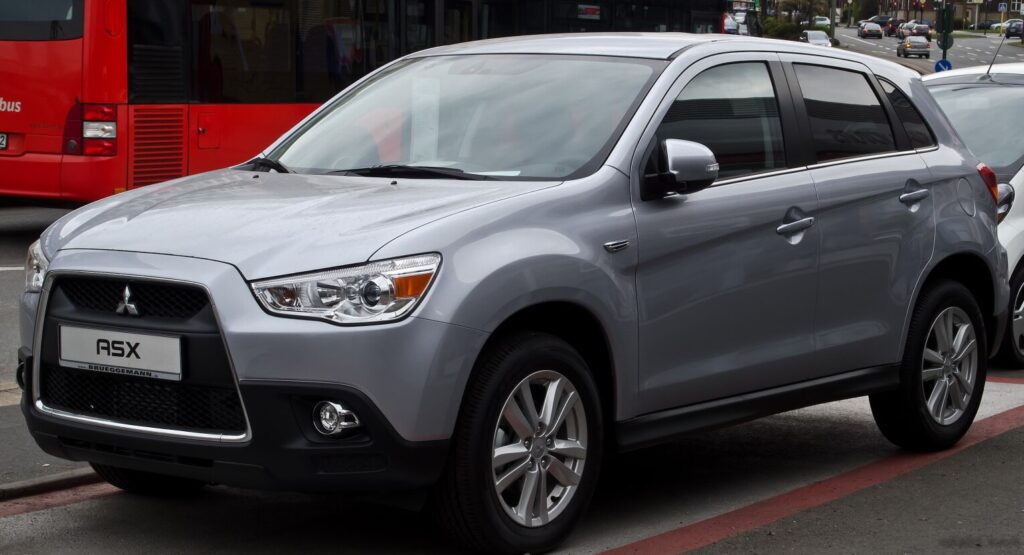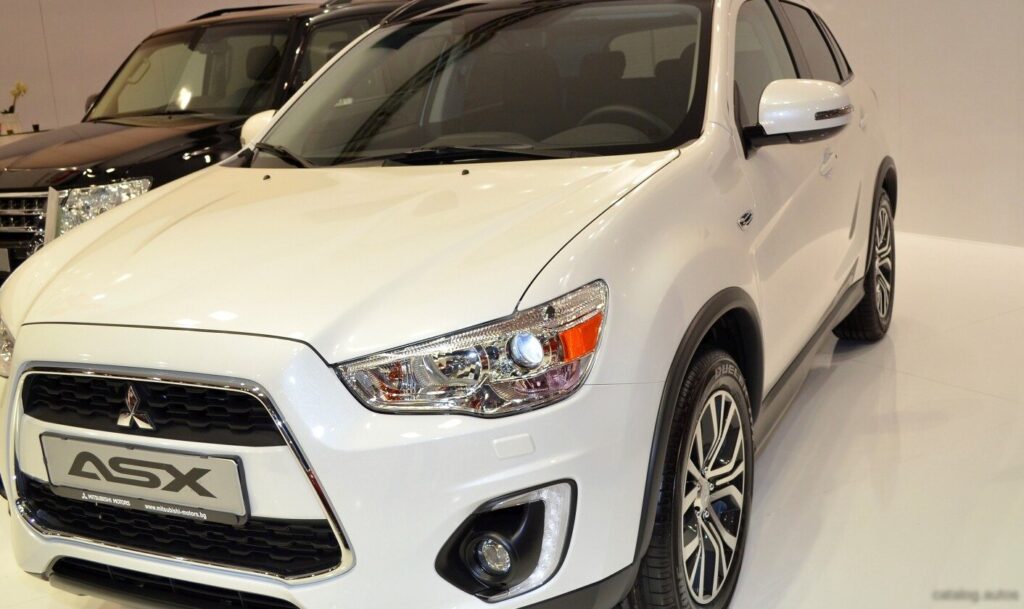
The Mitsubishi ASX 1.6 (115 hp) represents a key variant within the first generation (ASX I) of Mitsubishi’s compact crossover SUV, specifically the facelifted model introduced in 2012 and continuing through 2016. Positioned as an entry-level offering in many markets, this version aimed to provide affordable access to the ASX range, balancing fuel efficiency with practicality. The ASX, known as the RVR in some regions like Canada, was Mitsubishi’s attempt to capitalize on the growing popularity of the crossover segment, offering a more versatile alternative to traditional hatchbacks and sedans. This 1.6-liter variant was particularly significant in European and Asian markets where smaller displacement engines were favored due to tax regulations and fuel costs.
Technical Specifications
| Brand | Mitsubishi |
| Model | ASX |
| Generation | ASX I (facelift 2012) |
| Type (Engine) | 1.6 (115 Hp) |
| Start of production | 2012 |
| End of production | 2016 |
| Powertrain Architecture | Internal Combustion engine |
| Body type | SUV, Crossover |
| Seats | 5 |
| Doors | 5 |
| Fuel consumption (urban) | 7.7 l/100 km (30.5 US mpg) |
| Fuel consumption (extra urban) | 4.9 l/100 km (48 US mpg) |
| Fuel consumption (combined) | 6 l/100 km (39.2 US mpg) |
| CO2 emissions | 137 g/km |
| Fuel Type | Petrol (Gasoline) |
| Acceleration 0 – 100 km/h | 11.4 sec |
| Acceleration 0 – 62 mph | 11.4 sec |
| Acceleration 0 – 60 mph | 10.8 sec |
| Maximum speed | 183 km/h (113.71 mph) |
| Emission standard | Euro 5 |
| Weight-to-power ratio | 11.1 kg/Hp |
| Weight-to-torque ratio | 8.3 kg/Nm |
| Power | 115 Hp @ 6000 rpm |
| Torque | 154 Nm @ 4000 rpm (113.58 lb.-ft. @ 4000 rpm) |
| Engine layout | Front, Transverse |
| Engine Model/Code | 4A92 |
| Engine displacement | 1590 cm3 (97.03 cu. in.) |
| Number of cylinders | 4 |
| Engine configuration | Inline |
| Cylinder Bore | 75 mm (2.95 in.) |
| Piston Stroke | 90 mm (3.54 in.) |
| Compression ratio | 11:1 |
| Number of valves per cylinder | 4 |
| Fuel injection system | Multi-port manifold injection |
| Engine aspiration | Naturally aspirated engine |
| Valvetrain | DOHC |
| Engine oil capacity | 4.2 l (4.44 US qt | 3.7 UK qt) |
| Coolant capacity | 6 l (6.34 US qt | 5.28 UK qt) |
| Kerb Weight | 1275 kg (2810.89 lbs.) |
| Max. weight | 1870 kg (4122.64 lbs.) |
| Max load | 595 kg (1311.75 lbs.) |
| Trunk (boot) space – minimum | 416 l (14.69 cu. ft.) |
| Trunk (boot) space – maximum | 1193 l (42.13 cu. ft.) |
| Fuel tank capacity | 63 l (16.64 US gal | 13.86 UK gal) |
| Length | 4295 mm (169.09 in.) |
| Width | 1770 mm (69.69 in.) |
| Height | 1615 mm (63.58 in.) |
| Wheelbase | 2670 mm (105.12 in.) |
| Front track | 1525 mm (60.04 in.) |
| Rear track | 1535 mm (60.43 in.) |
| Minimum turning circle | 10.6 m (34.78 ft.) |
| Drivetrain | Front wheel drive |
| Number of gears | 5 |
| Gearbox type | Manual transmission |
| Front suspension | Independent type McPherson |
| Rear suspension | Independent multi-link spring suspension with stabilizer |
| Front brakes | Ventilated discs |
| Rear brakes | Disc |
| Assisting systems | ABS (Anti-lock braking system) |
| Steering type | Steering rack and pinion |
| Power steering | Electric Steering |
| Tires size | 215/65 R16 98H; 215/60R17 96H |
| Wheel rims size | 6.5J x 16; 6.5J x 17 |
Powertrain & Engine Architecture
The heart of this ASX variant is the 4A92 1.6-liter inline-four cylinder engine. This engine, part of Mitsubishi’s 4A9 family, is a naturally aspirated powerplant featuring a double overhead camshaft (DOHC) valvetrain with four valves per cylinder. It utilizes a multi-point fuel injection system, delivering fuel directly into the intake ports. The engine produces 115 horsepower at 6000 rpm and 154 Nm (113.58 lb-ft) of torque at 4000 rpm. The 4A92 engine is known for its relatively simple design, contributing to its generally good reliability. It’s paired with a five-speed manual transmission, which was the standard offering for this trim level. While an automatic transmission was available in some markets, it wasn’t as commonly paired with this specific engine.
Driving Characteristics
The 1.6-liter ASX delivers adequate, but not exhilarating, performance. Acceleration from 0 to 60 mph takes around 10.8 seconds, and top speed is rated at 113.71 mph. The five-speed manual transmission provides a reasonable spread of gears, but the engine’s limited torque output means frequent downshifts are often necessary, particularly when overtaking or climbing hills. Compared to the more powerful 1.8-liter and 2.0-liter variants, the 1.6 feels noticeably less responsive. However, it excels in urban driving and on the highway, where its lighter weight and efficient engine contribute to better fuel economy. The gear ratios are tuned for economy rather than outright performance, prioritizing smooth cruising over rapid acceleration.
Equipment & Trim Levels
The 1.6-liter ASX typically came with a fairly basic level of equipment, reflecting its position as the entry point to the range. Standard features generally included air conditioning, power windows, central locking, and an audio system with USB connectivity. Safety features such as ABS, front airbags, and stability control were also standard. Higher trim levels offered upgrades like alloy wheels, climate control, rear parking sensors, and a more sophisticated infotainment system. Interior upholstery was typically cloth, with a functional, if somewhat basic, dashboard layout. Optional extras included a panoramic sunroof and leather upholstery.
Chassis & Braking
The ASX utilizes a front-wheel-drive platform with independent suspension all around. The front suspension employs a McPherson strut setup, while the rear features a multi-link configuration with a stabilizer bar. This suspension setup provides a comfortable ride quality, absorbing bumps and imperfections in the road effectively. Braking duties are handled by ventilated discs at the front and solid discs at the rear. The ABS system provides enhanced braking control, particularly in slippery conditions. The steering is electrically assisted, offering a light and easy driving experience.
Market Reception & Comparison
The Mitsubishi ASX 1.6 received mixed reviews. Critics praised its fuel efficiency, comfortable ride, and practical interior space. However, the engine’s lack of power was a common criticism, particularly when compared to competitors offering more potent powertrains. In terms of fuel economy, the 1.6-liter ASX offered a competitive advantage over larger-engined rivals. Reliability was generally good, with few reported issues specific to this engine and transmission combination. Compared to the 1.8-liter variant, the 1.6 offered lower running costs but sacrificed performance. The 2.0-liter models provided a more engaging driving experience but came at a higher price point.
Legacy
The Mitsubishi ASX 1.6 (115 hp) remains a relatively affordable and practical used car option. The 4A92 engine is known for its durability, and with regular maintenance, it can provide many years of reliable service. While not the most exciting vehicle to drive, its fuel efficiency and comfortable ride make it a sensible choice for those seeking a compact crossover SUV. Parts availability is generally good, and maintenance costs are reasonable. The ASX, in general, helped establish Mitsubishi as a player in the competitive crossover market, paving the way for future models.