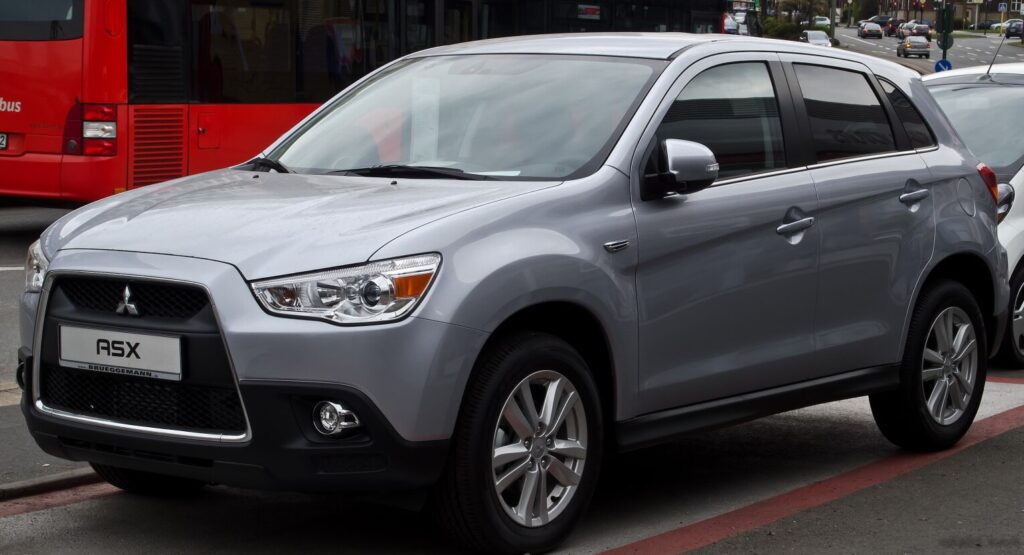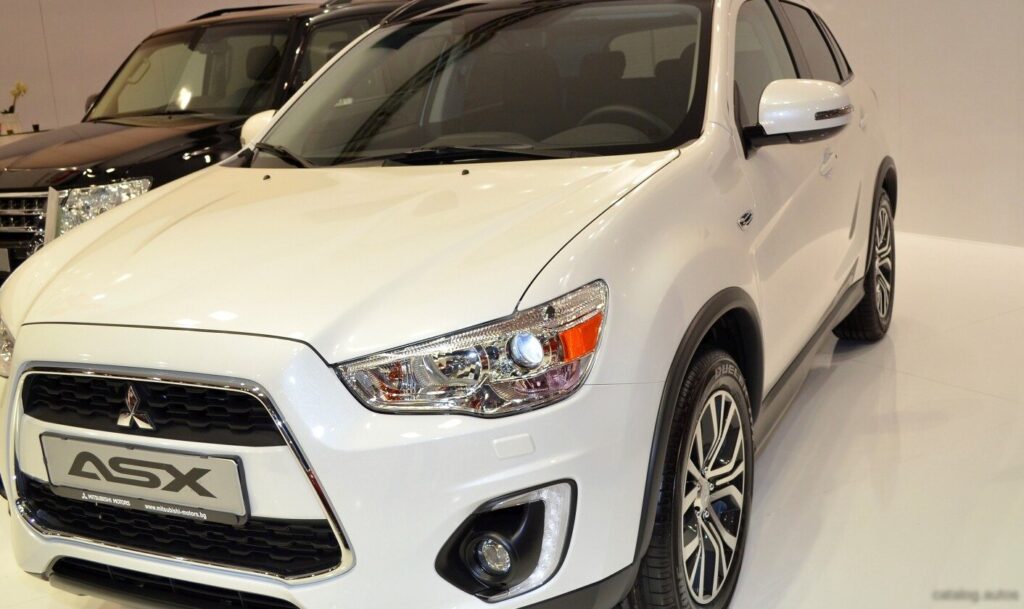
The Mitsubishi ASX I (facelift 2012) 1.6 DI-D, producing 114 horsepower, was a key variant of Mitsubishi’s compact crossover SUV offered primarily in the European market from 2015 to 2016. Positioned as an entry-level diesel option within the ASX range, it aimed to provide fuel efficiency and reasonable performance for everyday driving. This model represented Mitsubishi’s attempt to capture a segment of buyers seeking a practical and economical SUV. It was built on the Mitsubishi GS platform, shared with models like the Outlander and Peugeot 4008.
Technical Specifications
| Brand | Mitsubishi |
| Model | ASX |
| Generation | ASX I (facelift 2012) |
| Type (Engine) | 1.6 DI-D (114 Hp) |
| Start of production | 2015 |
| End of production | 2016 |
| Powertrain Architecture | Internal Combustion engine |
| Body type | SUV, Crossover |
| Seats | 5 |
| Doors | 5 |
| Fuel consumption (urban) | 5.2 l/100 km (45.2 US mpg, 54.3 UK mpg, 19.2 km/l) |
| Fuel consumption (extra urban) | 4.2 l/100 km (56 US mpg, 67.3 UK mpg, 23.8 km/l) |
| Fuel consumption (combined) | 4.6 l/100 km (51.1 US mpg, 61.4 UK mpg, 21.7 km/l) |
| CO2 emissions | 119 g/km |
| Fuel Type | Diesel |
| Acceleration 0 – 100 km/h | 11.2 sec |
| Acceleration 0 – 62 mph | 11.2 sec |
| Acceleration 0 – 60 mph | 10.6 sec |
| Maximum speed | 182 km/h (113.09 mph) |
| Emission standard | Euro 6 |
| Weight-to-power ratio | 11.9 kg/Hp, 84.1 Hp/tonne |
| Weight-to-torque ratio | 5 kg/Nm, 199.3 Nm/tonne |
| Power | 114 Hp @ 3600 rpm |
| Power per litre | 73.1 Hp/l |
| Torque | 270 Nm @ 1750 rpm (199.14 lb.-ft. @ 1750 rpm) |
| Engine layout | Front, Transverse |
| Engine Model/Code | 9HD |
| Engine displacement | 1560 cm3 (95.2 cu. in.) |
| Number of cylinders | 4 |
| Engine configuration | Inline |
| Number of valves per cylinder | 4 |
| Fuel injection system | Diesel Commonrail |
| Engine aspiration | Turbocharger, Intercooler |
| Valvetrain | SOHC |
| Engine oil capacity | 3.75 l (3.96 US qt | 3.3 UK qt) |
| Coolant capacity | 7.4 l (7.82 US qt | 6.51 UK qt) |
| Kerb Weight | 1355 kg (2987.26 lbs.) |
| Trunk (boot) space – minimum | 419 l (14.8 cu. ft.) |
| Trunk (boot) space – maximum | 1219 l (43.05 cu. ft.) |
| Fuel tank capacity | 63 l (16.64 US gal | 13.86 UK gal) |
| Length | 4295 mm (169.09 in.) |
| Width | 1770 mm (69.69 in.) |
| Width including mirrors | 1810 mm (71.26 in.) |
| Height | 1625 – 1635 mm (63.98 – 64.37 in.) |
| Wheelbase | 2670 mm (105.12 in.) |
| Ride height (ground clearance) | 180 mm (7.09 in.) |
| Minimum turning circle | 10.6 m (34.78 ft.) |
| Drivetrain Architecture | Front wheel drive |
| Number of gears | 6 |
| Gearbox type | Manual transmission |
| Front suspension | Independent type McPherson |
| Rear suspension | Independent multi-link suspension |
| Front brakes | Ventilated discs |
| Rear brakes | Disc |
| Assisting systems | ABS (Anti-lock braking system) |
| Steering type | Steering rack and pinion |
INTRODUCTION
The Mitsubishi ASX I, launched in 2010 and receiving a significant facelift in 2012, was Mitsubishi’s entry into the increasingly popular compact SUV segment. The 1.6 DI-D variant, introduced in 2015, was specifically designed to appeal to European buyers prioritizing fuel economy and lower running costs. This version utilized a downsized diesel engine to meet tightening emissions regulations and consumer demand for efficiency. It occupied the lower end of the ASX lineup, serving as a more affordable alternative to the higher-powered 1.8-liter petrol and 2.2-liter diesel options.
Powertrain & Engine Architecture
The heart of the ASX 1.6 DI-D is the 9HD engine, a 1.6-liter inline-four cylinder diesel. This engine utilizes a common rail direct injection system, delivering fuel directly into the combustion chamber at extremely high pressure for improved combustion efficiency and reduced emissions. The engine is turbocharged and intercooled, enhancing power output and torque. The intercooler cools the compressed air from the turbocharger, increasing its density and further improving performance. The engine features a Single Overhead Camshaft (SOHC) valvetrain, a relatively simple design contributing to its reliability and cost-effectiveness. The 114 horsepower and 270 Nm (199 lb-ft) of torque were delivered at 1750 rpm, providing a good balance of usability and fuel efficiency. The engine was paired with a six-speed manual transmission, optimized for maximizing fuel economy and providing adequate acceleration.
Driving Characteristics
The 1.6 DI-D engine, coupled with the six-speed manual transmission, provided a reasonably refined driving experience. While not particularly quick – achieving 0-60 mph in around 10.6 seconds – it offered sufficient power for everyday driving situations, including highway cruising and navigating urban environments. The gear ratios were tuned for fuel efficiency, meaning the engine needed to be revved slightly to access its peak power. Compared to the more powerful 1.8-liter petrol version, the 1.6 DI-D offered significantly better fuel economy but lacked the petrol engine’s responsiveness. The manual transmission allowed for greater driver control, but the relatively long throw of the gear lever wasn’t as precise as some competitors. The front-wheel-drive configuration contributed to a lighter vehicle weight, further aiding fuel efficiency.
Equipment & Trim Levels
The ASX 1.6 DI-D typically came with a reasonable level of standard equipment, reflecting its position as an entry-level model. Standard features generally included air conditioning, electric front windows, a basic audio system with USB connectivity, and ABS brakes. Higher trim levels, often denoted by designations like ‘Invite’ or ‘Inform’, added features such as alloy wheels, rear parking sensors, cruise control, and a more sophisticated infotainment system. Interior upholstery was typically cloth, with a functional and durable design. Optional extras included a panoramic sunroof, leather seats, and a navigation system.
Chassis & Braking
The ASX I utilized a McPherson strut front suspension and a multi-link rear suspension, providing a comfortable ride quality and decent handling characteristics. The suspension was tuned to prioritize comfort over outright sportiness. Front brakes were ventilated discs, offering good stopping power, while rear brakes were solid discs. ABS (Anti-lock Braking System) was standard, enhancing safety during emergency braking situations. The vehicle’s weight of approximately 1355 kg (2987 lbs) was relatively light for its class, contributing to its fuel efficiency and agility.
Market Reception & Comparison
The Mitsubishi ASX 1.6 DI-D was generally well-received by automotive critics as a practical and economical choice in the compact SUV segment. Its fuel economy was a major selling point, particularly in Europe where diesel fuel was often cheaper than petrol. However, some reviewers noted that the engine could feel underpowered when fully loaded or tackling steep hills. Compared to rivals like the Nissan Qashqai and Renault Kadjar, the ASX 1.6 DI-D offered a competitive price point and a decent level of equipment. Its reliability was generally considered good, although some owners reported minor issues with the diesel particulate filter (DPF).
Legacy
The Mitsubishi ASX I 1.6 DI-D has proven to be a relatively reliable and durable vehicle in the used car market. The 9HD engine, while not known for exceptional performance, is generally considered robust and capable of high mileage with proper maintenance. The availability of spare parts is good, and servicing costs are reasonable. However, potential buyers should be aware of the potential for DPF issues, particularly if the vehicle has primarily been used for short journeys. Today, the ASX 1.6 DI-D represents a cost-effective option for buyers seeking a practical and fuel-efficient compact SUV.