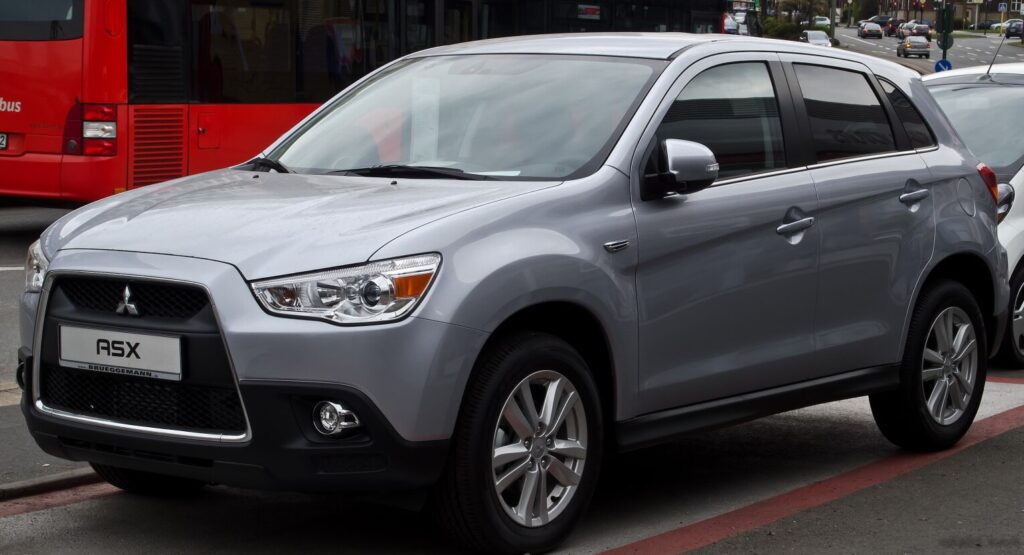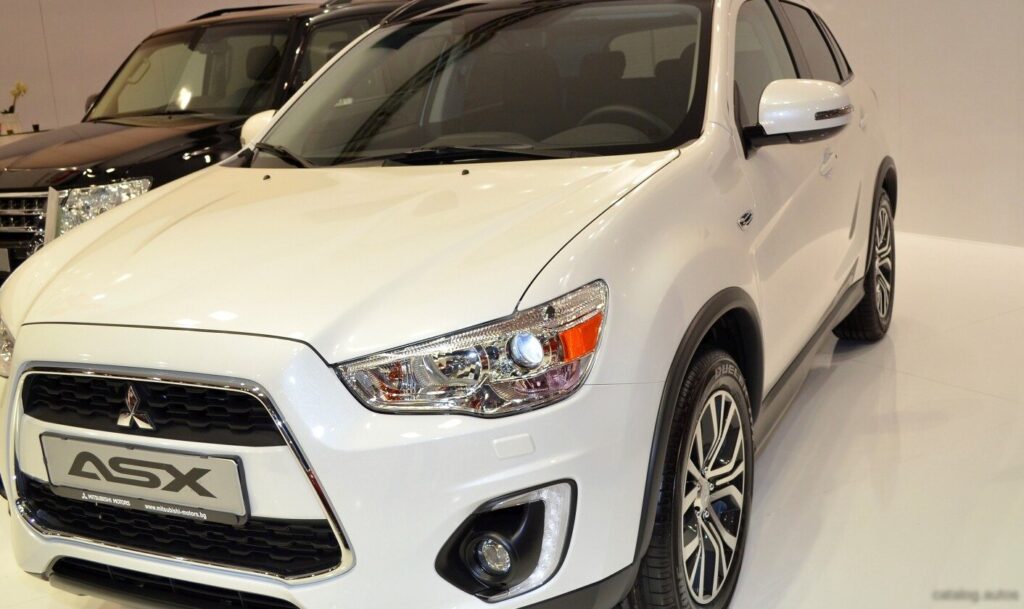
The Mitsubishi ASX I (facelift 2012) 1.6 DI-D 4WD, produced from 2015 to 2016, represents a specific configuration within the first generation of Mitsubishi’s compact crossover SUV. Positioned as a fuel-efficient and capable all-wheel-drive option, this variant aimed to appeal to buyers seeking practicality and reasonable running costs. It falls within the broader context of the ASX (Active Sport Crossover) line, which was Mitsubishi’s entry into the increasingly popular compact SUV segment, competing with vehicles like the Nissan Qashqai and Kia Sportage. This particular model was primarily sold in European and Asian markets, where diesel engines and all-wheel drive systems were highly valued.
Technical Specifications
| Brand | Mitsubishi |
| Model | ASX |
| Generation | ASX I (facelift 2012) |
| Type (Engine) | 1.6 DI-D (114 Hp) 4WD |
| Start of production | 2015 |
| End of production | 2016 |
| Powertrain Architecture | Internal Combustion engine |
| Body type | SUV, Crossover |
| Seats | 5 |
| Doors | 5 |
| Fuel consumption (urban) | 5.6 l/100 km (42 US mpg, 50.4 UK mpg, 17.9 km/l) |
| Fuel consumption (extra urban) | 4.7 l/100 km (50 US mpg, 60.1 UK mpg, 21.3 km/l) |
| Fuel consumption (combined) | 5 l/100 km (47 US mpg, 56.5 UK mpg, 20 km/l) |
| CO2 emissions | 132 g/km |
| Fuel Type | Diesel |
| Acceleration 0 – 100 km/h | 11.5 sec |
| Acceleration 0 – 62 mph | 11.5 sec |
| Acceleration 0 – 60 mph | 10.9 sec |
| Maximum speed | 180 km/h (111.85 mph) |
| Emission standard | Euro 6 |
| Weight-to-power ratio | 12.7 kg/Hp, 78.9 Hp/tonne |
| Weight-to-torque ratio | 5.4 kg/Nm, 186.9 Nm/tonne |
| Power | 114 Hp @ 3600 rpm |
| Torque | 270 Nm @ 1750 rpm (199.14 lb.-ft. @ 1750 rpm) |
| Engine layout | Front, Transverse |
| Engine Model/Code | 9HD |
| Engine displacement | 1560 cm3 (95.2 cu. in.) |
| Number of cylinders | 4 |
| Engine configuration | Inline |
| Number of valves per cylinder | 4 |
| Fuel injection system | Diesel Commonrail |
| Engine aspiration | Turbocharger, Intercooler |
| Valvetrain | SOHC |
| Engine oil capacity | 3.75 l (3.96 US qt | 3.3 UK qt) |
| Coolant capacity | 7.4 l (7.82 US qt | 6.51 UK qt) |
| Kerb Weight | 1445 kg (3185.68 lbs.) |
| Trunk (boot) space – minimum | 419 l (14.8 cu. ft.) |
| Trunk (boot) space – maximum | 1219 l (43.05 cu. ft.) |
| Fuel tank capacity | 60 l (15.85 US gal | 13.2 UK gal) |
| Length | 4295 mm (169.09 in.) |
| Width | 1770 mm (69.69 in.) |
| Width including mirrors | 1810 mm (71.26 in.) |
| Height | 1625 – 1635 mm (63.98 – 64.37 in.) |
| Wheelbase | 2670 mm (105.12 in.) |
| Ride height (ground clearance) | 180 mm (7.09 in.) |
| Minimum turning circle | 10.6 m (34.78 ft.) |
| Drive wheel | All wheel drive (4×4) |
| Number of gears and type of gearbox | 6 gears, manual transmission |
| Front suspension | Independent type McPherson |
| Rear suspension | Independent multi-link suspension |
| Front brakes | Ventilated discs |
| Rear brakes | Disc |
| Assisting systems | ABS (Anti-lock braking system) |
| Steering type | Steering rack and pinion |
Powertrain & Engine Architecture
The heart of this ASX variant is the 1.6-liter (1560 cc) 9HD diesel engine. This is a four-cylinder, inline engine utilizing a single overhead camshaft (SOHC) valvetrain and four valves per cylinder. A turbocharger with an intercooler is employed to boost power output, delivering 114 horsepower at 3600 rpm and a respectable 270 Nm (199 lb-ft) of torque at a low 1750 rpm. The engine utilizes a Diesel Commonrail direct injection system, which contributes to improved fuel efficiency and reduced emissions. The 9HD engine is known for its relatively robust construction, though it is not without its potential maintenance needs, particularly regarding the diesel particulate filter (DPF) which is standard equipment to meet Euro 6 emission standards. The engine is transversely mounted in the front of the vehicle. The 6-speed manual transmission was the standard offering for this configuration, providing a balance between fuel economy and driver control.
Driving Characteristics
The 1.6 DI-D 4WD ASX offers a practical and economical driving experience. Acceleration is adequate, with a 0-60 mph time of around 10.9 seconds, but it’s not a particularly sporty vehicle. The engine’s torque peak at low revs makes it reasonably responsive in everyday driving situations, such as overtaking or climbing hills. The all-wheel-drive system provides enhanced traction, particularly on slippery surfaces, making it suitable for varied weather conditions. Compared to higher-output versions of the ASX, such as those with the 1.8-liter gasoline engine, the 1.6 DI-D prioritizes fuel economy over outright performance. The manual transmission allows for greater driver engagement, but the gear ratios are tuned for efficiency rather than spirited driving.
Equipment & Trim Levels
The 1.6 DI-D 4WD trim typically included standard features such as air conditioning, power windows, central locking, and an audio system with USB connectivity. Safety features included ABS, multiple airbags, and stability control. Higher trim levels, often denoted by designations like ‘Invite’ or ‘Inform’, added features such as alloy wheels, climate control, rear parking sensors, and a touchscreen infotainment system. Interior upholstery was typically cloth, with options for leather upgrades on higher trims. The dashboard layout was functional and straightforward, prioritizing usability over luxury.
Chassis & Braking
The ASX I utilizes a McPherson strut suspension setup at the front and an independent multi-link suspension at the rear, providing a comfortable ride quality. The all-wheel-drive system is typically a part-time system, engaging the rear wheels when traction is needed. Braking duties are handled by ventilated discs at the front and solid discs at the rear. The ABS (Anti-lock Braking System) is standard, enhancing braking performance and stability. Stabilizer bars are fitted to both the front and rear axles to reduce body roll during cornering.
Market Reception & Comparison
The Mitsubishi ASX 1.6 DI-D 4WD was generally well-received by automotive critics as a practical and fuel-efficient crossover. Its strengths lay in its affordability, all-weather capability, and reasonable running costs. However, some reviewers noted that the engine could feel strained when fully loaded or driving uphill. Compared to the gasoline-powered ASX variants, the diesel offered significantly better fuel economy, but at the cost of some refinement. Against competitors like the Nissan Qashqai and Kia Sportage, the ASX offered a competitive package, particularly in terms of value for money.
Legacy
The 1.6 DI-D engine, while generally reliable, can be susceptible to issues with the DPF if not properly maintained, particularly with frequent short journeys. Regular servicing and the use of quality diesel fuel are crucial for long-term reliability. In the used car market, this ASX variant represents a relatively affordable and practical option for buyers seeking a compact SUV with all-wheel drive. Its fuel efficiency and robust build quality continue to make it a viable choice, provided that potential buyers are aware of the potential maintenance requirements associated with the diesel engine and DPF system.