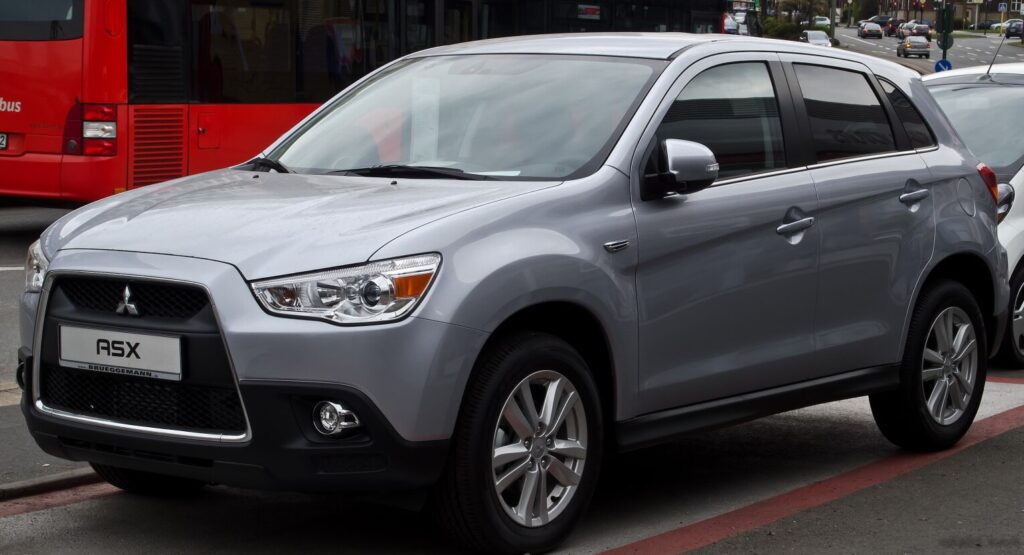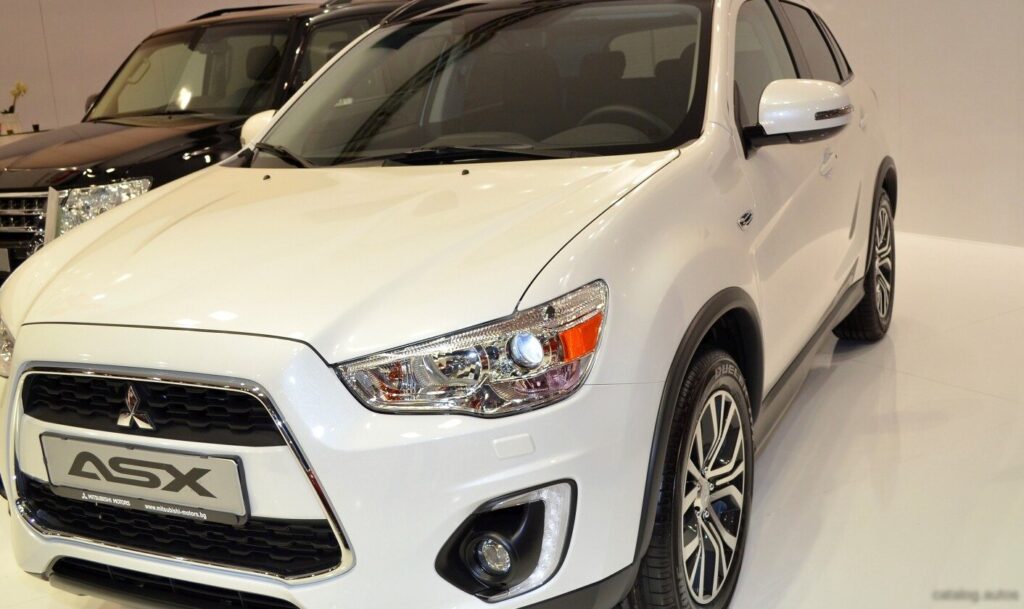
The Mitsubishi ASX I (facelift 2012) 1.8 DI-D (114 hp) represents a diesel-powered variant of Mitsubishi’s compact crossover SUV, sold primarily in the European market. Introduced as part of the ASX’s mid-life refresh in 2012, this model aimed to provide a fuel-efficient and practical option for buyers seeking a versatile vehicle. Production of this specific configuration continued through 2015. It occupied a mid-range position within the ASX lineup, offering a balance between performance, economy, and equipment levels. The ASX, known as the RVR in some markets, was Mitsubishi’s entry into the increasingly popular compact SUV segment, competing with vehicles like the Nissan Qashqai and Kia Sportage.
Technical Specifications
| Brand | Mitsubishi |
| Model | ASX |
| Generation | ASX I (facelift 2012) |
| Type (Engine) | 1.8 DI-D (114 Hp) |
| Start of production | 2012 |
| End of production | 2015 |
| Powertrain Architecture | Internal Combustion engine |
| Body type | SUV, Crossover |
| Seats | 5 |
| Doors | 5 |
| Fuel consumption (urban) | 6.3 l/100 km (37.3 US mpg, 44.8 UK mpg, 15.9 km/l) |
| Fuel consumption (extra urban) | 4.5 l/100 km (52.3 US mpg, 62.8 UK mpg, 22.2 km/l) |
| Fuel consumption (combined) | 5.1 l/100 km (46.1 US mpg, 55.4 UK mpg, 19.6 km/l) |
| CO2 emissions | 134 g/km |
| Fuel Type | Diesel |
| Acceleration 0 – 100 km/h | 10.2 sec |
| Acceleration 0 – 62 mph | 10.2 sec |
| Acceleration 0 – 60 mph | 9.7 sec |
| Maximum speed | 189 km/h (117.44 mph) |
| Emission standard | Euro 5 |
| Weight-to-power ratio | 12.6 kg/Hp, 79.2 Hp/tonne |
| Weight-to-torque ratio | 4.8 kg/Nm, 208.3 Nm/tonne |
| Power | 114 Hp @ 3500 rpm |
| Power per litre | 63.4 Hp/l |
| Torque | 300 Nm @ 1750-2250 rpm (221.27 lb.-ft. @ 1750-2250 rpm) |
| Engine layout | Front, Transverse |
| Engine Model/Code | 4N13 |
| Engine displacement | 1798 cm3 (109.72 cu. in.) |
| Number of cylinders | 4 |
| Engine configuration | Inline |
| Cylinder Bore | 83 mm (3.27 in.) |
| Piston Stroke | 83.1 mm (3.27 in.) |
| Compression ratio | 14.9:1 |
| Number of valves per cylinder | 4 |
| Fuel injection system | Diesel Commonrail |
| Engine aspiration | Turbocharger, Intercooler |
| Valvetrain | DOHC |
| Engine oil capacity | 5.3 l (5.6 US qt | 4.66 UK qt) |
| Coolant | 7.5 l (7.93 US qt | 6.6 UK qt) |
| Kerb Weight | 1440 kg (3174.66 lbs.) |
| Max. weight | 2060 kg (4541.52 lbs.) |
| Max load | 620 kg (1366.87 lbs.) |
| Trunk (boot) space – minimum | 416 l (14.69 cu. ft.) |
| Trunk (boot) space – maximum | 1193 l (42.13 cu. ft.) |
| Fuel tank capacity | 63 l (16.64 US gal | 13.86 UK gal) |
| Length | 4295 mm (169.09 in.) |
| Width | 1770 mm (69.69 in.) |
| Height | 1615 mm (63.58 in.) |
| Wheelbase | 2670 mm (105.12 in.) |
| Front track | 1525 mm (60.04 in.) |
| Rear (Back) track | 1535 mm (60.43 in.) |
| Minimum turning circle | 10.6 m (34.78 ft.) |
| Drivetrain Architecture | ICE drives front wheels |
| Drive wheel | Front wheel drive |
| Number of gears | 6 |
| Gearbox type | Manual transmission |
| Front suspension | Independent type McPherson |
| Rear suspension | Independent multi-link spring suspension with stabilizer |
| Front brakes | Ventilated discs |
| Rear brakes | Disc |
| Assisting systems | ABS (Anti-lock braking system) |
| Steering type | Steering rack and pinion |
| Power steering | Electric Steering |
| Tires size | 215/60 R17 96H |
| Wheel rims size | 6.5J x 17 |
INTRODUCTION
The Mitsubishi ASX I (facelift 2012) 1.8 DI-D (114 hp) was a key variant in the first generation of the ASX, a compact crossover designed to appeal to European buyers seeking a practical and economical vehicle. The facelift introduced in 2012 brought styling updates and refinements to the original ASX, launched in 2010. This 1.8-liter diesel engine option was positioned as a fuel-efficient alternative to the petrol engines offered, targeting drivers who covered significant mileage. Built on the Mitsubishi GS platform (shared with models like the Outlander and Lancer), the ASX aimed to provide a comfortable ride and a spacious interior within a relatively compact footprint. The “DI-D” designation signifies Mitsubishi’s direct-injection diesel technology.
Powertrain & Engine Architecture
The heart of this ASX variant is the 4N13 1.8-liter inline-four diesel engine. This engine utilizes a common-rail direct injection system, delivering fuel directly into the cylinders at extremely high pressure for improved combustion efficiency and reduced emissions. The 4N13 engine features a turbocharger with an intercooler, boosting power output and torque. The engine also incorporates a Diesel Particulate Filter (DPF) to further reduce particulate matter emissions, meeting Euro 5 standards. The valvetrain is a Double Overhead Camshaft (DOHC) configuration with four valves per cylinder, optimizing airflow for enhanced performance. This engine is paired with a 6-speed manual transmission, chosen for its efficiency and driver engagement. The engine’s design prioritizes low-end torque, making it suitable for everyday driving and towing.
Driving Characteristics
The 114 hp 1.8 DI-D engine, coupled with the 6-speed manual transmission, provides adequate performance for typical driving conditions. Acceleration from 0-60 mph takes approximately 9.7 seconds, and the top speed is around 117 mph. While not a particularly sporty setup, the engine delivers a usable 300 Nm (221 lb-ft) of torque between 1750 and 2250 rpm, providing good responsiveness for overtaking and climbing hills. The gear ratios are tuned for fuel efficiency, with taller gearing in higher gears to reduce engine speed at cruising speeds. Compared to the higher-output diesel variants (like the 150 hp version), this engine offers less outright performance but significantly better fuel economy. The manual transmission allows for greater driver control, but the clutch pedal can feel slightly heavier than some competitors.
Equipment & Trim Levels
The 1.8 DI-D variant typically came equipped with a reasonable level of standard features. These generally included air conditioning, electric front windows, a basic audio system with USB connectivity, and ABS brakes. Higher trim levels, often denoted by names like ‘Invite’ or ‘Inform’, added features such as alloy wheels, rear parking sensors, cruise control, and a more sophisticated infotainment system. Interior upholstery was typically cloth, with options for upgraded materials on higher trims. Optional extras could include a panoramic sunroof, leather seats, and a navigation system. The dashboard layout was functional and straightforward, prioritizing ease of use.
Chassis & Braking
The ASX I utilized a front-wheel-drive configuration as standard, with all-wheel drive available as an option on some trims. The front suspension employed an independent McPherson strut setup, while the rear suspension featured an independent multi-link system with a stabilizer bar. This suspension configuration aimed to provide a comfortable ride and good handling characteristics. Braking duties were handled by ventilated discs at the front and solid discs at the rear, providing adequate stopping power. ABS (Anti-lock Braking System) was standard across the range. The chassis was designed to balance ride comfort with handling stability, making it suitable for both urban driving and longer journeys.
Market Reception & Comparison
The Mitsubishi ASX 1.8 DI-D (114 hp) was generally well-received by automotive critics as a practical and economical crossover. Reviewers praised its fuel efficiency and comfortable ride, but some noted that the engine lacked the outright performance of some competitors. Compared to the petrol-powered ASX variants, the 1.8 DI-D offered significantly better fuel economy, making it a popular choice for drivers covering high mileage. Against rivals like the Nissan Qashqai and Kia Sportage, the ASX offered a competitive package in terms of price, features, and fuel efficiency. Reliability reports generally indicated good dependability, although the DPF system required regular maintenance to prevent clogging.
Legacy
The Mitsubishi ASX I 1.8 DI-D (114 hp) remains a relatively common sight on the used car market. The 4N13 engine has proven to be generally reliable, although regular servicing and maintenance are crucial, particularly regarding the DPF system. The engine’s fuel efficiency and relatively low running costs continue to appeal to buyers seeking an economical crossover. While not a particularly exciting vehicle to drive, the ASX 1.8 DI-D offers a practical and dependable option for those prioritizing fuel economy and everyday usability. Its enduring presence in the used car market is a testament to its overall reliability and value proposition.