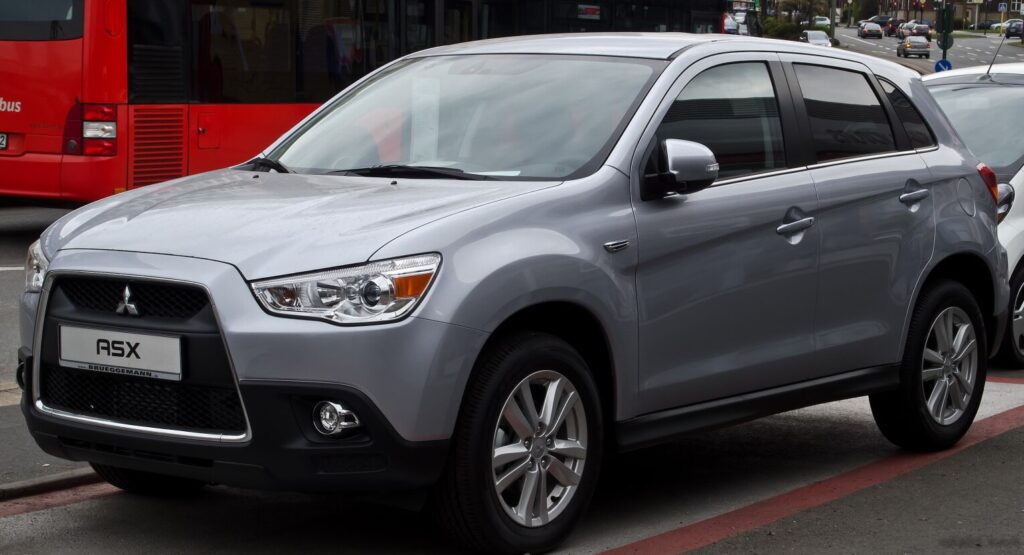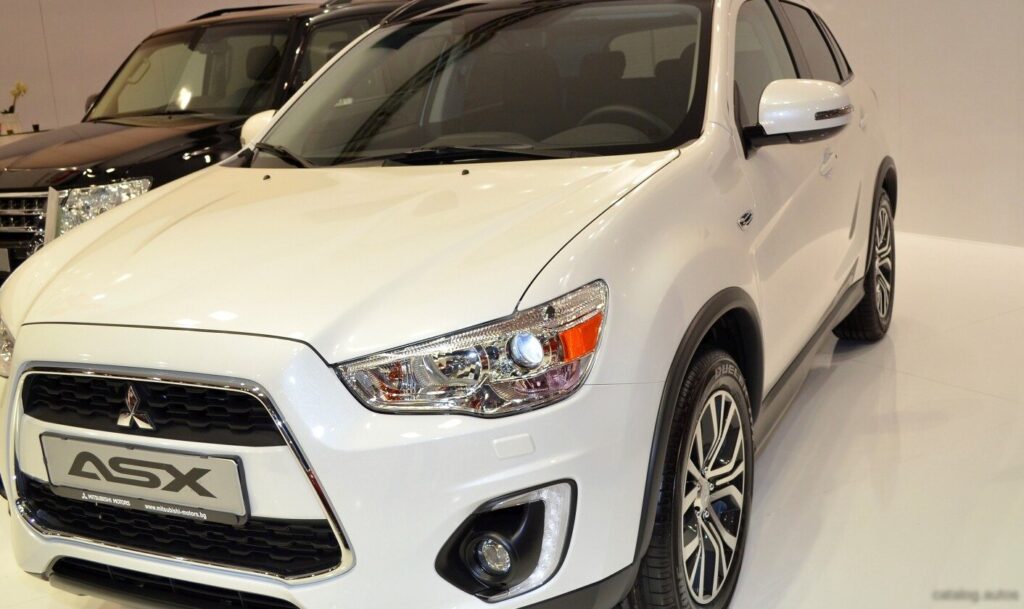
The Mitsubishi ASX I (facelift 2012) 1.8 Di-D, produced from 2012 to 2015, represents a significant iteration of Mitsubishi’s compact crossover SUV. Positioned as a mid-range offering within the ASX lineup, this variant aimed to balance fuel efficiency with respectable performance, appealing to buyers seeking a practical and economical vehicle. It falls within the first generation of the ASX (known as the Outlander Sport in North America), built on the Mitsubishi GS platform. The facelift brought styling updates and refinements to the original model launched in 2010, enhancing its market appeal in Europe and other global markets where it was sold.
Technical Specifications
| Brand | Mitsubishi |
| Model | ASX |
| Generation | ASX I (facelift 2012) |
| Type (Engine) | 1.8 Di-D (150 Hp) |
| Start of production | 2012 |
| End of production | 2015 |
| Powertrain Architecture | Internal Combustion engine |
| Body type | SUV, Crossover |
| Seats | 5 |
| Doors | 5 |
| Fuel consumption (urban) | 7 l/100 km (33.6 US mpg, 40.4 UK mpg, 14.3 km/l) |
| Fuel consumption (extra urban) | 4.9 l/100 km (48 US mpg, 57.6 UK mpg, 20.4 km/l) |
| Fuel consumption (combined) | 5.7 l/100 km (41.3 US mpg, 49.6 UK mpg, 17.5 km/l) |
| CO2 emissions | 150 g/km |
| Fuel Type | Diesel |
| Maximum speed | 200 km/h (124.27 mph) |
| Weight-to-power ratio | 9.7 kg/Hp, 102.7 Hp/tonne |
| Weight-to-torque ratio | 4.9 kg/Nm, 205.5 Nm/tonne |
| Power | 150 Hp @ 4000 rpm |
| Power per litre | 83.4 Hp/l |
| Torque | 300 Nm @ 2000-3000 rpm (221.27 lb.-ft. @ 2000-3000 rpm) |
| Engine layout | Front, Transverse |
| Engine Model/Code | 4N13 |
| Engine displacement | 1798 cm3 (109.72 cu. in.) |
| Number of cylinders | 4 |
| Engine configuration | Inline |
| Cylinder Bore | 83 mm (3.27 in.) |
| Piston Stroke | 83.1 mm (3.27 in.) |
| Compression ratio | 14.9:1 |
| Number of valves per cylinder | 4 |
| Fuel injection system | Diesel Commonrail |
| Engine aspiration | Turbocharger, Intercooler |
| Valvetrain | DOHC |
| Engine oil capacity | 5.3 l (5.6 US qt | 4.66 UK qt) |
| Coolant | 7.5 l (7.93 US qt | 6.6 UK qt) |
| Kerb Weight | 1460 kg (3218.75 lbs.) |
| Max. weight | 2060 kg (4541.52 lbs.) |
| Max load | 600 kg (1322.77 lbs.) |
| Trunk (boot) space – minimum | 384 l (13.56 cu. ft.) |
| Trunk (boot) space – maximum | 1219 l (43.05 cu. ft.) |
| Fuel tank capacity | 60 l (15.85 US gal | 13.2 UK gal) |
| Max. roof load | 80 kg (176.37 lbs.) |
| Permitted trailer load with brakes (12%) | 1400 kg (3086.47 lbs.) |
| Permitted trailer load without brakes | 750 kg (1653.47 lbs.) |
| Permitted towbar download | 70 kg (154.32 lbs.) |
| Length | 4295 mm (169.09 in.) |
| Width | 1770 mm (69.69 in.) |
| Height | 1625 mm (63.98 in.) |
| Wheelbase | 2670 mm (105.12 in.) |
| Front track | 1525 mm (60.04 in.) |
| Rear (Back) track | 1525 mm (60.04 in.) |
| Front overhang | 870 mm (34.25 in.) |
| Rear overhang | 755 mm (29.72 in.) |
| Ride height (ground clearance) | 170 mm (6.69 in.) |
| Drivetrain Architecture | The Internal combustion engine (ICE) drives the front wheels of the vehicle. |
| Drive wheel | Front wheel drive |
| Number of gears and type of gearbox | 6 gears, manual transmission |
| Front suspension | Independent, type McPherson with coil spring and anti-roll bar |
| Rear suspension | Independent multi-link spring suspension with stabilizer |
| Front brakes | Ventilated discs |
| Rear brakes | Disc |
| Assisting systems | ABS (Anti-lock braking system) |
| Steering type | Steering rack and pinion |
| Power steering | Electric Steering |
| Tires size | 215/65 R16; 215/60 R17 |
| Wheel rims size | 6.5J x 16; 6.5J x 17 |
INTRODUCTION
The Mitsubishi ASX I (facelift 2012) 1.8 Di-D was a key model in Mitsubishi’s European and Asian lineup, offering a diesel-powered option in the increasingly popular compact SUV segment. This version, equipped with the 4N13 engine, aimed to provide a balance between fuel economy and performance, catering to drivers who needed a versatile vehicle for both urban commuting and longer journeys. The facelift brought subtle but noticeable changes to the exterior styling, including a revised front fascia and updated interior trim. It was positioned as a practical and affordable alternative to more premium competitors.
Powertrain & Engine Architecture
The heart of the ASX 1.8 Di-D is the 4N13 1.8-liter inline-four diesel engine. This engine utilizes a common-rail direct injection system, delivering fuel directly into the cylinders at extremely high pressure for improved combustion efficiency and reduced emissions. The 4N13 features a turbocharger with an intercooler, boosting power output and torque. The engine also incorporates a DOHC (Double Overhead Camshaft) valvetrain with four valves per cylinder, optimizing airflow for enhanced performance. Mitsubishi’s diesel engines of this era were known for their relatively robust construction. The 1.8 Di-D produced 150 horsepower at 4000 rpm and 300 Nm (221 lb-ft) of torque between 2000 and 3000 rpm. This torque band provided good low-end grunt, making it suitable for everyday driving and towing. The engine was typically paired with a six-speed manual transmission, although an automatic option was also available in some markets.
Driving Characteristics
The 1.8 Di-D engine, while not exceptionally powerful, provided adequate performance for the ASX. Acceleration was respectable, though not sporty, with a 0-60 mph time estimated around 9.5-10.5 seconds. The strength of this powertrain lay in its mid-range torque, making overtaking and hill climbing relatively effortless. The six-speed manual transmission allowed drivers to keep the engine in its optimal power band. Compared to the petrol-powered versions of the ASX, the 1.8 Di-D offered significantly better fuel economy. However, it lacked the responsiveness and refinement of some of its competitors’ gasoline engines. The automatic transmission, when equipped, could feel somewhat sluggish, particularly during kickdown maneuvers. The ASX’s suspension provided a comfortable ride, absorbing bumps and imperfections in the road well, but it wasn’t particularly engaging for enthusiastic drivers.
Equipment & Trim Levels
The ASX 1.8 Di-D was typically offered in several trim levels, varying by market. Standard equipment generally included air conditioning, power windows, central locking, and a basic audio system. Higher trim levels added features such as alloy wheels, a touchscreen infotainment system, rear parking sensors, and climate control. Interior upholstery was typically cloth, with leather options available on higher-spec models. Safety features included ABS brakes, electronic stability control, and multiple airbags. Optional extras often included a panoramic sunroof, navigation system, and upgraded audio systems.
Chassis & Braking
The ASX I utilized a front-wheel-drive platform with independent suspension all around. The front suspension employed a McPherson strut setup, while the rear featured a multi-link configuration. This suspension design provided a good balance between ride comfort and handling. Braking duties were handled by ventilated discs at the front and solid discs at the rear. ABS (Anti-lock Braking System) was standard, enhancing braking performance and stability. The steering was a rack-and-pinion system with electric power assistance, providing light and precise steering feel.
Market Reception & Comparison
The Mitsubishi ASX 1.8 Di-D was generally well-received by automotive critics as a practical and economical crossover SUV. It was praised for its fuel efficiency, comfortable ride, and spacious interior. However, some reviewers noted that the engine lacked refinement and that the handling wasn’t particularly sporty. Compared to other diesel-powered crossovers in its class, such as the Nissan Qashqai and Volkswagen Tiguan, the ASX offered a competitive price point and a generous level of standard equipment. The 1.8 Di-D variant was often seen as a more sensible choice than the higher-powered petrol versions, particularly for drivers who covered long distances.
Legacy
The Mitsubishi ASX I 1.8 Di-D has proven to be a relatively reliable vehicle in the used car market. The 4N13 diesel engine, while not without its potential issues (such as diesel particulate filter problems common to many modern diesels), is generally considered durable when properly maintained. Regular servicing, including oil changes and filter replacements, is crucial for ensuring long-term reliability. Today, these vehicles can be found at affordable prices, making them an attractive option for budget-conscious buyers seeking a practical and fuel-efficient crossover SUV. However, potential buyers should be aware of the potential maintenance costs associated with diesel engines, particularly the DPF and turbocharger.