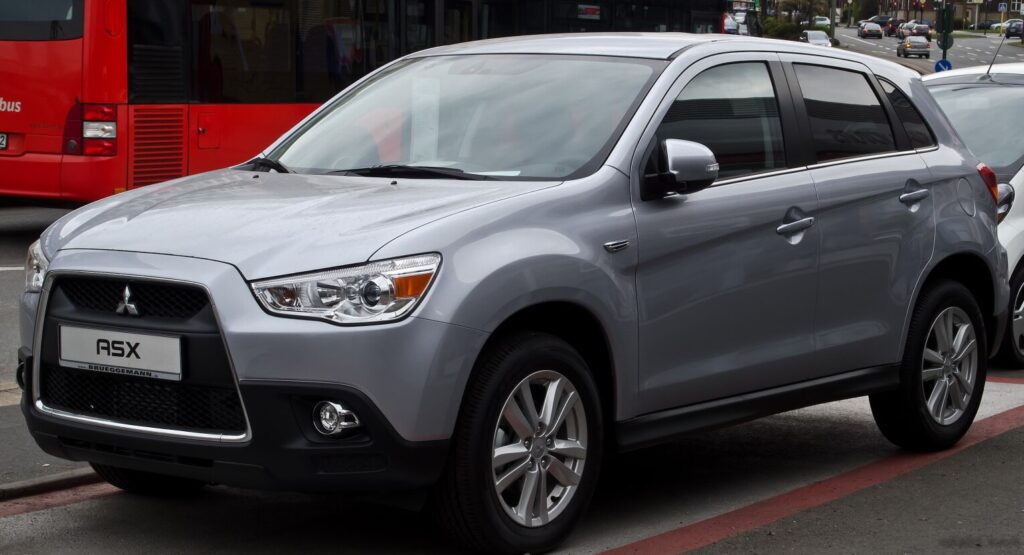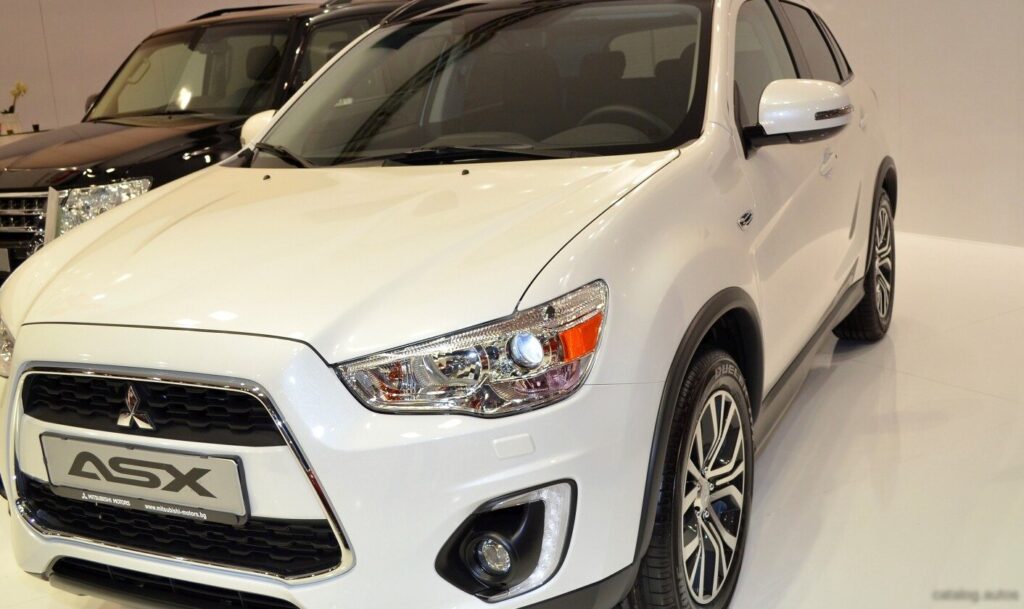
The Mitsubishi ASX I (facelift 2012) 2.0 AWD represents a significant iteration of Mitsubishi’s compact crossover SUV, produced from 2012 to 2016. Positioned as a mid-range offering within the ASX lineup, this variant aimed to provide a balance between performance, practicality, and all-weather capability. The facelift brought styling updates and refinements to the original ASX, which was initially launched in 2010. This model was primarily targeted towards the European and Asian markets, where demand for compact SUVs with all-wheel drive was growing. In the United States, Mitsubishi offered a similar vehicle, the Outlander Sport, but the ASX was not directly sold under that name.
Technical Specifications
| Brand | Mitsubishi |
| Model | ASX |
| Generation | ASX I (facelift 2012) |
| Type (Engine) | 2.0 (150 Hp) AWD |
| Start of production | 2012 |
| End of production | 2016 |
| Powertrain Architecture | Internal Combustion engine |
| Body type | SUV, Crossover |
| Seats | 5 |
| Doors | 5 |
| Fuel consumption (urban) | 10.3 l/100 km (22.8 US mpg) |
| Fuel consumption (extra urban) | 6.5 l/100 km (36.2 US mpg) |
| Fuel consumption (combined) | 7.9 l/100 km (29.8 US mpg) |
| CO2 emissions | 186 g/km |
| Fuel Type | Petrol (Gasoline) |
| Maximum speed | 192 km/h (119.3 mph) |
| Weight-to-power ratio | 9.5 kg/Hp |
| Weight-to-torque ratio | 7.2 kg/Nm |
| Power | 150 Hp @ 6000 rpm |
| Torque | 197 Nm @ 4200 rpm (145.3 lb.-ft. @ 4200 rpm) |
| Engine layout | Front, Transverse |
| Engine Model/Code | 4B11 |
| Engine displacement | 1998 cm3 (121.93 cu. in.) |
| Number of cylinders | 4 |
| Engine configuration | Inline |
| Cylinder Bore | 86 mm (3.39 in.) |
| Piston Stroke | 86 mm (3.39 in.) |
| Compression ratio | 10:1 |
| Number of valves per cylinder | 4 |
| Fuel injection system | Multi-port manifold injection |
| Engine aspiration | Naturally aspirated engine |
| Valvetrain | DOHC |
| Engine oil capacity | 4.3 l (4.54 US qt | 3.78 UK qt) |
| Coolant | 7.5 l (7.93 US qt | 6.6 UK qt) |
| Kerb Weight | 1425 kg (3141.59 lbs.) |
| Max. weight | 1970 kg (4343.11 lbs.) |
| Max load | 545 kg (1201.52 lbs.) |
| Trunk (boot) space – minimum | 384 l (13.56 cu. ft.) |
| Trunk (boot) space – maximum | 1219 l (43.05 cu. ft.) |
| Fuel tank capacity | 60 l (15.85 US gal | 13.2 UK gal) |
| Max. roof load | 80 kg (176.37 lbs.) |
| Permitted trailer load with brakes (12%) | 1300 kg (2866.01 lbs.) |
| Permitted trailer load without brakes | 750 kg (1653.47 lbs.) |
| Permitted towbar download | 65 kg (143.3 lbs.) |
| Length | 4295 mm (169.09 in.) |
| Width | 1770 mm (69.69 in.) |
| Height | 1625 mm (63.98 in.) |
| Wheelbase | 2670 mm (105.12 in.) |
| Front track | 1525 mm (60.04 in.) |
| Rear (Back) track | 1525 mm (60.04 in.) |
| Front overhang | 870 mm (34.25 in.) |
| Rear overhang | 755 mm (29.72 in.) |
| Ride height (ground clearance) | 195 mm (7.68 in.) |
| Drive wheel | All wheel drive (4×4) |
| Number of gears and type of gearbox | 5 gears, manual transmission |
| Front suspension | Independent, type McPherson with coil spring and anti-roll bar |
| Rear suspension | Independent multi-link spring suspension with stabilizer |
| Front brakes | Ventilated discs |
| Rear brakes | Disc |
| Assisting systems | ABS (Anti-lock braking system) |
| Steering type | Steering rack and pinion |
| Power steering | Electric Steering |
| Tires size | 215/65 R16; 215/60 R17 |
| Wheel rims size | 6.5J x 16; 6.5J x 17 |
Powertrain & Engine Architecture
The 2012-2016 Mitsubishi ASX 2.0 AWD is powered by the 4B11 engine, a 1.998-liter (2.0L) inline-four cylinder gasoline engine. This engine is part of Mitsubishi’s 4B series, known for its relatively simple design and durability. The 4B11 features a cast iron block and an aluminum cylinder head, incorporating a double overhead camshaft (DOHC) valvetrain with four valves per cylinder. Fuel delivery is managed by a multi-point fuel injection system. The engine produces 150 horsepower at 6000 rpm and 197 Nm (145.3 lb-ft) of torque at 4200 rpm. The engine’s 10:1 compression ratio is a typical value for naturally aspirated gasoline engines of this era. The ASX 2.0 AWD utilizes a five-speed manual transmission as standard, sending power to all four wheels via Mitsubishi’s all-wheel drive system.
Driving Characteristics
The 2.0-liter engine, paired with the all-wheel drive system, provides adequate performance for everyday driving. Acceleration is reasonable, though not particularly sporty. The five-speed manual transmission offers a decent spread of gears, but the engine’s torque peak at 4200 rpm means that frequent downshifts are often necessary for brisk acceleration or when tackling hills. Compared to the lower-powered 1.6-liter variants, the 2.0 AWD offers a noticeable improvement in responsiveness. However, it doesn’t match the performance of potential higher-output engine options available in other markets. The all-wheel drive system provides enhanced traction in slippery conditions, making it a suitable choice for drivers in regions with inclement weather. The steering is light and precise, contributing to a comfortable driving experience.
Equipment & Trim Levels
The ASX 2.0 AWD typically came equipped with a range of standard features, including air conditioning, power windows, power door locks, and a basic audio system. Higher trim levels offered additional features such as alloy wheels, a touchscreen infotainment system, rear parking sensors, and climate control. Interior upholstery was generally cloth, with leather options available on some trims. Safety features included ABS brakes, electronic brakeforce distribution (EBD), and multiple airbags. Optional extras often included a panoramic sunroof, navigation system, and upgraded audio systems.
Chassis & Braking
The ASX I utilizes a McPherson strut suspension setup at the front and a multi-link suspension at the rear, providing a comfortable ride quality. Stabilizer bars are fitted to both axles to reduce body roll during cornering. The braking system consists of ventilated discs at the front and solid discs at the rear. The ABS (Anti-lock Braking System) helps to maintain steering control during emergency braking situations. The ASX’s chassis is designed to provide a balance between handling and ride comfort, making it suitable for a variety of driving conditions.
Market Reception & Comparison
The Mitsubishi ASX 2.0 AWD was generally well-received by automotive critics as a practical and capable compact crossover. Reviewers praised its all-wheel drive system, comfortable ride, and spacious interior. However, some criticized its relatively modest engine performance and somewhat dated interior design. Compared to other competitors in the segment, such as the Nissan Qashqai and Kia Sportage, the ASX offered a competitive price point and a strong focus on practicality. Fuel economy was considered average for its class, with combined fuel consumption figures around 7.9 l/100 km (29.8 US mpg).
Legacy
The Mitsubishi ASX I (facelift 2012) 2.0 AWD has proven to be a relatively reliable vehicle, with the 4B11 engine generally considered durable. Common maintenance items include regular oil changes, timing belt replacement (depending on mileage), and inspection of the suspension components. On the used car market, these ASX models represent a good value proposition for buyers seeking a practical and affordable all-wheel drive crossover. While not known for exceptional performance, the 2.0 AWD variant offers a good balance of features, reliability, and capability, making it a popular choice among budget-conscious buyers.