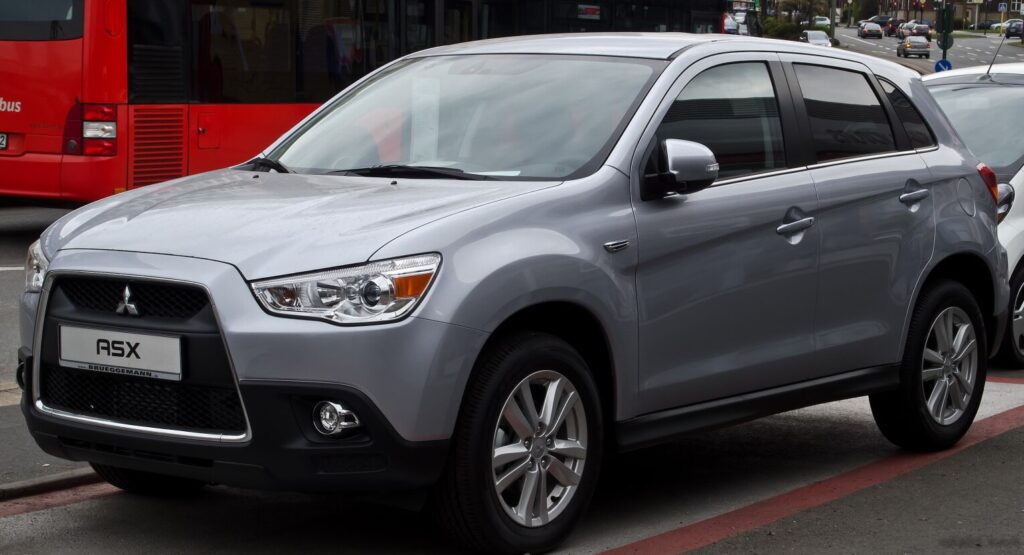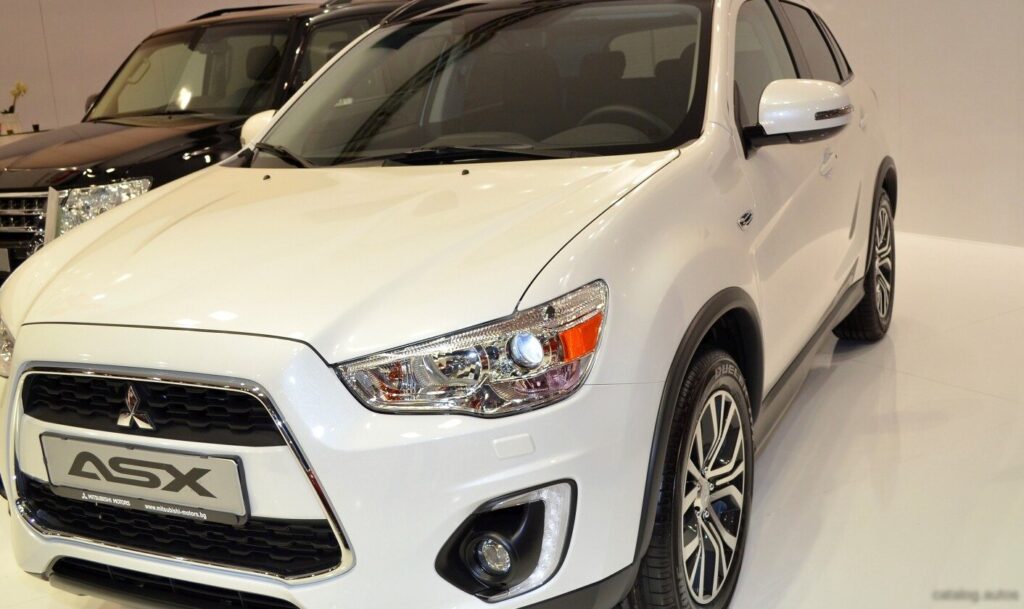
The Mitsubishi ASX I (facelift 2012) 2.0 (150 Hp) AWD CVT represents a significant iteration of Mitsubishi’s compact crossover SUV, produced from 2012 to 2016. Positioned as a mid-range offering within the ASX lineup, this variant aimed to provide a balance between performance, fuel efficiency, and all-weather capability. It was primarily marketed in Europe, Australia, and other international markets, offering an alternative to competitors like the Nissan Qashqai, Kia Sportage, and Hyundai ix35. The facelift brought styling updates and refinements to the original ASX, enhancing its appeal in a competitive segment. This specific configuration – the 2.0-liter engine paired with a continuously variable transmission (CVT) and all-wheel drive – was a popular choice for buyers seeking a practical and versatile vehicle.
Technical Specifications
| Brand | Mitsubishi |
| Model | ASX |
| Generation | ASX I (facelift 2012) |
| Type (Engine) | 2.0 (150 Hp) AWD CVT |
| Start of production | 2012 |
| End of production | 2016 |
| Powertrain Architecture | Internal Combustion engine |
| Body type | SUV, Crossover |
| Seats | 5 |
| Doors | 5 |
| Fuel consumption (economy) – urban | 10.5 l/100 km (22.4 US mpg, 26.9 UK mpg, 9.5 km/l) |
| Fuel consumption (economy) – extra urban | 6.8 l/100 km (34.6 US mpg, 41.5 UK mpg, 14.7 km/l) |
| Fuel consumption (economy) – combined | 8.1 l/100 km (29 US mpg, 34.9 UK mpg, 12.3 km/l) |
| CO2 emissions | 192 g/km |
| Fuel Type | Petrol (Gasoline) |
| Maximum speed | 188 km/h (116.82 mph) |
| Weight-to-power ratio | 9.7 kg/Hp, 103.1 Hp/tonne |
| Weight-to-torque ratio | 7.4 kg/Nm, 135.4 Nm/tonne |
| Power | 150 Hp @ 6000 rpm |
| Power per litre | 75.1 Hp/l |
| Torque | 197 Nm @ 4200 rpm (145.3 lb.-ft. @ 4200 rpm) |
| Engine layout | Front, Transverse |
| Engine Model/Code | 4B11 |
| Engine displacement | 1998 cm3 (121.93 cu. in.) |
| Number of cylinders | 4 |
| Engine configuration | Inline |
| Cylinder Bore | 86 mm (3.39 in.) |
| Piston Stroke | 86 mm (3.39 in.) |
| Compression ratio | 10:1 |
| Number of valves per cylinder | 4 |
| Fuel injection system | Multi-port manifold injection |
| Engine aspiration | Naturally aspirated engine |
| Valvetrain | DOHC |
| Engine oil capacity | 4.3 l (4.54 US qt | 3.78 UK qt) |
| Coolant | 7.5 l (7.93 US qt | 6.6 UK qt) |
| Kerb Weight | 1455 kg (3207.73 lbs.) |
| Max. weight | 1970 kg (4343.11 lbs.) |
| Max load | 515 kg (1135.38 lbs.) |
| Trunk (boot) space – minimum | 384 l (13.56 cu. ft.) |
| Trunk (boot) space – maximum | 1219 l (43.05 cu. ft.) |
| Fuel tank capacity | 60 l (15.85 US gal | 13.2 UK gal) |
| Max. roof load | 80 kg (176.37 lbs.) |
| Permitted trailer load with brakes (12%) | 1300 kg (2866.01 lbs.) |
| Permitted trailer load without brakes | 750 kg (1653.47 lbs.) |
| Permitted towbar download | 65 kg (143.3 lbs.) |
| Length | 4295 mm (169.09 in.) |
| Width | 1770 mm (69.69 in.) |
| Height | 1625 mm (63.98 in.) |
| Wheelbase | 2670 mm (105.12 in.) |
| Front track | 1525 mm (60.04 in.) |
| Rear (Back) track | 1525 mm (60.04 in.) |
| Front overhang | 870 mm (34.25 in.) |
| Rear overhang | 755 mm (29.72 in.) |
| Ride height (ground clearance) | 195 mm (7.68 in.) |
| Drive wheel | All wheel drive (4×4) |
| Number of gears and type of gearbox | automatic transmission CVT |
| Front suspension | Independent, type McPherson with coil spring and anti-roll bar |
| Rear suspension | Independent multi-link spring suspension with stabilizer |
| Front brakes | Ventilated discs |
| Rear brakes | Disc |
| Assisting systems | ABS (Anti-lock braking system) |
| Steering type | Steering rack and pinion |
| Power steering | Electric Steering |
| Tires size | 215/65 R16; 215/60 R17 |
| Wheel rims size | 6.5J x 16; 6.5J x 17 |
INTRODUCTION
The 2012 facelift of the Mitsubishi ASX I, equipped with the 2.0-liter engine, all-wheel drive, and a CVT, was a key model in Mitsubishi’s European and international lineup. Building upon the original ASX launched in 2010 (based on the 1HX0/A3 platform shared with the Renault Qashqai and Nissan Rogue), the facelift brought revised front-end styling, interior enhancements, and improvements to the suspension. This variant aimed to appeal to buyers seeking a compact SUV with enhanced practicality and all-weather confidence. The ASX, in general, was designed to offer a more affordable and accessible entry point into the growing crossover SUV market, competing with established players by emphasizing value and versatility.
Powertrain & Engine Architecture
At the heart of this ASX variant lies the 4B11 2.0-liter inline-four cylinder engine. This engine is a naturally aspirated powerplant utilizing multi-point fuel injection. The 4B11 is known for its relatively simple design and durability. It features a double overhead camshaft (DOHC) valvetrain with four valves per cylinder, contributing to its respectable power output. The engine produces 150 horsepower at 6000 rpm and 197 Nm (145.3 lb-ft) of torque at 4200 rpm. Paired with this engine is a continuously variable transmission (CVT). Mitsubishi’s CVT was designed to prioritize fuel efficiency and smooth acceleration, although it often came at the expense of a more engaging driving experience. The all-wheel-drive system is typically a reactive system, engaging the rear wheels when front wheel slip is detected, providing enhanced traction in adverse conditions.
Driving Characteristics
The ASX 2.0 AWD CVT delivers a comfortable, if not particularly sporty, driving experience. The CVT, while efficient, tends to hold the engine at a constant rpm during acceleration, resulting in a somewhat droning sound. Acceleration is adequate for everyday driving, but it doesn’t offer the punch of some of its turbocharged competitors. The all-wheel-drive system provides added stability and grip, particularly on slippery surfaces. The suspension is tuned for comfort, absorbing bumps and imperfections in the road reasonably well. Compared to the manual transmission versions of the 2.0-liter ASX, the CVT sacrifices some responsiveness for ease of use. The higher-output 2.2-liter diesel variants offered significantly more torque and a more robust feel, while the 1.6-liter petrol models were more economical but considerably slower.
Equipment & Trim Levels
The ASX 2.0 AWD CVT typically came with a reasonable level of standard equipment. This included air conditioning, power windows and mirrors, a basic audio system with USB connectivity, and alloy wheels. Higher trim levels added features such as a touchscreen infotainment system, rear parking sensors, cruise control, and automatic climate control. Interior upholstery was generally cloth, with leather options available on higher-spec models. Optional extras included a panoramic sunroof, keyless entry, and a premium audio system. The dashboard layout was functional and straightforward, prioritizing usability over outright style.
Chassis & Braking
The ASX I utilized a McPherson strut front suspension and a multi-link rear suspension. This setup provided a good balance between ride comfort and handling. The front suspension incorporated a stabilizer bar to reduce body roll during cornering. Braking duties were handled by ventilated discs at the front and solid discs at the rear. Anti-lock braking system (ABS) was standard, enhancing safety during emergency braking situations. The steering was electrically assisted, providing light and easy steering feel.
Market Reception & Comparison
The Mitsubishi ASX 2.0 AWD CVT was generally well-received by critics as a practical and versatile crossover SUV. However, the CVT transmission was often criticized for its lack of engagement and the droning engine noise it produced. Fuel economy was considered average for its class, and reliability was generally good. Compared to the diesel variants, the 2.0-liter petrol model offered lower running costs in terms of fuel price but lacked the diesel’s superior torque and fuel efficiency. Against competitors like the Nissan Qashqai and Kia Sportage, the ASX offered a competitive price point and a comfortable ride.
Legacy
The Mitsubishi ASX I (facelift 2012) 2.0 AWD CVT remains a relatively common sight on the used car market. The 4B11 engine is known for its durability, and the CVT transmission, while not universally loved, has proven to be reasonably reliable with proper maintenance. These vehicles represent a good value proposition for buyers seeking an affordable and practical crossover SUV. However, potential buyers should be aware of the CVT’s potential for issues if not regularly serviced. Overall, this variant of the ASX holds a respectable position as a dependable and versatile vehicle within its segment.