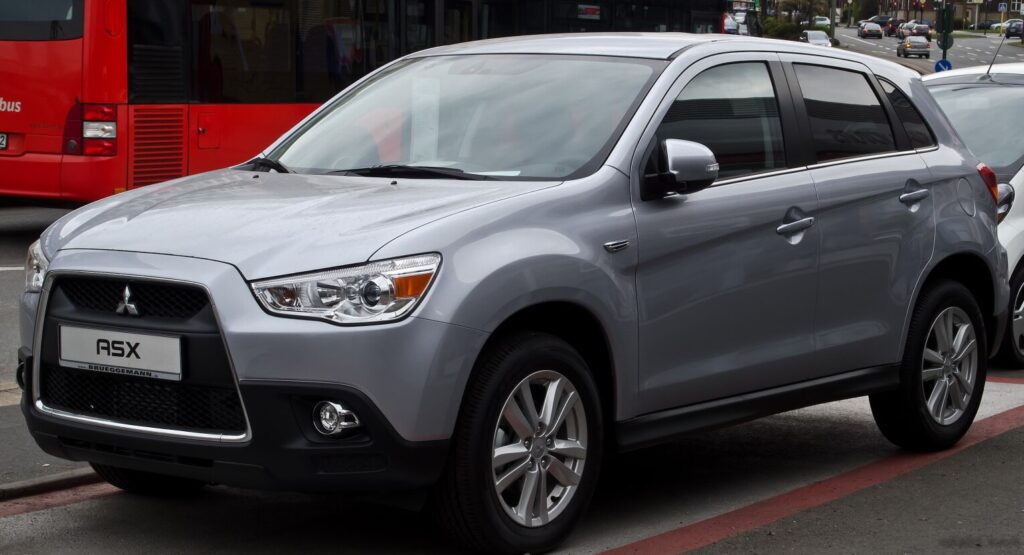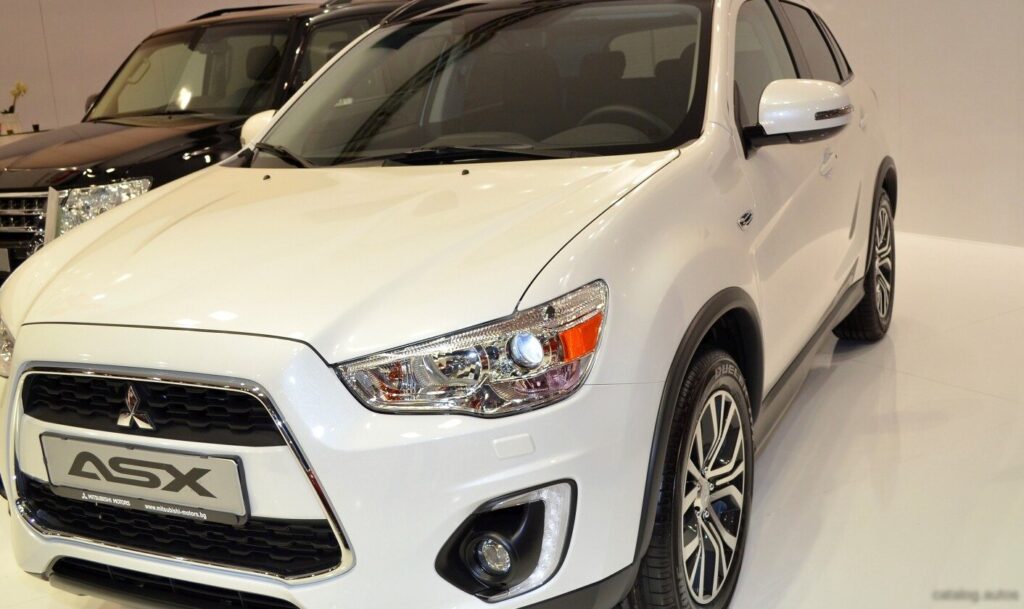
The Mitsubishi ASX I (facelift 2012) 2.2 DI-D 4×4 Automatic represents a significant offering within the first generation of Mitsubishi’s compact crossover SUV. Produced from 2012 to 2016, this variant aimed to provide a blend of fuel efficiency, all-wheel-drive capability, and the convenience of an automatic transmission. It occupied a mid-to-upper position within the ASX lineup, appealing to buyers seeking a more refined and capable vehicle than the base models, but without the outright performance focus of potential future performance trims. The facelift introduced in 2012 brought styling updates and refinements to the original ASX, enhancing its market appeal.
Technical Specifications
| Brand | Mitsubishi |
| Model | ASX |
| Generation | ASX I (facelift 2012) |
| Type (Engine) | 2.2 DI-D (147 Hp) 4×4 Automatic |
| Start of production | 2012 |
| End of production | 2016 |
| Powertrain Architecture | Internal Combustion engine |
| Body type | SUV, Crossover |
| Seats | 5 |
| Doors | 5 |
| Fuel consumption (urban) | 7.1 l/100 km (33.1 US mpg, 39.8 UK mpg, 14.1 km/l) |
| Fuel consumption (extra urban) | 5.1 l/100 km (46.1 US mpg, 55.4 UK mpg, 19.6 km/l) |
| Fuel consumption (combined) | 5.8 l/100 km (40.6 US mpg, 48.7 UK mpg, 17.2 km/l) |
| CO2 emissions | 153 g/km |
| Fuel Type | Diesel |
| Acceleration 0 – 100 km/h | 10.8 sec |
| Acceleration 0 – 62 mph | 10.8 sec |
| Acceleration 0 – 60 mph | 10.3 sec |
| Maximum speed | 190 km/h (118.06 mph) |
| Emission standard | Euro 5 |
| Weight-to-power ratio | 10.3 kg/Hp |
| Weight-to-torque ratio | 4.2 kg/Nm |
| Power | 147 Hp @ 3500 rpm |
| Torque | 360 Nm @ 1500-2750 rpm (265.52 lb.-ft. @ 1500-2750 rpm) |
| Engine layout | Front, Transverse |
| Engine Model/Code | 4N14 |
| Engine displacement | 2268 cm3 (138.4 cu. in.) |
| Number of cylinders | 4 |
| Engine configuration | Inline |
| Cylinder Bore | 86 mm (3.39 in.) |
| Piston Stroke | 97.6 mm (3.84 in.) |
| Compression ratio | 14.9:1 |
| Number of valves per cylinder | 4 |
| Fuel injection system | Diesel Commonrail |
| Engine aspiration | Turbocharger, Intercooler |
| Valvetrain | DOHC |
| Engine oil capacity | 5.8 l (6.13 US qt | 5.1 UK qt) |
| Coolant capacity | 7.5 l (7.93 US qt | 6.6 UK qt) |
| Kerb Weight | 1520 kg (3351.03 lbs.) |
| Max. weight | 2060 kg (4541.52 lbs.) |
| Max load | 540 kg (1190.5 lbs.) |
| Trunk (boot) space – minimum | 416 l (14.69 cu. ft.) |
| Trunk (boot) space – maximum | 1193 l (42.13 cu. ft.) |
| Fuel tank capacity | 63 l (16.64 US gal | 13.86 UK gal) |
| Length | 4295 mm (169.09 in.) |
| Width | 1770 mm (69.69 in.) |
| Height | 1615 mm (63.58 in.) |
| Wheelbase | 2670 mm (105.12 in.) |
| Front track | 1525 mm (60.04 in.) |
| Rear track | 1535 mm (60.43 in.) |
| Minimum turning circle | 10.6 m (34.78 ft.) |
| Drive wheel | All wheel drive (4×4) |
| Number of gears | 6 |
| Gearbox type | Automatic transmission |
| Front suspension | Independent type McPherson |
| Rear suspension | Independent multi-link spring suspension with stabilizer |
| Front brakes | Ventilated discs |
| Rear brakes | Disc |
| Assisting systems | ABS (Anti-lock braking system) |
| Steering type | Steering rack and pinion |
| Power steering | Electric Steering |
| Tires size | 215/60 R17 96H |
| Wheel rims size | 6.5J x 17 |
INTRODUCTION
The Mitsubishi ASX I, particularly the facelifted version released in 2012, was a crucial model for Mitsubishi in the European and Asian markets. Designed to compete with popular crossovers like the Nissan Qashqai and Kia Sportage, the ASX offered a more compact and affordable alternative. The 2.2 DI-D 4×4 Automatic variant was positioned as a premium offering within the range, combining a relatively powerful diesel engine with the convenience of an automatic transmission and the added security of all-wheel drive. Production of this specific configuration ran from 2012 until the end of the first generation ASX’s run in 2016.
Powertrain & Engine Architecture
At the heart of the ASX 2.2 DI-D 4×4 Automatic lies the 4N14 2.2-liter inline-four diesel engine. This engine utilizes a common-rail direct injection system, delivering fuel directly into the cylinders at extremely high pressure for improved combustion efficiency and reduced emissions. The engine is turbocharged and intercooled, boosting power output to 147 horsepower at 3500 rpm and 360 Nm (265.52 lb.-ft.) of torque between 1500 and 2750 rpm. The engine features a double overhead camshaft (DOHC) valvetrain with four valves per cylinder. The automatic transmission is a conventional six-speed unit, chosen for its ease of use and suitability for both urban and highway driving. While not known for being the sportiest transmission, it provided smooth shifts and contributed to the vehicle’s overall refinement.
Driving Characteristics
The 2.2 DI-D Automatic ASX offered a comfortable and capable driving experience. The engine’s torque output provided ample power for everyday driving and overtaking maneuvers, although it wasn’t particularly quick, with a 0-60 mph time of around 10.3 seconds. The automatic transmission, while smooth, could sometimes feel hesitant during quick acceleration. The all-wheel-drive system provided enhanced traction in slippery conditions, making it a suitable choice for drivers in regions with inclement weather. Compared to the lower-powered 1.8-liter gasoline versions, the 2.2 DI-D offered significantly more performance, but at the expense of some fuel economy. Manual transmission versions of the 2.2 DI-D provided a more engaging driving experience and slightly improved fuel efficiency.
Equipment & Trim Levels
The 2.2 DI-D 4×4 Automatic trim typically included a generous level of standard equipment. This often included air conditioning, power windows and mirrors, a CD/radio system with auxiliary input, and alloy wheels. Higher trim levels added features such as leather upholstery, a sunroof, a navigation system, and parking sensors. Safety features like ABS, electronic stability control, and multiple airbags were standard across the range. The interior design was functional and well-built, although it lacked the premium feel of some competitors.
Chassis & Braking
The ASX utilized a McPherson strut front suspension and a multi-link rear suspension, providing a comfortable ride and decent handling characteristics. The suspension was tuned for comfort rather than outright sportiness. Braking duties were handled by ventilated discs at the front and solid discs at the rear. The ABS system provided effective stopping power in various conditions. The vehicle’s weight of around 1520 kg (3351 lbs) contributed to its stable and planted feel on the road.
Market Reception & Comparison
The Mitsubishi ASX 2.2 DI-D 4×4 Automatic was generally well-received by automotive critics. It was praised for its fuel efficiency, comfortable ride, and capable all-wheel-drive system. However, some critics noted that the automatic transmission could be slow to respond and that the interior lacked the sophistication of some rivals. Compared to the 1.8-liter gasoline versions, the 2.2 DI-D offered superior performance and fuel economy, but came at a higher price point. The 2.2 DI-D was also a more practical choice for drivers who frequently towed trailers or drove in challenging conditions.
Legacy
The Mitsubishi ASX I, including the 2.2 DI-D 4×4 Automatic variant, has proven to be a relatively reliable vehicle in the used car market. The 4N14 diesel engine is known for its durability, although regular maintenance is essential. Common issues include diesel particulate filter (DPF) problems, particularly on vehicles that are primarily used for short trips. The automatic transmission is generally reliable, but it’s important to check for smooth shifting and any signs of slippage. Today, the ASX I represents a good value proposition for buyers seeking an affordable and capable compact crossover SUV.