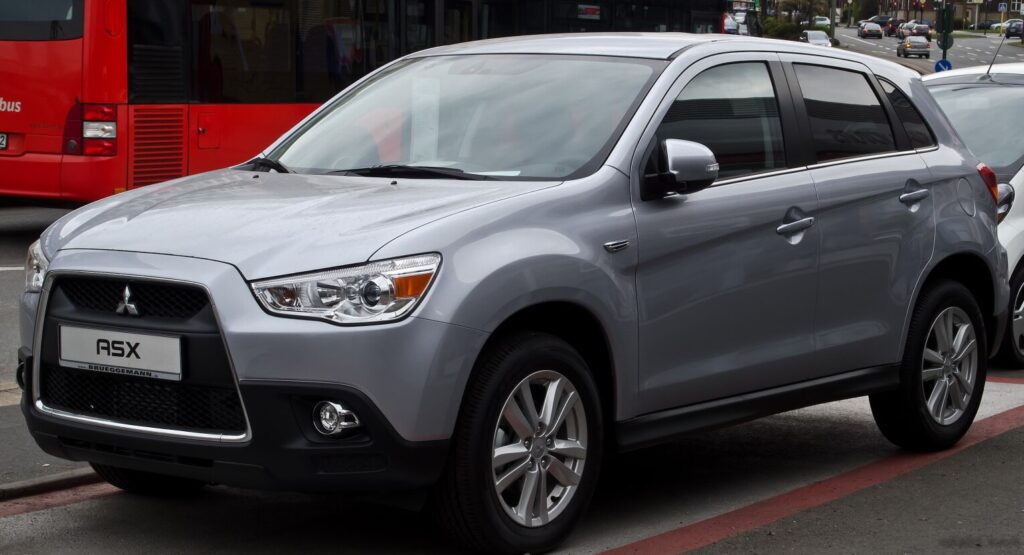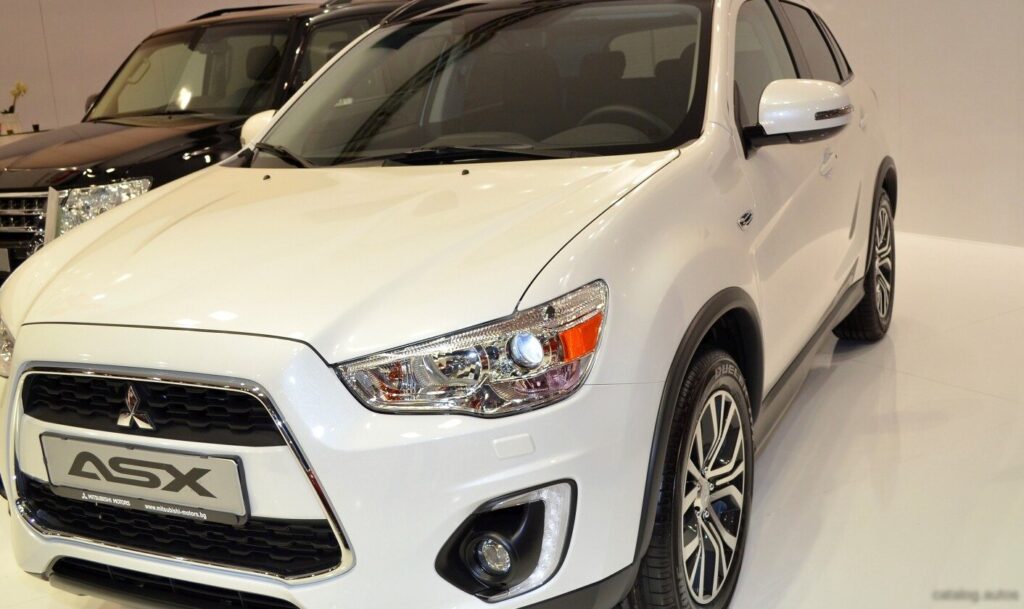
The Mitsubishi ASX I (facelift 2012) 2.3 DI-D 4WD Automatic, produced from 2013 to 2016, represents a significant offering in Mitsubishi’s compact crossover SUV lineup. This variant, positioned as a mid-to-upper trim level, aimed to provide a blend of fuel efficiency, all-weather capability, and comfortable practicality for the North American and European markets. It falls within the first generation of the ASX (known as the Outlander Sport in the US), built on the Mitsubishi GS platform, and the facelift brought updated styling and improved equipment levels. The 2.3 DI-D model distinguished itself with its larger diesel engine and automatic transmission, catering to buyers seeking a more refined driving experience and the benefits of diesel torque.
Technical Specifications
| Brand | Mitsubishi |
| Model | ASX |
| Generation | ASX I (facelift 2012) |
| Type (Engine) | 2.3 DI-D (150 Hp) 4WD Automatic |
| Start of production | 2013 |
| End of production | 2016 |
| Powertrain Architecture | Internal Combustion engine |
| Body type | SUV, Crossover |
| Seats | 5 |
| Doors | 5 |
| Fuel consumption (urban) | 7 l/100 km (33.6 US mpg, 40.4 UK mpg, 14.3 km/l) |
| Fuel consumption (extra urban) | 5 l/100 km (47 US mpg, 56.5 UK mpg, 20 km/l) |
| Fuel consumption (combined) | 5.8 l/100 km (40.6 US mpg, 48.7 UK mpg, 17.2 km/l) |
| CO2 emissions | 152 g/km |
| Fuel Type | Diesel |
| Acceleration 0 – 100 km/h | 10.8 sec |
| Acceleration 0 – 62 mph | 10.8 sec |
| Acceleration 0 – 60 mph | 10.3 sec |
| Maximum speed | 190 km/h (118.06 mph) |
| Emission standard | Euro 6 |
| Weight-to-power ratio | 10.3 kg/Hp, 97.1 Hp/tonne |
| Weight-to-torque ratio | 4.3 kg/Nm, 233 Nm/tonne |
| Power | 150 Hp @ 3500 rpm |
| Torque | 360 Nm @ 1500-2750 rpm (265.52 lb.-ft. @ 1500-2750 rpm) |
| Engine layout | Front, Transverse |
| Engine Model/Code | 4N14 |
| Engine displacement | 2268 cm3 (138.4 cu. in.) |
| Number of cylinders | 4 |
| Engine configuration | Inline |
| Number of valves per cylinder | 4 |
| Fuel injection system | Diesel Commonrail |
| Engine aspiration | Turbocharger, Intercooler |
| Valvetrain | DOHC |
| Engine oil capacity | 5.8 l (6.13 US qt | 5.1 UK qt) |
| Coolant capacity | 7.5 l (7.93 US qt | 6.6 UK qt) |
| Kerb Weight | 1545 kg (3406.14 lbs) |
| Trunk (boot) space – minimum | 419 l (14.8 cu. ft.) |
| Trunk (boot) space – maximum | 1219 l (43.05 cu. ft.) |
| Fuel tank capacity | 60 l (15.85 US gal | 13.2 UK gal) |
| Length | 4295 mm (169.09 in.) |
| Width | 1770 mm (69.69 in.) |
| Width including mirrors | 1810 mm (71.26 in.) |
| Height | 1625-1635 mm (63.98 – 64.37 in.) |
| Wheelbase | 2670 mm (105.12 in.) |
| Ride height (ground clearance) | 180 mm (7.09 in.) |
| Minimum turning circle | 10.6 m (34.78 ft.) |
| Drive wheel | All wheel drive (4×4) |
| Number of gears | 6 |
| Gearbox type | Automatic transmission |
| Front suspension | Independent type McPherson |
| Rear suspension | Independent multi-link suspension |
| Front brakes | Ventilated discs |
| Rear brakes | Disc |
| Assisting systems | ABS (Anti-lock braking system) |
| Steering type | Steering rack and pinion |
INTRODUCTION
The Mitsubishi ASX I, launched in 2010 and receiving a significant facelift in 2012, was Mitsubishi’s entry into the increasingly popular compact crossover segment. The 2.3 DI-D 4WD Automatic variant, introduced in 2013, represented a premium offering within the range, particularly in European and Asian markets where diesel engines were favored. This model aimed to appeal to buyers needing a versatile vehicle for both urban commuting and occasional off-road excursions. It provided a step up in performance and refinement compared to the lower-spec 1.6-liter petrol versions, while remaining more accessible than the higher-powered options available in some regions.
Powertrain & Engine Architecture
At the heart of the ASX 2.3 DI-D lies the 4N14 2.3-liter inline-four diesel engine. This engine utilizes a common-rail direct injection system, delivering fuel at extremely high pressure for optimized combustion. A turbocharger with an intercooler further enhances performance, boosting power and torque. The engine produces 150 horsepower at 3500 rpm and a substantial 360 Nm (265.52 lb.-ft.) of torque between 1500 and 2750 rpm. This broad torque curve provides strong pulling power at low and mid-range engine speeds, making it well-suited for everyday driving and towing. The engine also incorporates a diesel particulate filter (DPF) to meet stringent Euro 6 emission standards. The engine is paired with a six-speed automatic transmission, offering smooth and convenient gear changes. This transmission is tuned for fuel efficiency and comfortable cruising, rather than outright sporty performance.
Driving Characteristics
The 2.3 DI-D Automatic ASX delivers a composed and comfortable driving experience. The abundance of low-end torque makes it easy to accelerate from a standstill and navigate city traffic. While not a particularly fast vehicle – 0-60 mph takes around 10.3 seconds – it feels more responsive than the lower-powered petrol variants. The automatic transmission shifts smoothly, although it can sometimes feel hesitant during quick overtaking maneuvers. The all-wheel-drive system provides enhanced traction in slippery conditions, making it a capable vehicle for light off-road use. The steering is light and precise, but lacks significant feedback. Overall, the driving experience is geared towards practicality and ease of use, rather than outright driving excitement.
Equipment & Trim Levels
The 2.3 DI-D Automatic trim typically included a generous level of standard equipment. Features commonly found in this variant include air conditioning, power windows and mirrors, a multi-function steering wheel, and a basic audio system with USB connectivity. Higher-spec versions often added features such as alloy wheels, a touchscreen infotainment system with navigation, rear parking sensors, and automatic headlights and wipers. Interior upholstery was typically cloth, with options for leather available on some models. Safety features included ABS, electronic stability control, and multiple airbags.
Chassis & Braking
The ASX I utilizes a McPherson strut front suspension and a multi-link rear suspension, providing a comfortable ride and decent handling characteristics. The suspension is tuned to prioritize comfort over sporty handling. The braking system consists of ventilated discs at the front and solid discs at the rear. ABS (Anti-lock Braking System) is standard, providing enhanced braking performance in emergency situations. The all-wheel-drive system is typically an on-demand system, automatically engaging the rear wheels when traction is lost.
Market Reception & Comparison
The Mitsubishi ASX 2.3 DI-D Automatic was generally well-received by automotive critics. It was praised for its fuel efficiency, comfortable ride, and practical interior. However, some reviewers noted that the engine could be somewhat noisy and that the automatic transmission lacked responsiveness. Compared to the 1.6-liter petrol versions, the 2.3 DI-D offered significantly more torque and better fuel economy, but at a higher price point. Compared to other diesel-powered crossovers in its class, such as the Nissan Qashqai and Volkswagen Tiguan, the ASX offered a competitive package in terms of price and features.
Legacy
The Mitsubishi ASX I 2.3 DI-D Automatic has proven to be a relatively reliable vehicle, with the 4N14 diesel engine generally regarded as durable. However, like all diesel engines, it is important to ensure regular maintenance, including oil changes and DPF servicing. In the used car market, these models represent a good value proposition for buyers seeking a practical and fuel-efficient crossover SUV. While not as popular as some of its competitors, the ASX 2.3 DI-D remains a capable and well-rounded vehicle that continues to offer a comfortable and reliable driving experience.