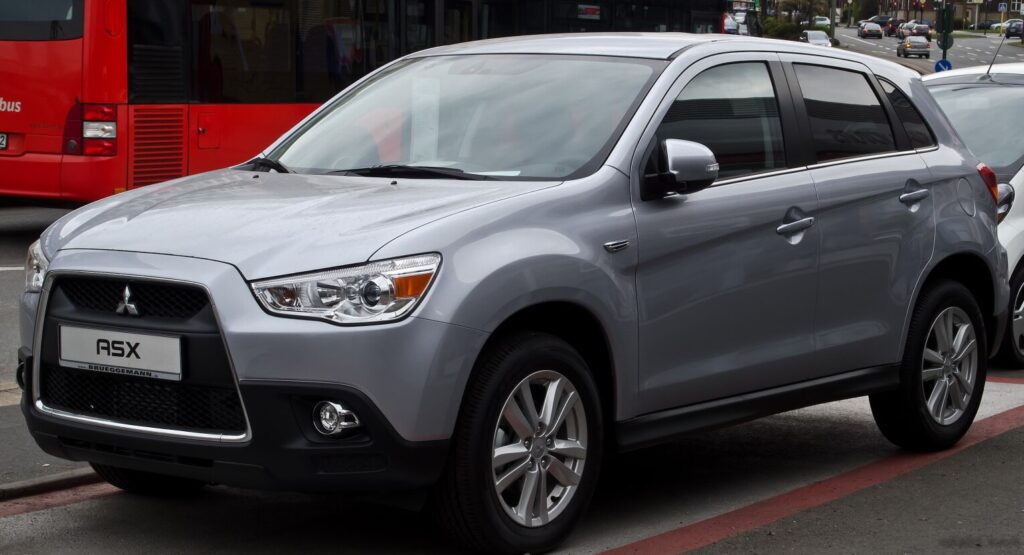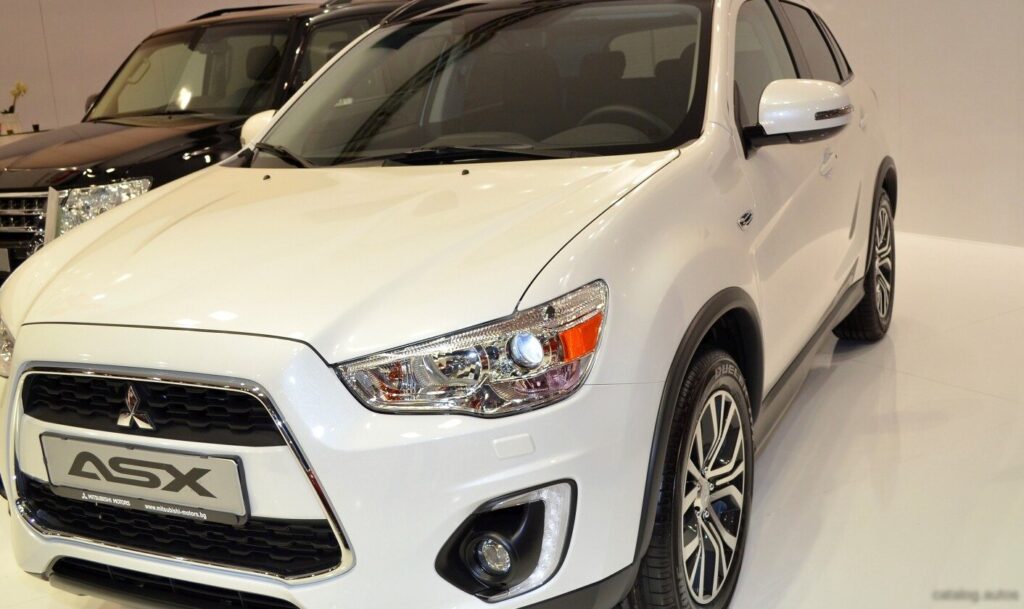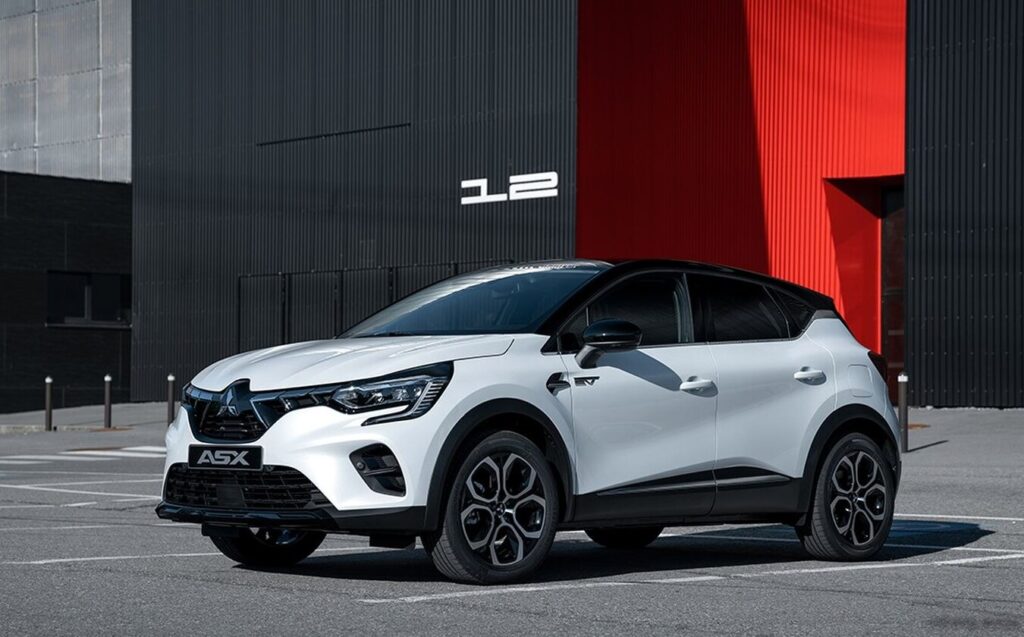
The Mitsubishi ASX II 1.0 Turbo (91 hp) represents an entry-level offering within the second generation of Mitsubishi’s popular ASX (Active Sport Crossover) line. Introduced in March 2023 and produced through June 2024, this variant was primarily aimed at the European market, offering a balance of affordability and fuel efficiency within the highly competitive compact SUV segment. It’s positioned as the base engine option, slotting below higher-powered turbocharged variants and, in some markets, plug-in hybrid models. The ASX II itself is a rebadged Renault Captur/Arkana, reflecting the Renault-Nissan-Mitsubishi Alliance’s platform sharing strategy.
Technical Specifications
| Brand | Mitsubishi |
| Model | ASX |
| Generation | ASX II |
| Type (Engine) | 1.0 Turbo (91 Hp) |
| Start of production | March, 2023 |
| End of production | June, 2024 |
| Powertrain Architecture | Internal Combustion engine |
| Body type | SUV, Crossover |
| Seats | 5 |
| Doors | 5 |
| Fuel consumption at Low speed (WLTP) | 6.7-7.2 l/100 km (35.1 – 32.7 US mpg, 42.2 – 39.2 UK mpg, 14.9 – 13.9 km/l) |
| Fuel consumption at Medium speed (WLTP) | 5.3-5.8 l/100 km (44.4 – 40.6 US mpg, 53.3 – 48.7 UK mpg, 18.9 – 17.2 km/l) |
| Fuel consumption at high speed (WLTP) | 4.9-5.3 l/100 km (48 – 44.4 US mpg, 57.6 – 53.3 UK mpg, 20.4 – 18.9 km/l) |
| Fuel consumption at very high speed (WLTP) | 6.2-6.8 l/100 km (37.9 – 34.6 US mpg, 45.6 – 41.5 UK mpg, 16.1 – 14.7 km/l) |
| Combined fuel consumption (WLTP) | 5.7-6.2 l/100 km (41.3 – 37.9 US mpg, 49.6 – 45.6 UK mpg, 17.5 – 16.1 km/l) |
| CO2 emissions (WLTP) | 129-140 g/km |
| Fuel Type | Petrol (Gasoline) |
| Acceleration 0 – 100 km/h | 14 sec |
| Acceleration 0 – 62 mph | 14 sec |
| Acceleration 0 – 60 mph | 13.3 sec |
| Maximum speed | 168 km/h (104.39 mph) |
| Emission standard | Euro 6d |
| Weight-to-power ratio | 13.8 kg/Hp, 72.3 Hp/tonne |
| Weight-to-torque ratio | 7.9 kg/Nm, 127.1 Nm/tonne |
| Power | 91 Hp @ 4600 rpm |
| Power per litre | 91.1 Hp/l |
| Torque | 160 Nm @ 2000-3750 rpm (118.01 lb.-ft. @ 2000-3750 rpm) |
| Engine layout | Front, Transverse |
| Engine displacement | 999 cm3 (60.96 cu. in.) |
| Number of cylinders | 3 |
| Engine configuration | Inline |
| Cylinder Bore | 72.2 mm (2.84 in.) |
| Piston Stroke | 81.34 mm (3.2 in.) |
| Compression ratio | 9.5:1 |
| Number of valves per cylinder | 4 |
| Fuel injection system | Multi-port manifold injection |
| Engine aspiration | Turbocharger, Intercooler |
| Valvetrain | DOHC |
| Engine systems | Start & Stop System, Particulate filter |
| Kerb Weight | 1259-1383 kg (2775.62 – 3048.99 lbs.) |
| Max. weight | 1734 kg (3822.82 lbs.) |
| Max load | 351-475 kg (773.82 – 1047.2 lbs.) |
| Trunk (boot) space – minimum | 422-536 l (14.9 – 18.93 cu. ft.) |
| Trunk (boot) space – maximum | 1275 l (45.03 cu. ft.) |
| Fuel tank capacity | 48 l (12.68 US gal | 10.56 UK gal) |
| Max. roof load | 80 kg (176.37 lbs.) |
| Permitted trailer load with brakes (12%) | 1200 kg (2645.55 lbs.) |
| Permitted trailer load without brakes | 640 kg (1410.96 lbs.) |
| Permitted towbar download | 75 kg (165.35 lbs.) |
| Length | 4227 mm (166.42 in.) |
| Width | 1797 mm (70.75 in.) |
| Width including mirrors | 2003 mm (78.86 in.) |
| Height | 1585 mm (62.4 in.) |
| Wheelbase | 2639 mm (103.9 in.) |
| Front track | 1560 mm (61.42 in.) |
| Rear (Back) track | 1547 mm (60.91 in.) |
| Front overhang | 876 mm (34.49 in.) |
| Rear overhang | 712 mm (28.03 in.) |
| Ride height (ground clearance) | 174 mm (6.85 in.) |
| Minimum turning circle (turning diameter) | 11.1 m (36.42 ft.) |
| Drivetrain Architecture | The Internal combustion engine (ICE) drives the front wheels of the vehicle. |
| Drive wheel | Front wheel drive |
| Number of gears and type of gearbox | 6 gears, manual transmission |
| Front suspension | Independent type McPherson |
| Rear suspension | Torsion |
| Front brakes | Ventilated discs |
| Rear brakes | Drum |
| Assisting systems | ABS (Anti-lock braking system) |
| Steering type | Steering rack and pinion |
| Power steering | Electric Steering |
| Tires size | 215/60 R17 |
| Wheel rims size | 7J x 17 |
Powertrain & Engine Architecture
The heart of the ASX II 1.0 Turbo is the H5Ft engine, a 999cc, three-cylinder turbocharged petrol engine. This engine, developed as part of the Renault-Nissan-Mitsubishi Alliance’s collaborative efforts, utilizes a single-scroll turbocharger and direct injection to deliver a modest 91 horsepower at 4600 rpm and 160 Nm (118 lb-ft) of torque between 2000 and 3750 rpm. The engine features a DOHC (Double Overhead Camshaft) valvetrain with four valves per cylinder and a compression ratio of 9.5:1. A particulate filter is included to meet stringent Euro 6d emissions standards. The engine is transversely mounted at the front of the vehicle. The standard transmission is a 6-speed manual gearbox, designed for efficiency and reasonable performance.
Driving Characteristics
The 1.0 Turbo engine, paired with the manual transmission, provides adequate, but not exhilarating, performance. Acceleration from 0-100 km/h (0-62 mph) takes approximately 14 seconds. The engine’s torque delivery is relatively flat, making it suitable for everyday driving situations. However, drivers seeking more spirited acceleration will find the engine lacking compared to the higher-output turbocharged options available in the ASX II lineup. The gear ratios are tuned for fuel economy, meaning the engine can feel strained when climbing hills or overtaking at higher speeds. The manual transmission offers a precise shift feel, but the overall driving experience is geared towards comfort and efficiency rather than sporty handling.
Equipment & Trim Levels
The 1.0 Turbo trim typically represents the entry point to the ASX II range. Standard equipment generally includes air conditioning, a touchscreen infotainment system with smartphone integration (Apple CarPlay and Android Auto), Bluetooth connectivity, and basic safety features such as ABS, electronic stability control, and multiple airbags. Interior upholstery is typically cloth, and the dashboard features a functional, if somewhat basic, design. Optional extras often include alloy wheels, parking sensors, a rearview camera, and upgraded infotainment systems with navigation. Higher trim levels add features like automatic climate control, leather upholstery, and advanced driver-assistance systems.
Chassis & Braking
The ASX II utilizes a front-wheel-drive configuration. The front suspension employs an independent McPherson strut setup, while the rear suspension features a torsion beam. This configuration provides a comfortable ride quality, prioritizing smoothness over outright handling precision. The braking system consists of ventilated discs at the front and drum brakes at the rear. While adequate for everyday use, the drum brakes on the rear can feel less responsive under heavy braking compared to disc brakes. Electric power steering provides light and easy steering feel.
Market Reception & Comparison
The ASX II 1.0 Turbo was generally well-received as an affordable and fuel-efficient option within the compact SUV segment. Critics praised its fuel economy (ranging from 5.7-6.2 l/100km) and its suitability for urban driving. However, the engine’s limited power output was a common criticism, particularly when compared to competitors offering more powerful engines. Compared to higher-trim ASX II models with larger engines, the 1.0 Turbo offers significantly lower performance but also a lower price point. It competes directly with other entry-level compact SUVs like the Peugeot 2008 and Opel/Vauxhall Mokka.
Legacy
The Mitsubishi ASX II 1.0 Turbo, while not a performance standout, represents a practical and economical choice for buyers seeking a compact SUV. The H5Ft engine, while relatively simple in design, has proven to be reasonably reliable. As a used car, these models offer good value for money, particularly for those prioritizing fuel efficiency and low running costs. However, potential buyers should be aware of the engine’s limited power output and the potential for turbocharger-related issues over the long term. The ASX II’s reliance on Renault-Nissan technology also means that parts availability and repair costs may be influenced by the broader Alliance network.