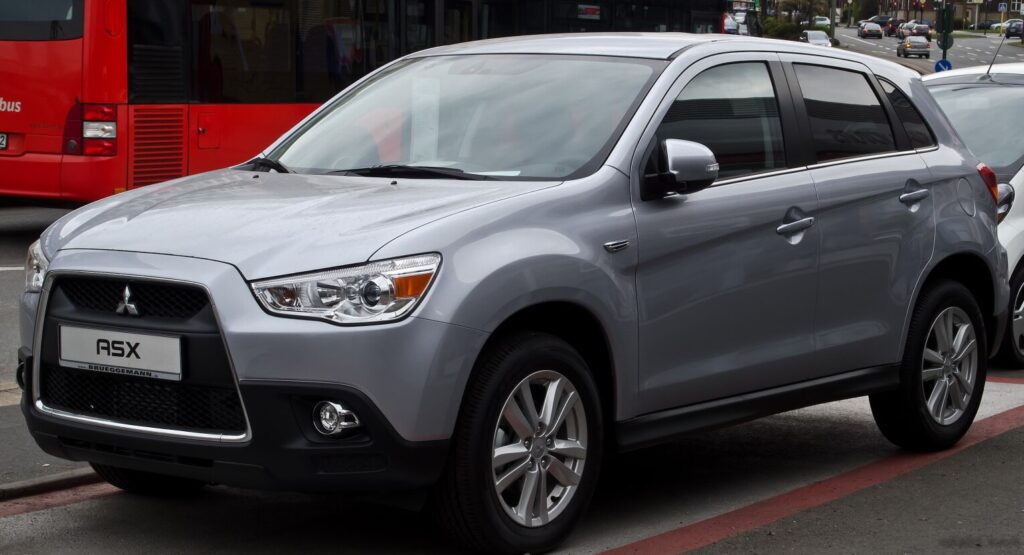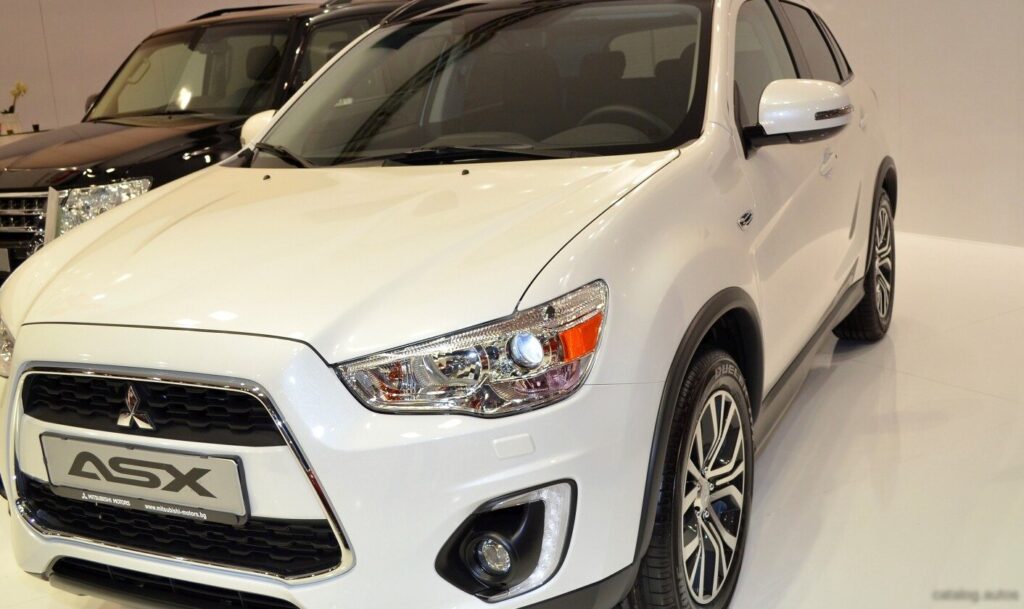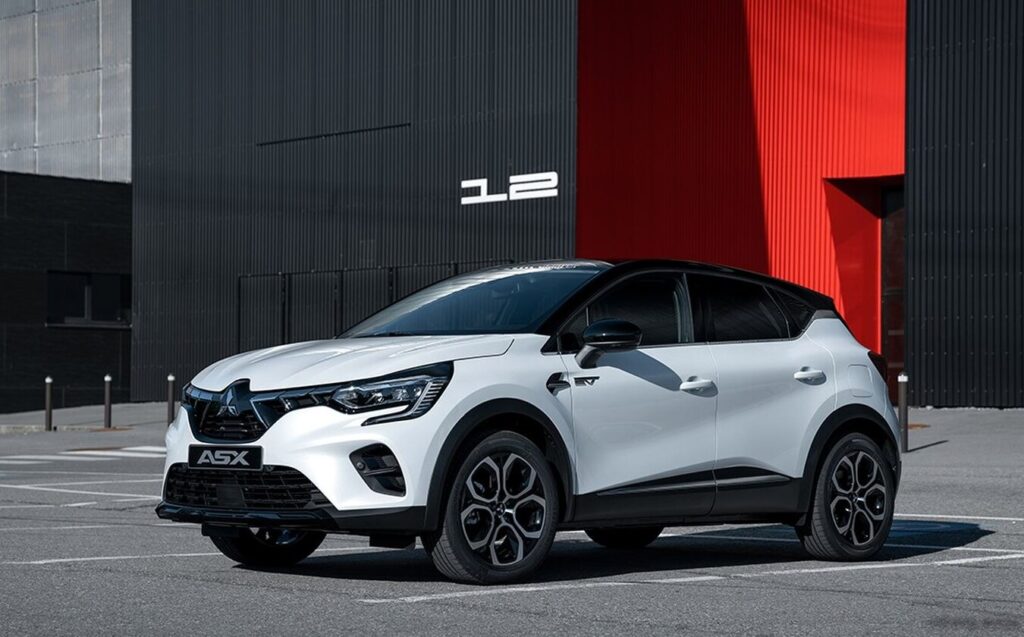
The Mitsubishi ASX II 1.3 Turbo (158 Hp) Mild Hybrid DCT is a compact crossover SUV produced by Mitsubishi Motors from March 2023 to June 2024. This variant represents a key offering within the second generation ASX lineup (internally designated as the X150), positioned as a balance between fuel efficiency, performance, and modern technology. It was primarily marketed in the European market, leveraging Mitsubishi’s reputation for reliability and practicality within the competitive C-segment SUV class. The introduction of mild hybrid technology aimed to meet increasingly stringent emissions regulations while enhancing the driving experience.
Technical Specifications
| Brand | Mitsubishi |
| Model | ASX |
| Generation | ASX II |
| Type (Engine) | 1.3 Turbo (158 Hp) Mild Hybrid DCT |
| Start of production | March, 2023 |
| End of production | June, 2024 |
| Powertrain Architecture | MHEV (Mild Hybrid Electric Vehicle) |
| Body type | SUV, Crossover |
| Seats | 5 |
| Doors | 5 |
| Fuel consumption at Low speed (WLTP) | 7.5 l/100 km (31.4 US mpg) |
| Fuel consumption at Medium speed (WLTP) | 5.7 l/100 km (41.3 US mpg) |
| Fuel consumption at high speed (WLTP) | 5 l/100 km (47 US mpg) |
| Fuel consumption at very high speed (WLTP) | 6.2-6.3 l/100 km (37.9 – 37.3 US mpg) |
| Combined fuel consumption (WLTP) | 5.9 l/100 km (39.9 US mpg) |
| CO2 emissions (WLTP) | 133-134 g/km |
| Fuel Type | Petrol (Gasoline) |
| Acceleration 0 – 100 km/h | 8.5 sec |
| Acceleration 0 – 62 mph | 8.5 sec |
| Acceleration 0 – 60 mph | 8.1 sec |
| Maximum speed | 204 km/h (126.76 mph) |
| Emission standard | Euro 6d |
| Weight-to-power ratio | 8.4 kg/Hp |
| Weight-to-torque ratio | 4.9 kg/Nm |
| Battery voltage | 12 V |
| Power | 158 Hp @ 5500 rpm |
| Torque | 270 Nm @ 1800-3750 rpm (199.14 lb.-ft.) |
| Engine layout | Front, Transverse |
| Engine displacement | 1333 cm3 (81.34 cu. in.) |
| Number of cylinders | 4 |
| Engine configuration | Inline |
| Cylinder Bore | 72.2 mm (2.84 in.) |
| Piston Stroke | 81.34 mm (3.2 in.) |
| Compression ratio | 10.5:1 |
| Number of valves per cylinder | 4 |
| Fuel injection system | Direct injection |
| Engine aspiration | Turbocharger, Intercooler |
| Valvetrain | DOHC |
| Kerb Weight | 1325-1345 kg (2921.12 – 2965.22 lbs.) |
| Max. weight | 1834 kg (4043.28 lbs.) |
| Max load | 489-509 kg (1078.06 – 1122.15 lbs.) |
| Trunk (boot) space – minimum | 422-536 l (14.9 – 18.93 cu. ft.) |
| Trunk (boot) space – maximum | 1275 l (45.03 cu. ft.) |
| Fuel tank capacity | 48 l (12.68 US gal) |
| Max. roof load | 80 kg (176.37 lbs.) |
| Permitted trailer load with brakes (12%) | 1500 kg (3306.93 lbs.) |
| Permitted trailer load without brakes | 690 kg (1521.19 lbs.) |
| Permitted towbar download | 75 kg (165.35 lbs.) |
| Length | 4227 mm (166.42 in.) |
| Width | 1797 mm (70.75 in.) |
| Width including mirrors | 2003 mm (78.86 in.) |
| Height | 1585 mm (62.4 in.) |
| Wheelbase | 2639 mm (103.9 in.) |
| Front track | 1560 mm (61.42 in.) |
| Rear (Back) track | 1547 mm (60.91 in.) |
| Front overhang | 876 mm (34.49 in.) |
| Rear overhang | 712 mm (28.03 in.) |
| Ride height (ground clearance) | 174 mm (6.85 in.) |
| Minimum turning circle | 11.1 m (36.42 ft.) |
| Drivetrain Architecture | FWD, MHEV |
| Number of gears and type of gearbox | 7 gears, automatic transmission DCT |
| Front suspension | Independent type McPherson |
| Rear suspension | Torsion |
| Front brakes | Ventilated discs |
| Rear brakes | Drum |
| Tires size | 215/55 R18 |
| Wheel rims size | 7J x 18 |
INTRODUCTION
The Mitsubishi ASX II 1.3 Turbo Mild Hybrid DCT, launched in 2023, represents a significant update to Mitsubishi’s popular compact SUV. Building upon the foundation of the second-generation ASX, this variant incorporates a 1.3-liter turbocharged engine paired with a 48-volt mild hybrid system and a seven-speed dual-clutch transmission (DCT). This combination aimed to deliver improved fuel economy and reduced emissions without sacrificing the everyday usability expected of a crossover. The ASX II is based on the Renault-Nissan-Mitsubishi Alliance’s CMF-B platform, shared with models like the Renault Captur and Nissan Juke, allowing for cost efficiencies and shared componentry. This particular engine and transmission pairing was positioned as a mid-range offering, appealing to buyers seeking a balance between performance and economy.
Powertrain & Engine Architecture
At the heart of the ASX II 1.3 Turbo is the 4N13C engine, a 1.3-liter inline-four cylinder gasoline engine equipped with a turbocharger and direct fuel injection. This engine produces 158 horsepower at 5500 rpm and 270 Nm (199 lb-ft) of torque between 1800 and 3750 rpm. The direct injection system, coupled with the turbocharger, allows for precise fuel delivery and increased power output. The mild hybrid system utilizes a 48V lithium-ion battery and a belt-driven starter-generator (BSG). The BSG provides assistance during acceleration, allowing the engine to shut off during coasting and braking, and enabling a smoother start-stop system. The seven-speed dual-clutch transmission (DCT) offers quick and seamless gear changes, contributing to both performance and fuel efficiency. The DCT’s programming is tuned to prioritize fuel economy in normal driving conditions, with sportier shift patterns available through selectable drive modes.
Driving Characteristics
The 1.3 Turbo Mild Hybrid DCT delivers a respectable driving experience for its class. Acceleration from 0-100 km/h (0-62 mph) takes approximately 8.5 seconds. While not a performance-oriented vehicle, the turbocharger provides adequate power for everyday driving situations, including highway merging and overtaking. The DCT transmission contributes to a responsive feel, although some drivers may notice slight hesitation at low speeds. The mild hybrid system is largely transparent to the driver, providing a subtle boost during acceleration and contributing to improved fuel economy. Compared to the base 1.0-liter engine option, the 1.3 Turbo offers noticeably more power and torque. However, it doesn’t match the performance of higher-spec engines available in other ASX II variants, such as the plug-in hybrid model.
Equipment & Trim Levels
The ASX II 1.3 Turbo Mild Hybrid DCT typically came equipped with a generous array of standard features. These included an 8-inch touchscreen infotainment system with Apple CarPlay and Android Auto compatibility, a digital instrument cluster, automatic climate control, and a suite of advanced driver-assistance systems (ADAS) such as lane departure warning, automatic emergency braking, and adaptive cruise control. Interior upholstery was typically cloth, with options for leather upgrades available. Optional extras included a panoramic sunroof, premium audio system, and parking assist features. Trim levels varied slightly depending on the market, but generally offered progressive upgrades in terms of interior materials, exterior styling, and technology features.
Chassis & Braking
The ASX II utilizes a McPherson strut front suspension and a torsion beam rear suspension. This setup provides a comfortable ride quality suitable for everyday driving. The front brakes are ventilated discs, while the rear brakes are drums. This configuration is typical for vehicles in this weight class and price range. The electric power steering provides light and precise steering feel. The chassis is tuned to prioritize comfort and stability over sporty handling. Stabilizer bars are fitted to both the front and rear axles to reduce body roll during cornering.
Market Reception & Comparison
The Mitsubishi ASX II 1.3 Turbo Mild Hybrid DCT was generally well-received by automotive critics. Reviewers praised its fuel efficiency, comfortable ride, and comprehensive list of standard features. However, some criticized the rear drum brakes and the somewhat uninspired interior design. Compared to competitors like the Nissan Qashqai and Peugeot 3008, the ASX II offered a competitive price point and a strong warranty. In terms of fuel economy, the 1.3 Turbo Mild Hybrid DCT consistently outperformed non-hybrid variants of the ASX II and many of its rivals. Reliability reports suggest that the 4N13C engine is generally robust, although the DCT transmission may require more frequent servicing than a traditional automatic gearbox.
Legacy
The Mitsubishi ASX II 1.3 Turbo Mild Hybrid DCT represents a transitional step in Mitsubishi’s powertrain strategy, embracing mild hybrid technology to meet evolving emissions standards. While production ended in June 2024, the model continues to appear on the used car market. The 4N13C engine, while not known for exceptional performance, has proven to be relatively reliable. The DCT transmission, however, is a potential area of concern for prospective buyers, and regular maintenance is crucial to ensure its longevity. The ASX II, in general, has established itself as a practical and affordable crossover SUV, and the 1.3 Turbo Mild Hybrid DCT variant offers a compelling combination of fuel efficiency and usability.